
Mostar’s Old Town is fascinating because you can read centuries of power in the stones. This 1 hour guided walk stitches the story together from the Ottoman period to later influences, with iconic landmarks and practical stops that make the whole area easier to understand.
I like that the route starts simple, then keeps getting more specific, so you see big-picture changes and also the small, human details that make Mostar feel real. I also like that you have time to ask questions in English or French. The one drawback to consider is that, based on timing feedback, the tour can run a bit shorter than expected, and if you want the full story including the war and post-war period, you may need to ask directly.
Key things to know before you go
- Crooked Bridge as your first Ottoman clue, setting the tone for the walk right away
- Nezir-Aga Mosque and nearby structures that show how religion shaped city space
- Tannery and hammam stops that shift the focus from monuments to daily life
- Halebija Tower landmarks, including the oldest cafe and a traditional divers club site
- Old Bridge to Kujundžiluk, moving you from architecture to the craft and jewelry street
- Mehmed Pasha Koski Mosque courtyard to close the tour with a clear architectural endpoint
Old Town Mostar in 75 minutes: why this walk works

This is a short, focused walking tour through the Old Town core, designed for first-time visitors who want the big story without getting lost in side streets. Mostar’s Old Town dates back to the 15th century, and your guide connects that timeline to what the Ottoman Empire did to city life and design.
The pace is helpful. You are not just looking at pretty buildings. You are learning what the places were for, and how different rulers left different architectural habits behind. If you only have a day in town and want maximum clarity fast, this format fits.
Because the experience is mostly outdoors and the tour is on foot, you’ll also get something practical: you’ll learn the geography. After this, it’s much easier to return on your own and know why each landmark matters.
More Walking Tours in Mostar
- Mostar Private Walking Tour
★ 5.0 · 93 reviews - Charming Mostar: Private Mostar Walking Tour
★ 5.0 · 23 reviews - Best of Mostar – Private Walking Tour
★ 5.0 · 21 reviews
Meeting Andrej at the western entrance near the tobacco kiosk
.jpg)
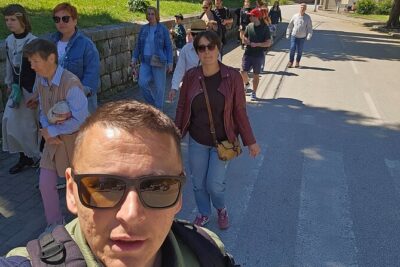
You meet at the entrance to the Old Town from the western side, next to a tobacco shop (kiosk). The guide listed for this experience is Andrej, a 38 year old local who leads in English and French.
That matters more than it sounds. A good Old Town walk depends on timing and on using clear landmarks, since Mostar’s lanes can feel similar if you are wandering without a plan. Starting from the western entrance gives you a clean flow, and it also sets up the order of sights.
This is described as a private group, and the price is listed per group up to 43. Translation: it can be a good fit for small groups that want personal attention, but the walk is still a fixed route. You’ll want to ask questions early if you have strong interests, like architecture details or specific eras.
Crooked Bridge to Nezir-Aga Mosque: your Ottoman-era start
.jpg)
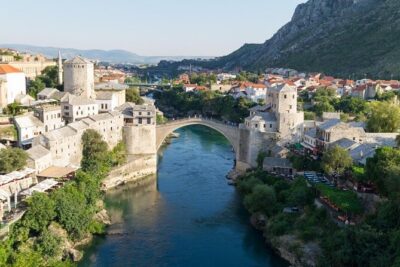
The walk begins on the western side and quickly brings you to the Crooked Bridge. Even if you have seen photos of it, I’d plan to look longer than you expect. The bridge works as a shortcut into the Ottoman story: it helps you picture how people moved, traded, and gathered in a city shaped by imperial rule.
From there, you head to Nezir-Aga Mosque. This is a key moment because it anchors the walk in how religion and civic life were linked in historic Mostar. Mosques did more than provide worship space. They also helped define what mattered in the urban layout.
What I like about starting with bridge and mosque is that you immediately get two different types of “architecture talk.” Bridges tell you about movement and commerce. Mosques tell you about community and power structures. Put together, you start seeing the city as a system, not a collection of stops.
Tannery and hammam: when the walk shifts from monuments to daily life
.jpg)
After the first wave of big landmarks, the route includes a tannery and a hammam. This part changes the feel of the tour in a smart way. You move from seeing structures to understanding city functions.
A tannery points to the commercial and artisanal side of the Old Town. Mostar’s Ottoman-era Old Town was the main artisanal and commercial area, and sites like this help explain why so much activity clustered here. You’re not just learning about rulers. You are learning about work.
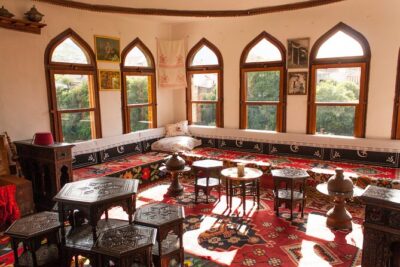
The hammam stop does a similar job from a different angle. Bathhouses were social spaces as well as practical ones, so you can connect how people lived day to day with how the city’s architecture supported routine life. Even without going deep into technical details, just having the hammam on the route makes the city feel less distant and more lived-in.
If you enjoy history that explains people, not just events, this section is one of the best uses of your time. It also helps you better understand why Ottoman-era cities looked the way they did.
More around Mostar to weigh up
- Mostar Private Walking Tour – where East meets West
★ 5.0 · 15 reviews - Stolac, the crossroads of civilisations, private walking tour.
★ 5.0 · 9 reviews - Mostar War Heritage Walking Tour
★ 5.0 · 6 reviews - Wine Tasting & Private Walking Tour Mostar
★ 5.0 · 5 reviews
Halebija Tower landmarks: the oldest cafe and the divers-club connection
.jpg)
Getting closer to the Old Bridge brings you to Halebija Tower. This area includes two notable items mentioned on the route: the oldest cafe in the city and a traditional divers club site.
I like this stop because it breaks the pattern of only seeing religious or defensive architecture. A cafe shows continuity in social culture. It suggests where people gathered to talk, recharge, and stay connected to the everyday rhythm of the Old Town.
The traditional divers club connection is equally interesting, since it ties the river and the bridge to lived tradition. It also makes the Old Bridge feel more than scenic. It becomes part of a working relationship between people and the water.
This is also where you start to get real texture from the tour. The guide can connect architectural forms to local customs, and you’ll come away seeing why this river city developed the way it did.
Crossing the Old Bridge to Kujundžiluk’s jewelers’ lane
.jpg)
The big moment is crossing the Old Bridge. This is the kind of move that changes your viewpoint instantly, and it helps you understand why the bridge matters so much in Mostar’s identity.
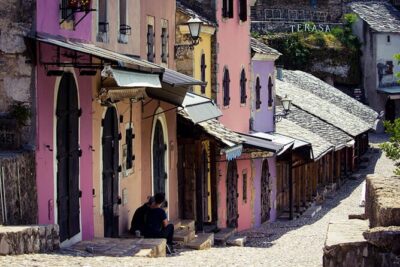
Once you cross, the route continues toward Kujundžiluk, known as the street of jewelers. This is where Mostar’s commercial heritage becomes more literal. You are moving from the social and landmark core toward the craft-focused lane that supported trade.
If you’ve ever walked through an old city and wondered where commerce actually happened, this is the answer. Kujundžiluk gives you a clear visual and spatial explanation of the Old Town’s artisanal economy. It’s not just that crafts existed. You can see the street form that made trading practical.
I’d spend a moment watching how the lane bends and funnels movement. That tiny detail helps you understand why these streets worked for centuries. And if you plan to shop later, knowing the layout first makes it easier to choose what fits your budget and style.
Mehmed Pasha Koski Mosque courtyard: closing with architecture you can picture
.jpg)
The tour ends in the courtyard of Mehmed Pasha Koski Mosque. Ending here is smart. You move from the jewelry street, which explains trade and daily craft, to a mosque space that helps you interpret the architectural and cultural rules of the city.
Courtyards often feel like a pause in the noise of walking. They give you a clean “wrap” for the story your guide has been building. By the time you reach this stop, you can connect the earlier themes: bridges for movement, religious sites for community, hammam and tannery for routine life, then commerce lanes and a final architectural anchor.
It’s also a good ending point if you want to continue exploring after the tour. You’ll be near a landmark that gives you orientation, and you can decide where to go next without starting from scratch.
Price and value: what $58 gets you in Old Town Mostar
.jpg)
The price is listed as $58 per group up to 43, for a walking tour lasting about 1 hour, with an approximate completion time closer to 1 hour and 15 minutes. In practical terms, you’re paying for a guided “map with meaning,” not just a route.
Here’s where the value comes from:
- You get a licensed local guide leading in English and French, which can save you hours of self-research and guesswork.
- You cover multiple landmark categories in one go: bridge, mosque, hammam, tannery, tower landmarks, and the jewelers’ street.
- The timing is short enough to fit into a busy itinerary, which matters in Mostar where the Old Town is compact but easy to over-walk if you do it alone.
Because it’s not a long tour, you should treat it like a high-impact orientation. If you go in with a couple of questions, the guide’s explanations can turn the walk into a memorable first draft of Mostar’s story that you can refine later on your own.
One caution on value: one piece of feedback indicated the tour ran shorter than expected. So if your schedule is tight, give yourself a cushion after the end time, especially on a day you also plan to cross to other parts of the city.
Tips to make your walk smoother and more meaningful
.jpg)
This tour is not for wheelchair users, since it is described as a walking experience. If mobility is a concern, you’ll want to choose an option with different pacing and fewer steps.
For everyone else, a few practical steps help:
- Wear comfortable shoes. You’ll be moving through Old Town streets where surfaces can be uneven.
- Bring water if you’re traveling in warm months, since you’ll be outside most of the time.
- Arrive a few minutes early at the western entrance by the tobacco kiosk, so you start when you should.
Most importantly, decide what kind of history you want before the first stop. The tour focuses on Mostar’s development through centuries and explains architecture under different rulings. If you care about the war and post-war period as part of the story, bring it up. Some coverage may not hit every era in the depth you want, so a simple question to Andrej can help tailor the conversation.
If you want coffee or mosque entrances beyond what’s included, plan those separately. Optional activities like boat rides, mosque entrances, and traditional Bosnian coffee are not included in the tour price, and food and drinks are also not included.
Who should book this Old Town Mostar walking tour
.jpg)
Book this if you:
- Want a structured overview of Old Town Mostar without doing the heavy research yourself
- Like Ottoman-era architecture and the way different rulers changed city design
- Enjoy learning how commerce, religion, and daily life fit together
- Are short on time and want a compact walk with clear landmark flow
You might skip it or pair it with something else if:
- You need a fully accessible route for wheelchair users
- You want a long narrative that covers every major modern era in detail
- You prefer an unstructured wander where you control every stop and stop time
This is ideal for couples, solo travelers, and small groups who want an orientation walk that makes independent exploring easier afterward.
Should you book it?
Yes, you should book this Old Town Mostar walking tour if your goal is orientation plus meaning in under 2 hours. The route is efficient, and the mix of bridge, mosques, hammam, tannery, tower landmarks, and Kujundžiluk helps you understand Mostar as a working city shaped by centuries of rule.
It’s also a good bet if you value a licensed guide who can explain in English and French. Andrej is described as friendly and polite, and the city history is presented in a way that’s easy to follow.
I’d book with one practical mindset: treat it as a guided highlight story, not a complete textbook of every era. If your schedule is tight or you want specific topics like war and post-war history included, ask your guide early and plan an extra stop after the tour so you can chase the parts that matter most to you.
FAQ
How long is the walking tour in Old Town Mostar?
The tour is listed as 1 hour, with an approximate completion time of around 1 hour and 15 minutes.
Where do I meet the guide?
You meet at the entrance to the Old Town from the western side next to a tobacco shop (kiosk).
Who is the guide and what languages do they speak?
The guide is Andrej, and the tour is led in English and French.
Is this tour private?
Yes, it is listed as a private group.
Is the tour suitable for wheelchair users?
No, it is not suitable for wheelchair users.
What is included in the price?
A licensed local guide in French and English is included.
What is not included?
Optional activities such as boat rides, entrances to mosques, and traditional Bosnian coffee are not included. Food and drinks are also not included.
How much does the tour cost?
The price is listed as $58 per group up to 43.
What is the cancellation policy?
Free cancellation is offered up to 24 hours in advance for a full refund.
Newest Mostar write-ups
- Private Transfer from Mostar to Split★ 5.0 · 3 reviews
- Mystical Sutjeska National Park★ 5.0 · 3 reviews
- Mostar Guided Tour & Sweet Delights★ 5.0 · 3 reviews
- Burek Masterclass in Mostar★ 3.0 · 3 reviews
- All Inclusive Neretva Rafting, Day Tour from Mostar★ 5.0 · 4 reviews
- Mostar Old Town Walking Tour – Best Seller★ 5.0 · 4 reviews
- Authentic Medjugorje Tour★ 4.0 · 4 reviews
- Private Transfer from Mostar and Split★ 5.0 · 5 reviews
Walking Tours in Mostar, compared.
Stolac, the crossroads of civilisations, private walking tour.
Read our review →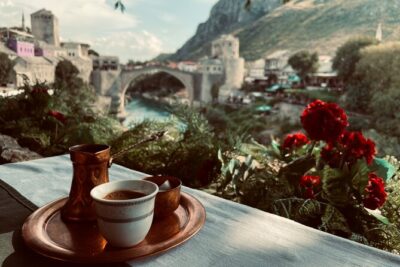
Browse the lists this tour appears in