
Reviewed · JAJCE WATERFALL TOURS
Bosnian Kingdom Capitals: Travnik & Jajce Tour from Sarajevo
Bosnia’s kingdom-capitals circuit is a smart way to see two towns that feel totally different, even though they share the same story. In one long day you move from Travnik’s Ottoman-era streets and forts to Jajce’s hilltop fortress, underground catacombs, Roman leftovers, and the Pliva Waterfall area.
I love the Ottoman architecture focus in Travnik, especially the mosque stops like Šarena Džamija and Hadzi Ali-Begova džamija. I also love the hilltop and underground mix in Jajce, where you can go from the Fortress views to the Catacomb tunnels in the same afternoon.
One possible drawback: this is a full day, about 10 to 12 hours, and a lot of time is spent on the road. If you hate moving from place to place, this schedule may feel like a sprint.
Key highlights you will feel right away
- Travnik’s Ottoman hits in tight time slots, including Šarena Džamija and multiple Ottoman-style graves and mosques
- Jajce’s “kingdom capital” views from the Fortress of Jajce, plus the Coronation Church of St. Mary
- Under-the-street history with the Catacomb of Jajce tunnels
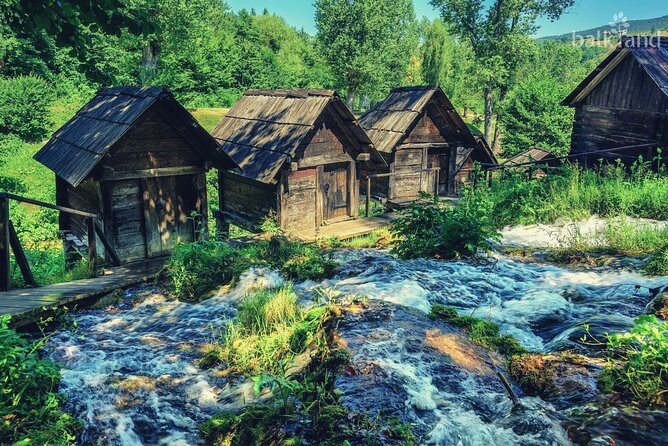
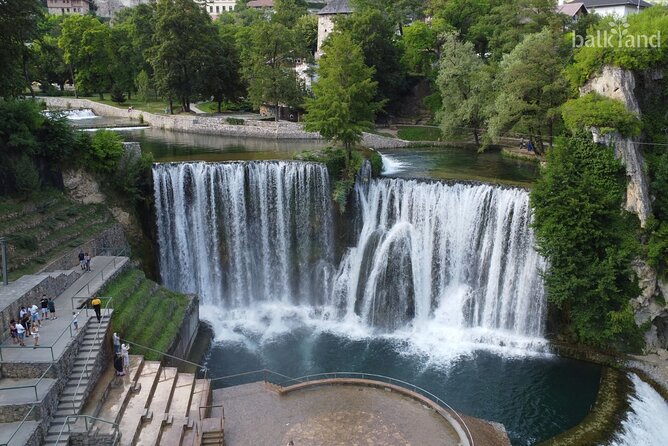
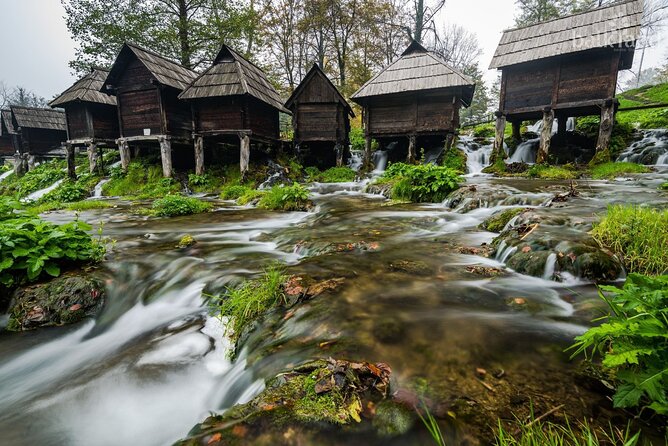
- Pliva Waterfall and Mlincici watermills as your nature and tradition payoff
- All fees and taxes handled, plus bottled water, snacks, WiFi, and an air-conditioned vehicle
- Private by default, with only your group participating, and local guiding set up in Travnik and Jajce
A full day that actually makes sense: Travnik then Jajce
This tour is built around the idea that central Bosnia is easier to understand when you travel in a clear loop. Start in Travnik with its Ottoman-era landmarks, then shift into Jajce, which layers medieval kingdom symbolism with Roman-era archaeology and Yugoslav-era memory.
The timing works because the stops alternate between buildings you can look at and spaces where you can walk a bit. That keeps your energy steady, even with a long day. It also means you get variety without having to plan transport yourself.
Other trips up to Jajce:
- From Sarajevo: Travnik, Jajce, Pliva Lakes & Watermills Trip
★ 4.9 · 519 reviews - From Sarajevo: Jajce, Travnik, Pliva Lake, & Watermills Tour
★ 4.8 · 317 reviews - Jajce, Travnik and Pliva watermills – Day Tour from Sarajevo
★ 5.0 · 295 reviews
Getting from Sarajevo, and what 10 to 12 hours really means
You meet at Sarajevo City Hall on Brodac 1. Pickup is offered, and your day ends back at the same meeting point.
Expect about 2.5 hours of scenic driving back to Sarajevo after your Jajce dinner break. Since the tour runs roughly 10 to 12 hours total, travel time is a real part of the experience, not just a boring connector.
Practical tip: use the car time to prep. Download offline maps if you like, and get your photo angles ready before each stop. When you only have 20 to 35 minutes at a location, quick prep helps you get the shots you actually want.
Travnik’s Ottoman core: from fort walls to Šarena Džamija
Travnik is where the day locks in. The old town feel is strongest in the Ottoman-era sites, and the schedule keeps you moving through the most meaningful ones.
Tvrdava Stari grad, Travnik’s hilltop fortress
This stop is all about views and walls. Tvrdava Stari grad sits up on a hill, and the time on-site is about 35 minutes with the admission included.
What you get for that time: you can walk among well-preserved structures, see towers and stonework, and orient yourself visually before you move deeper into town. The biggest win here is perspective, because the fortress helps you understand why Travnik grew where it did.
A consideration: the fortress visit is relatively short. If you want slow, detailed wandering, you might wish you had more time in the streets after.
More around Travnik and the Pliva lakes:
- From Sarajevo: Travnik, Jajce, Pliva Lakes & Watermills Tour
★ 5.0 · 213 reviews - Jajce, Travnik, Pliva lake and Watermills Tour
★ 5.0 · 104 reviews - Travnik, Jajce & Pliva Lakes Day Tour From Sarajevo (fees Incl.)
★ 5.0 · 50 reviews - Sarajevo: Jajce Waterfall, Travnik & Pliva Lake Tour
★ 5.0 · 40 reviews
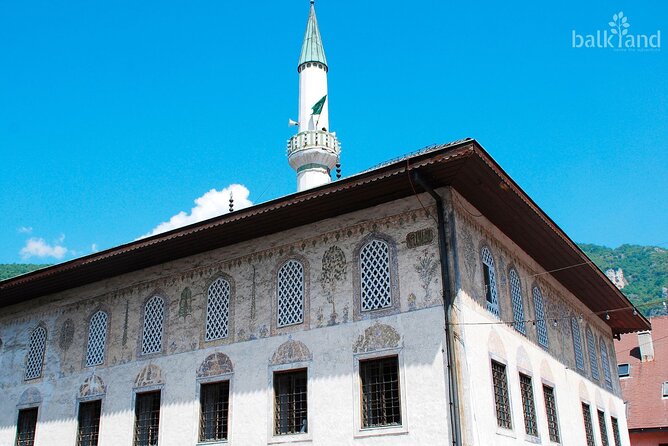
Šarena Džamija, a 16th-century showpiece
Šarena Džamija is one of the most memorable “blink and you’ll still remember it” stops. It was built during Ottoman rule in the 16th century, and the architecture and ornamentation are the point, with admission included and about 20 minutes.
This is the kind of site where you look up and notice details more than you read labels. I like it because it gives you a strong visual sense of Ottoman design without needing a lot of context beforehand.
Turbe and Hadzi Ali-Begova dzamija for the quieter side
After the big architecture moment, the tour gives you smaller Ottoman landmarks too.
- Turbe (about 10 minutes, free admission) is a beautifully crafted Ottoman-style mausoleum linked to a prominent vizier.
- Hadzi Ali-Begova dzamija (about 10 minutes, free admission) is another Ottoman-style mosque stop, focused on religious and architectural heritage.
These moments are short, but they add texture. They also keep your mental map from turning into a checklist. You start to see how Ottoman influence shows up in daily religious life and in memorial spaces, not only in monuments.
Plava Voda and the memorial sites: history in a calm setting
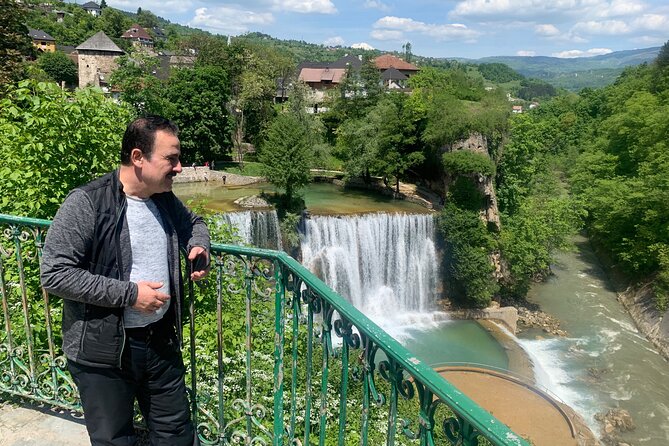
Plava Voda is a national monument area with a mix of cemetery space, a café named Lutvina Kahva, and a notable tomb tied to mufti Mehmed Efendi and his wife Ajiša. You get about 20 minutes, and the admission is free.
This stop works for people who want a break from the busiest architectural sites. It also helps you understand that “history” in Bosnia is not just forts and museums. It is also memorial landscapes and community spaces.
Tip for your visit: take a moment to slow down here. Even with limited time, Plava Voda feels like a place where you should stand back and look, not only take photos.
Ivo Andrić and Travnik museums: literature and how it was anchored
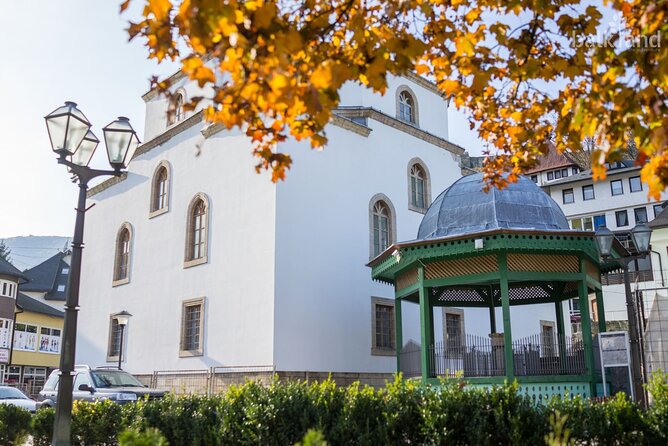
Travnik is tied to one of Bosnia’s best-known writers, Ivo Andrić, and the tour includes his birth connection.
Birth House of Nobel Prize winner Ivo Andrić
This is a 15-minute visit with admission included. The birthplace has been reconstructed and turned into a memorial museum, opened in 1974 as an annex connected to the Regional Museum of Travnik.
Why I like this stop on a day like this: it helps you connect Bosnia’s modern literary identity to a specific place. You do not just see Ottoman architecture, you see how the town sits inside a longer story that reaches the 20th century.
Zavičajni muzej Travnik (Local Museum)
Next is Zavičajni muzej Travnik, visited for about 10 minutes with admission included. The museum was established in 1950, and it has been housed in a building constructed in 1928 with funding tied to the Rockefeller Foundation, with the permanent exhibition opening in 1975.
One smart thing about this museum stop is that it hints at how Travnik changed hands and purposes over time. You are not getting an all-day museum experience. You are getting a map of themes so your eyes catch more later.
Catholic heritage in Travnik: Church of St. John the Baptist
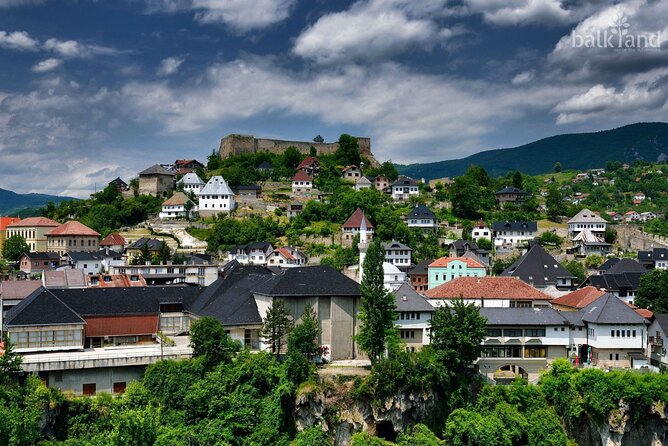
The tour also includes the Church of St. John the Baptist (Crkva sv. Ivana Krstitelja). It is a mid-19th-century Catholic church, and the visit is about 10 minutes with admission included.
This matters because it keeps the day from becoming only an Ottoman story. Travnik is part of a multi-faith landscape, and short church visits like this help you notice that without taking up your whole schedule.
Jajce’s medieval power points: Catacombs, Fortress, and AVNOJ
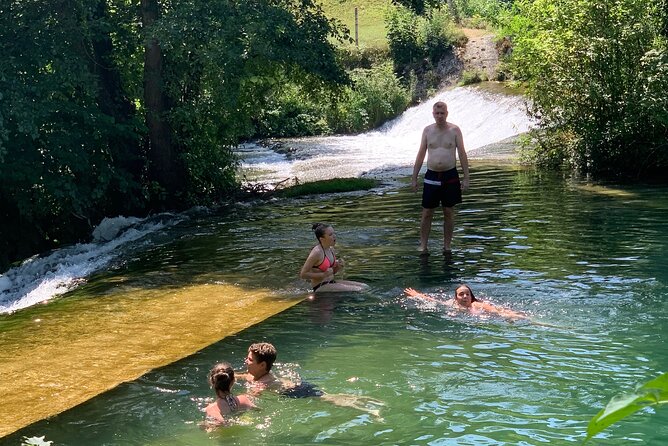
After Travnik, you transition into Jajce, and the vibe changes. You go from mosque domes and hilltop fort sections to kingdom-crown symbolism, underground tunnel history, and museums tied to 20th-century statehood memory.
Catacomb of Jajce, underground history in a 30-minute block
The Catacomb of Jajce visit runs about 30 minutes with admission included. It is an underground tunnel system built in the medieval period and set up as a popular tourist attraction.
I like this stop because it changes your senses. It is not bright street-level touring. It is a “go inside the past” moment that gives the day a physical sense of scale.
Practical note: tunnels can feel cool and dim. Wear comfortable shoes because you will be walking inside.
Fortress of Jajce and the Coronation Church of St. Mary
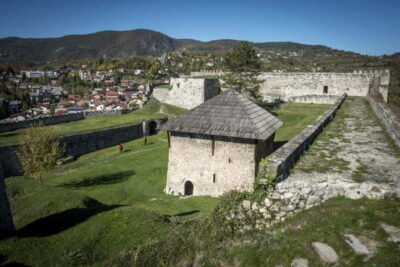
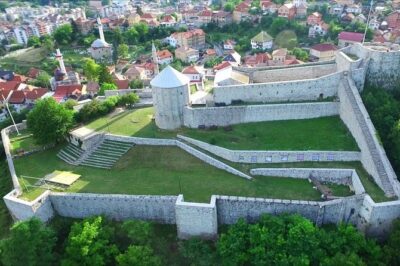
The Fortress of Jajce is a centerpiece, visited for about 30 minutes with admission included. This is where the town’s kingdom-capital identity comes through, including its role as the residence of the last two kings.
You also have the Coronation Church of St. Mary located beneath the fortress, tied to the final Bosnian king’s coronation. Then you get the hilltop advantage: you can see the town from above.
If you only pick one “main event” in Jajce, this is the one. The viewpoints make the short time feel worthwhile.
AVNOJ Museum: Yugoslavia’s founding place memory
The AVNOJ Museum in Jajce is about 20 minutes with admission included. It commemorates the second session of AVNOJ, tied to the Anti-Fascist Council of the People’s Liberation of Yugoslavia, and connects to the later founding story of Yugoslavia.
This stop is here for meaning, not for quick photos. You will likely come away thinking about how political history gets anchored to places, even when those places are primarily known for medieval ruins.
Roman and natural breaks: Mithra Temple, Pliva Waterfall, and Mlincici
After history-heavy stops, the schedule gives you a “reset zone” using Roman archaeology and then nature and watermills.
Temple of Mithras, a Roman 3rd-century reminder
The Temple of Mithras is visited for about 20 minutes with admission included. It is described as one of the best-preserved Mithraic icons in the Balkans, built in the 3rd century AD by Roman soldiers.
I like this part because it pushes the geography of Bosnia farther back than most first-time visitors expect. Jajce suddenly feels like a crossroads over centuries, not a single-era town.
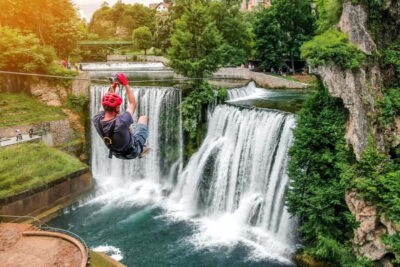
Pliva Waterfall, the outdoors payoff
Then you get the big nature switch with Pliva Waterfall. The visit is about 30 minutes with admission included.
The focus is on the sound and color of the cascading water, mossy rocks, and the chance to enjoy the natural pools. This is one of the stops that makes the long day feel justified.
Tip: plan for wet ground around waterfalls. Wear footwear you trust.
Mlincici watermills, the open-air museum feeling
Finally, you hit Mlincici, the watermills in Jajce powered by the Pliva River. The mills have functioned for centuries, and the tour frames them as an Ottoman-period economic asset, with today’s setting acting like an open-air window into traditional milling.
This stop pairs well with Pliva Waterfall because both are about water as a working force. Together, they give you a practical sense of why the area developed the way it did.
Food timing and the ćevapi moment
Food is part of the promise for this day. The tour overview specifically calls out a chance to try ćevapi, which is one of Bosnia’s most known national dishes.
What to plan: Lunch and dinner are not included. You do get a dinner break in Jajce, about 45 minutes to 1 hour before the drive back.
My practical advice: if you want to eat the most “you only get one chance” dish of the day, use the dinner break. If you need lunch, plan to handle it on your own during the gaps in the schedule.
Price and value check for $150.10 from Sarajevo
At about $150.10 per person, you are paying for a full-day routing that includes transport, time-saving organization, and a stack of paid admissions.
Here is why it can be good value for the right traveler:
- The day includes air-conditioned vehicle, WiFi on board, bottled water, and snacks (a chocolate bar or chips).
- The tour lists all fees and taxes, and many of the major stops have admission included in the plan.
- The structure is tight enough that you are not spending half the day figuring out local transport between Travnik and Jajce.
The main “value” risk is also the biggest one: if you hate long days and time-on-the-road, you might feel like the price buys movement more than comfort. But if you are the type who wants a focused circuit, this kind of single-day plan can be the most efficient way to experience central Bosnia from Sarajevo.
Should you book this Travnik and Jajce kingdom-capsitals day?
Book it if you want one organized day that hits multiple eras, with Ottoman architecture in Travnik, medieval kingdom symbolism in Jajce, and a water-and-nature payoff with Pliva Waterfall and Mlincici.
Skip it if you are picky about pacing or you prefer long museum time over quick landmark snapshots. This tour is built around short stops, about 10 to 35 minutes each, with travel taking real space in your day.
One more reason I’d lean toward booking: the experience is set up as private for your group, and it is designed to keep the day smooth end to end. In practice, that kind of structure matters when your time is limited.
If you can handle a full day, this is a strong way to get oriented fast and see why Travnik and Jajce are often paired together on Bosnia itineraries.
FAQ
How long does the Bosnian Kingdom Capitals tour from Sarajevo take?
It runs about 10 to 12 hours total. Some remaining hours on the day are spent on travel.
Where do I meet the tour in Sarajevo?
You start at Sarajevo City Hall, Brodac 1, Sarajevo 71000, Bosnia and Herzegovina.
Is pickup offered?
Yes, pickup is offered.
Is this a private tour or a group tour?
It is private, meaning only your group will participate.
What is included in the tour price?
The tour includes bottled water, snacks (a chocolate bar or chips), all fees and taxes, an air-conditioned vehicle, and WiFi on board.
What is not included in the tour price?
Lunch and dinner are not included, and alcoholic beverages are not included.
Is ćevapi included?
The experience overview says you will try ćevapi as part of the tour.
How much time is there for dinner, and how long is the drive back?
There is a dinner break in Jajce of about 45 minutes to 1 hour. The drive back to Sarajevo takes about 2.5 hours.
What happens if the weather is bad?
The tour requires good weather. If it is canceled due to poor weather, you will be offered a different date or a full refund.
Newest Sarajevo write-ups
- Sarajevo to Zagreb: One-Way Tour via Jajce, Travnik, Pliva Lake and Watermills★ 5.0 · 3 reviews
- Mountain Village Lukomir Full Day Adventure Tour★ 5.0 · 3 reviews
- Sarajevo E-Bike City Tour★ 5.0 · 3 reviews
- Strbacki Buk and Una Waterfalls: Day Trip from Sarajevo★ 5.0 · 3 reviews
- Sarajevo Snowshoeing Adventure★ 5.0 · 3 reviews
- Sarajevo Old Town: Bosnian Coffee, Baklava & Panoramic Views★ 5.0 · 3 reviews
- 4 Hours Tara Rafting Trip★ 5.0 · 3 reviews
- PRIVATE Sarajevo Under Siege War Tour★ 5.0 · 3 reviews
Jajce Waterfall Tours, compared.
Jajce, Travnik and Pliva watermills – Day Tour from Sarajevo
Read our review →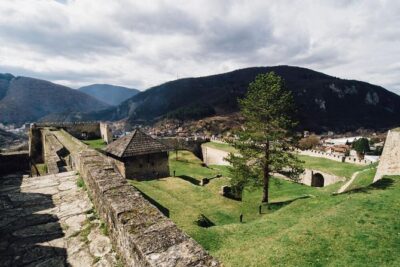
Travnik, Jajce & Pliva Lakes Day Tour From Sarajevo (fees Incl.)
Read our review →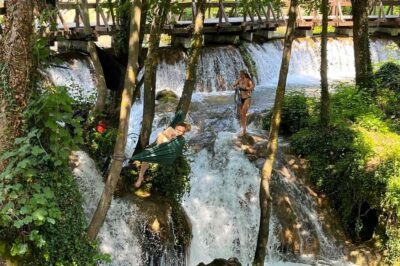
Browse the lists this tour appears in