
Sarajevo Old Town is interesting because it’s not a single story. It’s a stack of stories, religions, empires, and everyday life, all within a walkable old core. I love how this tour builds the day around Bosnian coffee and traditional sweets, and I also love the stop for panoramic views that makes the whole city click into place. One drawback to consider: it’s a walking tour with moderate time on your feet, mostly photo stops and explanations, so it’s not the same thing as a sit-down museum day.
You’ll start at Vječna vatra (Eternal Flame) and move through key landmarks that explain how Sarajevo’s history shaped modern Europe. Guides like Dijana and Amela are highlighted for answering questions across history, architecture, culture, and even food, and that kind of real back-and-forth is the point. If you’re expecting to rush, this isn’t that. You’ll want comfortable shoes and patience for narrow streets and stairs.
Key highlights you should know before you go
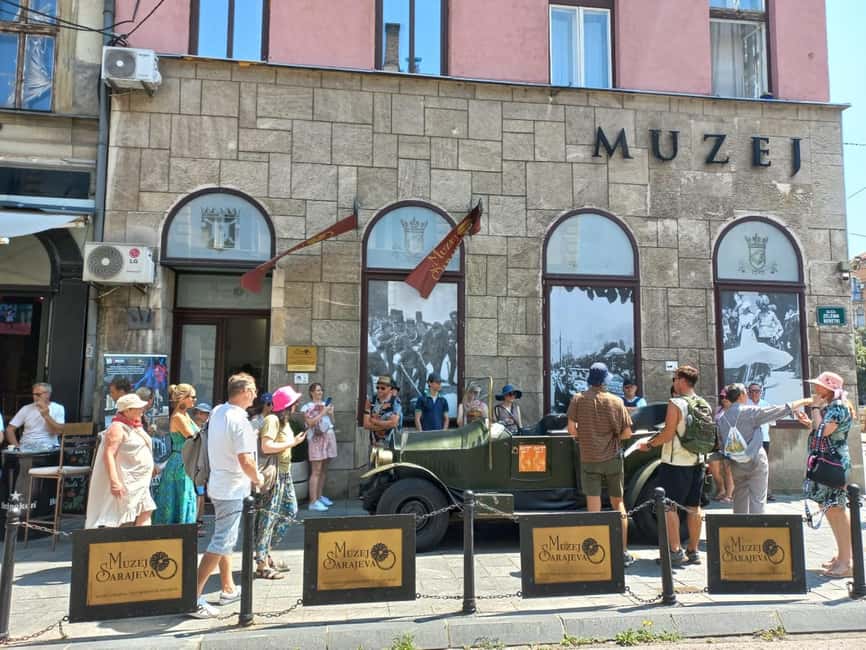
- Local-guided route built around Sarajevo’s most important sights, with context that connects the dots.
- Bosnian coffee and traditional sweets served the authentic local way, with a short tasting break.
- Hands-on copper craft tied to the city’s 500-year tradition, not just a photo moment.
- Faiths and cultures in one walk across churches, mosques, and landmark viewpoints.
- Latin Bridge to the assassination story, explained in a clear, practical way.
- Best panoramic view stop plus a classic end point at Sebilj.
Why this Sarajevo Old Town walk works so well
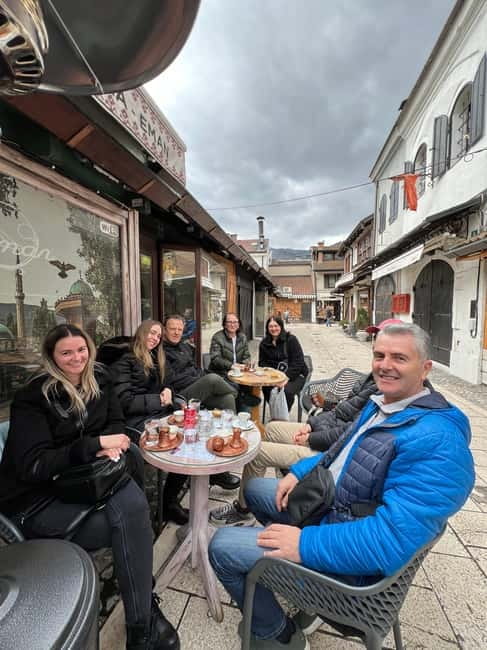
This tour is built for the way Sarajevo actually feels on the ground. You don’t just see monuments. You get the reasons behind them, including the clashes and the coexistence. That matters in Sarajevo because the city’s identity is shaped by big events, but it also lives in daily rituals like coffee and craft.
What I like most for your trip: it compresses a lot of Sarajevo into about 3 hours without feeling like a checklist. You start with the symbolic Eternal Flame, you pass major religious landmarks, and you hit the sites tied to the assassination that changed European history. Then the route pivots toward local culture, where coffee, sweets, and copper craft bring the story back to human scale.
The route has one practical consideration. Because it’s a walking tour, you should plan to stay outdoors for most of the experience, and you’ll be on your feet for a moderate amount of time. If you want lots of long indoor stops, this format may feel a bit too fast.
More Food & Coffee Tours in Sarajevo
- Private Walking Tour, Food Tasting and Bosnian Coffee in Sarajevo
★ 5.0 · 255 reviews - Ultimate Gastro Experience
★ 4.5 · 14 reviews - 🍽️ Sarajevo Food Tour: Eat where the locals eat
★ 5.0 · 10 reviews
Meeting at Vječna vatra and setting the story in motion
You meet in front of the Eternal Flame monument, Vječna vatra, and tours start at 10 am every day. If you book a private group, the guide can arrange a free hotel or agreed-address pickup. This matters because it reduces friction. Sarajevo is easy to get lost in if you’re juggling maps and hills, so starting at a clear landmark is a win.
From the first stop, your guide frames what you’re about to see. The Eternal Flame isn’t just a photo. It’s a symbol that sets the tone for Sarajevo’s 20th-century story, and it gives you a reference point for later stops tied to war and politics.
You also get a style of guiding that focuses on questions, not just lectures. In past experiences with guides like Dijana and Daniella, visitors appreciated clear answers across history, building styles, customs, and gastronomy. For you, that means you can ask, What does this building represent? or Why is this street named this way? and get a real response, not a shrug.
Eternal Flame to the City Market Hall: symbols, trade, and everyday Sarajevo
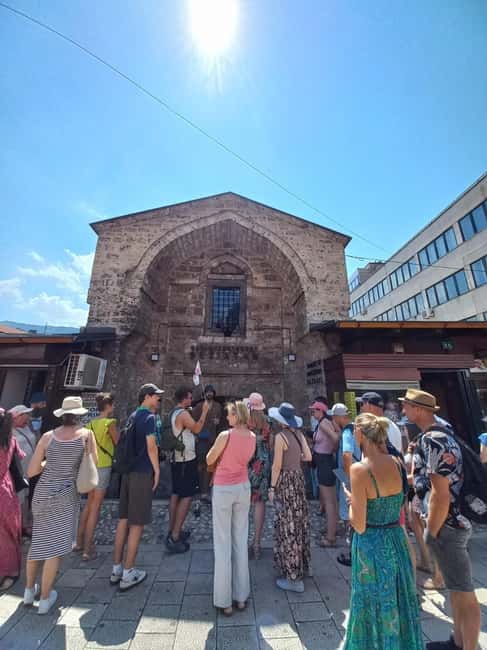
After the Eternal Flame, the tour typically moves toward the City Market Hall area for a photo stop. This is where the city’s public life peeks through. Market spaces in Sarajevo are not just about shopping. They’re part of how locals socialize, trade, and keep traditions visible.
From there, you’ll continue through the old core with more photo stops and commentary, keeping a steady pace. Expect short explanations tied to what you can see, so you don’t need to memorize dates to enjoy the walk.
Cathedral Church of the Nativity of the Theotokos
One of the next key religious stops is the Cathedral Church of the Nativity of the Theotokos. This pause is useful because it lets you understand Sarajevo’s multi-faith identity in a grounded way. Instead of talking about religion abstractly, the tour points to what’s right in front of you.
Where else to eat and drink coffee in Sarajevo:
- Half-Day Grbavica Food Tour in a Small Group
★ 5.0 · 6 reviews - Sarajevo: Bosnian Coffee Workshop with Brewing Lesson
★ 5.0 · 3 reviews - Experience Sarajevo: Bosnian Cooking Class
★ 5.0 · 3 reviews - Traditional Bosnian Cooking Class in Mostar with Lunch and Drinks
★ 5.0 · 16 reviews
Sacred Heart Cathedral
You’ll then reach the Sacred Heart Cathedral for another stop. These consecutive religious landmarks are a strong way to understand Sarajevo as a city where different communities built their own spiritual centers side by side.
If you’re the type who likes to connect architecture to meaning, this section tends to land well. You’ll likely come away with a clearer mental map of the city’s religious geography.
Sarajevo’s Meeting of Cultures: history you can walk through
One of the stops is the Sarajevo Meeting of Cultures landmark area. It’s an idea made physical. You see how Sarajevo’s identity has been shaped by movement, trade, and cultural exchange, even when the political story got messy.
This is also where your guide’s storytelling style matters. A good guide helps you keep both truths in your head: the city’s ability to host different communities and the reality of conflict that later tore through the region.
You’ll also hear about Sarajevo’s shift from its place in the wider European story to its modern role as an Olympic city. The route includes the fact that Sarajevo hosted the XIV Winter Olympic Games in 1984. That’s a helpful counterweight to the darker parts of the narrative, and it gives you a fuller picture of what the city meant beyond headlines.
Latin Bridge and the assassination story (Franz Ferdinand and Sophie)
The tour includes Latin Bridge as a photo stop, with context about the assassination of Archduke Franz Ferdinand and his wife Sophie. The guide explains how that event changed world history and how World War I followed afterward.
For your visit, this stop is valuable because it’s the kind of moment history teachers try to make you imagine. Here, you get to actually stand near the place and follow the logic of why it became so important.
Practical note: this is a photo stop, so you won’t spend hours. But the commentary is the point. You’ll leave with a mental timeline that connects the bridge to the wider European conflict that erupted after.
Emperor’s Mosque and Gazi Husrev-beg Mosque: two different looks, one shared city
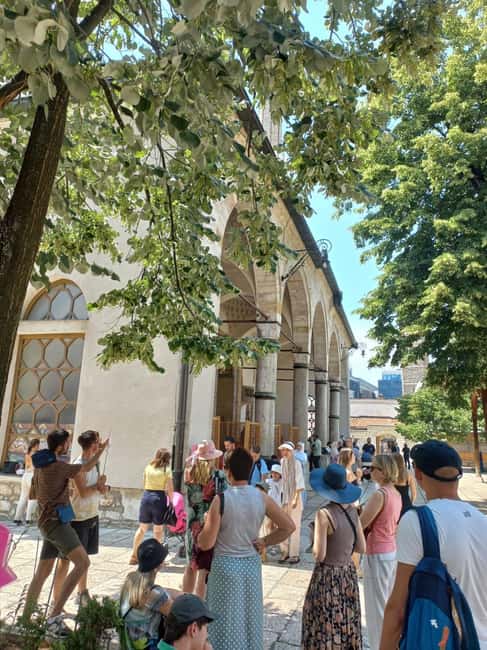
Next come two major mosque stops for photo stops and guided explanations: the Emperor’s Mosque and the Gazi Husrev-beg Mosque.
What’s useful here is variety. You’re not just seeing one style of mosque architecture. You’re also learning why these landmarks matter in Sarajevo’s social and cultural fabric. Even if you know nothing about the city, the guide helps you read the signs and symbols you see in front of you.
If you care about understanding how a city works day to day, this section helps. A mosque is not just a building. It’s a living place of community, and the tour ties that idea back into Sarajevo’s identity.
Morića Han and Sarajevo City Hall: the old town’s public face
After the mosque landmarks, the route includes Morića Han and then Sarajevo City Hall for additional photo stops. These pauses give you a sense of the city’s layers, from old-town gathering spaces to civic landmarks.
Because the tour keeps moving, you get enough context to know what you’re looking at, without turning the day into a slow slog. If you’re short on time, this is exactly the right balance.
That said, if you want long interior time at buildings, you should treat these stops as “see it, understand it, move on.” The tour format is designed for walking and perspective, not deep museum-style visits.
Kazandžiluk and the 500-year copper craft moment
One of the most distinctive parts of this experience is the inclusion of a 500-year-old tradition of copper crafting, including a chance to try it yourself. The itinerary includes a stop in Kazandžiluk, which pairs perfectly with this craft focus.
This is where the tour becomes more than sightseeing. Craft is how culture survives. You can read about copperwork forever, but a hands-on moment turns it into something you remember with your body, not just your brain.
If you’re traveling with kids or you’re the type who likes doing something, this is also a strong reason to book. It breaks up the history stops and gives you a tangible souvenir in the form of a new skill or at least a new appreciation.
Practical tip for you: be ready to handle small mess or wear something comfortable. The tour does not specify details, so you’ll want to follow your guide’s instructions on the day.
Baščaršija and the Bosnian coffee break with sweets
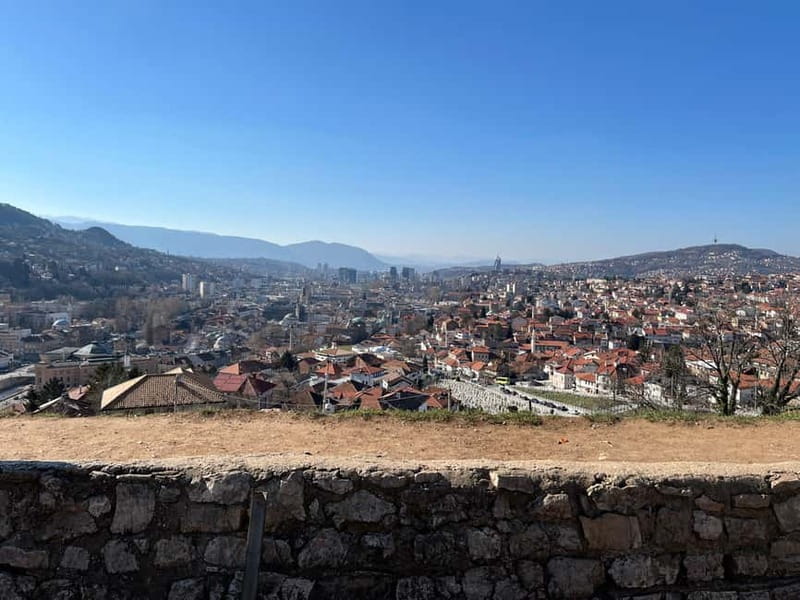
You’ll reach Baščaršija, Sarajevo’s famous old bazaar area, for a photo stop. This is one of those places where the city’s everyday rhythm is most visible. The streets feel built for wandering, and the guide’s route helps you avoid the “I wandered for an hour, I’m not sure what I actually saw” trap.
Then comes the highlight food break: a local café stop for Bosnian coffee and a tasting period of about 20 minutes. This isn’t coffee as an afterthought. It’s part of the culture, prepared and served in the authentic way that locals have used for centuries.
And yes, expect traditional sweets alongside the coffee. Baklava is part of the experience title, and the idea here is that you taste the city the way locals do, not just the way tourist menus do it.
One small consideration: if you’re not a coffee person, you can still benefit from the break. The real value is learning the ritual and tasting sweets that fit the local tradition. Still, if you dislike coffee completely, you may want to confirm what the café serves on the day.
Sebilj and the best panoramic view: ending with scale
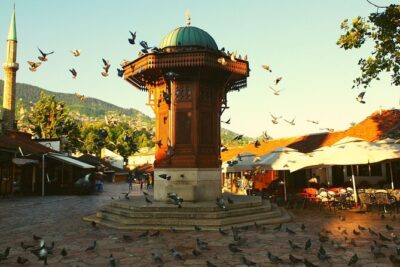
You’ll hit Sebilj for a photo stop, and the tour finishes at Sebilj. Sebilj is a classic Sarajevo landmark, and finishing here is smart. It’s central, recognizable, and it gives you an easy “I’m done, now what?” anchor.
In between, you also get a viewpoint stop with scenic photos on the way and a short time for the panoramic look, about 15 minutes. The tour specifically promises what it calls the best panoramic view on Sarajevo. The goal isn’t just a pretty picture. It’s to help you understand the city’s layout, hills, river bends, and how the old core fits into the bigger picture.
If you only take one view from your Sarajevo trip, plan to treat this part as your moment. Stand still, look around, then check back to the landmarks you passed so you can place them in your mental map.
What the tour is really like on the ground
Here’s the honest way to picture it for your planning. You’ll move through Sarajevo’s key sights at a steady walking pace, with photo stops at nearly every landmark. The guide provides explanations about history, architecture, culture, and everyday customs. You’ll get at least one strong food break with Bosnian coffee and sweets. You’ll also get a craft experience tied to copper work tradition, including a hands-on try.
Because the tour is about 150 minutes to 3 hours, it’s a great match for travelers who want structure. You won’t need to hunt for the important stops yourself. And because it’s a guided walking tour with an English-speaking local expert guide (and multiple languages offered), it’s easier to get answers fast.
Price and value: is $20 per person worth it?
At $20 per person for about 3 hours, this tour is priced like a practical local intro, not a luxury experience. The value comes from what’s included: the guided walking route through major Sarajevo landmarks, Bosnian coffee, and the panoramic view stop, plus the craft element where you get to try copper crafting.
If you were doing this on your own, you’d likely spend time figuring out directions and translations. You might also spend money on separate entry fees or guided help if you want history context for the major sites like Latin Bridge, the mosques, and old market areas. In that sense, $20 is not just about the walking. It’s about buying clarity.
One way to judge fit: if you want a fast, guided, food-and-craft version of Sarajevo Old Town, this price makes sense. If you want full-day independence or deep museum time, you’ll probably prefer a different format.
Who should book this Sarajevo Experiences tour
Book it if you want:
- A walkable old town route that connects landmarks to real stories
- A guided explanation of Sarajevo’s multi-faith and political history
- A food break with Bosnian coffee and traditional sweets
- A hands-on craft moment with copper work
- A panoramic view stop that helps you understand the city’s shape
Skip it if you:
- Want long indoor museum time or extended stays at each building
- Need a fully seated experience or minimal walking
- Prefer to plan everything completely on your own without a guide
Should you book it
I’d book this tour if your Sarajevo days are limited and you want the city to make sense quickly. The combination of history landmarks, the coffee and sweets break, a copper crafting hands-on moment, and that short panoramic viewpoint stop is a smart use of a half-day.
It’s also a good choice when you care about details. The guide-led Q and A style is a big part of why people enjoy it, including guides such as Dijana and Amela. If you like asking questions, you’ll get your money’s worth fast.
FAQ
Where is the meeting point for the tour?
The tour meets in front of the Eternal Flame monument, Vječna vatra.
What time does the tour start?
It starts every day at 10 am.
How long is the Sarajevo Old Town walking tour?
The duration is 150 minutes to 3 hours.
How much does the tour cost?
The price is $20 per person.
What is included in the experience?
It includes a guided walking tour, an English-speaking local-expert guide, Bosnian coffee, and a panoramic view of Sarajevo.
Is there a coffee and sweets stop during the tour?
Yes. There is a local café break for coffee tasting that lasts about 20 minutes, and traditional sweets are part of the experience.
Does the tour skip the ticket line?
Yes, ticket line skipping is included.
What languages are available for the live guide?
The tour offers live guiding in Croatian, English, Serbian, Serbo-Croatian, and Bosnian.
Do I need to walk a lot?
You should expect a moderate amount of walking, so wear comfortable shoes.
What is the cancellation and payment flexibility?
You can cancel up to 24 hours in advance for a full refund, and you can reserve now and pay later.
Newest Sarajevo write-ups
- Sarajevo to Zagreb: One-Way Tour via Jajce, Travnik, Pliva Lake and Watermills★ 5.0 · 3 reviews
- Mountain Village Lukomir Full Day Adventure Tour★ 5.0 · 3 reviews
- Sarajevo E-Bike City Tour★ 5.0 · 3 reviews
- Bosnian Kingdom Capitals: Travnik & Jajce Tour from Sarajevo★ 5.0 · 3 reviews
- Strbacki Buk and Una Waterfalls: Day Trip from Sarajevo★ 5.0 · 3 reviews
- Sarajevo Snowshoeing Adventure★ 5.0 · 3 reviews
- 4 Hours Tara Rafting Trip★ 5.0 · 3 reviews
- PRIVATE Sarajevo Under Siege War Tour★ 5.0 · 3 reviews
Bosnian Food & Coffee, compared.
Private Walking Tour, Food Tasting and Bosnian Coffee in Sarajevo
Read our review →
Traditional Bosnian Cooking Class in Mostar with Lunch and Drinks
Read our review →
Browse the lists this tour appears in