
A Sarajevo food tour works best when it shows you real daily life, not just pretty photos. This one centers on Grbavica, and the guide (like Nermin in recent runs) brings that neighborhood to life with food plus context. I especially like the focus on four different dishes beyond ćevapi, and I love that you get stories you can connect to what you are eating. One thing to consider is the pace: you will walk about 5 kilometers, and it is not a good fit for anyone with mobility limits.
You also get the Sarajevo flavor combo in full: hearty bites, ice-cold drinks, and that moment where you either fall for rakija or decide you like your bravery in smaller doses. The “food and people” angle is real here because the stops are the kind you would miss if you were just hunting for the top-rated menu. The only drawback I can see is that this is not a sit-and-stretch kind of afternoon, and you should plan to eat nothing beforehand.
Key highlights that make this Sarajevo food tour worth your time
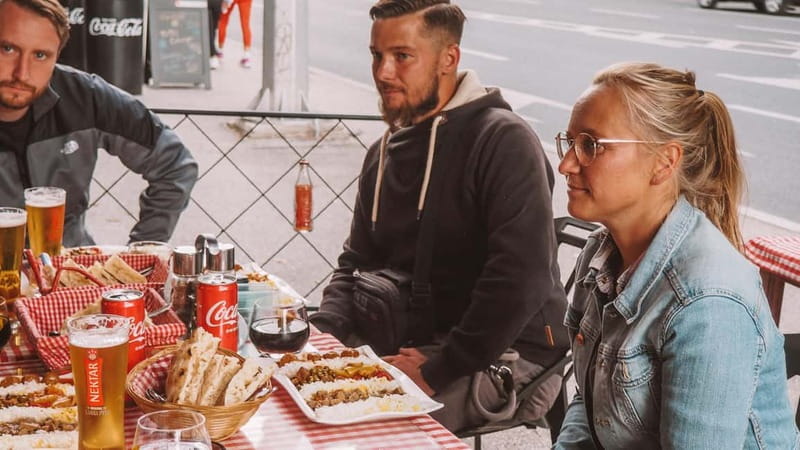
- Four dishes beyond ćevapi, so you do not repeat what you already ordered elsewhere
- Rakija and local drinks, served ice-cold the Bosnian way
- Grbavica’s siege-era resilience, explained while you are still in the neighborhood
- Pijaca Grbavica market + fresh produce, not just restaurant food
- Small group up to 8, which keeps questions and pacing practical
- Stadium time, tied to Željezničar’s frontline past
Why Grbavica is the right area for a Sarajevo food tour
Sarajevo has a “postcard old town” you can walk in a day. But the city is bigger than that, and Grbavica is one of the places where you feel the modern Sarajevo story. It is a neighborhood with a tough past and a working present, so the tour has meaning beyond the table.
Food is the shortcut. When you eat in a neighborhood like this, you learn what people actually choose for lunch and dinner. On this tour, the food is not just Bosnian for tourists, it is Bosnian for neighbors. That matters because you stop thinking of dishes as names on a menu and start thinking of them as habits, comfort, and community.
More Food & Coffee Tours in Sarajevo
- Private Walking Tour, Food Tasting and Bosnian Coffee in Sarajevo
★ 5.0 · 255 reviews - Ultimate Gastro Experience
★ 4.5 · 14 reviews - Half-Day Grbavica Food Tour in a Small Group
★ 5.0 · 6 reviews
Starting at Zgosca’s Stecak replica, then walking into the memorial Sarajevo
You meet at the Replica of Zgosca’s Stecak, and then the tour immediately shifts into a “walk with a purpose” mode. The route includes a stop at Suada and Olga bridge, which helps set the tone for how Sarajevo remembers. After that, the day is built around short walks that connect history and everyday life.
The practical upside: you are never waiting around. You are moving, reading, and eating as the story unfolds. The tradeoff: you do need decent walking shoes and the mindset of a five-kilometer stroll, not a museum trip with frequent seating.
Suada and Olga to murals: how the route keeps the story personal
Along the way, you make a photo stop at the mural of General Jovan Divjak. It is the kind of stop that could be “just a wall” on another tour, but here it supports the bigger theme: Sarajevo rebuilt itself, and Grbavica is part of that.
This is also where the guide’s local connections do real work. Recent guides like Nermin or Numa are praised for knowing routes and people, not just facts. When the route is tight and the guide can point you toward small corners you would never find alone, you end up feeling like you are walking inside the neighborhood rather than around it.
The market stop that changes how you think about Bosnian food
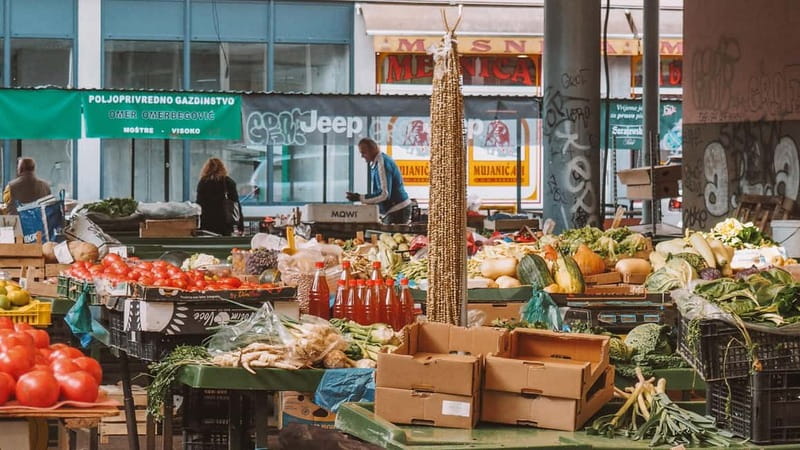
One of the best parts is Pijaca Grbavica Sarajevo, the local market visit. This is where you see produce as part of daily life, not as a decorative garnish. You get food tasting here too, but the bigger value is the sensory contrast. You go from restaurant portions to stall colors and seasonal ingredients, then back to warm, filling food.
You also get a later walk through Dolac Malta, which keeps that market energy going. If you like food tours that teach you how markets influence what people eat, you will enjoy this part. It is also a good reminder that Sarajevo cooking is practical, not fussy.
One drawback to keep in mind: markets can be active and you will be in a walking loop. If crowds are hard for you, plan to go slow during this section and listen to your guide on the route.
Where else to eat and drink coffee in Sarajevo:
- Sarajevo Old Town: Bosnian Coffee, Baklava & Panoramic Views
★ 5.0 · 3 reviews - Sarajevo: Bosnian Coffee Workshop with Brewing Lesson
★ 5.0 · 3 reviews - Experience Sarajevo: Bosnian Cooking Class
★ 5.0 · 3 reviews - Traditional Bosnian Cooking Class in Mostar with Lunch and Drinks
★ 5.0 · 16 reviews
Aščinica and local restaurants: what you are really learning
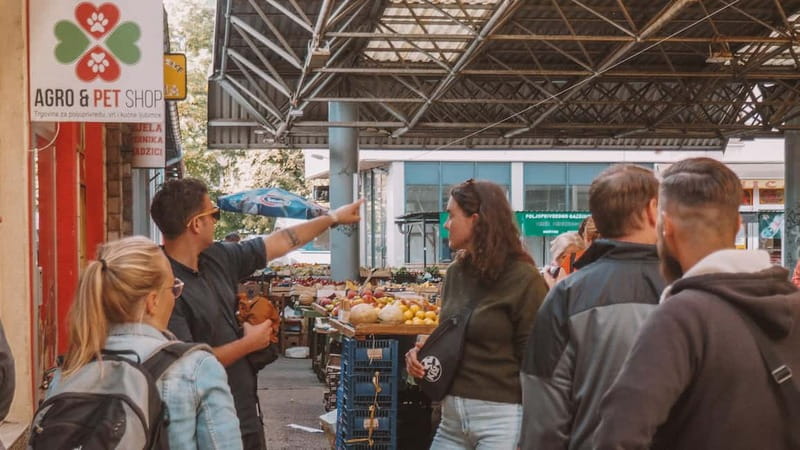
The tour includes time in an Aščinica, a local shop serving home-cooked meals. This is the kind of stop that helps you understand why Bosnian comfort food hits the way it does. You are not just sampling dishes, you are seeing how people structure meals and cravings.
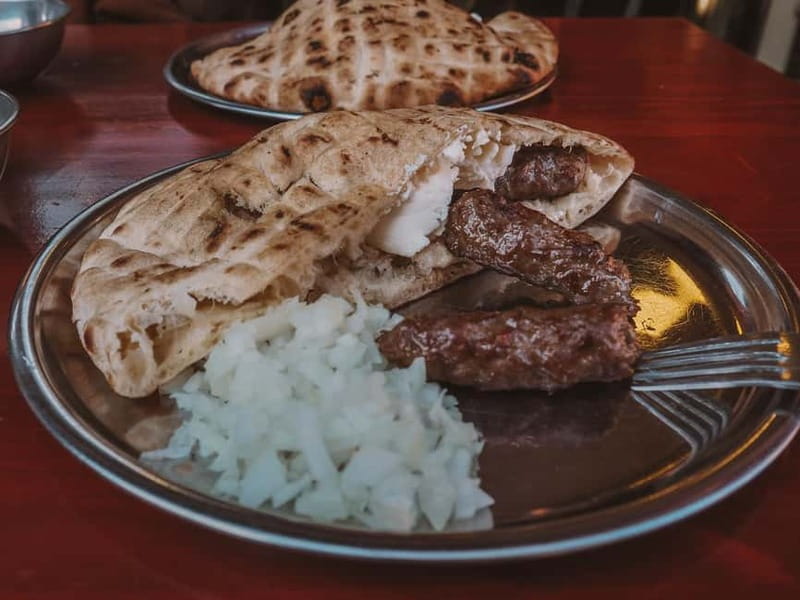
The food list is designed to go beyond the usual order. Instead of relying on ćevapi, you are set up for a range of dishes that includes:
- Beefy burek, a savory pie you will likely see vanish fast at each table
- Soul-warming soups, ideal when you want something filling and not overly heavy
- Melt-in-the-mouth desserts, including a stop at a legendary pâtisserie established in the 1970s
You also get a restaurant tasting stop early in the itinerary. That sequencing is smart. You start with warm, familiar foundations, then move into market flavors and later sweets so the day feels balanced instead of one long sugar sprint.
Burek, dessert, and the “come hungry” reality
If you only remember one tip from this tour, make it this: come hungry. The experience is built around multiple tastings across several stops, and the portions are described as generous.
At the local bakery, you try the iconic burek. Later you get dessert from that pâtisserie established in the 1970s. Those are two points where your expectations can easily run ahead, because burek and cake are both easy to judge on the spot. Here, they are used as anchors. One salty, one sweet, both satisfying, both making the tour feel like a meal rather than a snack parade.
If you are the type who hates waste, do not over-order elsewhere before the tour. You will leave full, and you will be glad you did not spend your appetite twice.
Rakija, beer, and wine: how the drinks fit the food
The tour includes trying the (in)famous Bosnian rakija, along with the option of local beer or wine. Rakija is served ice-cold, and the idea is simple: it complements heavy, savory food.
You get a local bar tasting stop later in the day. This is often where the tour becomes more relaxed. You are past the biggest walking sections, the group is warmed up, and you can ask the easy questions you saved for later. Many guides keep things light, with humor, and still answer questions seriously.
If you want a practical approach: treat rakija like a small commitment. Take a measured sip, see how it feels with the food you just had, then decide if you want another. It is not a contest. It is a taste of local hospitality.
Grbavica’s siege story told while you walk it
The tour is not just a food circuit. It also includes what the neighborhood endured. The guide explains Grbavica’s past and its resilience during the Sarajevo siege, and that context is threaded through the walk.
One of the most important parts is the stadium visit. You tour the stadium area linked with Željezničar, described as once situated on the front lines. Hearing that while you are actually at the place changes the story. You stop thinking of war as a distant timeline, and you start seeing it as an environment that shaped daily movement, safety, and rebuilding.
This section can be emotionally heavy, but it also has hope baked into it. It is about survival and return to routine, and you can feel that in how the guide frames the neighborhood today.
Where the day lands: café stop and an easy finish
After the stadium and bar tasting, the tour continues with a local bakery tasting, then a walk through Dolac Malta, and finishes with a local café food tasting. By the end, you are not just eating more. You are getting a final flavor snapshot of how Sarajevo rounds out an afternoon.
Transportation back to the city is not included, but the finish is described as a roughly 20-minute walk. That is helpful because it gives you control. If you feel like strolling along the river area afterward, you can. If you want to take it easy, you can do that too.
Pace, group size, and what to wear so you enjoy it
This is a small group tour with a maximum of 8 people, and that size matters. It makes it easier for the guide to keep the route smooth and to explain both food and neighborhood history without rushing you through each stop.
You should also expect about five kilometers of walking over five hours. That is enough distance to tire you out if you wear the wrong shoes, but it is not so intense that you cannot keep up if you are generally fit.
Not included luggage rules also matter. Luggage or large bags are not allowed, so travel light. If you are carrying a daypack, keep it small enough to move through narrow streets comfortably.
Price and value: is $81 fair for five-plus tastings and context?
At $81 per person for about five hours, the value comes from two areas.
First, it is not a single meal. You get multiple tastings across different types of places: a restaurant stop, a market stop, an Aščinica home-cooked experience, a bakery, a bar, and a café. That kind of spread is harder to recreate on your own because you need the connections and the timing.
Second, the history component is integrated, not tacked on. The siege-era resilience and the frontline stadium context help explain why Grbavica feels the way it does today. Guides like Nermin or Numa are praised for making the day feel personal, even when the stories are serious.
If you usually enjoy food tours but hate the ones that only sell a shopping experience, this one is more likely to fit you. The focus stays on eating, walking, and learning without turning it into a lecture.
Who this Sarajevo food tour is best for
This tour fits you if you:
- Want a Sarajevo food tour off the tourist path, focused on real neighborhood life
- Already tried ćevapi elsewhere and want the rest of the menu
- Like food tours that include history you can stand next to
- Enjoy small group tours where you can ask questions without feeling lost
It is not suitable for people with mobility impairments, and it is not ideal if you hate walking or want lots of sit-down time. Also, if you have strong dietary requirements, you should let the operator know 24 hours in advance so they can accommodate.
Should you book this Sarajevo food tour in Grbavica?
I think you should book it if you want Sarajevo beyond the old town and you enjoy food that feels like a local meal, not a checklist. The best selling points are the variety beyond ćevapi, the chance to try rakija (with the option to choose beer or wine), and the guide-led balance of neighborhood stories and practical eating.
If you are short on time, love minimal walking, or need more accessibility, look for another style of tour. But if you can handle five kilometers on foot and you want the city’s taste plus its context, this is the kind of half-day you will remember for the right reasons.
FAQ
How long is the Sarajevo Food Tour in Grbavica?
It lasts about 5 hours.
How far will I walk?
You will walk approximately 5 kilometers during the tour.
What is the group size?
The group is small, with a maximum of 8 participants.
Where do we meet?
The starting location is the Replica of Zgosca’s Stecak.
What kinds of food tastings are included?
You get 5 food stops with traditional Bosnian dishes, including burek, soups, dessert from a pâtisserie established in the 1970s, and tastings that also include market food. You also explore an Aščinica.
Is rakija included, or can I choose something else?
Rakija is included as a tasting option, and you can also sip local beer or wine.
Do we visit a market and a stadium?
Yes. You visit Pijaca Grbavica (a market) and you also visit the stadium area tied to Željezničar’s frontline past.
What languages are the tours offered in?
The live guide speaks German, English, Bosnian, Croatian, and Serbian.
Can the tour accommodate dietary requirements?
Yes, but you need to inform them at least 24 hours before the tour.
Is there flexibility if my plans change?
You can cancel up to 24 hours in advance for a full refund, and you can reserve now and pay later.
More Food in Sarajevo
- Eat, Pray, Love Tour
★ 4.5 · 32 reviews - Sarajevo: Eat, Pray, Love Tour – Local Life Experience
★ 4.9 · 13 reviews - Burek Masterclass: Roll, Bake, Eat
★ 4.9 · 91 reviews
More Food & Drink in Sarajevo
- Sarajevo: 4-Hour Food And Craft Tour
★ 5.0 · 70 reviews - Sarajevo: Sarajevo City Market, Old Town Food Tasting Tour
★ 4.9 · 69 reviews - Sarajevo: Food And Crafts tour
★ 4.9 · 23 reviews - LUKOMIR VILLAGE HIKE & TREK TOUR (nature, hike, food & panorama)
★ 5.0 · 11 reviews
Newest Sarajevo write-ups
- Sarajevo to Zagreb: One-Way Tour via Jajce, Travnik, Pliva Lake and Watermills★ 5.0 · 3 reviews
- Sarajevo E-Bike City Tour★ 5.0 · 3 reviews
- Mountain Village Lukomir Full Day Adventure Tour★ 5.0 · 3 reviews
- Bosnian Kingdom Capitals: Travnik & Jajce Tour from Sarajevo★ 5.0 · 3 reviews
- Strbacki Buk and Una Waterfalls: Day Trip from Sarajevo★ 5.0 · 3 reviews
- Sarajevo Snowshoeing Adventure★ 5.0 · 3 reviews
- Sarajevo Old Town: Bosnian Coffee, Baklava & Panoramic Views★ 5.0 · 3 reviews
- 4 Hours Tara Rafting Trip★ 5.0 · 3 reviews
Bosnian Food & Coffee, compared.
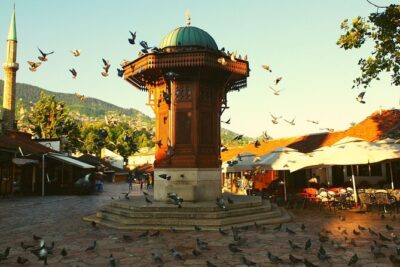
Private Walking Tour, Food Tasting and Bosnian Coffee in Sarajevo
Read our review →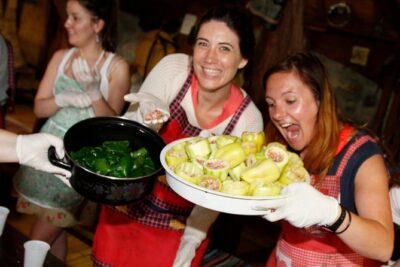
Traditional Bosnian Cooking Class in Mostar with Lunch and Drinks
Read our review →
Browse the lists this tour appears in