
Reviewed · JAJCE WATERFALL TOURS
CENTRAL BOSNIA | A medieval tour (Jajce + Travnik + Pliva lakes)
This tour is interesting because it strings together medieval towns and Bosnia’s dramatic nature in one long day. You start in Sarajevo, then hop into the story of kings, fortresses, and Ottoman-era influence, before ending with the Pliva Waterfall and lake-side scenery.
I particularly like how the day balances architecture and outdoors. You get two very different towns to walk through, plus real time at Pliva Lakes for relaxing, kayaking or swimming if you feel like it, and lunch sampling along the way. And I also like the small-group feel, with a guide named Muki earning praise for both his local knowledge and his smooth driving.
One consideration: it runs about 10 hours, and part of it depends on weather, since the tour needs good conditions for the lakes and outdoor stops.
Key points to know before you go
- Small group (max 5 travelers), so you spend less time waiting around
- Old towns plus fortresses, including Travnik’s old town sector and Jajce’s fortress area
- Sarena Džamija (Multi-Colored Mosque), built in 1757 with standout exterior decoration
- Pliva Waterfall and Pliva Lakes, plus the watermills at Mlincici along the river
- Mostly free stops, with entry tickets only noted as not included for some fort/fortress areas
- English tour, with bottled water included and a mobile ticket
A 10-hour medieval loop from Sarajevo that actually fits together
The day is designed like a proper route, not a random collection of stops. You start at 8:00 am at Đulagina 2, Sarajevo, and the tour ends back at the same meeting point. With an approximate 10-hour duration, you’re looking at a full day, but the timing is realistic if you like moving between places and then slowing down when it’s time for nature.
The small group size matters more than people think. When there are only up to 5 travelers, your guide can keep things organized without turning every stop into a waiting game. If you enjoy asking questions and getting quick context while you’re walking, that’s where tours like this deliver.
Muki, the guide mentioned in feedback, is specifically called out for being great, with both strong local knowledge and excellent driving. That’s not a small detail on a long day. In this part of Bosnia, comfort and timing can make the difference between a day that feels smooth and one that feels like constant rushing.
Other trips up to Jajce:
- From Sarajevo: Travnik, Jajce, Pliva Lakes & Watermills Trip
★ 4.9 · 519 reviews - From Sarajevo: Jajce, Travnik, Pliva Lake, & Watermills Tour
★ 4.8 · 317 reviews - Jajce, Travnik and Pliva watermills – Day Tour from Sarajevo
★ 5.0 · 295 reviews
Travnik Old Town and the Kaštel fortress vibe
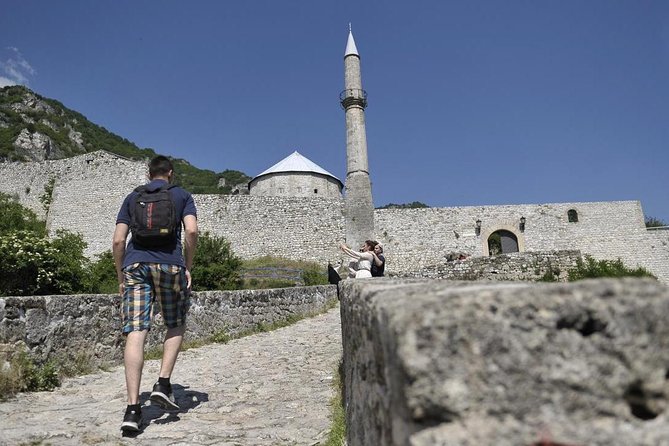
The first real historical chapter of the day is the Old Town area of Travnik, tied to the wider medieval region known as the župa Lašva within the medieval Bosnian Kingdom. The area is first mentioned in connection with Bela IV of Hungary in 1244. That gives you a clear medieval anchor early on, before you even get to the most eye-catching sights.
Travnik is described as one of the fortified towns in the region. The key link here is Kaštel, which is the fortress area that corresponds to today’s old town sector. When you’re there, think of it like a living map of layers, where later periods build on earlier power centers.
Another useful detail: Travnik’s story intersects with Ottoman conquest history. Travnik itself is first mentioned by the Ottomans during their conquest of nearby Jajce. Even if you’re not a trivia person, this helps your brain connect the dots between towns, instead of treating each stop like a standalone postcard.
This stop is also listed with free admission time, so it’s a good opening segment if you want to get into the walking early without worrying about ticket friction. If you’re the type who likes to start strong and build momentum, Travnik sets the tone well.
Sarena Džamija, a 1757 mosque with unusual details to look for
Next comes the Sarene Džamija, sometimes called the Multi-Colored Mosque. Built in 1757, it’s hard to miss because of its bright colors and intricate exterior artwork. The guide context that’s useful here is that it’s described as one of the most beautiful mosques in the Balkans, and also the only one in Bosnia that people believe stores hairs of the prophet.
Even if you don’t follow that belief personally, it’s a fascinating local detail because it tells you something about how communities attach meaning to buildings. And the exterior isn’t just decorative for decoration’s sake. There are unusual flower motifs painted on the outside, and carved wood details that reward close looking.
One more practical point you can use on-site: the prayer room is positioned on the first floor, with the ground floor used for business. That’s a different arrangement than you might expect, and it makes the building feel both religious and everyday at the same time.
This stop is free admission, so it’s a low-stress, high-reward cultural break inside the loop. If you like architecture that you can read with your eyes, give yourself a few minutes longer than you think you need here.
Tvrdava Stari grad, medieval fortifications with unclear builders
After the mosque, you move to Tvrdava Stari grad, the Old Fort. What makes this stop interesting is that it’s presented as one of the most beautiful and best preserved medieval fortified buildings in Bosnia, yet some details are still uncertain.
There’s no record of the exact year and length of construction, or who the builder was. Historians generally place construction in the second half of the 14th century or the first half of the 15th century, and there’s an educated assumption that the original builder could have been King Tvrtko II Kotromanić. Another possibility mentioned is King Stjepan Dabiša.
That uncertainty is not a downside, it’s part of the charm. When you stand inside a fort like this, you’re not just looking at one moment in time. You’re watching a structure that survived centuries and still carries historical questions.
The caution here is the ticket detail: admission is not included for this stop. So it’s worth going with a bit of flexibility in your budget for fort entry, depending on what the operator says day-of. The payoff is that the fort is described as showing later historical periods as well, so your walk becomes a lesson in how styles and control change over time.
More around Travnik and the Pliva lakes:
- From Sarajevo: Travnik, Jajce, Pliva Lakes & Watermills Tour
★ 5.0 · 213 reviews - Jajce, Travnik, Pliva lake and Watermills Tour
★ 5.0 · 104 reviews - Travnik, Jajce & Pliva Lakes Day Tour From Sarajevo (fees Incl.)
★ 5.0 · 50 reviews - Sarajevo: Jajce Waterfall, Travnik & Pliva Lake Tour
★ 5.0 · 40 reviews
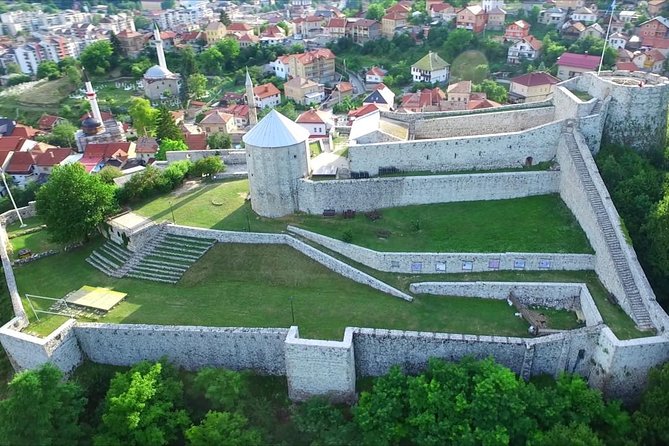
Jajce Fortress, a multi-century fort complex above town
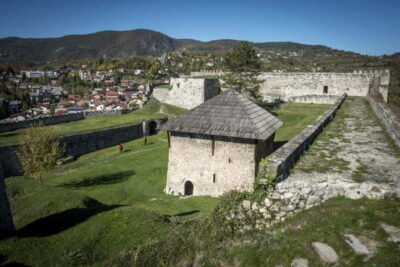
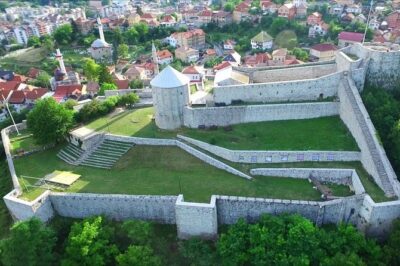
Jajce’s fortress sits above the town at an altitude of 470 meters, inside a medieval city complex that dates back to the 13th century. This is the kind of place where your first reaction is usually, wow, it’s dramatic. Your second reaction is, okay, the structure is layered.
The fortress is described as having been constructed over several centuries and encircling the architectural remains of a mid-15th century castle. That means you’re not only seeing walls. You’re seeing the idea of a defensive system adapting as time passed.
A standout detail to look for is the portal with the royal coat of arms on the southwest side of the fortress. The portal is tied to the era of Tvrtko II and King Stjepan Tomasevic, who moved the royal court to Jajce in 1421. Even a quick read of that info helps you understand why the site matters beyond its view.
Like Tvrdava Stari grad, the fortress stop lists admission as not included, so plan for possible entrance fees. Still, from a value standpoint, it’s one of those places where you get a lot of sight time because the views and the fortress layout do the storytelling.
Pliva Waterfall and the lakes, where you actually get to breathe
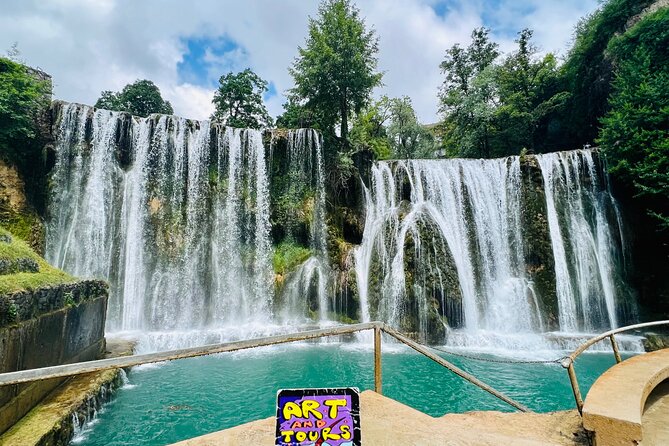
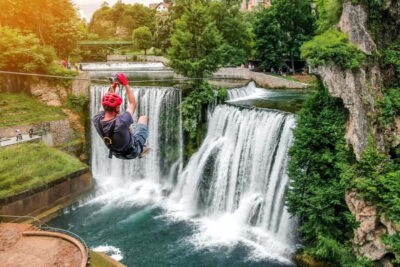
Then the tour shifts gears from stone and power to water and pace. The Pliva Waterfall sits at 17 meters and is right in the center of Jajce. It’s described as one of twelve most beautiful waterfalls in the world, and it has a very specific claim to fame: it’s the only waterfall in the world described as creating an estuary where the Pliva River meets the Vrbas River.
Even if you ignore the superlatives, the practical point is this: it’s easy to access and dramatic. You get about 30 minutes, which is just enough to stand close, look down from above if possible, and take a few photos without feeling like you’re wasting time.
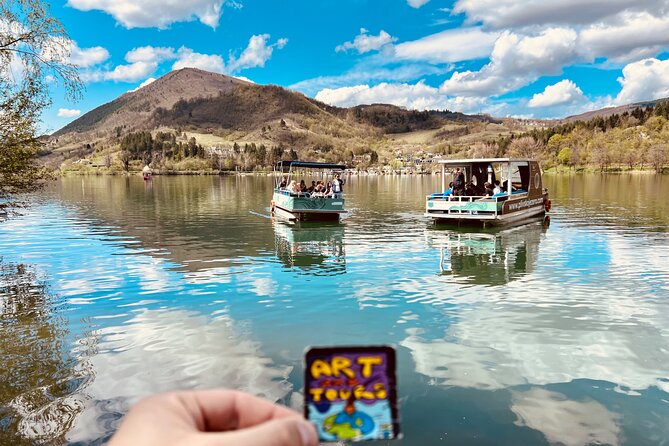
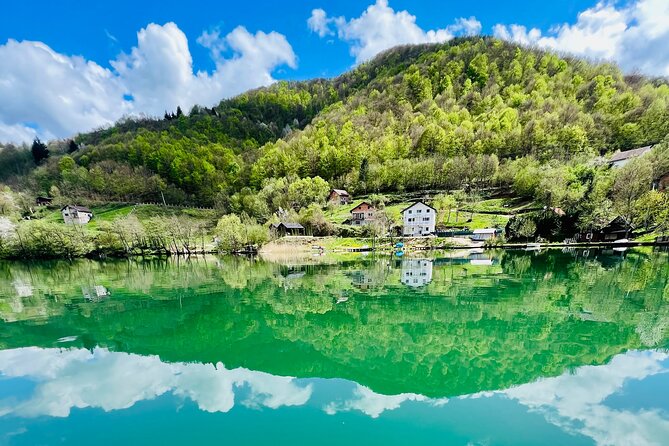
Immediately after, you go to Pliva Lakes, the Great and Small Lakes a few kilometers from Jajce. This is where the tour becomes more of a break than a history walk. The lakes offer recreational opportunities like fishing, kayaking, canoeing, swimming, volleyball, biking, and walking. There are also public barbecue facilities along the lakeside for picnics.
You might not do every activity, but you’ll appreciate the flexibility. Some days, a tour tries to cram in constant movement. Here, you’re given a full about 1 hour at the lakes, which is long enough to sit, cool off if the weather allows it, and enjoy the water without rushing.
Pliva Waterfall is a quick hit. Pliva Lakes is the reward.
Mlincici watermills, where the walk feels like a storybook break
The final stop is Mlincici, a stretch along the Pliva River where watermills draw visitors down the way from the big waterfall in town. The mills are no longer used for actual milling, but they still add a playful, historic atmosphere.
The description you’ll get on-site frames them like quaint structures that feel slightly magical, even though they are straightforward and functional in origin. The short version: you move from the open-water views into a human-scale river area, where the sound of water and the look of old mill buildings make the day feel like it slows down at the end.
This stop is listed at about 1 hour with free admission. It’s also a great place to reset your energy for the ride back. If your feet are tired from fort steps and old-town walking, the river route helps, because it’s more about strolling than climbing.
Value check: what you pay for, and where ticket costs may show up
The price is $90.31 per person for a full day of guiding plus transport from Sarajevo. You’re not just buying a ride. You’re paying for a structured itinerary with a plan, an English-speaking guide, and time at a mix of cultural and natural highlights.
You also get practical extras: bottled water is included, and you’ll have a mobile ticket. You’re not stuck printing anything or guessing where to go.
The key value detail is the ticket split. Most of the stops are marked with free admission, including Travnik old town, Sarena Džamija, Pliva Waterfall, Pliva Lakes, and Mlincici. The ones specifically marked as not included are Tvrdava Stari grad and the Fortress of Jajce. So your out-of-pocket cost, if any, should mostly be those fortress entry fees.
In other words, the itinerary is built so you get plenty without drowning in ticket costs. If you like forts and view points, you’ll likely feel the extra entry is worth it. If not, you can still enjoy the rest of the day comfortably because the itinerary keeps the rest free.
Who this tour suits best, and who should think twice
This trip is best for you if you want a medieval-focused day with real pacing, not just a long list of photos. You’ll enjoy it if you like walking in old towns, reading what buildings meant in their time, and then finishing with a nature break at the lakes.
It’s also a good fit if you appreciate small groups. A max of 5 travelers tends to make the guide’s explanations feel more connected to what you’re seeing, and it reduces the chance that you’re constantly waiting.
Who should think twice? If you hate long days, this one may feel like a workout. It’s about 10 hours, with plenty of outdoor time and several walking segments. Also, because the experience requires good weather, you should expect it to be rescheduled or refunded if conditions are poor.
Should you book Central Bosnia, Jajce plus Travnik plus Pliva Lakes?
If you like the idea of a guided medieval circuit that ends in real water scenery, I think you should book this. The strongest reasons are the mix of old towns, forts, and Pliva nature, plus the small group size that keeps things efficient. The praise for Muki, including his driving and his command of the area, is exactly what you want on a long day.
My main “wait and think” signal is the fort entry factor, since Tvrdava Stari grad and the Fortress of Jajce are the only stops labeled as not included. If you’re comfortable with that, you’ll likely feel this is good value for time and variety. If you prefer only completely free admissions, you might still enjoy the mosque and lakes, but you would be skipping the two most fortress-heavy moments.
Overall, it’s a smart way to see a chunk of central Bosnia in one day, with the right balance of history and fresh air.
Newest Sarajevo write-ups
- Sarajevo to Zagreb: One-Way Tour via Jajce, Travnik, Pliva Lake and Watermills★ 5.0 · 3 reviews
- Sarajevo E-Bike City Tour★ 5.0 · 3 reviews
- Mountain Village Lukomir Full Day Adventure Tour★ 5.0 · 3 reviews
- Bosnian Kingdom Capitals: Travnik & Jajce Tour from Sarajevo★ 5.0 · 3 reviews
- Strbacki Buk and Una Waterfalls: Day Trip from Sarajevo★ 5.0 · 3 reviews
- Sarajevo Old Town: Bosnian Coffee, Baklava & Panoramic Views★ 5.0 · 3 reviews
- Sarajevo Snowshoeing Adventure★ 5.0 · 3 reviews
- 4 Hours Tara Rafting Trip★ 5.0 · 3 reviews
Jajce Waterfall Tours, compared.
Jajce, Travnik and Pliva watermills – Day Tour from Sarajevo
Read our review →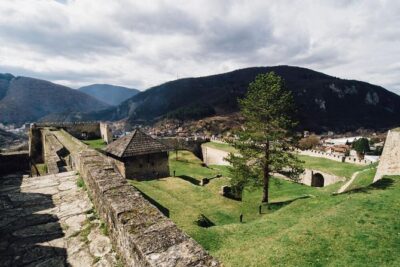
Travnik, Jajce & Pliva Lakes Day Tour From Sarajevo (fees Incl.)
Read our review →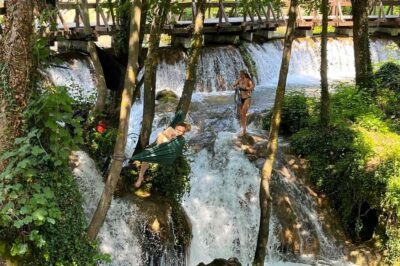
Browse the lists this tour appears in