
Reviewed · FULL-DAY
Best of Sarajevo – Ultimate Full-Day Experience
Sarajevo can feel like it has layers you can see at street level, and this full-day route is built for that. You move from Ottoman-era corners to Austro-Hungarian moments, then you end up in the places that explain the city’s modern story. It is a lot of ground, but the day is broken into short stops plus a few longer breaks for food and coffee.
I love that it mixes the familiar highlights with smaller details that help you understand how Sarajevo got its name and how different communities lived side by side. I also like the hands-on parts, especially the Bosnian coffee and burek tastings that actually teach you what you are eating, not just where to stand for a photo.
One heads-up: this is a long day, with many quick, sometimes slightly rushed-feeling stops, and the driving portions (especially toward the end) may not be your favorite part if you prefer mostly walking.
Key highlights and why they matter
- Tons of Sarajevo in one day, without needing to plan transport between far-apart sights
- Short, focused stops that give you context fast, not just a list of landmarks
- Food and coffee breaks included, including baklava with coffee and a burek tasting
- Trebević Cable Car plus Bob Trail walk, good views and a memorable change of pace
- Faith sites from multiple traditions, all shown as part of the same city fabric
- War history stops, including Sniper Alley and the Tunnel of Hope, for real context
Why this best-of Sarajevo day works so well
This tour is interesting because it treats Sarajevo like one continuous story, not a set of isolated attractions. You start where the city’s modern headlines began, you move through religious and civic landmarks that shaped daily life, and you finish with the war sites that explain why Sarajevo remembers so intensely.
It also keeps things practical. There are many quick stops where you can step off the bus, learn what to look for, and keep moving. Then there are the parts you will actually taste and use, like Bosnian coffee with baklava and a traditional lunch tasting plus a burek tasting. For me, that mix is the sweet spot on a first visit.
Group size is kept small, with a maximum of 15 people. In a city where some sights are tightly packed, that matters. You are less stuck behind crowds and more likely to hear the guide without leaning your neck toward someone else’s shoulder.
More around Sarajevo to weigh up
- From Sarajevo: Full-Day Hike to Lukomir Village
★ 5.0 · 90 reviews - From Sarajevo: Full-Day Hike to Lukomir Village
★ 5.0 · 59 reviews - From Sarajevo: Medjugorje Pilgrimage Full-Day Tour
★ 5.0 · 42 reviews
Starting at Latin Bridge, then learning Sarajevo from street-level clues
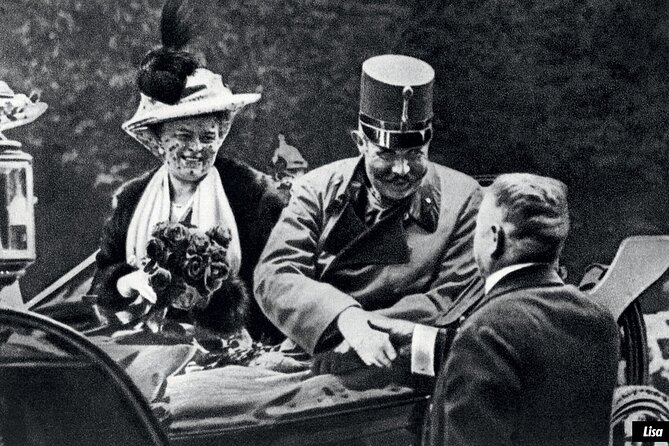
You kick off near Latin Bridge, and you get a short walk that connects the bridge name to Sarajevo’s most famous historical moment. Even if you do not know the details yet, you will leave with a clearer sense of why this is not just a photogenic crossing.
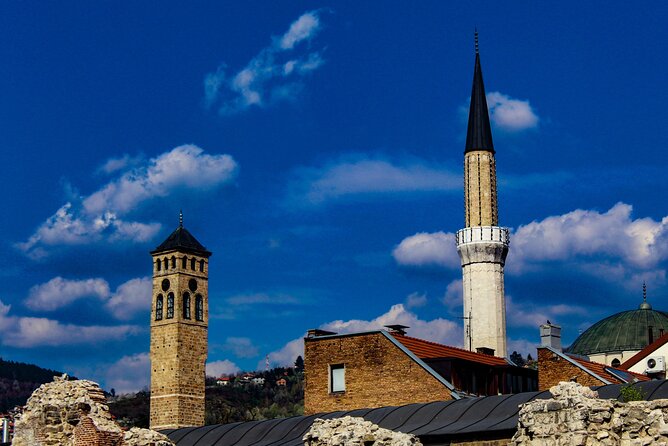
A few minutes later, you head to the Emperor’s Mosque, which is one of the oldest mosques in Sarajevo. The point here is not only the architecture. It is how the city’s name and identity formed through time, with different influences layered into everyday life.
Then comes the quieter stop, Jedileri, the Tomb of the Seven Brothers. It is brief, but it is the kind of memorial you will remember because it feels calm and local, with legends woven into the story. If you like places that are less about spectacle and more about meaning, this is a nice pause.
From there, you get Church of Saint Anthony of Padua. Sarajevo’s religious scene is not one style. It is different faiths sharing the same streets. This short visit helps you see Catholic heritage as part of the same neighborhood mix, not as a separate world.
Beer history, the view break, and Trebević Cable Car reality check
After the religious landmarks, you transition to something more everyday and surprising: Sarajevska Pivara, the history of the first brewery in the Ottoman Empire. That stop is short, but it adds a human detail. You see that the city’s story is not only about religion and politics. People built trades too.
Next is Sarajevska žičara, the Trebević Cable Car. This is a key moment because it changes the energy of the day. You get a ride with big city-and-hills views, and it is one of those stops that makes you glad the tour includes a break from pure walking.
Important practical note: the cable car entry is not included in the base price. You will need the separate entry package that lists the cable car as part of it. If you hate surprise costs, plan for that 30€ package early, so the day stays smooth.
Once you reach the top area, you walk Trebević Bob Trail, a historic bobsled and luge track decorated with graffiti art. Expect a gentle walking segment that feels more modern and playful than the earlier memorial stops, and that contrast is a good thing on a long day.
The House of Spite and Sarajevo City Hall, tiny stories and big symbols
Back in the old-town flow, you stop at the House of Spite, sometimes described as a quirky story of a house that had to be moved brick by brick. It is quick, but it gives you a taste of local humor and stubborn problem-solving. That matters in Sarajevo, because so much of the city’s narrative is heavy.
Then there is Sarajevo City Hall. The entry is listed as not included, so you likely focus on the exterior and the nearby views rather than a full interior visit. Still, it is a good civic landmark to look at while your head is already full of earlier history.
Somewhere quieter after Sarajevo:
- Sarajevo: Mostar, Konjic, Blagaj Tekke, Pocitelj & Waterfall
★ 4.9 · 1,666 reviews - Fall of Yugoslavia, Sarajevo War Tour with Tunnel of Hope Museum and Frontlines
★ 5.0 · 1,314 reviews - Sarajevo: Grand Walking Tour Through Time and Cultures
★ 4.8 · 1,236 reviews - Sarajevo: Mostar, Konjic, Sufi House, Pocitelj & Kravice Falls
★ 5.0 · 1,179 reviews
Bascarsija and the included Bosnian coffee and burek tastings
If you only had time for one part of the day to feel like you are living in Sarajevo, it is Bascarsija. The centerpiece is the included coffee break, and you get a Bosnian coffee degustation with baklava. This is not just sugar and caffeine. The point is to learn how locals think about coffee culture, where it fits in daily life, and how it is served.
You then shift into Kazandžiluk, a craft-focused section. The tour gives you time to understand traditional metalwork and old crafts that still exist. You are not watching a factory. You are seeing the idea of keeping skills alive.
Next is Bravadžiluk Street with the burek degustation, a traditional food tasting where you learn how it is made. If you have never tried burek, this is a great first bite because it is served as a learning moment. And if you have tried it before, you can compare textures and flavors you might not have noticed on your own.
Sebilj Fountain and Morica Han, Ottoman-era spaces that feel real
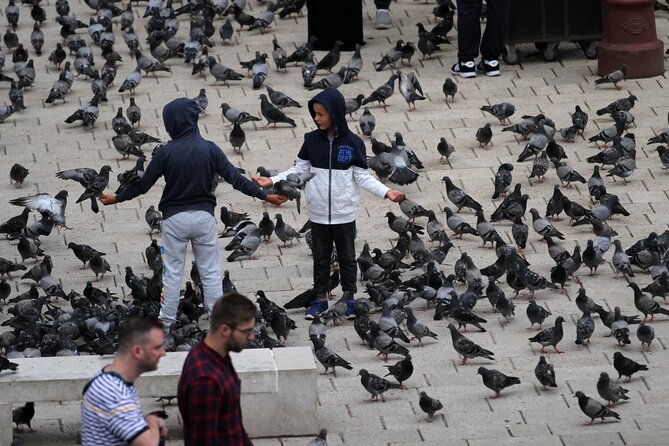
You pause at Sebilj Brunnen, the iconic fountain in Sarajevo’s center. It is one minute, but those one-minute moments are useful. They give you a visual anchor for where you are and where you are headed next.
Then you step inside Morica Han, an Ottoman inn. This is a short visit, but it has that distinct enclosed-historical feel you cannot get from just looking at buildings from the street. If you like architecture that tells stories through shapes and materials, this stop will land well.
Islamic life in Sarajevo: Gazi Husrev-beg Mosque and the Meeting of Cultures
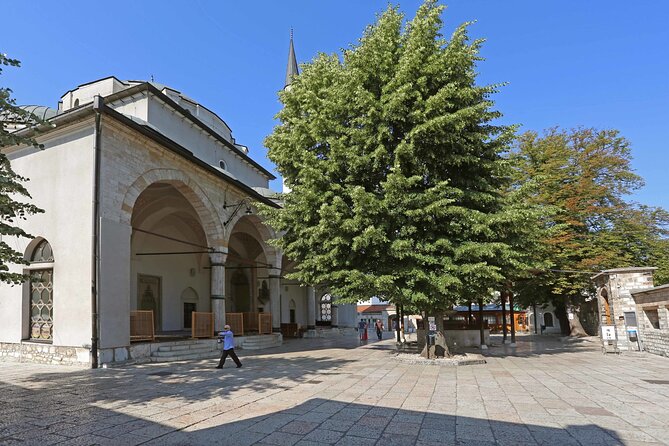
You get another major religious stop with Gazi Husrev-beg Mosque. Entry is not included, so you may focus more on the exterior and courtyard areas depending on what is covered by your entry package. Either way, it is an important moment because the tour frames it as the epicenter of local Muslim life.
A couple of minutes later, you stand at the Sarajevo Meeting of Culture spot, where East meets West in the city’s imagination. This is brief, but it helps you connect the religious and cultural landmarks you have already seen into one idea: Sarajevo has always been a junction.
Jewish, Catholic, and Orthodox Sarajevo, three faiths on one route
From there, you visit the Jewish Museum of Bosnia and Herzegovina. Entry is not included, and it is tied to the paid 30€ package. The stop centers on the Sarajevo Jewish community and the Sarajevo Haggadah. If religious history matters to you, make sure you plan time and budget for the entry so you do not rush through this part.
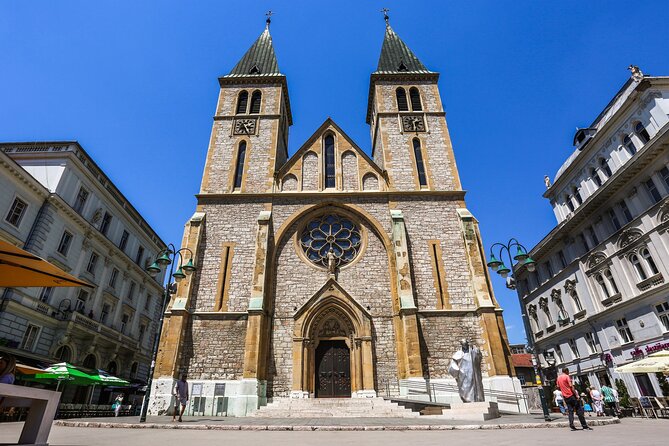
Then you head to Katedrala Srca Isusova, the Catholic cathedral. This one is listed with free admission, so you can likely spend more time inside than at the paid-entry sites.
Finally, you see the Serbian Orthodox Cathedral, Sarajevo’s largest Orthodox church with impressive domes. Again, entry is not included, so you may view it from outside or with limited access depending on what the package covers that day. Still, it is one of the skyline moments you will remember when you look back at Sarajevo afterward.
Sniper Alley and the Tunnel of Hope, the war history section you cannot skip
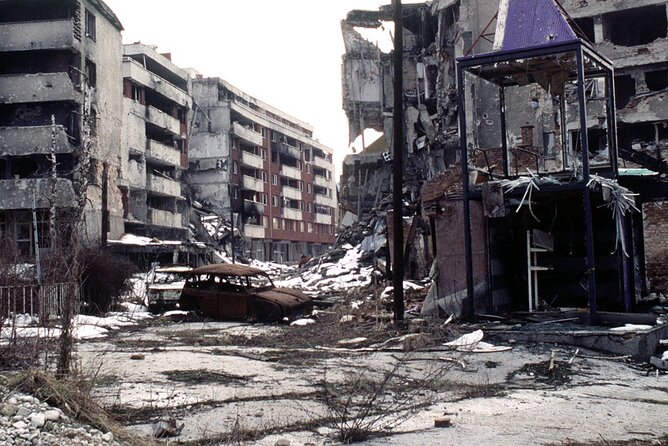
Now the tour shifts from daily-life landmarks to the places that explain siege-era Sarajevo. First up is Sniper Alley, where the drive gives you a look at one of the most dangerous streets from the Siege of Sarajevo. It is brief, but it hits hard. Even from a vehicle, you will understand why this is a preserved memory site.
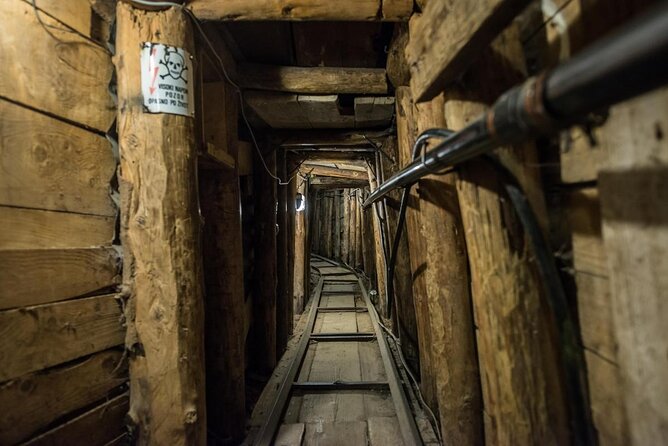
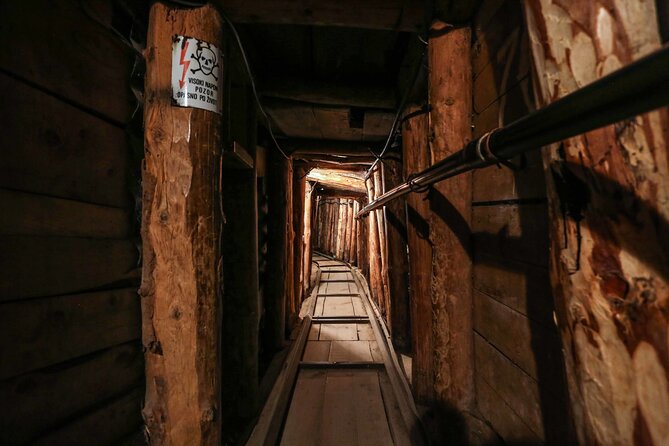
Then comes Sarajevo War Tunnel, also known as the Tunnel of Hope. This is the long stop on the back half, with about an hour allocated. The tunnel museum entry is not included in the base price and is part of that 30€ entry package.
This part is valuable because it turns abstract history into something physical. You see a lifeline and understand why survival depended on moving people and supplies. If you are traveling with anyone who tends to skip war history, try to convince them here. The tunnel makes the story concrete.
Food and pacing: what this means for how you experience the day
The rhythm is the key to enjoying this tour. You will do many short stops, often 3 to 15 minutes, and then you get longer blocks where food takes over, like the coffee break and burek tasting, plus a traditional lunch tasting.
That pacing has two effects. First, you will get a fast orientation to Sarajevo’s geography. Second, you have to be okay with moving before you are fully tired, not settling into long visits at every site.
If you want the day to feel better, wear comfortable shoes and bring water. Also, do not plan anything tight afterward. Even if some stops are brief, the mental load adds up, especially once you get to the war history section.
The guide factor, Tarik and why it matters on a complex route
One of the standouts from the experience is the guide, specifically a guide named Tarik. The tone that comes through is that he sets a pace that works, includes the full list of stops, and adds items people request. You also get an impartial historical approach, which is a big deal on a route that touches politics, faith, and conflict.
There is one caution from the same pattern: some people do not love the driving and the last portion of the tour. So if you are the type who loves walking and hates being seated, keep your focus on the stops that are still coming up, because the tunnel portion is usually the moment the day becomes most meaningful.
Price and value, what you really pay for
The base price is $84.11 per person for about 7 to 8 hours, with an air-conditioned vehicle included. That is already decent value because you get several included food moments: Bosnian coffee with baklava, plus another included traditional food tasting lunch and burek dégustation.
You also get a mobile ticket and the tour is offered in English. With a maximum of 15 people, this is not a giant bus situation.
Then there is the separate entry fee package of 30€ per person for items like the cable car, Bey’s mosque, synagogue, Orthodox Church, and the tunnel museum. In other words, your true cost is the base price plus that 30€ package if you want all the covered entry parts.
If you are trying to travel on a tight budget, double-check that you are comfortable paying the package. If you are okay with it, the value improves because the big “ticket moments” are part of that fee.
Who should book this tour, and who might want to choose something else
This is a strong fit if you:
- Want a first-time overview of Sarajevo with a mix of history, faith landmarks, and war context
- Like food tastings and short, guided lessons that help you understand what you are seeing
- Prefer a small group size and a guide who keeps things moving without forgetting the basics
It may not be ideal if you:
- Hate long days and quick stop pacing
- Want a strictly walking-focused itinerary with minimal driving
- Are traveling with a strict budget that cannot handle the separate entry package
Should you book Best of Sarajevo, Ultimate Full-Day Experience?
Yes, if you want the most efficient way to see a lot of Sarajevo in one day and you are comfortable with a mix of quick stops and two or three bigger, more memorable moments. The included coffee and food experiences make it feel like more than just sightseeing, and the war history section gives the day weight.
I would book it especially if you like having a guide stitch the city together for you. With Tarik’s kind of pacing and impartial framing, the day tends to feel organized, not chaotic.
FAQ
How long is the Best of Sarajevo full-day tour?
It runs about 7 to 8 hours.
What time does the tour start, and where is the meeting point?
The start time is 9:00 am at Sarajevo Insider – City Tours and Excursions, Zelenih beretki 30, Sarajevo 71000, Bosnia and Herzegovina. The tour ends back at the meeting point.
How much does it cost?
The price is $84.11 per person.
Is the tour offered in English?
Yes, it is offered in English.
What is included in the price?
Included items are Bosnian coffee with baklava tasting, an air-conditioned vehicle, and a traditional food tasting lunch.
What entry fees are not included?
The entry fee package is 30€ per person and includes the cable car, Bey’s mosque, Synagogue, Orthodox Church, and Tunnel Museum.
Is there a maximum group size?
Yes, the maximum number of travelers is 15.
Does it require good weather?
Yes, it requires good weather. If canceled due to poor weather, you will be offered a different date or a full refund.
Newest Sarajevo write-ups
- Sarajevo to Zagreb: One-Way Tour via Jajce, Travnik, Pliva Lake and Watermills★ 5.0 · 3 reviews
- Sarajevo E-Bike City Tour★ 5.0 · 3 reviews
- Mountain Village Lukomir Full Day Adventure Tour★ 5.0 · 3 reviews
- Bosnian Kingdom Capitals: Travnik & Jajce Tour from Sarajevo★ 5.0 · 3 reviews
- Strbacki Buk and Una Waterfalls: Day Trip from Sarajevo★ 5.0 · 3 reviews
- Sarajevo Old Town: Bosnian Coffee, Baklava & Panoramic Views★ 5.0 · 3 reviews
- Sarajevo Snowshoeing Adventure★ 5.0 · 3 reviews
- 4 Hours Tara Rafting Trip★ 5.0 · 3 reviews
Full-Day, compared.
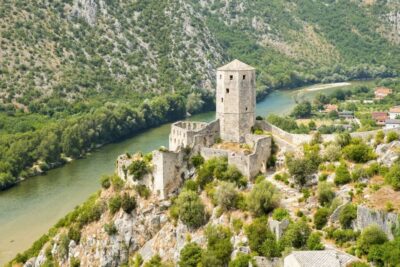
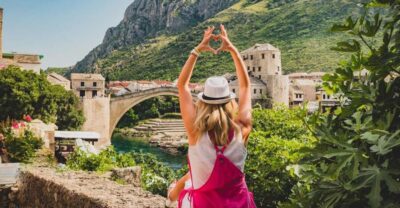
Mostar and Kravice Waterfalls Full-Day Tour from Split
Read our review →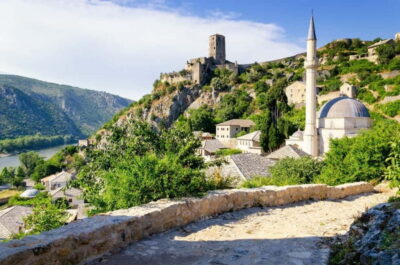
Full-Day Tour in Herzegovina, Blagaj, Počitelj, and Kravice
Read our review →
Full-Day Herzegovina Tour with Blagaj, Pocitel and Kravice Waterfalls
Read our review →Browse the lists this tour appears in