
Reviewed · WALKING TOURS IN SARAJEVO
Sarajevo: Grand Walking Tour Through Time and Cultures
Sarajevo is interesting because this city teaches Europe in layers. You walk through Ottoman and Austro-Hungarian streets, then you hit the sites tied to the Archduke Franz Ferdinand assassination, and suddenly the map feels personal. I love the Baščaršija Old Town atmosphere and the chance to stand by the Latin Bridge without rushing through the story.
One thing to plan for: it is a lot of time on your feet. You will do photo stops, short visits, and guided stops close together, so the experience works best if you pack comfortable shoes and a patient attitude for standing and walking.
Key moments worth marking on your mental map
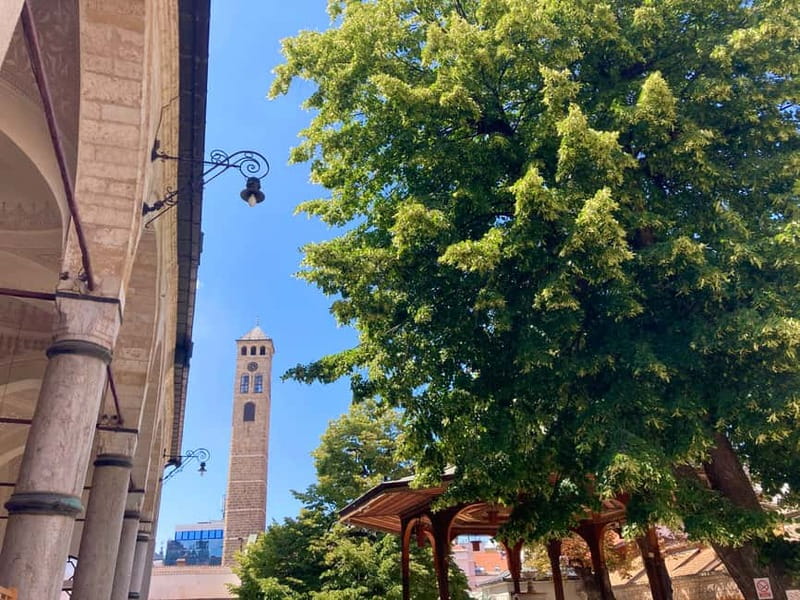
- Baščaršija first, with a real feel for market life and old-street energy
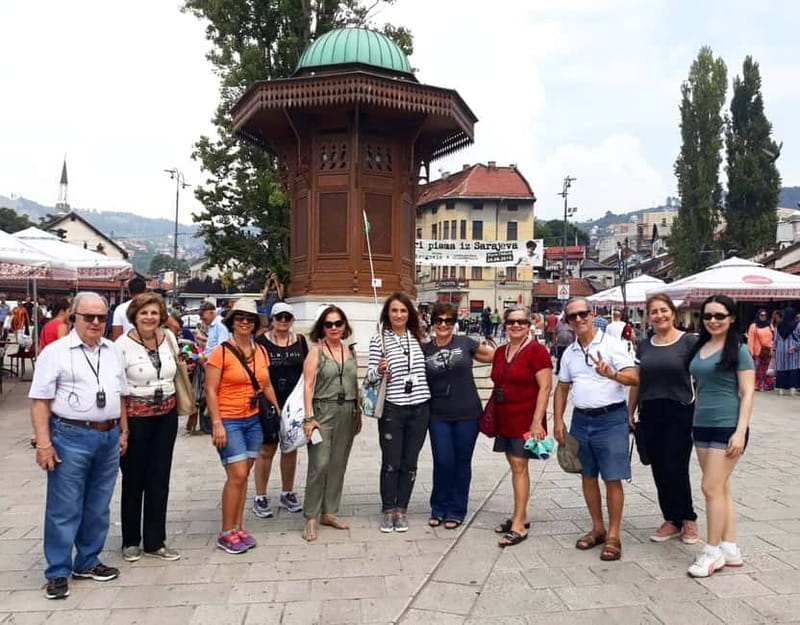
- Sebilj Fountain, Sarajevo’s famous wooden landmark and a perfect “we’re here” photo point
- Latin Bridge, where your guide connects a World War I trigger to local streets you can actually walk
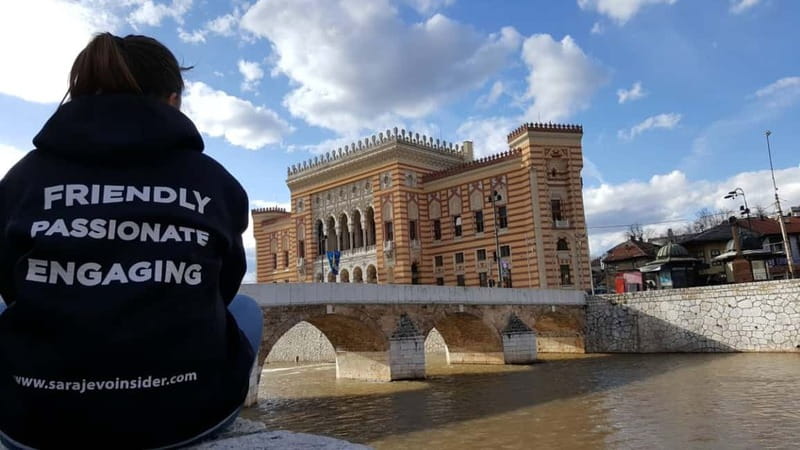
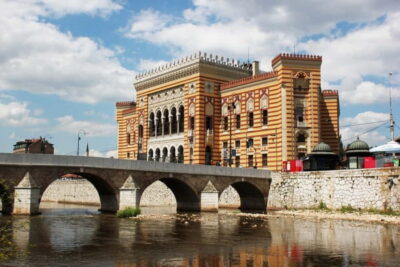
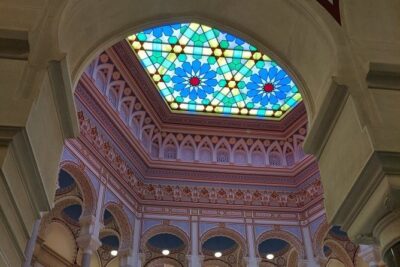
- City Hall, a neo-Moorish architectural gem that shows how Sarajevo looked when big empires shaped the skyline
- Craft quarter stops, including Bravadžiluk and Kazandžiluk, plus a baklava shop stop to taste local tradition
- Faith sites in close range, from mosques to churches to the Museum of the Jews of Bosnia and Herzegovina
Sarajevo as a crossroads, and why this walk makes it click
This tour is built for that Sarajevo “wait, how did all this fit together?” feeling. The route is designed to show Sarajevo as a crossroads of East and West, where different communities and empires left their mark on streets, buildings, and everyday culture. In about three hours, you get a sense of why Sarajevo is often described as a meeting point of civilizations.
You’ll hear how Ottoman, Austro-Hungarian, and later Yugoslav influences shaped the city’s look and social rhythm. You’ll also learn how major European events, especially the 1914 assassination of Archduke Franz Ferdinand, turned Sarajevo into a global headline. That context matters because it makes the landmarks more than pretty backdrops.
I also like that the guide experience tends to be practical, not just lecture-style. On this kind of tour, you want someone who can answer your questions clearly and then pivot into the everyday details, like marketplace culture and Bosnian food. Many guides on this program are known for patience and a story-first approach, with local advice that helps you continue your visit after the walk.
More Walking Tours in Sarajevo
- Sarajevo: 2 Hours Old Town Walking Tour With Local Guide
★ 5.0 · 505 reviews - Private Walking Tour, Food Tasting and Bosnian Coffee in Sarajevo
★ 5.0 · 255 reviews - Sarajevo Grand Walking Tour
★ 5.0 · 232 reviews
Price and pacing: what $21 for 3 hours really buys you
At $21 per person for roughly three hours, the value is in the structure. You are paying for a licensed guide, a city map, and a route that strings together key sites without making you piece it together yourself. Sarajevo’s center is walkable, but the meaning is hard to spot if you show up cold.
The pace is designed to move you through a tight loop of stops, mostly on foot, with photo breaks and short guided segments. Some stops are listed as brief, like a few minutes at Monastery and Sarajevo Brewery, so you should treat the tour as an orientation plus story time, not a museum marathon.
Food and drinks are not included. That is actually a plus if you want control over what you eat and where you want to linger. You will still get a baklava shop stop, so you can taste something traditional, but the rest is your call.
One more practical note: the tour is listed as wheelchair accessible, but it also says it is not suitable for people with mobility impairments. If you are deciding based on mobility needs, I suggest you message the provider before booking, because the itinerary includes a lot of walking and multiple photo stops.
Latin Bridge to Emperor’s Mosque: the “big event” start that sets the tone
The tour begins with a stop at Latin Bridge, and it is one of those places where standing still for a few minutes changes how you see everything nearby. You are not just taking a photo for the World War I angle. You are learning why that moment mattered and how it tied Sarajevo to world history.
From there, you head toward the Emperor’s Mosque for another guided stop and photo moment. This is the kind of pairing that works well for first-timers: one site pulls you into European history, and the next reminds you that Sarajevo’s religious architecture and public life were always part of the same city story.
Then you move through more of the central area with quick guided stops, including Monastery. The monastery stop is short in the itinerary, but it serves a purpose. It keeps the tour balanced, so the focus is not only on the famous headline sites. Instead, you start to see how faith and community landmarks sit side by side with major political history.
If you want the most out of this first stretch, keep one question ready. For example, ask how Sarajevo’s role as a meeting point influenced the city’s architecture and community life. Guides tend to handle that question well, and some are especially good at answering follow-ups without making you feel rushed.
Baščaršija Old Town and Sebilj Fountain: the Sarajevo you can feel in your boots
Next comes Baščaršija, Sarajevo’s old bazaar district, and this is the part of the tour that usually makes people stop multitasking. The streets here feel like a living market, where you can learn about traditional crafts and marketplace culture without leaving the city center. This is where the tour shifts from major landmarks to everyday texture.
You’ll also visit the Sebilj Fountain, Sarajevo’s famous wooden landmark. Even if you’ve seen it in photos, seeing it in real life gives you a better sense of scale and why this spot became an icon. It is also a helpful landmark for orientation, because the center of Baščaršija forms your mental grid from here.
The itinerary includes a pass through Morića Han, plus a longer guided approach to the surrounding lanes. Morića Han is the kind of stop that rewards you for slowing down just a touch. You get a sense of how travelers, traders, and locals moved through this area over time, even when the modern city feels fast.
One small consideration: because Baščaršija is busy and the tour includes photo stops, you might need to manage timing for crowded sidewalks. If you prefer quiet streets, you may want to arrive in Sarajevo early in the day so this portion feels more comfortable.
More around Sarajevo to weigh up
- Sarajevo: Old Town Walking Tour with Local Guide
★ 4.9 · 211 reviews - Sarajevo Essential Full Walking Tour
★ 5.0 · 198 reviews - Sarajevo: Discover Sarajevo Walking Tour with Local Guide
★ 4.9 · 92 reviews - Discover Sarajevo Walking Tour with Local Guide
★ 5.0 · 75 reviews
City Hall, House of Spite, and the story behind the skyline
Sarajevo’s central “power buildings” show up in your route, and City Hall is the headline one. The listing describes it as a neo-Moorish architectural gem, and that matters because it’s visual proof that empires and administrations left their style behind. When your guide explains what you are seeing, the architecture becomes a way to understand social history, not just decoration.
After City Hall, you pass the House of Spite. This is another stop where the guide’s storytelling is the whole point. You are not meant to skim it. You are meant to listen, look closely, and understand why a building like this became part of local legend.
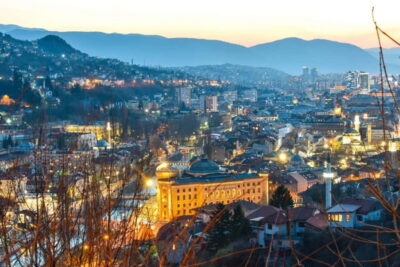
Then you hit a viewpoint stop for about 15 minutes. This is one of my favorite tour tricks, even on short walks. A short lookout break turns your memories into a map. You can connect the streets you just walked with the bigger city layout, which makes the rest of your visit easier.
If the day is hot or you’re traveling in shoulder season with changing weather, use this viewpoint break to steady yourself. It gives you a mental reset without breaking the flow of the tour.
Craft quarters: Bravadžiluk, Kazandžiluk, and a baklava stop that makes sense
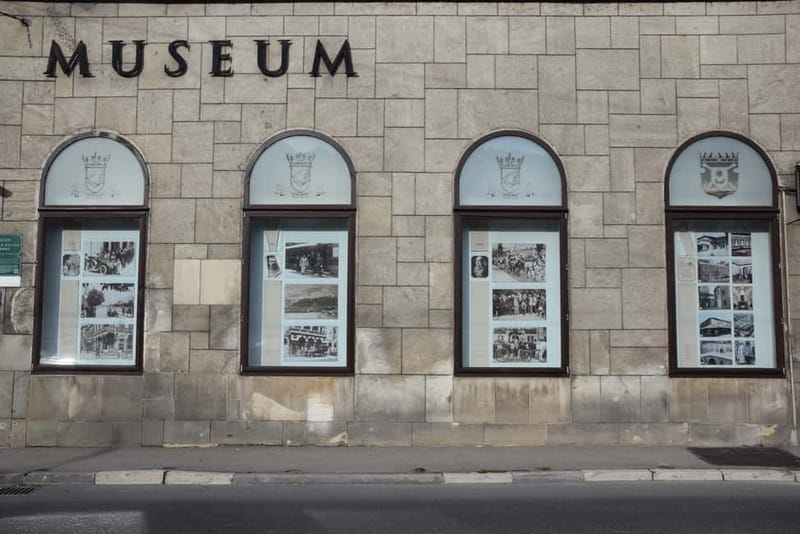
Two named stops anchor the craft-quarter side of this walk: Bravadžiluk and Kazandžiluk. These lanes are where the tour leans into traditional crafts and what people made and traded in the past. The value here is not that you are hunting souvenirs. It’s that you learn why the city’s economy and daily life shaped the geography of the center.
You do guided visits at these stops, then continue toward places like Morića Han. The overall effect is like stitching together the city’s rhythm: markets, crafts, small passages, then a place where food and hospitality show up.
That brings you to the baklava shop stop, listed as Baklava ducan Sarajevo. Since food and drinks are not included, this is your chance to try something local during the walk. I like this format because you can taste one classic item without committing to a full meal you might regret after a long walk.
You’ll also stop briefly at Sarajevo Brewery. The itinerary shows it as a photo stop with a short guided segment, so think of it as context, not a tasting tour.
If you want to maximize this section, ask your guide one practical question: what nearby spots are best for a proper meal after the tour. Many Sarajevo guides are especially good with food tips, and getting those directions early often saves you time later.
Faith and community landmarks: from Gazi Husrev-beg Mosque to Sarajevo’s Jewish museum
One of the most useful parts of this tour is how it treats Sarajevo’s multicultural identity as a real geography. You see multiple faith landmarks close together, instead of treating them as separate “tourist categories.”
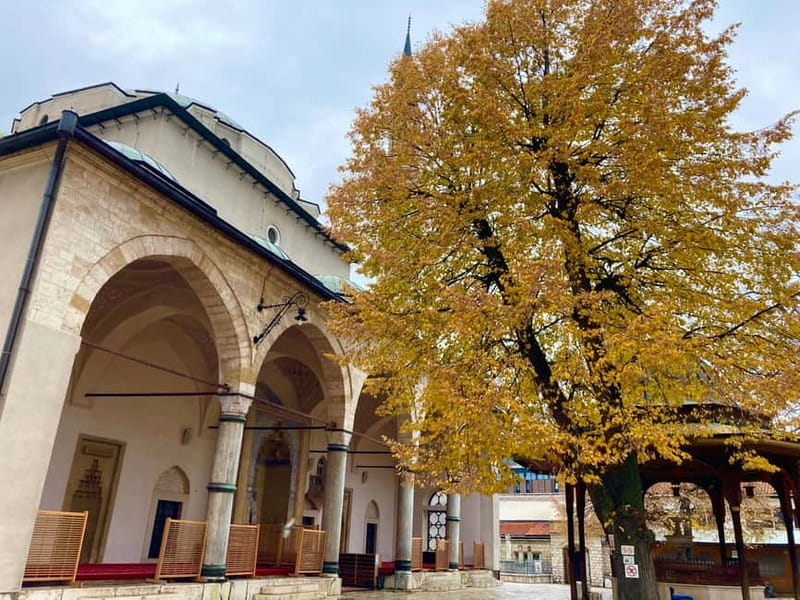
You’ll visit Gazi Husrev-beg Mosque and then continue through stops tied to the city’s cultural diversity, including Sarajevo Meeting of Cultures. Even without heavy museum time, you come away with a clearer sense of why Sarajevo is often called a symbol of religious coexistence.
Next up is the Museum of the Jews of Bosnia and Herzegovina. The guided stop here helps turn a name into understanding, so the visit feels grounded in place and community, not like a checkbox museum. After that, you move into Christian landmarks, including Sacred Heart Cathedral and the Cathedral Church of the Nativity of the Theotokos.
Then you return through City Market Hall, with a visit and a guided segment around five minutes. Market halls are underrated on walking tours. They are where you can see daily life in one frame, and they often give you the final thread connecting the tour back to ordinary Sarajevo.
Finally, you end with the Eternal Flame stop, again with a guided photo moment. This kind of memorial stop adds emotional weight. It is brief, but it changes the mood of the last part of the walk.
Using your guide well: questions to ask and how to carry the tour forward
Part of the reason this tour earns top marks is that the guides tend to be engaged and patient. In particular, guides like Kenan and Elma have been singled out for storytelling, clear explanations, and handling questions in a way that keeps the walk relaxed. Bojan is often praised for bringing both serious topics and local warmth together, and Hannah is known for pacing information without turning it into an overload.
So here is how you use that strength. In the first half of the tour, ask a question that connects architecture to events. For example, ask how Ottoman and Austro-Hungarian influences show up in city planning and public spaces. Then in the second half, ask for a specific follow-up, like what to look for in Baščaršija that most guidebooks miss.
Also, because food and drinks are not included, use the guide to plan your next steps. The walk hits baklava during the route, but you’ll still want coffee, a proper meal, or a low-key place to decompress. A guide who shares local cafe tips can turn your last afternoon into something smoother.
Finally, wear clothes you can handle walking in. Sarajevo weather changes. You’ll be outside, moving between sites, and doing photo stops throughout.
Should you book this Sarajevo Grand Walking Tour through Time and Cultures?
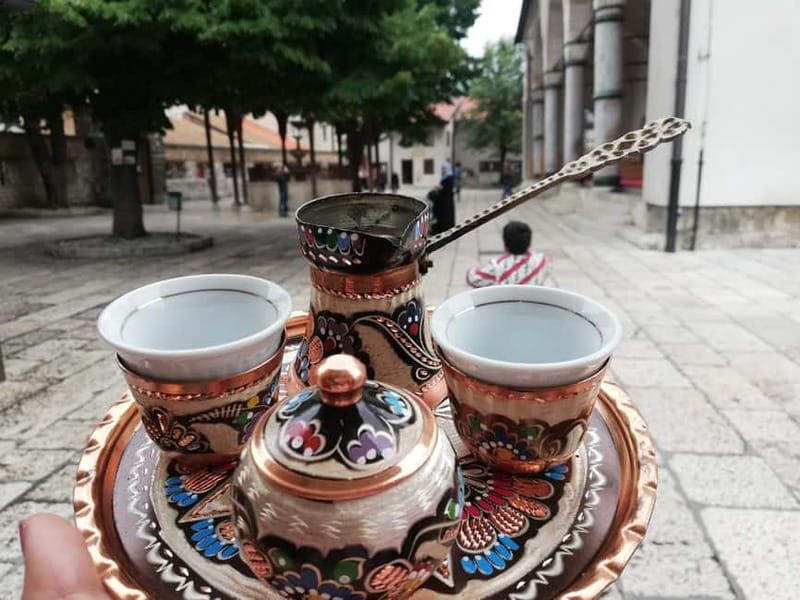
If it is your first time in Sarajevo and you want a fast, story-driven orientation, this is a strong booking. The price is low enough to feel easy to try, and the route covers the big names people come for, plus enough cultural stops to make the city feel lived-in.
I would especially consider it if you care about the connection to Archduke Franz Ferdinand and want to understand why Sarajevo sits at the center of European history. You’ll also get useful context for Sarajevo’s mix of communities, so even if you visit other museums later, this walk gives you a base layer.
Skip or rethink if you do not handle walking well, since the experience is primarily on foot with repeated stops. Also check that the route fits your needs if mobility is a factor, since the listing includes a conflict between wheelchair accessibility and a note about mobility impairments.
FAQ
How much does the Sarajevo Grand Walking Tour cost?
It costs $21 per person.
How long is the walking tour?
The duration is 3 hours.
What is included in the ticket price?
You get a licensed tour guide and a city map.
Are food and drinks included?
No. Food and drinks are not included, though the tour includes a baklava shop stop.
What languages does the guide speak?
The live tour guide speaks German, French, Italian, Spanish, English, Croatian, and Serbian.
Is the tour wheelchair accessible?
The tour is listed as wheelchair accessible, but it also notes it is not suitable for people with mobility impairments. If you are unsure, check with the provider.
Where does the tour start and end?
The meeting point may vary depending on the option booked, and the tour has two possible drop-off locations, including UPN BiH, Insider City Tours and Excursions.
What is the cancellation policy?
You can cancel up to 24 hours in advance for a full refund.
Newest Sarajevo write-ups
- Sarajevo to Zagreb: One-Way Tour via Jajce, Travnik, Pliva Lake and Watermills★ 5.0 · 3 reviews
- Sarajevo E-Bike City Tour★ 5.0 · 3 reviews
- Mountain Village Lukomir Full Day Adventure Tour★ 5.0 · 3 reviews
- Bosnian Kingdom Capitals: Travnik & Jajce Tour from Sarajevo★ 5.0 · 3 reviews
- Strbacki Buk and Una Waterfalls: Day Trip from Sarajevo★ 5.0 · 3 reviews
- Sarajevo Snowshoeing Adventure★ 5.0 · 3 reviews
- Sarajevo Old Town: Bosnian Coffee, Baklava & Panoramic Views★ 5.0 · 3 reviews
- 4 Hours Tara Rafting Trip★ 5.0 · 3 reviews
Walking Tours in Sarajevo, compared.
Private Walking Tour, Food Tasting and Bosnian Coffee in Sarajevo
Read our review →
Browse the lists this tour appears in