
Reviewed · WALKING TOURS IN SARAJEVO
Sarajevo Grand Walking Tour
Sarajevo’s story can feel huge and heavy, but this Grand Walking Tour turns it into a walk you can actually follow. I like that it covers famous landmark names plus the smaller details that explain how Sarajevo became Sarajevo, from Austria-Hungary to Yugoslavia and the present day. I also love the guide-led pacing, with real people and real questions, and guides such as Ilma and Haris are praised for making timelines feel human.
One possible drawback: it’s a lot to take in. You’re moving for about 3 hours, and the subject matter can get emotional, especially near remembrance sites, so it helps if you’re ready to listen closely and not just snap photos.
Key highlights (the fun parts, in plain terms)
- Latin Bridge stop connects one moment to a world war.
- Old Town loop covers Baščaršija, crafts streets, and Ottoman-era stops.
- Faith side by side includes mosque, Catholic church, Serbian Orthodox church, and major cathedrals.
- War memory stops include Kovači Cemetery and the Eternal Flame.
- Architecture with meaning at places like the Spite House and Sarajevo City Hall.
- Markets you can smell and taste at Markale City Market and nearby streets.
Why this Sarajevo Grand Walking Tour helps you understand the city fast
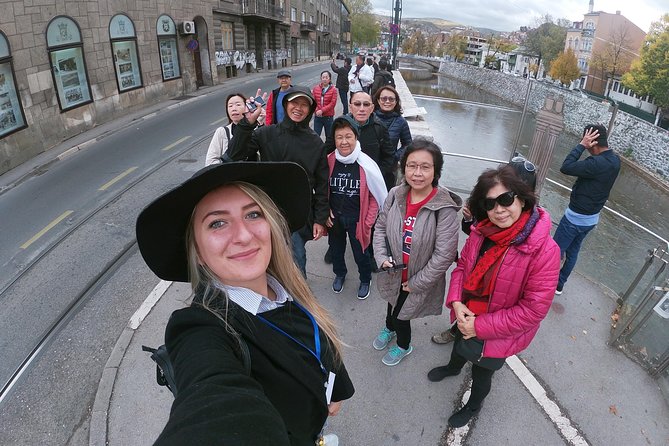
If you have only a half day in Sarajevo, you want the kind of tour that gives you a working map in your head. This one walks you through the city’s major eras without getting stuck in one chapter. You’ll start with the infamous Sarajevo moment that triggered World War I, then keep moving through Ottoman Sarajevo, Austro-Hungarian influence, Yugoslav-era change, and the conflict of the 1990s.
The value here is the guided narration. At a price of $20.57 per person for about 3 hours, you are paying mostly for a local storyteller plus a structured route. That matters because Sarajevo’s landmarks are close enough to see on your own, but not easy to connect into a clear story unless someone explains what you’re looking at.
Also, the tour is built for easy orientation. Many guides in this lineup, including people like Hana and Suad, are specifically praised for making the complex history understandable without turning it into a lecture. You should walk away able to explore the rest of the city with better instincts.
More Walking Tours in Sarajevo
- Sarajevo: Grand Walking Tour Through Time and Cultures
★ 4.8 · 1,236 reviews - Sarajevo: 2 Hours Old Town Walking Tour With Local Guide
★ 5.0 · 505 reviews - Private Walking Tour, Food Tasting and Bosnian Coffee in Sarajevo
★ 5.0 · 255 reviews
Timing, route flow, and what to expect day-of
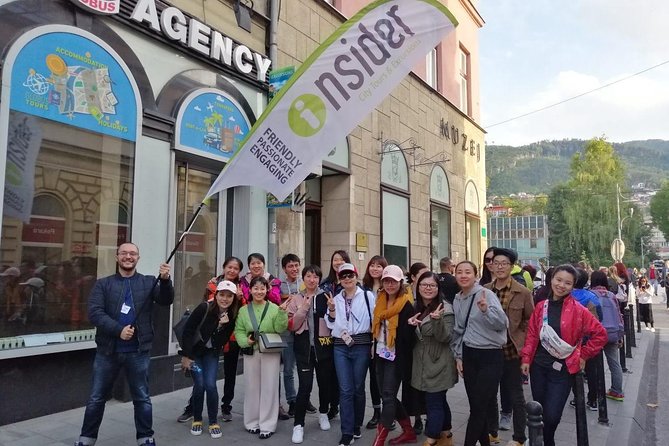
This is an approximately 3-hour walking tour with departures in English and a maximum of 30 travelers. An average booking window of about 13 days in advance suggests it’s popular, so if your dates are fixed, I’d reserve early rather than wing it.
A practical note from guide-led experiences: the walk is mostly straightforward. One guide itinerary experience is described as an easy walk on the flats, and rain has happened without derailing the tour. Still, Sarajevo weather can change fast, so bring a layer and wear comfortable shoes. If you’re the type who gets cold easily, you’ll be glad you did.
You’ll also get a mobile ticket, and the tour includes a city map. That sounds basic, but it’s helpful because you’ll cover a lot of ground and will want something to re-check later.
The tour ends back at the meeting point, so you’re not planning a second transport shuffle at the end of your day.
Latin Bridge to Mejdan Park: where one shot changed everything
You begin at the Latin Bridge area, the Franz Ferdinand assassination site. The tour stops you right at the historical trigger moment, so the story isn’t abstract. Instead of just hearing a date, you see the exact location and get help placing it in the bigger chain reaction that led to World War I.
Then you shift to something calmer at Mejdan Park by the Miljacka River. It’s a short breather stop, and that matters because after heavy history, you need a quick reset. It also helps you understand that Sarajevo isn’t only monuments and memorial plaques. It’s a lived-in city with green spaces and everyday rhythms.
One practical consideration: because you start with a major historical moment, expect the narration to be focused and detailed early on. If you’re tired that day, arrive rested enough to concentrate for the first stretch.
Emperor’s Mosque, Saint Anthony Church, and Sarajevo’s everyday mix
From the Latin Bridge area, the route moves into the city’s spiritual and architectural variety, starting with the Emperor’s Mosque. The highlight here is age and continuity: this is Sarajevo’s oldest mosque and a key marker of Islamic heritage in the city’s long timeline. You won’t just hear facts, you’ll get context for how these places helped define Sarajevo’s identity across centuries.
Next comes the Franciscan Church of Saint Anthony, also described as a neo-Gothic Franciscan church. This is where Sarajevo’s religious diversity stops being a concept and turns into what you can see in stone and design.
Then you get a welcome shift to ordinary life at Sarajevska Pivara (Sarajevo Brewery). Even though it’s only a couple of minutes on the route, a brewery stop is a smart move. It grounds the tour in industry and local production, not only monuments. It’s a reminder that culture includes how people make and share daily comforts.
Tip for your planning: even if you’re not a museum person, these quick stops add up. The tour uses short time blocks to keep you moving, while still making each stop feel intentional.
More around Sarajevo to weigh up
- Sarajevo: Old Town Walking Tour with Local Guide
★ 4.9 · 211 reviews - Sarajevo Essential Full Walking Tour
★ 5.0 · 198 reviews - Sarajevo: Discover Sarajevo Walking Tour with Local Guide
★ 4.9 · 92 reviews - Discover Sarajevo Walking Tour with Local Guide
★ 5.0 · 75 reviews
Modernist Sarajevo and the Spite House: architecture as attitude
A big part of this walking tour is using buildings as clues. You’ll look at the Bosnian House Bikačici-Hadzišabanović, a modernist architectural stop that carries Sarajevo’s layered past forward into later design thinking. It’s the kind of place where your guide can point out how architecture reflects social life, not just style.
Then comes one of the most memorable stops on the route: the House of Spite. The story behind it is exactly what the name suggests, a defiant situation that turned into a rebuilt, brick-by-brick outcome. This is a strong moment to understand Sarajevo’s temperament: stubborn, practical, and determined, shaped by pressure and conflict but expressed through everyday decisions.
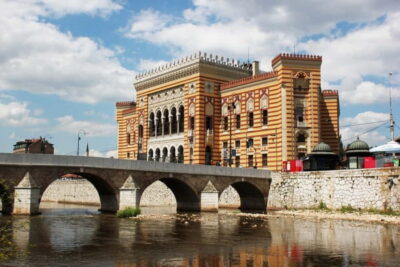
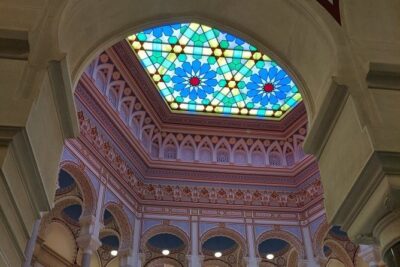
After that, you’ll reach Sarajevo City Hall, a neo-Moorish masterpiece blending East and West influences. It’s a perfect contrast to the House of Spite. One is about personal stubbornness; the other is about civic power and how a city wanted to present itself.
Time-wise, this section is a little longer at City Hall (about 10 minutes), so slow down mentally here. Look, listen, and let the guide connect the design choices to the political atmosphere of the time.
Kovači Cemetery, Kovači Street, and the Old Town you can shop in
You’ll then move to Kovači Cemetery, a national memorial honoring Bosnia’s defenders from the 1992 to 1995 war. This is one of the stops where I’d lower your camera speed and focus on the narration. The point is remembrance, and the tour gives you a chance to reflect instead of rushing.
From there, the walk continues along Kovači Street, where the Ottoman-era charm and local shops show up in the streetscape. This is where you start to feel the tour’s structure: it’s not only about seeing landmarks, it’s about seeing how the city’s look and commercial life connect.
Then the tour lands in Baščaršija, the Old Town marketplace. This is the tour’s long stop at about 15 minutes, and it’s the best place to let the city hit your senses. You’ll get orienting context for the market area so that when you come back later on your own, you know what streets and styles are doing.
One thing I appreciate about this format: it keeps the market stop from becoming just wandering time. The guide places it inside the story, so you’re not guessing what you’re looking at.
Kazandžiluk and Bravadžiluk Streets: crafts and food cues
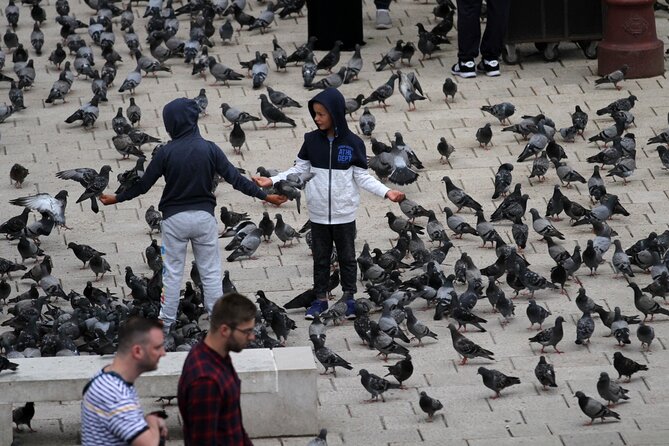
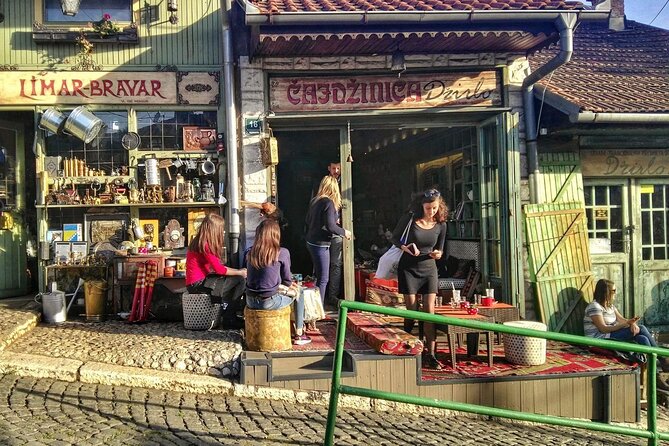
Next up are the craft-focused streets: Kazandžiluk and Bravadžiluk (the tour mentions both). Here, the focus is traditional metalwork and the street life that goes with it. You’ll see how specialized trades shaped the market and the way visitors experience Sarajevo’s shopping streets.
This is also a good section for quick observational habits. Look at materials, look at how vendors work, and notice which kinds of goods cluster together. Even without buying anything, you’ll start understanding how the market organizes space.
Sebilj Brunnen and Morica Han: iconic fountain and Ottoman hospitality
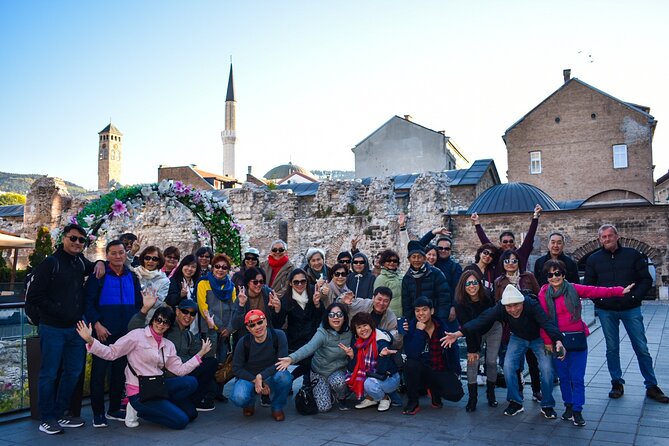
The route includes Sebilj Brunnen (Fountain). It’s an iconic Sarajevo moment, plus you’ll learn the legend connected to returning to Sarajevo. Even if you’ve heard fountain stories elsewhere in the region, this stop is useful because it ties folklore to place names and helps you recognize the fountain as a social meeting point, not just a photo spot.
Then you step to Morica Han, described as Sarajevo’s last Ottoman inn. A short stop at about 5 minutes can still feel meaningful if the guide explains what an inn like this represented. Morica Han helps connect the old trading routes and the city’s visitor culture to the physical space you’re standing in now.
If you’re thinking about where to start your own exploring after the tour, these two stops are a good anchor point. You’ll remember them as landmarks, which makes your next walk easier.
Gazi Husrev-beg Mosque and the Meeting of Cultures
The tour continues with Gazi Husrev-beg Mosque, a 16th-century spiritual masterpiece and a serene stop on the route. About 10 minutes here gives you enough time to appreciate the place without feeling rushed.
Then it moves to the Sarajevo Meeting of Cultures, a symbolic crossroads of East and West. This is one of those stops that can sound like a slogan if the guide doesn’t connect it to visible reality. On this route, it’s used to tie the religious and architectural variety together into one idea: Sarajevo’s identity is built from contact, not isolation.
If you’re the type who enjoys learning how a city talks about itself, this section does that. It’s also a nice reset after a few heavier remembrance moments.
The Museum of the Jews of Bosnia and the sacred Sarajevo triangle
One of the most important stops on the route is the Museum of the Jews of Bosnia and Herzegovina, tied to the old Jewish temple. The tour highlights Sephardic Jewish heritage and specifically the Sarajevo Haggadah, described as priceless. Even in a short visit window (about 5 minutes on the route), it gives context for a part of Sarajevo many first-time visitors do not expect.
From there, the tour moves into the Catholic and Orthodox spiritual architecture:
- Katedrala Srca Isusova (Cathedral of Sacred Jesus Heart), described as Sarajevo’s grand Catholic cathedral, known as the city’s Notre Dame.
- Serbian Orthodox Cathedral, known for domes and murals.
These stops run about 5 minutes each, which is enough for your brain to register how different traditions use light, shape, and iconography. The value is the contrast. You’re not only learning names, you’re seeing how Sarajevo’s religious landscape overlaps in space.
Markale Market and the Eternal Flame: where the story turns to remembrance
The final stretches bring you back to daily life and then to remembrance.
You’ll stop at Pijaca Markale, Markale City Market, about 5 minutes. This is another place where you should look, smell, and listen, then maybe grab a snack later if you want. It helps end the tour with something human scale, not only grand monuments.
Then you finish at the Eternal Flame, a World War II monument. About 5 minutes here is long enough for a quiet moment and a reminder that Sarajevo’s memory spans multiple conflicts, not just one era.
If you’re tired by this point, don’t feel bad. This is where your feet and your emotions finally catch up. The tour structure helps because you still end near lively city life, so you can head out for dinner feeling grounded rather than stuck in a museum headspace.
Value for money: is $20.57 worth it?
For many cities, a walking tour can cost a lot more than the guide’s time is actually worth. Here, the math is pretty straightforward:
- You get a guide plus a city map.
- The route covers lots of named sights in about 3 hours.
- Most of the stops are marked admission ticket free in the tour schedule.
What’s not included is also clear: lunch and coffee and/or tea aren’t part of the price, and any additional costs labeled as fees or taxes are not included. So if you want a snack or drink mid-walk, plan for it yourself.
Given that many guides on this route are praised for strong storytelling and for answering questions well, I’d say the price feels fair if you want the city’s big picture with enough details to be useful.
Should you book the Sarajevo Grand Walking Tour?
Yes, if you want a structured way to learn Sarajevo without spending hours building your own itinerary. This is especially good for your first day, since it gives you a mental map you can reuse immediately for exploring on foot later.
I’d say skip it only if you hate walking and prefer slow, one-neighborhood wandering, or if you really don’t want war-related sites. The tour includes remembrance stops, and the narration can get serious.
If you do book, come ready to listen for meaning, not just facts. Wear comfortable shoes, bring a warm layer, and leave a little extra time afterward for Baščaršija and Markale, since those are places you’ll want to revisit once you know what you’re seeing.
FAQ
How long is the Sarajevo Grand Walking Tour?
It lasts about 3 hours.
How much does the tour cost?
The price is $20.57 per person.
Is the tour offered in English, and do I get a mobile ticket?
Yes, it is offered in English, and you receive a mobile ticket.
What is included in the price?
The tour includes a guide and a city map. Lunch and coffee or tea are not included.
Are there admission tickets for the stops?
The tour schedule lists the stops with admission ticket free.
Where do I meet, and where does the tour end?
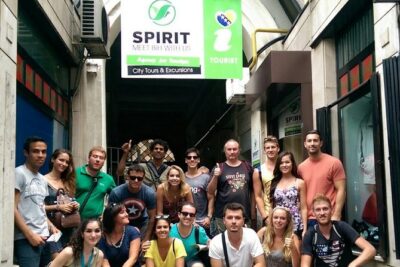
The meeting point is Sarajevo Insider – City Tours and Excursions, Zelenih beretki 30, Sarajevo. The tour ends back at the same meeting point.
How big is the group?
The tour has a maximum of 30 travelers.
Can I upgrade to a private tour?
Yes, there is an option to upgrade to a private tour.
What if the weather is poor?
The experience requires good weather. If it is canceled due to poor weather, you will be offered a different date or a full refund.
Are service animals allowed?
Yes, service animals are allowed.
Newest Sarajevo write-ups
- Sarajevo to Zagreb: One-Way Tour via Jajce, Travnik, Pliva Lake and Watermills★ 5.0 · 3 reviews
- Mountain Village Lukomir Full Day Adventure Tour★ 5.0 · 3 reviews
- Sarajevo E-Bike City Tour★ 5.0 · 3 reviews
- Bosnian Kingdom Capitals: Travnik & Jajce Tour from Sarajevo★ 5.0 · 3 reviews
- Strbacki Buk and Una Waterfalls: Day Trip from Sarajevo★ 5.0 · 3 reviews
- Sarajevo Snowshoeing Adventure★ 5.0 · 3 reviews
- Sarajevo Old Town: Bosnian Coffee, Baklava & Panoramic Views★ 5.0 · 3 reviews
- 4 Hours Tara Rafting Trip★ 5.0 · 3 reviews
Walking Tours in Sarajevo, compared.
Private Walking Tour, Food Tasting and Bosnian Coffee in Sarajevo
Read our review →
Browse the lists this tour appears in