
Reviewed · WALKING TOURS IN SARAJEVO
Discover Sarajevo Walking Tour with Local Guide
Sarajevo is one of those cities where different eras sit side by side, and a good walking route is the fastest way to make sense of it. I like that this tour keeps you moving through the city center while your guide explains what you are seeing, from Ottoman architecture to Austro-Hungarian street scenes.
My second favorite part is the human one, the guide. People like Samira and Enes Popara are praised for clear English, local pride, and storytelling with humor that keeps the pace light even when the topics get heavy. The one thing to plan for is that this is only about 2 hours, so you will get focused stops, not long interior time, and some sites may require tickets you pay separately.
Key things that make this tour worth your time
- Gazi Husrev-beg Mosque details like its dome height (23 m) and minaret (45 m), plus the story of early electricity illumination
- Morica Han, Sarajevo’s only surviving caravanserai, restored after a 1957 fire
- Sebilj Fountain and the Square of Pigeons, including the fountain’s relocation in 1891
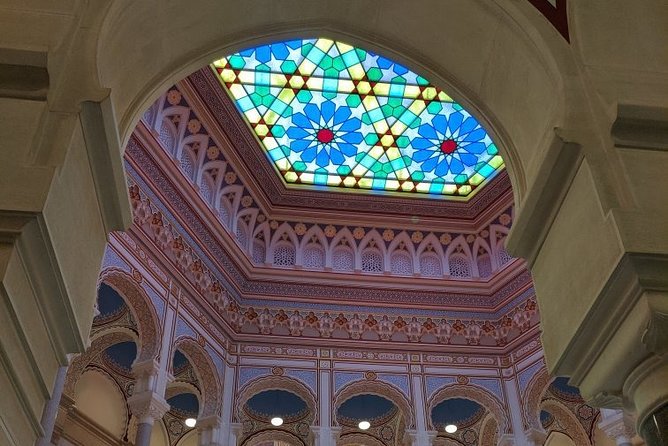
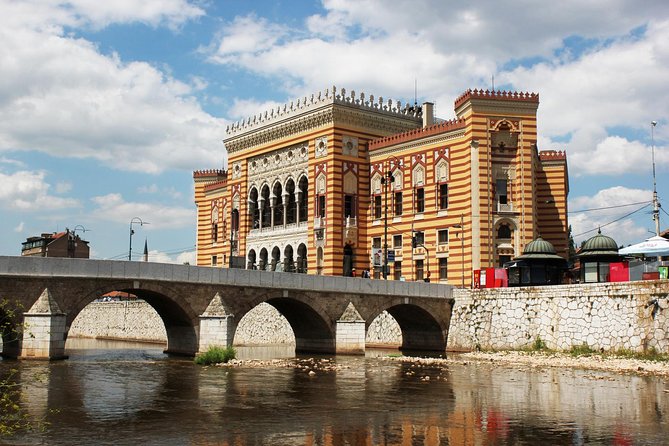
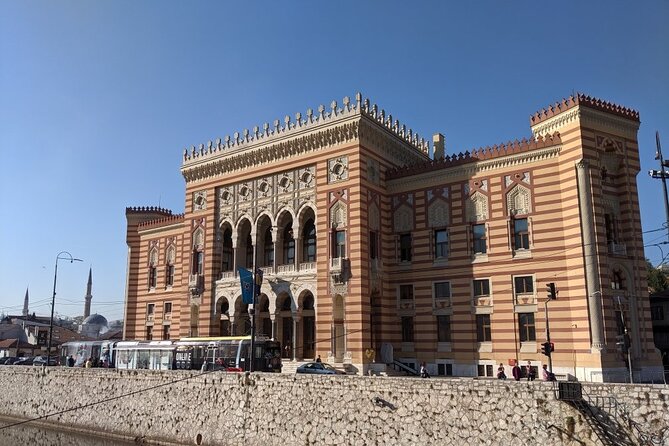
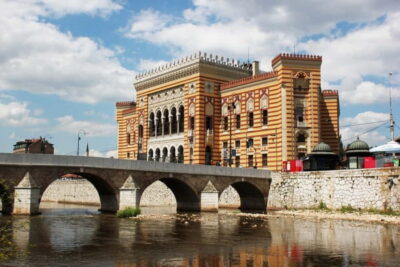
- Sarajevo City Hall (completed 1896), with Neo-Moorish design inspired by Islamic art in Spain and North Africa
- A tight loop of major faith sites, including orthodox, Catholic, and Jewish landmarks
- Small group energy, with a maximum of 20 people and a bottled water included
A 2-hour Sarajevo walk that helps everything click
If Sarajevo is on your list, this tour is a smart first move. You are not just collecting photos. You are learning how to read the city as a mix of influences, with short stops that connect architecture to real events and everyday life.
At $12.07 per person, the value comes from the guide and the structure. In two hours, you cover a lot of ground around the old center, and you get explanations that help you understand why the mix of Ottoman, Austro-Hungarian, and other European styles shows up right where you are walking.
Also, this is a tour that people plan ahead for. It is commonly booked about 10 days in advance, which usually signals two things: there are limited time slots and the guides are popular.
More Walking Tours in Sarajevo
- Sarajevo: Grand Walking Tour Through Time and Cultures
★ 4.8 · 1,236 reviews - Sarajevo: 2 Hours Old Town Walking Tour With Local Guide
★ 5.0 · 505 reviews - Private Walking Tour, Food Tasting and Bosnian Coffee in Sarajevo
★ 5.0 · 255 reviews
Meeting on Ferhadija, and what you should expect from the format
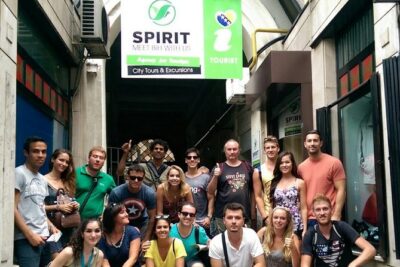
The tour starts at Info Bosnia Tourist Information Center on Ferhadija, right by Sarajevo Meeting of Cultures. The meeting address also appears as Velika avlija Laure Papo Bahorete 2, Sarajevo 71000, so use whichever helps you navigate best, then look for the group at the Info Bosnia spot.
You are in an English-language tour, and you will receive a mobile ticket. The group is capped at 20 people, so you can still hear the guide and ask a question or two without feeling like you are in a stadium.
Wear smart casual and bring comfortable walking shoes. The tour is described as moderate physical fitness, so plan for steady walking and a few uphill or uneven moments in old-town streets.
And yes, you get bottled water included. It is a small thing, but it matters when you are trying to stay present for the story instead of thinking about where to buy a drink.
Gazi Husrev-beg Mosque and Morica Han: Ottoman Sarajevo, up close
Stop one is Gazi Husrev-beg Mosque. Built in 1530 or 1531 in an Early Istanbul style, it served as the central building of Gazi Husrev-bey’s waqf, a charitable foundation. You will also hear the scale numbers, the dome is 23 m high and the minaret is 45 m.
One of the most memorable claims connected to this mosque is that it was the first mosque in the world to be illuminated by electricity. Whether you focus on the architecture or the modern-meets-old detail, this stop sets the tone: Sarajevo did not just inherit traditions, it adapted them over time.
Practical note: admission ticket for this stop is listed as not included. That means if the interior is open and you want to go in, plan for a separate ticket.
Next is Morica Han, a caravanserai originally built in 1551. This is the kind of place that usually makes you stop mid-sentence. It burned down in 1957, then was restored between 1971 and 1974, and it once hosted up to 300 people with 44 guest rooms and space for 70 horses.
Morica Han is also described as the only surviving caravanserai in Sarajevo, which makes the building feel like a rare survivor of the old travel and trade network. Admission is free for this stop, so you can spend more time simply absorbing the atmosphere and listening to how your guide connects it to wider city life.
Sebilj Fountain and Kazandziluk: the city’s “every day” layer
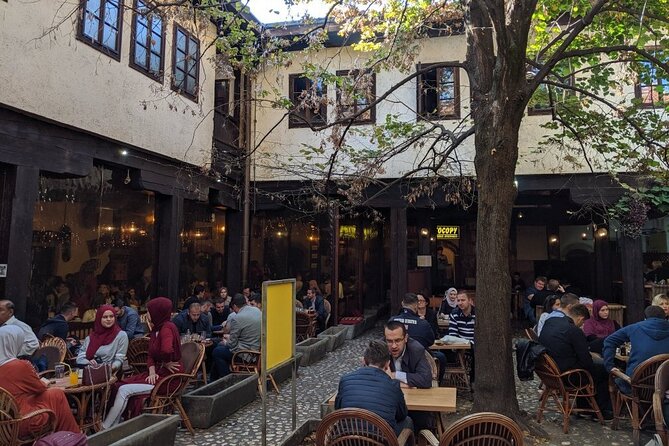
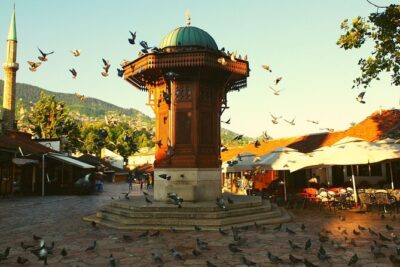
After the big historical anchors, the walk turns more human. At Sebilj Brunnen, you are looking at a Neo-Ottoman stone-and-wood fountain in the center of Bascarsia.
The Sebilj story has a twist that fits Sarajevo’s theme of movement and change. The first Sebilj was built by Mehmed Pasa Kukavica in 1753, then it was relocated by Austrian architect Alexander Wittek in 1891. Around the fountain is the Square of Pigeons, a name that feels like it belongs to a postcard, but it also hints at the everyday rhythm of the square.
Admission is free, so this works as a quick breather and photo stop. Still, pay attention to what your guide says, because the fountain is not just decoration. It is a reminder that public space is where cultures show up in plain sight.
Then you hit Kazandziluk, Sarajevo’s famous coppersmith street. This is one of those stops where the city’s identity lives in craft. Even if you do not buy anything, the street helps you understand how trade and skilled work were part of the city’s long-term economy, not just a historical detail.
Admission is free here too. Keep your eyes open for workshop-style storefronts and the small clues that people have built their routines around.
More around Sarajevo to weigh up
- Sarajevo Grand Walking Tour
★ 5.0 · 232 reviews - Sarajevo: Old Town Walking Tour with Local Guide
★ 4.9 · 211 reviews - Sarajevo Essential Full Walking Tour
★ 5.0 · 198 reviews - Sarajevo: Discover Sarajevo Walking Tour with Local Guide
★ 4.9 · 92 reviews
City Hall’s Neo-Moorish look, then the Emperor’s Mosque
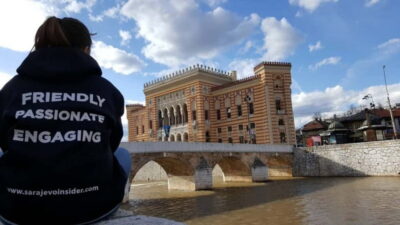
The tour moves into Austro-Hungarian Sarajevo at Sarajevo City Hall. Completed in 1896, it is described as the most representative building from that era in the city. The design is Neo-Moorish, inspired by Islamic art in Spain and North Africa.
This stop is a good one for perspective. You will see how European administrators and architects used stylistic cues from the Islamic world, not to copy everything directly, but to project a certain idea of sophistication and empire. In other words, styles moved around the map, and Sarajevo absorbed them.
Practical note: admission for City Hall is listed as not included. If you are hoping for interior time, consider planning for an additional ticket or saving that building for a separate visit.
Right after that, you go to Emperor’s Mosque. It is described as the first mosque built in Sarajevo by Isa-bey. Admission is free, so it is another quick stop where you can focus on the religious landmark without worrying about extra costs.
The switch from Neo-Moorish City Hall to an early mosque landmark is exactly why this tour works. You walk from one symbol system to another in minutes, and your guide helps connect the dots.
Latin Bridge: where a single moment changed Europe
Latin Bridge sits right next to where the assassination of Archduke Franz Ferdinand and Sophie took place. Your guide will frame this stop as more than a historical fact, but as a point that reshaped politics and triggered a chain reaction across Europe.
Admission for this stop is listed as not included. In practice, that usually means the cost is not bundled in the tour price, so if there is any paid element related to the exact spot you want to view, you would handle it directly on-site.
This is also the kind of stop where you should slow down for a minute. Stand where your guide points out, listen once, then look around again. Sarajevo has a way of making you feel how close big events can feel to ordinary streets.
Bezistan covered bazaar: trade and daily life under one roof
Next up is Gazi-Husrev Beg’s Bezistan. A covered bazaar matters because it changes how you experience a city. Instead of heat, rain, or light dictating your route, the market structure shapes the movement for you.
Bezistan was built at the same time as Taslihan, a stone inn that was destroyed during the Austro-Hungarian period. Hearing that contrast is useful. It shows that some commercial and architectural forms lasted, while others did not, even when they started in the same era.
Admission is free for this stop. If you want to buy a small souvenir or simply watch local craft and routine, this is typically the easiest place to do it without feeling like you are interrupting the tour flow.
From Orthodox to Catholic: Serbian Orthodox Cathedral and Katedrala Srca Isusova
The walk then broadens into Sarajevo’s major faith landmarks.
First is the Serbian Orthodox Cathedral of the Holy Mother. It is described as being built in the Ottoman period, and it is the largest orthodox church in Sarajevo. Admission is listed as not included, so plan for a separate ticket if you want interior access.
Then you move to Katedrala Srca Isusova, the cathedral of the Sacred Heart of Jesus. It is described as one of the first major European-style buildings in Sarajevo. Admission is free, which gives you a chance to spend a little extra time here if you want it.
What I appreciate is that these stops are not treated like trivia. They are used to explain how different communities lived side by side and how architecture became a language for identity. Even if you do not know the dates yet, the guide makes the comparisons feel clear.
Jewish Museum and the Sarajevo Meeting of Cultures finale
The tour includes the Jewish Museum of Bosnia and Herzegovina, also known as the Old Jewish Temple and the Sephardic Synagogue. It is described as the first and oldest synagogue built in Sarajevo.
Admission is listed as not included for this stop. If you care a lot about Jewish history in particular, it may be worth setting aside time later to revisit and read more at your pace, because a walking tour stop can only scratch the surface.
The finale is Sarajevo Meeting of Cultures, a place where East meets West. It is also the viewpoint area your guide uses to help you see the city’s uniqueness in one glance. The tour finishes in front of Info Bosnia Tourist Information Center again, so you are not left wandering for where you started.
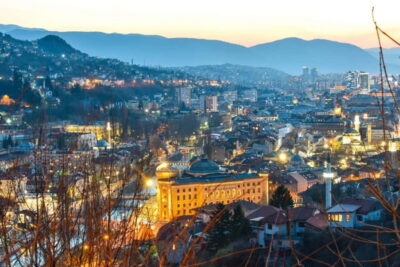
Even if you think you know what Sarajevo looks like from photos, the final view and explanation help you understand the layers. The city stops feeling like a list of monuments and starts feeling like a place with logic.
Guides make or break it, and this one is built for great ones
This tour earns its top score for a reason: the pacing and the people leading it. Guides such as Samira, Layla, Senka, and Enes Popara are repeatedly praised for friendly delivery, solid English, and a knack for turning complicated local themes into clear street-level stories.
You will feel the difference right away if your guide is doing two things well. First, they explain what you are seeing in plain language. Second, they connect each stop to the bigger picture without turning it into a long lecture.
That matters in Sarajevo, because the city has layers and tensions that are easy to oversimplify. A good guide helps you hold multiple truths at once, and the humor keeps it from getting too heavy too fast.
The bottled water and the small group size help too. It makes it easier to stay attentive instead of rushing. And since several stops are free to access, you can keep your spending under control if you plan ahead for the paid admissions.
Price and value: $12.07 is low, but plan small add-ons
At $12.07 per person for about two hours, this tour is priced like a budget-friendly orientation walk. The value is that you are paying for a certified guide and a structured route through key landmarks, not just for time spent outside.
Still, the tour does not include admission tickets for several stops. Tickets are listed as not included for Gazi Husrev-beg Mosque, Sarajevo City Hall, Latin Bridge, Serbian Orthodox Cathedral, and the Jewish Museum of Bosnia and Herzegovina. Other stops are free, including Morica Han, Sebilj Fountain, Kazandziluk, Emperor’s Mosque, Bezistan, the Sacred Heart Cathedral, and Sarajevo Meeting of Cultures.
So my practical advice is simple: treat the tour price as the guide and route, then budget a little extra if you want interiors at the paid sites.
Also consider how this fits your day. If you have limited time in Sarajevo, this tour helps you choose what to return to with more time later. If you have more time, it gives you the story framework so the next museum or church visit feels less random.
Who should book this Sarajevo walk
You should book if you want:
- A first-time orientation to Sarajevo’s city center in about two hours
- Clear English storytelling that connects Ottoman, Austro-Hungarian, and other influences
- A manageable walking pace with a small group cap
You might choose something else if you are only interested in long museum-style visits or you want to spend a lot of time inside major sites. This tour is set up for guided stops, not hours of entry tickets and lingering rooms.
Should you book this Sarajevo walking tour?
Yes, if you are the type of traveler who likes to understand what you are seeing while you walk. This one is well-priced, guided by locals with strong English delivery, and packed into a route that covers both architecture and major historical context without wasting time.
Book it especially if you want to get your bearings fast, because the loop hits mosques, markets, civic buildings, and major faith landmarks in one connected story. Just go in knowing that a few stops are not included for admission, so bring a bit of cash or a plan for extra tickets at Gazi Husrev-beg Mosque, Sarajevo City Hall, the Serbian Orthodox Cathedral, and the Jewish Museum.
FAQ
How long is the Sarajevo walking tour?
It runs for about 2 hours.
What does the tour cost?
The price is $12.07 per person.
Is the tour offered in English?
Yes, it is offered in English.
Where do I meet the guide?
Meet in front of Info Bosnia Tourist Information Center on Ferhadija, near Sarajevo Meeting of Cultures. The listed start address is Velika avlija Laure Papo Bahorete 2, Sarajevo 71000, Bosnia and Herzegovina.
What is included in the price?
A certified guide and a bottle of water are included. You will also have a mobile ticket.
Are admission tickets included for all stops?
No. Admission tickets are listed as not included for Gazi Husrev-beg Mosque, Sarajevo City Hall, Latin Bridge, Serbian Orthodox Cathedral, and the Jewish Museum of Bosnia and Herzegovina. Several other stops are listed as free.
How large is the group?
The tour has a maximum of 20 people.
What should I wear?
The dress code is smart casual.
Can I cancel and get a refund?
Yes. Free cancellation is available up to 24 hours before the experience start time for a full refund.
Newest Sarajevo write-ups
- Sarajevo to Zagreb: One-Way Tour via Jajce, Travnik, Pliva Lake and Watermills★ 5.0 · 3 reviews
- Sarajevo E-Bike City Tour★ 5.0 · 3 reviews
- Mountain Village Lukomir Full Day Adventure Tour★ 5.0 · 3 reviews
- Bosnian Kingdom Capitals: Travnik & Jajce Tour from Sarajevo★ 5.0 · 3 reviews
- Strbacki Buk and Una Waterfalls: Day Trip from Sarajevo★ 5.0 · 3 reviews
- Sarajevo Old Town: Bosnian Coffee, Baklava & Panoramic Views★ 5.0 · 3 reviews
- Sarajevo Snowshoeing Adventure★ 5.0 · 3 reviews
- 4 Hours Tara Rafting Trip★ 5.0 · 3 reviews
Walking Tours in Sarajevo, compared.
Private Walking Tour, Food Tasting and Bosnian Coffee in Sarajevo
Read our review →
Browse the lists this tour appears in