
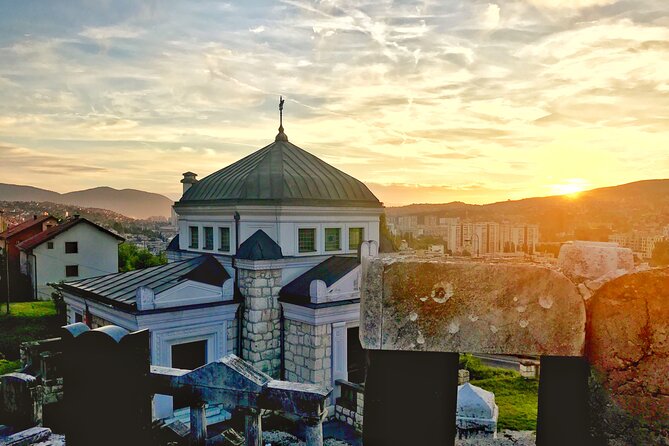
Reviewed · HISTORICAL TOURS
Sarajevo: Jewish Heritage Tour
Sarajevo’s Jewish heritage is one of those stories you can actually see in the city, not just read about. I love that the tour starts in the oldest synagogue in Bosnia (1581), and I love the focus on the Sarajevo Haggadah, including how it survived war. One consideration, two of the museum and synagogue stops have admission fees of their own, so you’ll want to budget a little extra beyond the tour price.
The other big win is the human side. Guides like Armina, Ahmed, and Edin bring local context and personal storytelling, and the group stays small (up to 8 people), so you can ask questions without shouting over strangers.
Key things I’d mark as worth your attention
- 1581 synagogue setting at the Jewish Museum, with a short film that sets the scene
- Sarajevo Haggadah context, plus advice on timing since display days can vary
- Sephardic and Ashkenazi sites in one walkable route, not just one neighborhood
- Cemetery history that tracks multiple eras, from Ottoman rule to Austro-Hungarian times
- Small-group pace, with time to stop for details in real streets and squares
- A mix of paid and free stops, so you can plan your day and your ticket spending
Jewish Sarajevo on foot, in a small group
This is a guided walking tour designed for people who want to understand Sarajevo as a lived-in city, not just a photo stop. You move through the historic center at an easy pace, with enough time at each point to connect the dots between religion, community life, and the larger city story.
The tour typically runs about 2 to 3 hours, and the group size is kept to a maximum of 8 travelers. That matters, because the subject is layered, and you’ll likely have questions. A small group also makes it easier to hear your guide when you’re standing in busy public spaces.
Language is English, and pickup is possible if you request it. If you’re staying near the center, you’ll still enjoy it even without pickup, because the meeting point is in a central area with public transportation nearby.
More around Sarajevo to weigh up
- East Bosnia & West Serbia UNESCO heritage day tour from Sarajevo
★ 5.0 · 55 reviews - Sarajevo Full Day Tour: History, Culture, Nature, War & Olympics
★ 5.0 · 27 reviews - Sarajevo genuine walking tour: Steps through history
★ 5.0 · 22 reviews
Meet Bosnia Tours start point and how pickup works
You meet at Meet Bosnia Tours – Sarajevo Tours, Days Out, Excursions and Activities, at Gazi Husrev begova 75, at the crossroads near Mula Mustafe Bašeskije. The scheduled start time is 9:00 am, so I’d plan to arrive a bit early, especially if you’re lining up museum timing.
Hotel pickup can be arranged upon request. The operator also includes an air-conditioned vehicle, which usually helps when the route needs short transfers between stops. If you prefer to walk every step, you can still do most of the strolling, but the vehicle support helps keep the day comfortable.
A useful extra for planning is that you get a mobile ticket, and you’ll receive confirmation when you book.
Jewish Museum in the oldest synagogue (1581) and the Sarajevo Haggadah film
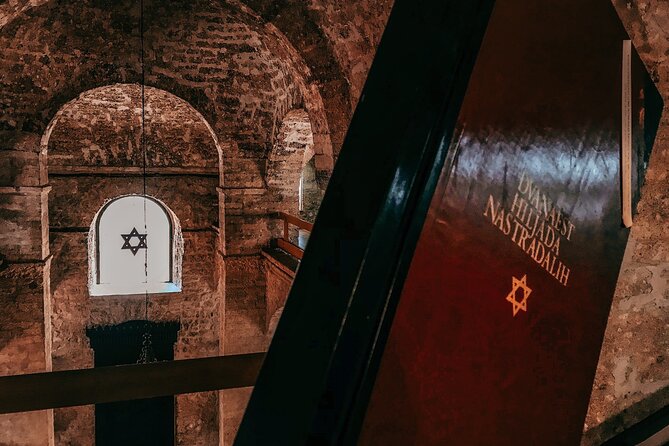
The first real “wow” moment is the Jewish Museum of Bosnia and Herzegovina, housed in the oldest synagogue in Bosnia and Herzegovina, built in 1581. Even before the history lesson starts, the setting gives you a sense of continuity. This is not a modern museum plopped down in a random building.
Plan on about 45 minutes here, and note that the museum admission is not included in the tour price. Inside, you’ll watch a film for roughly 20 minutes about the Sarajevo Haggadah. The idea is simple: the guide helps you understand what the Haggadah is before you see where it’s kept later in the day.
What I like about this structure is that it prevents the common mistake of treating the Haggadah like just another artifact. You get emotional and historical context first, then later you learn how it survived when the world turned hostile.
Eternal Flame stop: schools, shops, and the Sarajevo Jewish “map”
After the museum, you’ll move through the city with a guide who connects locations to real community life. This is where the tour shifts from “here’s a building” to “here’s how people lived.”
At the Eternal Flame area, you’ll hear about major Jewish community landmarks and investments. Expect stories about things like:
- where the first hotel in Sarajevo was opened
- the kinds of shops Jews ran in the city
- where the first Jewish school opened
- where the singing synagogue used to be
Some of these details are the kind you’d miss if you were wandering on your own. And that’s the point. You’re not just collecting monuments, you’re building a mental map of community presence across generations.
This stop is about 30 minutes, and admission here is listed as free. The tradeoff is that because it’s tied to storytelling, you’ll get the most value if you’re comfortable listening while walking and stopping in public squares.
Somewhere quieter after Sarajevo:
- Sarajevo: Mostar, Konjic, Blagaj Tekke, Pocitelj & Waterfall
★ 4.9 · 1,666 reviews - Fall of Yugoslavia, Sarajevo War Tour with Tunnel of Hope Museum and Frontlines
★ 5.0 · 1,314 reviews - Sarajevo: Grand Walking Tour Through Time and Cultures
★ 4.8 · 1,236 reviews - Sarajevo: Mostar, Konjic, Sufi House, Pocitelj & Kravice Falls
★ 5.0 · 1,179 reviews
National Theatre square and the city-wide Jewish connection
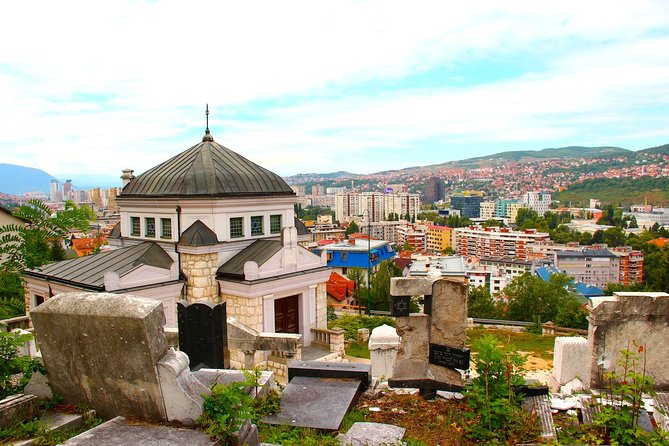
The itinerary includes a stop around National Theatre square and its connection to the Jewish community in Sarajevo. This is one of those moments where you realize Sarajevo’s Jewish story isn’t confined to one block. It shows up in how the city grew, which institutions appeared, and how communities interacted across different religions.
This portion is short. You’ll likely spend only a brief time there, but it works as a bridge between earlier synagogue stops and later museum and cemetery visits. If you like a route that keeps moving, this kind of in-between stop helps keep momentum.
Bosnian Cultural Center and the Sephardic synagogue link
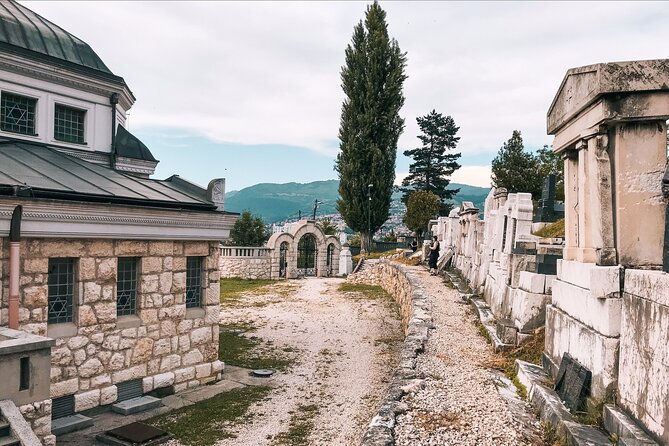
Next comes the Bosnian Cultural Center, where you’ll see how one building can carry multiple purposes over time. The tour highlights that the center has another function beyond its original religious role.
The key point for your understanding: you’re looking at the site connection to a major Sephardic synagogue, described as one of the largest Sephardic synagogues in Europe today. Admission here is free, and the stop itself is brief, around 10 minutes.
I like this stop because it helps you see how heritage sites evolve. A synagogue isn’t always frozen in time. Community needs change, and spaces often change roles while still preserving identity through memory and local interpretation.
The drawback is simply time. If you want a deep, long visit inside this particular building, this tour may feel like it moves on before you’ve had enough.
Ashkenazi Synagogue: center of Jewish life today
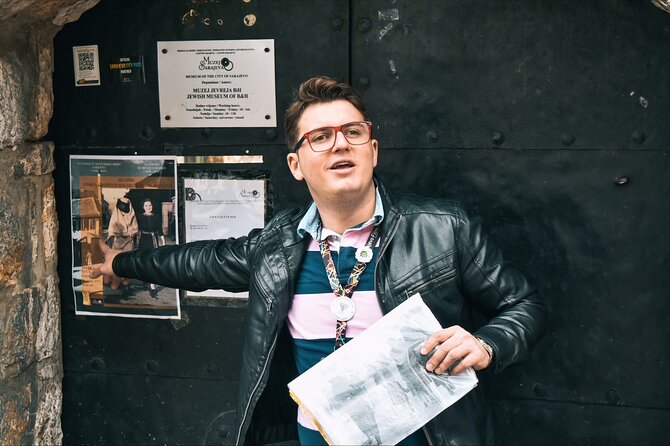
Then you’ll visit the Ashkenazi Synagogue, described as the center of Jewish life in Sarajevo today. This stop gives you a more direct sense of present-day community reality, not only historical context.
Expect about 45 minutes here. Admission is not included, so you’ll pay separately if you want to enter and see everything on site.
This is one of the stops where a good guide really matters. When the conversation is about the modern community, you need context and respectful framing, and the guides featured with this tour have a reputation for careful, compassionate explanations. If you’re traveling as a small group, you’ll also get space to ask questions about how Sarajevo’s Jewish community functions now.
Old Jewish Cemetery: from Ottoman Sephardic roots to later Ashkenazi burials
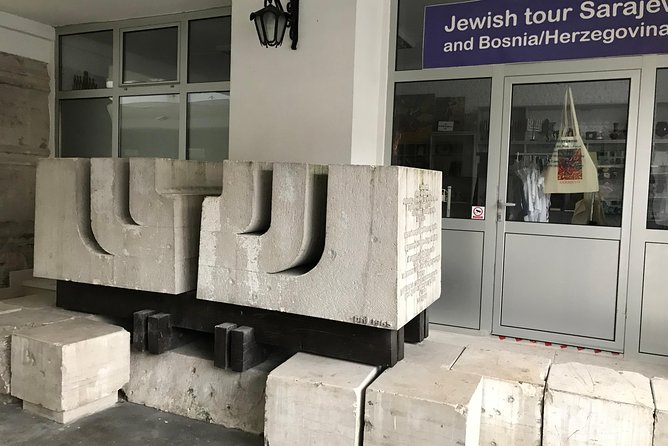
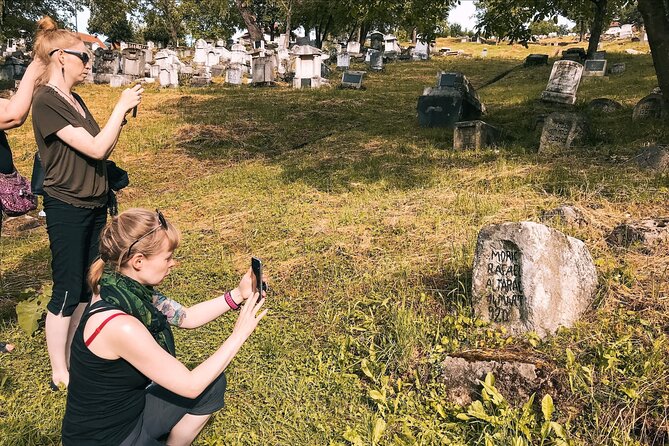
The tour ends with one of the most moving parts: the Jewish Cemetery Sarajevo. This cemetery is described as being almost 500 years old.
The story isn’t just “old graves.” It’s a timeline of who arrived and when. The cemetery was established by Sephardic Jews during the Ottoman period. Later, after Ashkenazi Jews arrived in Sarajevo with the Austro-Hungarian Empire in the late 19th century, the cemetery also became a burial ground for them.
You’ll spend about 30 minutes here, and admission is free. There’s a quiet practicality to this stop: it teaches you to slow down and read history through place. It also gives you a sense of continuity that you don’t get from photos.
One practical note: cemetery visits often call for respectful clothing and a calm pace. If you’re visiting in warm weather, consider bringing water, since you’ll be outdoors for a while even on a short tour.
National Museum of Bosnia: Sarajevo Haggadah and the story of survival
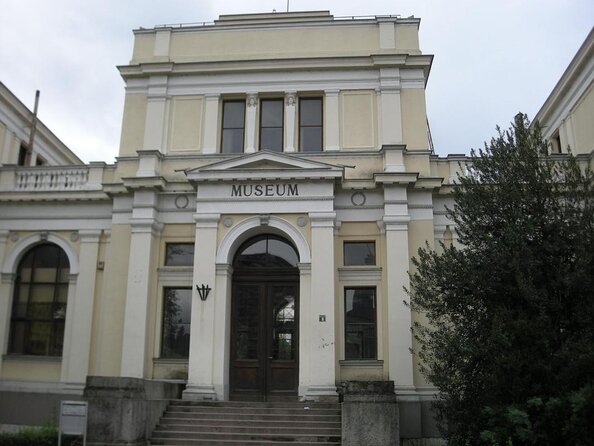
Your final major museum stop is the National Museum of Bosnia and Herzegovina. Admission is not included, and the time here is about 20 minutes, so this is a “key scenes only” visit.
This is the part many people care about most, because the museum houses the Sarajevo Haggadah, described as a compilation of stories connected to a long journey across centuries. The Haggadah is said to be a compilation of different stories written by Jews in Barcelona in the 14th century, and then brought to Sarajevo by a Jewish family in the 16th century.
The emotional centerpiece is its survival through danger. The tour description includes the idea that it was saved from the Nazis, with help from a Muslim librarian. It’s also described as having survived three wars, and it remains the most important Jewish heritage item in Bosnia.
One important tip: if you want to actually see the manuscript on display, the museum’s display schedule can matter. The guide information included with this experience mentions that the Sarajevo Haggadah has been displayed on Tuesdays and Thursdays at least at some times, so I’d treat this as a “check the day” situation and ask your provider ahead of time.
Because the stop is short, you’ll get more out of it if you come in knowing the story beats. That’s why the earlier museum film matters.
What’s included for your money, and what you should budget separately
At $72.18 per person, this tour is priced like a focused guided experience, not a long half-day production. You get:
- a local guide and a professional guide
- an air-conditioned vehicle
- a walking route with organized stops
- a mobile ticket
- a group size capped at 8 travelers
- free admission at several key stops
The tradeoff is straightforward: some admissions are not included. The Jewish Museum, the Ashkenazi Synagogue, and the National Museum have admission tickets listed as not included. Other stops in between are free, including the Eternal Flame area, Bosnian Cultural Center, and the cemetery.
So how should you budget? Think of the tour price as the guided framework and the time planning, then plan on paying separately for the paid museum and synagogue entries. That’s normal for city heritage tours, but it’s worth being ready.
If you’re wondering whether the price is worth it, I’d judge it by your interest level. If you just want a quick overview, you might feel it’s too much. If you want the places explained and connected, the value is strong, especially with the small group size.
Guides make the difference, and you get that here
A big part of this experience is the guide. The tour information and guide names that show up with this operator include Armina (also listed as Armina Pijalovic), plus Ahmed, Edin, and Arna. The common thread is clear communication and a careful tone about community history.
What stands out in the guide approach is that you don’t just get dates. You get context, plus local connections. One guide focus is making coexistence and respect feel real by explaining how Sarajevo’s communities interacted and how Jewish life changed over time.
If you’re an older traveler or you’re traveling with someone who needs patience, this tour’s small group size helps. In a larger group, you lose that flexibility.
Who should book this Jewish heritage walk
This is a great fit if:
- you want a guided, place-based explanation of Sarajevo’s Jewish community
- you prefer walking tours but still want comfort between stops (vehicle included)
- you care about both historical sites and sites tied to today’s community
- you like when a guide brings local detail, including practical notes and story connections
It might be less ideal if:
- you want only free sites, with no extra ticket spending
- you dislike museums or prefer long stays inside them, since several paid entries are time-limited
- you struggle with reading signs and listening at public sites, because many explanations happen while you’re moving
It’s also suitable for most people, with the general note that children must be accompanied by an adult.
Should you book Sarajevo: Jewish Heritage Tour
I’d book it if your goal is to understand Sarajevo through its Jewish landmarks you might not notice alone. The mix of stops matters: oldest synagogue roots at the museum, present-day Ashkenazi center, Sephardic connections via the cultural center, and the cemetery that anchors the timeline from Ottoman through Austro-Hungarian eras.
Book with one practical mindset. Admission for some stops is not included, and museum access for the Sarajevo Haggadah can depend on display days. If you plan for that, the tour price makes sense, because you’re buying guided interpretation, timing, and a route that actually connects the story.
If you want Sarajevo’s Jewish presence explained with care and good pacing, this is an easy yes.
Newest Sarajevo write-ups
- Sarajevo to Zagreb: One-Way Tour via Jajce, Travnik, Pliva Lake and Watermills★ 5.0 · 3 reviews
- Sarajevo E-Bike City Tour★ 5.0 · 3 reviews
- Mountain Village Lukomir Full Day Adventure Tour★ 5.0 · 3 reviews
- Bosnian Kingdom Capitals: Travnik & Jajce Tour from Sarajevo★ 5.0 · 3 reviews
- Strbacki Buk and Una Waterfalls: Day Trip from Sarajevo★ 5.0 · 3 reviews
- Sarajevo Snowshoeing Adventure★ 5.0 · 3 reviews
- Sarajevo Old Town: Bosnian Coffee, Baklava & Panoramic Views★ 5.0 · 3 reviews
- 4 Hours Tara Rafting Trip★ 5.0 · 3 reviews
Historical Tours, compared.
Sarajevo genuine walking tour: Steps through history
Read our review →
BOSNIAN PYRAMIDS TOUR (nature, history & archeology)
Read our review →
Browse the lists this tour appears in