
Reviewed · CITY TOURS IN SARAJEVO
ROSES OF SARAJEVO (Official WAR + CITY tour)- Story of a Survivor
A survivor-led tour is what makes the Roses of Sarajevo experience so interesting. You get the story behind the sites, not just the sights. I especially like the Tunnel of Hope walk-through and the way the guide uses it to explain what day to day life meant during the siege.
I also like the focus on both sides of Sarajevo, including East Sarajevo in Republika Srpska, plus key political context that helps you understand why Bosnia is still complicated today. The main drawback is emotional, this is heavy material, and you should be ready for moments that can feel personal and hard.
Quick hits
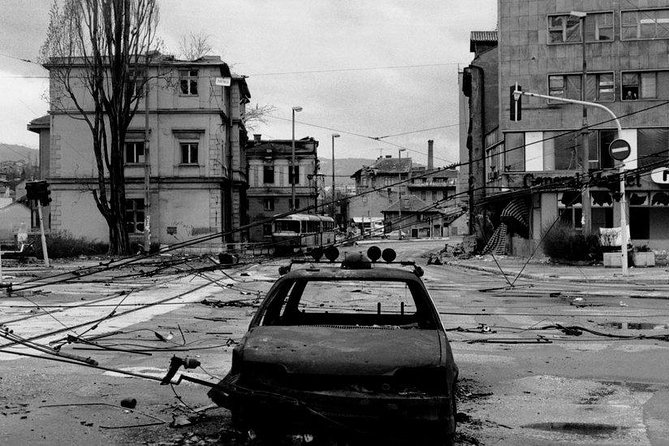
- Survivor narration that connects war facts to real childhood and survival
- Tunnel of Hope Museum included as a walk-through segment (pay extra for the museum ticket)
- Sniper Alley plus Sarajevo bridges, marked by the siege’s first victims and the Franz Ferdinand assassination site
- East Sarajevo in Republika Srpska, with on-the-ground war murals and ethnic context
- Mountain viewpoints at Trebević, including sniper zones and a viewpoint called Urijan Dedina
- Small groups, max 15 travelers, with a guide capped at 8
Why this tour works: a survivor voice, not just a slideshow
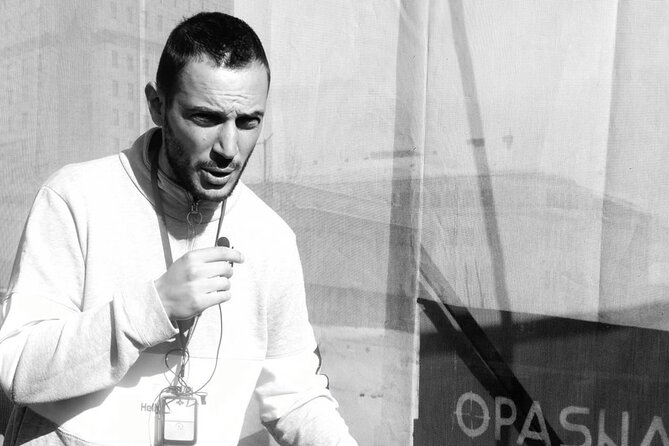
If you want Sarajevo to make sense quickly, this is a strong first stop on your trip. The tour moves in a logical arc, from western Sarajevo toward the siege viewpoints and then into East Sarajevo, so the geography starts to click in your head. The best part is that you are not just being told what happened, you are being shown how someone who lived it understood it.
In the reviews, guides like Mak and Mac (and also Alen) get praised for turning big events into human scale. That matters. War history can become abstract fast, especially when you hear dates and casualty numbers back to back. Here, the personal framing helps you keep your bearings, and it makes the heavy moments feel grounded rather than theatrical.
More City Tours in Sarajevo
- Sarajevo: Guided City Highlights Tour with Sarajevo Tunnel
★ 4.8 · 79 reviews - Sarajevo: Sarajevo City Market, Old Town Food Tasting Tour
★ 4.9 · 69 reviews - Sarajevo: Nighttime City Highlights Walking Tour
★ 4.9 · 52 reviews
Price and time, and whether it is good value
The price is $53.21 per person for about 4 hours 15 minutes. You also get a driver/guide and transport in an air-conditioned minivan, which is a real comfort in Sarajevo when you are traveling across neighborhoods and viewpoint stops. That part is practical value, because the route covers a lot of ground.
The one notable extra cost is the Tunnel of Hope Museum entrance fee, €10 per person, which is not included. Everything else is either free or handled as part of the plan for that stop (many segments are marked as admission free in the tour structure). So, your budget is mostly predictable: pay for the Tunnel of Hope Museum, then focus on the experience.
For best value, book this early in your trip if your goal is understanding. A lot of Sarajevo landmarks and street art, even the architecture, starts to make more sense once you have the siege context in place.
Meeting point and group size: what that means for your day
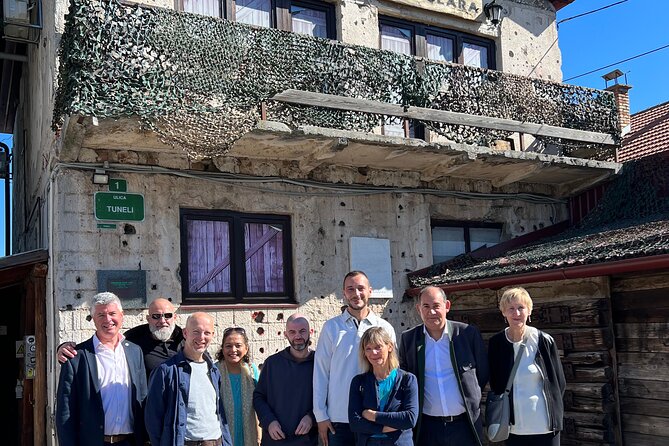
The tour starts at Đulagina 2, Sarajevo 71000 and ends back at the same place. Expect a small group: up to 15 travelers total, and the guide is capped at 8 people. In practice, that size matters for two reasons.
First, you can ask questions without shouting over the van noise. Second, the tour moves quickly between major sites, so smaller groups help keep things from feeling rushed or impersonal.
You will also get a mobile ticket, which is convenient. The tour is offered in English, and most people can participate, with the note that children must be accompanied by an adult.
Starting in Sarajevo’s identity zones: cathedral, Little Yugoslavia, and the first waypoints
The tour begins by setting the stage, starting with a brief look at Sarajevo’s Sacred Heart of Jesus Cathedral. From there, you hear why Sarajevo has been nicknamed Little Yugoslavia, a label that points to its layered identity and cross-currents over time.
This early segment matters because it keeps the city from becoming only a war map. You see how Sarajevo’s culture and history were already complex before the 1990s conflict, and that complexity is exactly what the guide ties back to later when discussing the political system.
More around Sarajevo to weigh up
- Sarajevo: Mostar, Konjic, Blagaj Tekke, Pocitelj & Waterfall
★ 4.9 · 1,666 reviews - Fall of Yugoslavia, Sarajevo War Tour with Tunnel of Hope Museum and Frontlines
★ 5.0 · 1,314 reviews - Sarajevo: Grand Walking Tour Through Time and Cultures
★ 4.8 · 1,236 reviews - Sarajevo: Mostar, Konjic, Sufi House, Pocitelj & Kravice Falls
★ 5.0 · 1,179 reviews
The drive to the Tunnel of Hope: monuments, Ottoman and Austro-Hungarian layers, and the war zones you pass
On the way to the Tunnel of Hope Museum area, you travel through a route where the guide explains 20+ monuments across Ottoman, Austro-Hungarian, and Yugoslav eras. That is not trivia for trivia’s sake. It is your “legend” for Sarajevo’s streets, because so many buildings and memorials are doing double duty, they are landmarks and they are messages.
You also stop to learn about a war house tied to the Kolar family, and then you are introduced to minefields. One part of the experience is an on-vehicle or on-site movie segment lasting about 17 minutes 44 seconds. After that, you move toward the Sarajevo War Museum and related areas including a war room and a war journal spot.
A short free time block follows during this section, about 10 to 15 minutes, which I like because it gives you a chance to reset your brain before you start walking. It is easy to overload on facts here, even when the guide is excellent.
Tunnel of Hope Museum: where the siege becomes physical
You then walk through the Tunnel of Hope, a signature moment of the tour. This is where the day stops being mostly informational and starts feeling experiential. Even if you already know the siege existed, the tunnel format makes it harder to dismiss the human effort involved.
Just plan for this: the museum ticket is not included, so have that €10 ready. Also, expect the tour to be emotionally intense. This segment is the kind of place where people process quietly. If you are the type who needs a lot of chatter to stay calm, you might find that challenging.
What happens after the tunnel: the city’s war timeline, victims, and the political why
After the siege tunnel segment, the tour moves into a city-wide explanation of what the conflict did to Sarajevo and how it echoes into today.
You get a brief moment about the Rose of Sarajevo, including the 1994 and 1995 number of victims tied to the siege timeline. From there, the guide transitions into the broader political story by introducing Yugoslavia, then explaining the monument of the liberation of Sarajevo in WWII. This connection helps you see that the 1990s were not the first time Sarajevo’s streets carried conflict.
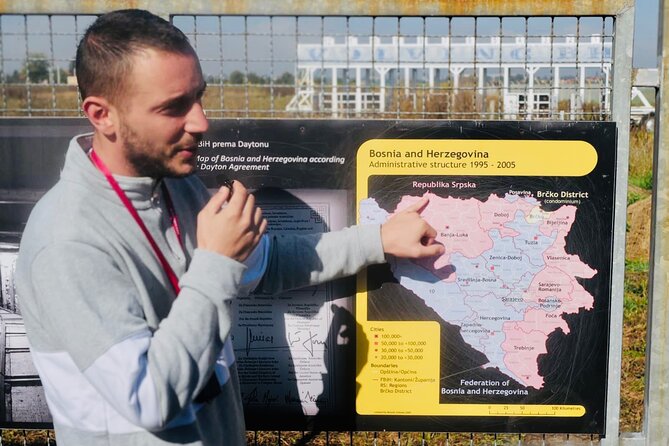
Next comes one of the most useful parts for people who want more than dates: a look at the Presidency of Bosnia and Herzegovina, described as Europe’s most complicated institution. You get a presentation of the current political system, which is exactly what you need if you plan to keep exploring after your tour.
Sniper Alley and the Holiday Inn exchange story
One of the most memorable stretches is when the group passes through Sniper Alley, with the guide explaining the story behind what was hit and how journalists and everyday life intersected with siege realities.
A specific stop in this driving segment includes the war-journalist hotel and the Holiday Inn hotel in Sarajevo, tied to the exchange of soldiers during the siege. This is one of those details that makes the war feel less like a battlefield map and more like a set of competing human decisions.
You also pass the National Museum on the Austro-Hungarian part of Sarajevo and hear about the Sarajevo Haggada book. These references might sound like side quests, but they reinforce the message: Sarajevo is still Sarajevo, even while it was under siege. The culture did not pause. It just had to survive.
East Sarajevo in Republika Srpska: what changes when you cross entities
Then the tour turns toward the other side of the city, guiding you through a segment focused on East Sarajevo, located in the Republika Srpska (RS) entity. The guide explains core differences between the entities and points out the country’s ethnic diversity.
This portion is valuable if you are trying to understand why Bosnia works the way it does today. You cannot get that from postcards. The tour uses on-the-ground references, including current war murals in East Sarajevo, to show that memory is not only in museums. It is in streets.
If you want to keep your perspective balanced, this is one of the best segments. The guide does not treat the war as a single story, it treats it as multiple lived experiences, shaped by where people stood.
Trebević viewpoints and sniper zones: seeing what the siege used
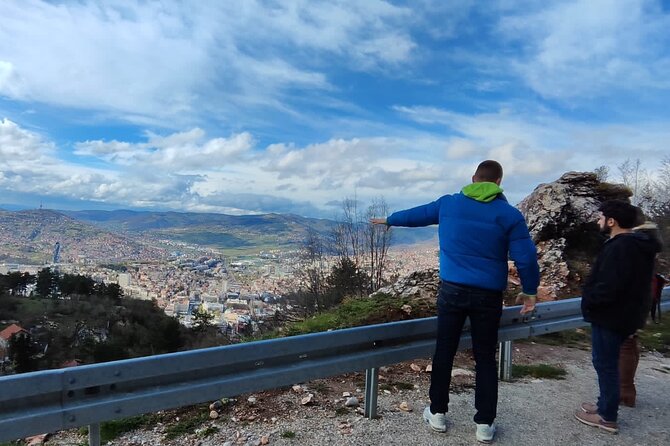
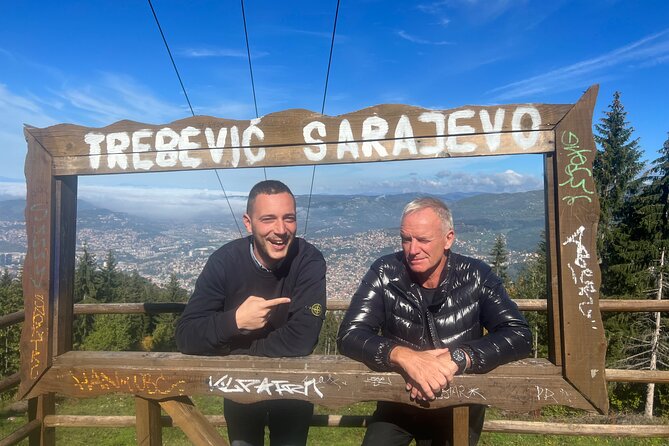
The tour reaches Trebević Vidikovac for panoramic views. Here you learn about Trebević Mountain and the I and II sniper zones, and you get a clear visual sense of how siege lines worked.
Before the main sniper-zone area, you pass a place introduced as SunnyLand, described as a Bosnian Disneyland facility that served as a previous 1992 to 1995 sniper zone. That contrast is jarring in the best way, it shows how quickly normal life signage can switch into survival realities.
Another short stop helps you lock in the geography: Urijan Dedina, described as a best viewpoint of Sarajevo’s Sniper Alley. From a visitor point of view, this is the moment you finally start to “read” the city from above, and you understand why certain streets became deadly.
Sarajevo’s Olympic leftovers: bobsleigh track and Skenderija
One of the more surprising switches is the visit to the Sarajevo Olympic Bobsleigh and Luge Track, with about 30 minutes allocated for the track, including a best photo spot on it. The key value here is contrast. You are looking at a stadium-level relic of 1984 Olympic ambition while the tour has also just shown you siege zones and frontline streets.
The day also references Skenderija, the 1984 Olympic hall, as you move through that Sarajevo stretch. Even if you are not an Olympic fan, it is a good mental reset, because it reminds you Sarajevo once hosted international energy without fear dictating the schedule.
Jewish Cemetery and the bridges: Sarajevo as layered memory
The tour slows down in places that carry long memory.
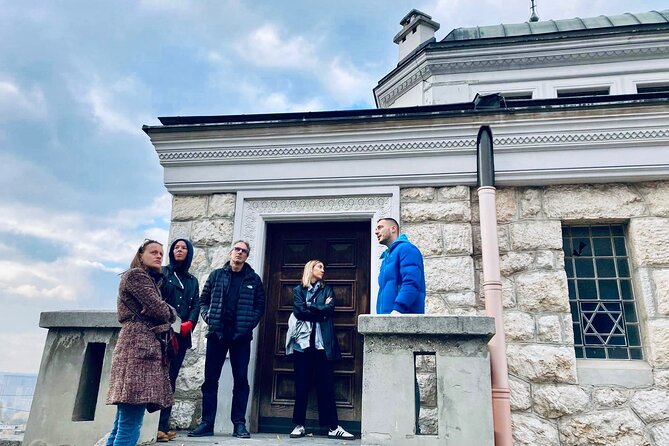
At the Jewish Cemetery, you visit old monuments dating to the 16th century, hear the presentation of Sarajevo as a kind of European Jerusalem, and learn about a monument for WWII Jewish victims. You also visit the Jewish Synagogue.
If you want an easy way to describe this stop, it is not only about the siege. It is about the broader patterns of how communities persist, record loss, and keep culture visible.
Then you visit Suada and Olga bridge, with a split emphasis. On one side, it is described as the Sarajevo Siege First Victim Bridge side. On the other, it is connected to a love story labeled Romeo and Juliet. You also see the first shot building from the start of Sarajevo War. The emotional effect is strong here because the bridge becomes both a memorial and a story device.
Yellow Fortress at sunset: Ottoman Sarajevo from above
You finish with a high point at Yellow Fortress, described as Sarajevo’s best panorama and sunset spot. The guide also provides Ottoman history during this stop.
I like the way the tour ends this way. You are not leaving with only grief. You leave with a view that shows Sarajevo as a city layered in time, with lines of influence visible in the architecture and terrain.
If you are the kind of person who wants a final moment to think, this stop gives it to you.
The part I would plan around: the emotional pacing
Let me be plain: this is a somber experience. The tour deals with siege survival, minefields, sniper zones, casualties, and first victims. The guide’s survivor storytelling is often what earns the top scores, and it is also what can hit hardest.
A practical way to handle that is timing. If you book it, try not to schedule a party later the same night. You will likely process what you saw and heard for hours afterward. If you prefer lighter tours, pick a different day for this one.
Who this tour is best for
This tour is ideal if you want:
- A first-day orientation to Sarajevo that also explains what to look for.
- War context that is not just structural, but personal.
- A mix of city highlights and key political explanation.
It can also suit people with only a day or two, because you cover major neighborhoods, bridges, viewpoints, and the Tunnel of Hope route in one run. If you have limited mobility, keep in mind there is walking through the tunnel and time at viewpoints, so you might find the pacing demanding.
Should you book Roses of Sarajevo?
Yes, if your goal is to understand Sarajevo beyond the postcard version. This is one of those tours where the personal survivor narrative turns the city into a readable place, not just a list of landmarks. The guides mentioned in the reviews, especially Mak or Mac, are repeatedly praised for making the information feel human and for tying the past to what you still see today.
Book it early in your trip if possible, and budget the €10 Tunnel of Hope Museum ticket. Then prepare for an emotional day that is heavy, but also deeply practical for understanding Bosnia and Sarajevo in context.
Newest Sarajevo write-ups
- Sarajevo to Zagreb: One-Way Tour via Jajce, Travnik, Pliva Lake and Watermills★ 5.0 · 3 reviews
- Sarajevo E-Bike City Tour★ 5.0 · 3 reviews
- Mountain Village Lukomir Full Day Adventure Tour★ 5.0 · 3 reviews
- Bosnian Kingdom Capitals: Travnik & Jajce Tour from Sarajevo★ 5.0 · 3 reviews
- Strbacki Buk and Una Waterfalls: Day Trip from Sarajevo★ 5.0 · 3 reviews
- Sarajevo Snowshoeing Adventure★ 5.0 · 3 reviews
- Sarajevo Old Town: Bosnian Coffee, Baklava & Panoramic Views★ 5.0 · 3 reviews
- 4 Hours Tara Rafting Trip★ 5.0 · 3 reviews
City Tours in Sarajevo, compared.
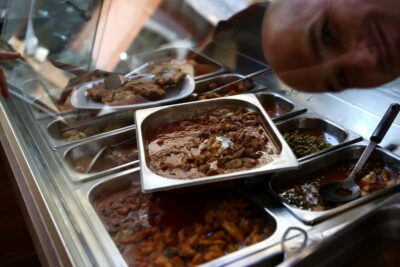
Sarajevo City Market, Old Town Food Tasting Tour
Read our review →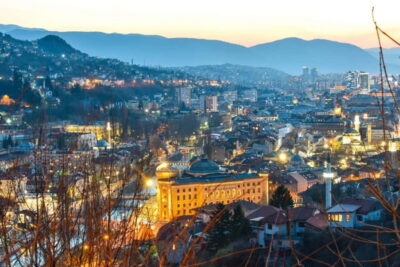
Browse the lists this tour appears in