
Reviewed · CITY TOURS IN SARAJEVO
Sarajevo City SIghtseeing / War Bike Tour
Sarajevo can be a tough city to understand at first glance. This Sarajevo City Sightseeing / War Bike Tour is interesting because you mix classic Ottoman-era sights with a real, on-the-ground look at the 1990s Bosnian War story at the Tunnel of Hope. You cover a lot without feeling rushed, and the max group size stays small.
I like two things a lot: you start with the iconic Baščaršija center (Sebilj, Kazandžiluk, Vijećnica area) and you end the day with context that actually matters (Tunnel of Hope and the spring at Vrelo Bosne). One possible drawback is that it is still a full half day, with short stops sprinkled in and two longer segments that ask you to stay present, not just take photos.
Why this bike tour works in Sarajevo, even if you only have half a day
This is built as a practical circuit. You meet at Obala Isa-bega Ishakovića 3 at 9:00am, ride between stops, and then return back to the same point. Total time is 6 to 7 hours, which is enough to get your bearings and still feel like you did something real, not just checked boxes.
The bikes and helmets are included, which I appreciate because it removes one more logistics headache when you’re in a new city. The tour is also capped at 10 travelers, and that small group size matters, especially on cobbled streets where patience helps.
One more helpful detail: you might see the route described as covering about just over 25 miles. That gives you a realistic sense of effort. If you’re comfortable cycling and you like a steady pace, you’re in the right place. If not, make sure you tell the guide early, so they can help set a rhythm you can handle.
Guides are a big reason people rate this tour so highly. Names like Mustafa, Mirza, Said, Kamer, and Arna come up again and again, with the same theme: good storytelling plus smooth bike handling so you don’t spend the day worrying about logistics.
Baščaršija Square to Sebilj Brunnen: your fast start in the old city
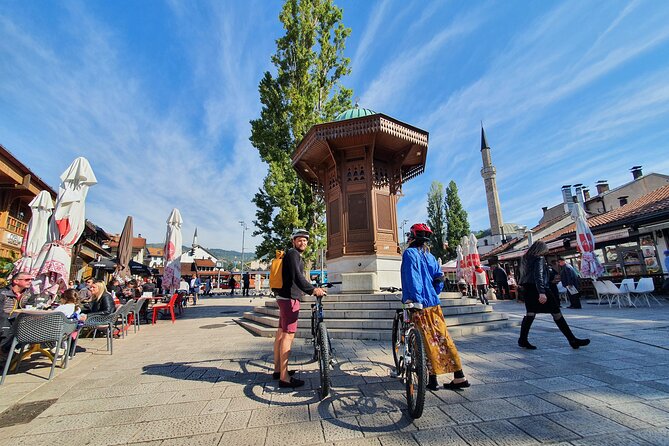
You begin right in the core, at the Sebilj Brunnen, a wooden fountain that sits in the heart of Baščaršija. It’s a standout meeting spot and an easy anchor point, which is exactly what you want on day one. You get only about 5 minutes here, so treat it like a photo and orientation stop.
What I like is how Sebilj sets the tone. From here, you’re surrounded by the kind of street layout that makes you feel how Sarajevo fits together: narrow lanes, foot traffic, shops, and quick turns that reward slow attention.
Practical tip: if you want that classic fountain shot without crowds, arrive with your bike ready and your camera already set. The stop is brief, and you’ll spend more time pedaling than waiting.
More City Tours in Sarajevo
- ROSES OF SARAJEVO (Official WAR + CITY tour)- Story of a Survivor
★ 5.0 · 770 reviews - Sarajevo: Guided City Highlights Tour with Sarajevo Tunnel
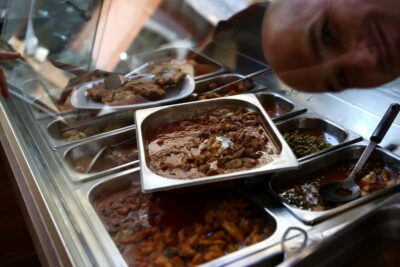
★ 4.8 · 79 reviews - Sarajevo: Sarajevo City Market, Old Town Food Tasting Tour
★ 4.9 · 69 reviews
Kazandžiluk: copper craft street and smarter souvenir shopping
After Sebilj, you head into Kazandžiluk, one of the oldest lanes in the Baščaršija area, dating back to the 16th century. This is the pedestrian-friendly street tied to coppersmiths, where you’ll see handmade copper items such as coffee pots, trays, and jewelry, often with detailed filigree designs.
This is more than a shopping detour. It shows you how Sarajevo’s Ottoman-era craft traditions stayed visible over centuries, and it gives you something tangible to take home that isn’t the usual generic magnet.
What to watch for: because everything is handmade, quality can vary. Use the time you have to look closely at finishing and details, and if you’re buying gifts, consider asking the shop owner about the item type and how it’s made. Even if you don’t buy, walking Kazandžiluk helps you understand the city’s rhythm.
Vijećnica and the House of Spite: architecture plus survival story
Next comes Vijećnica, Sarajevo’s former city hall and later national library, built in 1894 in a Moorish Revival style. It was heavily damaged during the Siege of Sarajevo in the early 1990s, and it reopened in 2014 as a national monument and cultural venue.
A few minutes later you stop at Inat Kuća, the House of Spite. The story here is direct: the owner refused to sell his building for City Hall construction, and the authorities relocated it brick by brick across the river. Today it’s a restaurant, which gives the building a practical, living purpose rather than turning it into a dead display.
These two stops work well back to back because they show two sides of the same theme: Sarajevo’s architectural ambition, and what happens when a city fights to protect its identity. Also, the way the guide ties the stories together can make the buildings feel less like landmarks and more like chapter titles in a single book.
Consideration: because both stops are short, you’ll want to keep your questions simple and pointed. I find it helps to ask about why those restoration choices matter now, rather than trying to learn every detail in five minutes.
Latin Bridge: the 1914 moment that changed world history
You’ll then reach Latin Bridge, famous for being the site of the 1914 assassination of Archduke Franz Ferdinand, an event that helped trigger World War I. The bridge dates to the 16th century, so the site isn’t just about a single date. It’s also a reminder that key historical moments often happen in everyday urban settings.
This stop is short, around 5 minutes, but it’s one of those places where you can feel the weight without the need for a long script. The guide’s job here is to connect the bridge to Sarajevo’s place in broader European history, while still keeping the focus on what you can see in front of you.
Quick photo advice: if you’re photographing while biking nearby, watch for pedestrians and keep your turn slow. This area draws people for a reason, so don’t assume you have open space.
More around Sarajevo to weigh up
- Trebevic Mountain Biking Tour from Sarajevo – Bobsleigh Track
★ 5.0 · 16 reviews - Skakavac Waterfall Mountain Biking Tour from Sarajevo MTB
★ 5.0 · 11 reviews - Sarajevo E-Bike City Tour
★ 5.0 · 3 reviews - Biking in Mostar ,Ćiro trail Mostar-Čapljina
★ 5.0 · 4 reviews
Mosque, market, and cathedral: Ottoman and Austro-Hungarian Sarajevo in one ride
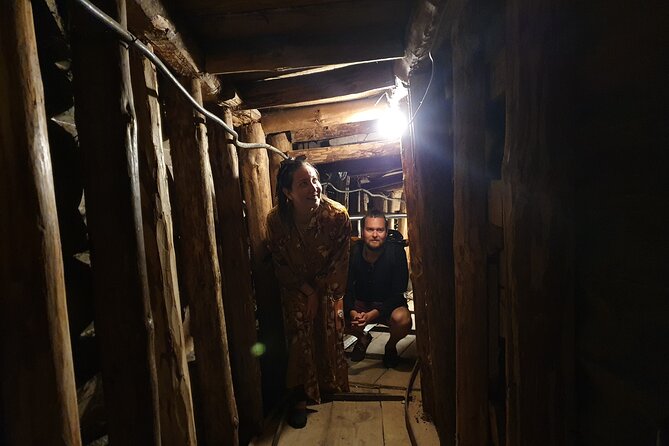
One of the strengths of this tour is that it doesn’t treat Sarajevo as a single-era postcard. After Latin Bridge, you get a cluster of major religious and civic landmarks.
First is Gazi Husrev-beg Mosque, built in 1530 and described as the largest mosque in Sarajevo. Next you’ll see Gazi-Husrev Beg’s Bezistan, a 16th-century covered market built by Gazi Husrev-beg, with shops under arched arcades.
Then you reach Sacred Heart Cathedral, the largest cathedral in Bosnia and Herzegovina, built in the late 19th century in a Neo-Gothic style. That last piece matters because it shifts the visual story from Ottoman-influenced design toward Austro-Hungarian-era architecture.
If you like understanding how cities layer cultures over time, this segment does a good job. In a single afternoon you see how Sarajevo’s public spaces reflect shifting power, different communities, and changing styles.
Respect tip: religious buildings often have rules about clothing and behavior. Since the tour includes brief stops, follow the guide’s cues on what to do, where to stand, and how long to linger.
Parliament Building: modern structure shaped by the Siege
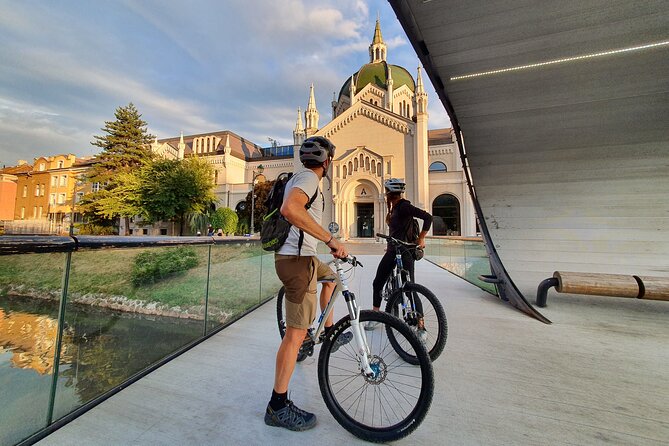
The tour continues to the Parliamentary Assembly of Bosnia and Herzegovina building, constructed in 1982 by architect Juraj Neidhardt. It was severely damaged during the Siege of Sarajevo and has been restored since then.
This is one of those stops that’s easy to overlook if you only think of Sarajevo as old town and bridges. But the parliament building puts the city’s story into a later timeline, showing that the war did not only hit ancient stone, it damaged modern institutions too.
Even with a brief 5-minute stop, it helps anchor the Tunnel visit later. You’re not just visiting war history as a standalone museum moment, you’re seeing how the consequences spilled into governance, civic life, and rebuilding priorities.
Vrelo Bosne: the break that makes the Tunnel stop easier
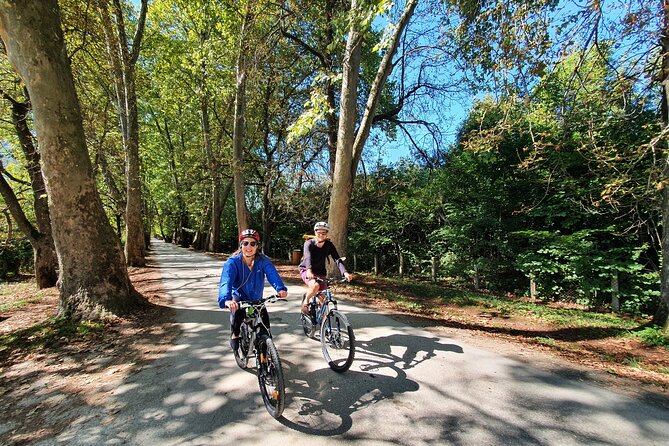
After the city-center sights, you get about 1 hour at Vrelo Bosne, the spring of the Bosna river in a public park at the foothills of Mount Igman. This is included, including admission, and it’s a smart pacing choice.
I like this break because it gives your brain a reset. After moving through heavy historical sites, a green outing with river-spring scenery can help you process without forcing you to jump immediately from one intense subject to another.
You’re still on a schedule, so don’t expect a full hiking day. But that hour is enough to stretch, freshen up, and take in a different side of Sarajevo.
Best use of the hour: plan to slow down and look around, not just scroll photos. It’s the kind of stop that changes how you remember the rest of the tour.
Tunnel of Hope: the war story told through place, not just facts
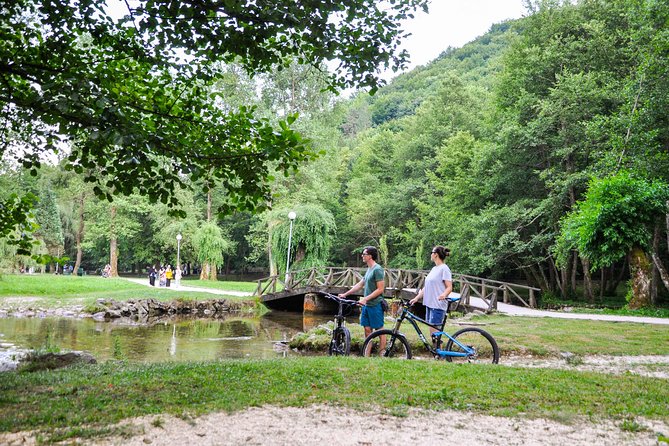
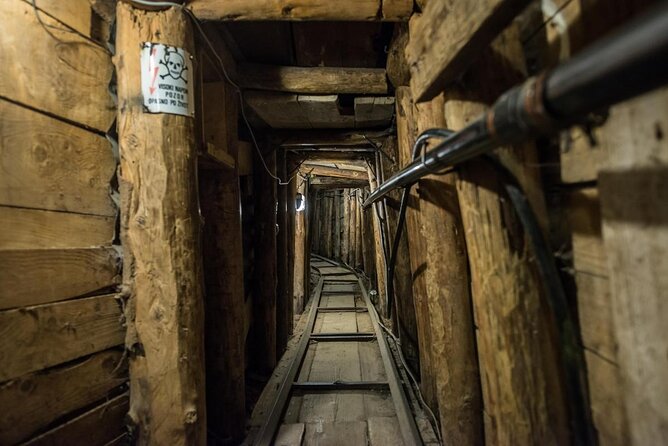
The final major segment is the Sarajevo War Tunnel, also known as the Tunnel of Hope. It was constructed during the Bosnian War to connect two Bosnian-held territories that were cut off. Admission to the museum is included, and you’ll spend about 1 hour here.
This is the part of the tour that demands attention. It is not just a dramatic site, it’s a physical answer to the question, how did people keep going when a city was under siege? Even if you only know a little about the war, the tunnel’s purpose helps make it understandable.
One practical note: this stop can feel emotionally heavy, so I’d suggest taking breaks inside the museum when you need them. You don’t have to rush through. If the guide offers context, let it land, then take your own time walking through the exhibits.
Bike logistics, pacing, and what to pack
The tour is offered in English, and it runs as a group ride with short on-and-off sightseeing moments. Many stops are around 5 minutes, so you should treat them like guided highlights rather than a slow, museum style walk.
Because cobbled streets show up in the Baščaršija area and the craft lanes, you’ll want stable shoes. If your feet hate walking on uneven stone, consider what that might feel like in a bike saddle plus brief stops.
Pack basics:
- A bottle of water, especially on warmer days
- Sunscreen and sunglasses, since open-air riding is part of the day
- A light layer for shade near monuments and the tunnel area
Weather matters. The tour requires good weather, and if conditions are poor, you’ll be offered a different date or a full refund. That’s important in Sarajevo because clouds and rain can change how comfortable cycling feels.
Price and value: is $138.34 a fair deal?
At $138.34 per person, you’re not paying just for bike rental. You also get a helmet, plus admission to the Tunnel of Hope museum and admission to Vrelo Bosne. Those are two paid elements that can easily add up if you tried to DIY them.
The price also buys time and structure. A city like Sarajevo can be confusing if you only rely on maps, because landmarks cluster in ways that are easy to miss unless someone puts them into a clean route. With the small group size up to 10, you’re also less likely to feel like you’re stuck behind a large crowd.
Could it be pricey for some budgets? Sure. But if you want an efficient half-day overview and you care about understanding Sarajevo beyond surface photos, the included admissions and the guided context give it solid value.
Who should book this War Bike Tour, and who should skip it
This tour fits best if you:
- Want a first-time overview of Sarajevo’s biggest landmarks
- Enjoy biking and want to cover more than a standard walking tour
- Are ready to spend real time at the Tunnel of Hope and take the war story seriously
- Prefer a small group, up to 10 travelers
You might skip or choose another option if:
- You dislike cycling distances around a full half-day
- You’re hoping for a mostly relaxed, slow sightseeing day with long museum time
- You want a purely historical focus with no outdoor park break
Should you book it?
Yes, I’d book it if you want Sarajevo in one day, without losing the meaning behind the places. The mix is the magic: Ottoman-era landmarks in Baščaršija, modern civic sites like the parliament building, a proper war story at the tunnel, and then a breathing space at Vrelo Bosne.
If cycling sounds fun but you worry about effort, message your comfort level when you book and show up ready to ride. With the helmet and small group size, it’s set up to feel manageable.
FAQ
How long is the Sarajevo City Sightseeing / War Bike Tour?
It’s listed as 6 to 7 hours.
What is the price per person?
The price is $138.34 per person.
Is the tour offered in English?
Yes, it is offered in English.
What is the maximum group size?
The maximum group size is 10 travelers.
What does the tour include?
It includes use of bicycle, use of helmet, Sarajevo War Tunnel museum admission, Vrelo Bosne admission, and new friends.
Where does the tour start and end?
It starts at Obala Isa-bega Ishakovića 3, Sarajevo 71000, and it ends back at the same meeting point.
Can I get a full refund if I cancel?
Yes. You can cancel for a full refund if you cancel up to 24 hours in advance of the experience’s start time. If it’s canceled due to poor weather, you’ll be offered a different date or a full refund.
Newest Sarajevo write-ups
- Sarajevo to Zagreb: One-Way Tour via Jajce, Travnik, Pliva Lake and Watermills★ 5.0 · 3 reviews
- Mountain Village Lukomir Full Day Adventure Tour★ 5.0 · 3 reviews
- Sarajevo E-Bike City Tour★ 5.0 · 3 reviews
- Bosnian Kingdom Capitals: Travnik & Jajce Tour from Sarajevo★ 5.0 · 3 reviews
- Strbacki Buk and Una Waterfalls: Day Trip from Sarajevo★ 5.0 · 3 reviews
- Sarajevo Snowshoeing Adventure★ 5.0 · 3 reviews
- Sarajevo Old Town: Bosnian Coffee, Baklava & Panoramic Views★ 5.0 · 3 reviews
- 4 Hours Tara Rafting Trip★ 5.0 · 3 reviews
City Tours in Sarajevo, compared.
Sarajevo City Market, Old Town Food Tasting Tour
Read our review →

Browse the lists this tour appears in