
Reviewed · HISTORICAL TOURS
SARAJEVO STREET ART TOUR (art, history & mystery) – sARTajevo!
This experience is interesting because it treats street art like a clue you can read. I love how the guide connects each mural to history and meaning, and I love the fact it is a small group walk, max 5, so you get real back-and-forth instead of standing in silence. One possible drawback: the focus stays on murals and street-level art, so if you want classic sightseeing only, you may miss some of that.
You start at Đulagina 2 at 6:00 pm and finish back there, usually after about 2 to 3 hours. The tour is offered in English, and it works well even if you do not consider yourself an art person.
Key highlights you will feel on the walk
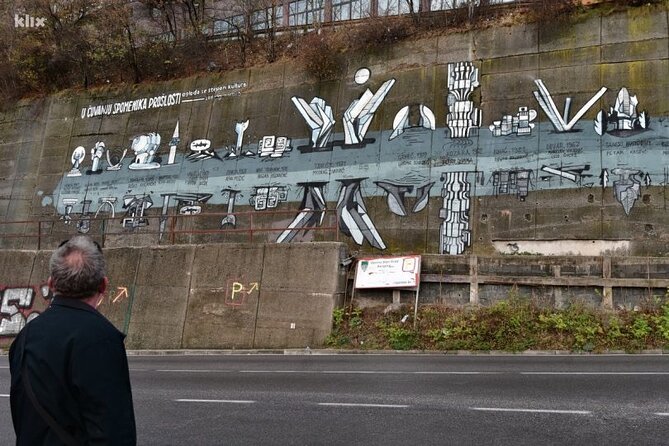
- Bentbaša mural stop with the piece titled In the preservation of monuments of the past and a slow, story-first explanation
- Papagajka (Perrot) building where the first street art festival took place
- Academy of Fine Arts plus hands-on style talk around stickers and what designs are doing on walls
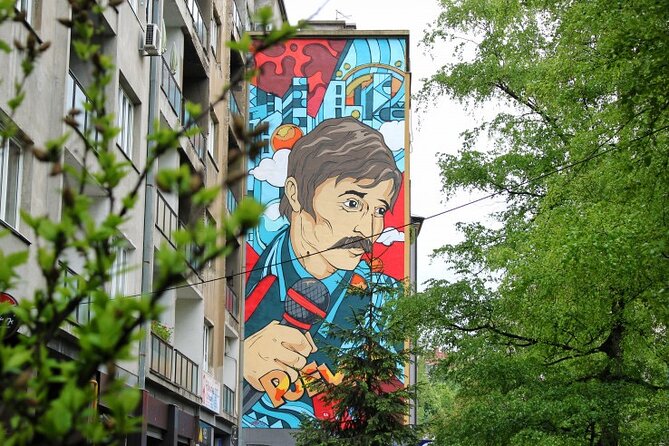
- Aria street art locations tied to Mr. Chat, the mural Singer (Pjevač), and Gallery Boris Smoje
- Ferhadija Pedestrian Street area with the Srebrenica 1992/1995 mural and a guided look at the surrounding graffiti scene
Sarajevo street art as real-life history
Sarajevo has a way of making modern life feel connected to the past, and this tour uses that instinct on purpose. You walk through neighborhoods where you can see art layered onto everyday spaces. The big idea is simple: the walls are not decoration. They are part of what people remember, argue about, and build next.
I also liked how the tour feels practical. You are not just told what to look at. You get guided cues for how to notice things like style, placement, and what a piece might be responding to. That is why the best moments do not feel like museum viewing. They feel like learning the city’s second language.
One more thing I really valued is the human side. Guides such as Alan, Ado, and Mak have led this experience in the past, and their common strength is that they explain with confidence and clarity. You do not need prior art knowledge. You just need curiosity and a comfortable pair of shoes.
More around Sarajevo to weigh up
- East Bosnia & West Serbia UNESCO heritage day tour from Sarajevo
★ 5.0 · 55 reviews - Sarajevo Full Day Tour: History, Culture, Nature, War & Olympics
★ 5.0 · 27 reviews - Sarajevo genuine walking tour: Steps through history
★ 5.0 · 22 reviews
Price and logistics that actually matter
At $30.04 per person for about 2 to 3 hours, this is priced like a focused guided experience, not a long, complicated excursion. The value angle is stronger than it looks at first glance, because the stop-by-stop plan includes free admission tickets at each location. That means fewer surprises and less time wasted figuring out costs on the spot.
The tour starts at 6:00 pm, which is a smart choice for a walking tour in Sarajevo. Late-day light helps street art look more readable, and the city starts feeling more lived-in. The group size cap, maximum 5 travelers, keeps the pace human and makes it easier for the guide to talk directly with you.
You also get a mobile ticket, and the activity ends back at the meeting point. If you are juggling dinner plans or a night out, that return-to-start setup is a relief.
Stop 1: Bentbaša and the mural about preserving the past
Bentbaša is your first real lesson in how street art can carry a message without needing a frame. The anchor here is a mural titled In the preservation of monuments of the past. The guide’s job at this stop is not to recite background notes. It is to help you read the mural as an argument about memory.
What makes this stop work is the way the explanation is tied to the mural itself. You will be pointed toward details that shape the meaning, then guided toward why that meaning lands in Sarajevo. This is where the tour’s theme, art, history, and mystery, starts to feel real. Not mystery like horror-movie jumps, more like the sense that you are catching a conversation that has been going on for years.
If you have ever walked past a mural and thought, cool colors, you will probably slow down more here. The guide pushes you to see that the artwork is doing more than expressing. It is responding.
Possible drawback: since this is a walking experience built around multiple stops, your time at each location is brief. If you love staring at a single wall for a long time, you might wish there were extra minutes here.
Stop 2: Papagajka (Perrot) and Copy Papagajka
Next you head to the art building Papagajka, also associated with Perrot, where the first street art festival was held. That fact alone makes this stop meaningful. It turns the walls from a random urban feature into something with dates, events, and a community behind it.
You also stop near Copy Papagajka, which gives you a chance to see how festival energy translates into real wall art. The guide walks you through what you are looking at and why those styles and themes show up in this place. If you are expecting street art only to be political or confrontational, this stop may gently challenge that idea, because festivals often bring craft, experimentation, and play into the open.
I liked how this is not taught like a lecture. It is more like the guide shows you a map with your eyes. You learn how to connect the art you see now to the moments that made it possible.
Somewhere quieter after Sarajevo:
- Sarajevo: Mostar, Konjic, Blagaj Tekke, Pocitelj & Waterfall
★ 4.9 · 1,666 reviews - Fall of Yugoslavia, Sarajevo War Tour with Tunnel of Hope Museum and Frontlines
★ 5.0 · 1,314 reviews - Sarajevo: Grand Walking Tour Through Time and Cultures
★ 4.8 · 1,236 reviews - Sarajevo: Mostar, Konjic, Sufi House, Pocitelj & Kravice Falls
★ 5.0 · 1,179 reviews
Stop 3: Academy of Fine Arts, sticker art, and design choices
At the Academy of Fine Arts stop, the tour shifts from murals on outer walls to how design language gets trained and shared. This is also where you get a look at what the guide calls the most beautifully designed object in Sarajevo, plus an explanation that ties art education to what you see on streets.
Sticker art is part of this stop, and it is a smart inclusion. Stickers are small, fast, and often temporary. They also reveal how street artists test ideas when they do not have the space of a mural. The guide demonstrates and explains sticker art, which helps you understand street art as an ecosystem instead of a single style.
If you came hoping to learn why graffiti and street stickers look the way they do, this is the section that usually clicks fastest. You start noticing how artists make compact statements that still land emotionally.
A small consideration: if you prefer purely outdoor stops, this could feel a little more enclosed or structured than the mural stops. But it is still built to keep you moving and looking.
Stop 4: Aria, Mr. Chat, Singer (Pjevač), and Gallery Boris Smoje
Aria is where the tour gets more name-and-story specific. You will visit locations tied to Mr. Chat, the mural Singer (Pjevač), and Gallery Boris Smoje. Rather than treating street art as anonymous, this part puts artists and institutions into the same conversation.
That matters because it changes how you interpret what you see. When you know a mural like Singer (Pjevač) is part of a broader network, you stop viewing it as a one-off. You start thinking about themes that repeat, styles that connect, and how the city’s art scene talks back and forth.
Mr. Chat is another reason this stop feels fun. The guide helps you read the work in context, which means you get more than the character itself. You learn the point of the persona, the visual language, and why the style fits Sarajevo.
And with Gallery Boris Smoje included, you get a bridge between street culture and formal art spaces. Even if you do not plan to go into galleries on this trip, it helps you understand why street art in Sarajevo does not live in a separate universe. It is tied to people, places, and conversations.
Stop 5: Ferhadija Pedestrian Street and the Srebrenica 1992/1995 mural
This is the stop where the tour’s tone turns heavier. Behind Ferhadija Pedestrian Street, you will find the mural Srebrenica 1992/1995. The guide introduces it and helps connect it to the wider graffiti scene along the street.
Art at this level carries weight. You are not just reading color. You are reading how a city chooses to hold onto grief, history, and testimony in public space. The guide’s explanation is what keeps the experience respectful and clear instead of vague.
Then you extend the walk to understand the graffiti scene around you. That is an underrated part of the tour. It prevents you from treating the Srebrenica mural as an isolated monument. You see it as part of a larger pattern of street art that shapes how people process events and identity.
If you are sensitive to intense historical content, plan to slow your pace here. Give yourself a minute to stand back, look, and let the meaning settle before moving on.
What you will learn, even if you do not care about street art
Here is the honest benefit: the guide teaches you how to see. Even if you do not know one tag from another, you will leave with a set of instincts.
You will learn to look for:
- message versus style (what the art is saying, not just how it looks)
- context clues (where something is placed and what surrounds it)
- evolution over time (how Sarajevo’s street art connects past and present)
This is also where that non-art-person praise makes sense. A strong street art tour does not require you to admire art. It requires you to understand it. And the guides on this route have been praised for putting works into historical and artistic context, so you finish with clearer meaning, not just photos.
A practical tip from this approach: after the tour, you will start scanning walls on your own. The city becomes easier to read. That is the kind of souvenir that lasts longer than any postcard.
Why the best guides feel like insiders, not lecturers
One thing that keeps coming up in the experience vibe is the guide quality. Guides such as Alan, Ado, and Mak have been highlighted for speaking perfect English and for being smart, charming, and credible. More important than the personality is the structure they bring to explanations.
The tour format helps. You are at a wall for a short window, then you move to the next. That keeps attention sharp and stops the walking from turning into a long speech. You get just enough time at each stop to connect the art to its story, then you keep going.
Also, the group size keeps things flexible. With a maximum of 5 people, you are more likely to get direct answers and follow-ups. If you ask a question about a specific mural detail, you usually get a real reply instead of a general pep talk.
Should you book this $30.04 street art walk?
If you want a guided way to see Sarajevo that is not the standard checklist route, I would book it. The price is reasonable for a 2 to 3 hour plan, and the free admission tickets at each stop keep the experience simple. It is also a great pick if you like learning history through everyday culture, not just through monuments and plaques.
Book this tour if:
- you want street art with context, not street art as random wall decoration
- you like small groups and clear explanations in English
- you are curious about how Sarajevo connects past events to present identity through public art
Skip it if:
- you only want big-name sights and have little interest in murals and sticker art
- you dislike heavier historical themes, since the Srebrenica mural stop is part of the route
FAQ
How long is the Sarajevo Street Art Tour?
It lasts about 2 to 3 hours.
What time does the tour start, and where do I meet?
The start time is 6:00 pm, and the meeting point is Đulagina 2, Sarajevo 71000, Bosnia and Herzegovina. The tour ends back at the meeting point.
Is the tour offered in English?
Yes, it is offered in English.
Are there entrance fees for the stops?
The tour information lists admission tickets as free at each stop.
How many people are in a group?
This tour has a maximum of 5 travelers.
Do I need a printed ticket?
You receive a mobile ticket.
Can I cancel for a full refund?
Yes. You can cancel up to 24 hours in advance for a full refund.
More Street Art in Sarajevo
- Mostar Street Art & Graffiti Tour
★ 5.0 · 19 reviews
Newest Sarajevo write-ups
- Sarajevo to Zagreb: One-Way Tour via Jajce, Travnik, Pliva Lake and Watermills★ 5.0 · 3 reviews
- Mountain Village Lukomir Full Day Adventure Tour★ 5.0 · 3 reviews
- Sarajevo E-Bike City Tour★ 5.0 · 3 reviews
- Bosnian Kingdom Capitals: Travnik & Jajce Tour from Sarajevo★ 5.0 · 3 reviews
- Strbacki Buk and Una Waterfalls: Day Trip from Sarajevo★ 5.0 · 3 reviews
- Sarajevo Snowshoeing Adventure★ 5.0 · 3 reviews
- Sarajevo Old Town: Bosnian Coffee, Baklava & Panoramic Views★ 5.0 · 3 reviews
- 4 Hours Tara Rafting Trip★ 5.0 · 3 reviews
Historical Tours, compared.
Sarajevo genuine walking tour: Steps through history
Read our review →
BOSNIAN PYRAMIDS TOUR (nature, history & archeology)
Read our review →
Browse the lists this tour appears in