
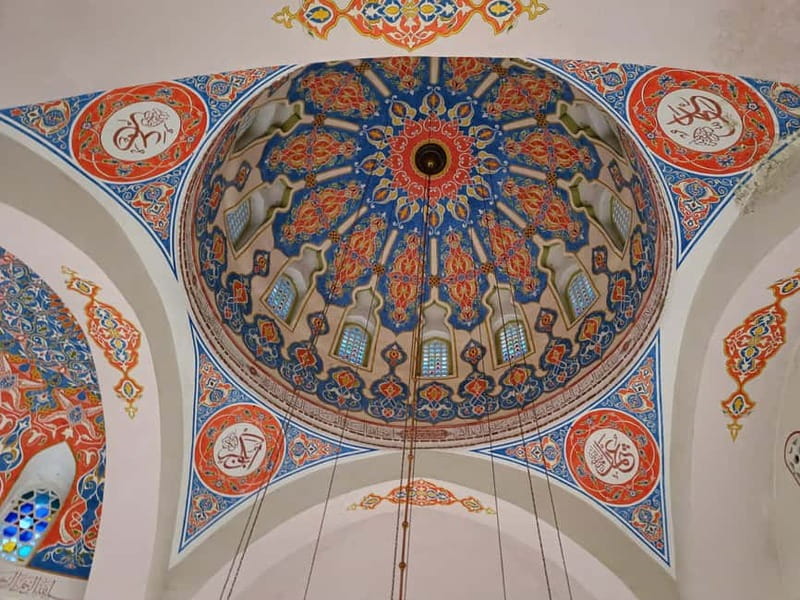
Reviewed · WALKING TOURS
Discover Banja Luka: Guided Walking Tour
Banja Luka can feel like one city stitched from different centuries at once, and this walking tour helps you read the stitches. I love the contrast of Ottoman mosques and Christian cathedrals in the same daytime loop, and I also like how the walk includes an easygoing river stroll. One possible drawback, though, is that the city still carries visible scars from an earthquake, so some areas are more about what survived than what once stood.
The tour is built for people who want to understand why different faiths and empires left their marks here, not just take photos. You’ll get a guided route through Ottoman, Austro-Hungarian, Yugoslav, and even Brutalist-era leftovers, plus a visit to the key religious landmarks and the Castel Fortress. Expect plenty of stops with explanations, so it helps if you’re comfortable asking questions and walking at an unhurried pace.
If you’re sensitive to uneven ground, plan to go slow and watch your footing, because it’s a city walking experience. On the bright side, the tour is wheelchair accessible, and it’s offered as a private group, so you’re not stuck in a crowded pack. Bring comfortable shoes and water, because three hours of city time adds up.
Key points you will actually care about
- Religions side-by-side: Ferhadija Mosque plus major Orthodox and Catholic cathedrals in one route
- A river-centered city story: a relaxed walk along the river that locals treat like the city’s main artery
- Castel Fortress viewpoints: you’ll pause at the fortress for city views and historical perspective
- Hard history, not just postcards: the earthquake impact explains why parts of the old architecture are gone
- You get explanations in your language: Italian, German, English, Serbo-Croatian, and Bosnian
- Good value for 3 hours: a focused loop for about $23 per person
Why this Banja Luka walk feels more meaningful than a checklist
This is the kind of city tour that helps you connect dots fast. Banja Luka’s identity is not one simple story. It’s a layered place where Islamic Ottoman design, Orthodox tradition, Catholic presence, and Austro-Hungarian-era influence all show up within walking reach, then you top it off with Yugoslav-era structures and Brutalist forms.
The best part for me is how the route moves between “spiritual buildings” and “everyday space.” Churches and mosques matter, but so does the river, because that’s where daily life plays out. When you walk the waterfront and then look up toward Castel Fortress, the city starts to make physical sense, not just historical sense.
You should also know what kind of mood to expect. The earthquake damage is part of the reality here. That means the tour leans into what remains, what was rebuilt, and what you can still learn from the surviving architecture.
More around Banja Luka to weigh up
- Unveiling Banja Luka’s urban soul: Walk & Enjoy
★ 4.5 · 5 reviews - Sarajevo: Grand Walking Tour Through Time and Cultures
★ 4.8 · 1,236 reviews - Sarajevo: 2 Hours Old Town Walking Tour With Local Guide
★ 5.0 · 505 reviews
How the 3-hour format works in real time
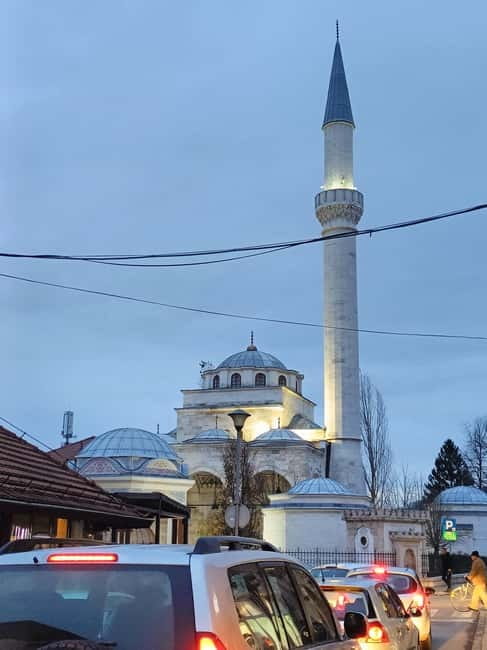
This is a 2 to 3 hour walking tour, and the duration listed is 3 hours, so plan for about that length of time on your feet. It’s a private group, so you can usually move at a pace that works for you, and it’s also wheelchair accessible.
A practical note: because it’s a walking tour, your comfort matters more than you think. Wear shoes you can trust on city sidewalks and bring water, especially if you’re going in warmer months. A camera helps too, because several stops are designed for photos, not just passing glances.
If you’re the type who likes a steady flow rather than a long schedule of random detours, this timing is a good fit. You’re not trying to cram a whole city in a half day. You’re getting a tight loop that explains what you’re seeing as you go.
Ferhadija Mosque: the Ottoman centerpiece you won’t gloss over
One of the key stops is the Ferhadija Mosque. This is the kind of landmark that immediately changes your perception of a city. Up close, you can see Ottoman-era influence in the style and the way the building anchors a neighborhood.
On a tour like this, the mosque is not treated like a single photo spot. You’ll get context for how Ottoman rule and culture shaped the region, and you’ll also understand why religious buildings sit at the center of civic life here. In practical terms, that makes your later stops click, because you start recognizing the same city logic repeating across different faiths.
The only consideration is that religious sites can have their own local expectations, so dress and behavior matter. The data you have here focuses on what’s included and how long you walk, not dress rules, so use normal respectful site etiquette when you arrive.
Cathedrals of Christ the Saviour and Saint Bonaventure
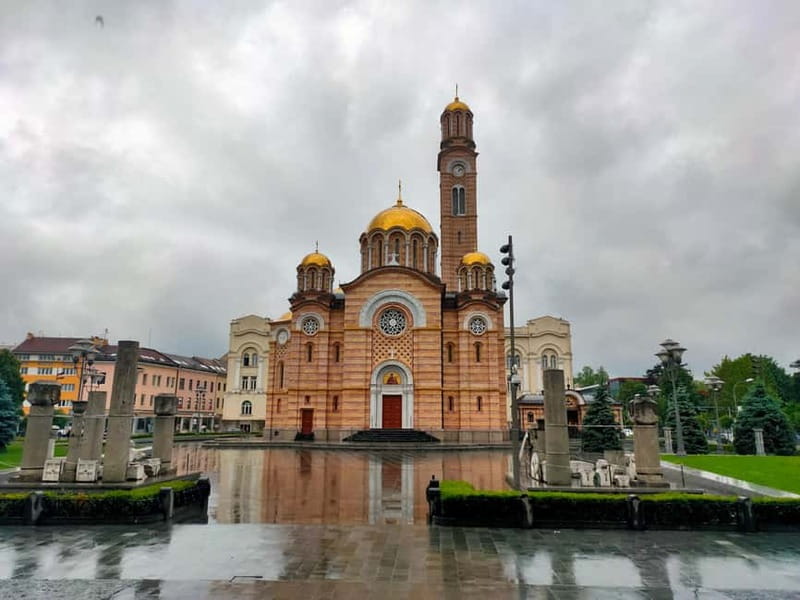
Next you’ll visit two big Christian landmarks: the Cathedral of Christ the Saviour and the Cathedral of Saint Bonaventure. Seeing them in the same overall walk helps you understand Banja Luka’s religious mix without feeling like you’re jumping around on separate days.
Why this pairing is valuable is simple: Orthodox and Catholic traditions leave different visual and cultural fingerprints. Even if you’re not a church architecture expert, you can feel the contrast in design choices and in the way each building relates to its surroundings.
This is also where the earthquake context becomes more than sad background. When older architecture is damaged or gone, religious buildings can become even more important as landmarks. They’re not just places of worship, they’re reference points that help you orient your understanding of the city over time.
Somewhere quieter after Banja Luka:
- Krupa on Vrbas
★ 5.0 · 28 reviews - Banja Luka City Tour & A magical journey on Dayak boat
★ 5.0 · 14 reviews - Vrbas River Rafting Adventure with Breakfast
★ 4.0 · 5 reviews
Austro-Hungarian traces and Brutalist structures on the same street
Banja Luka’s story doesn’t stop with Ottoman and Christian sites. The tour includes remains of Austro-Hungarian buildings and bold Brutalist structures. That mix can feel jarring at first, which is exactly why it’s worth doing with a guide rather than on your own.
Austro-Hungarian-era influence often shows up in street layout, building proportions, and older civic architecture. Brutalism, on the other hand, brings a different attitude, one tied to later decades and different ideas about how public space should look and function.
The earthquake adds another layer to this. When parts of the historic built environment are damaged, you get an even clearer view of what different eras tried to build, rebuild, and redefine. The tour helps you see these contrasts as a timeline, not as random visual variety.
If you’re the kind of traveler who likes street-level history, this section is where the tour earns its keep.
The river walk: the city’s artery of life, not just scenery
One of the highlights is a relaxing walk along the river. This part is important because it keeps the experience human-sized. After you’ve seen major buildings, the river gives you a breather and helps you understand how the city breathes day to day.
What I like about including this is that it turns your perspective from “religion and empire” into “people and place.” Rivers shape movement, commerce, and daily routines. So when you stand near the water later, the fortress stop makes more sense, because you’re picturing how the city would have operated centuries ago.
Don’t underestimate this segment. Three hours can pass quickly, and a comfortable walk is often the moment you finally absorb what you heard earlier. Bring water, take a few photos, and slow down just enough to look around instead of only up at buildings.
Castel Fortress: the views that tie the whole loop together
The tour includes a visit to the Castel Fortress on the river. This is a strategic stop in every sense of the word. Fortress points sit higher and wider, meaning you can see the city’s layout and understand how it defends, controls, or simply overlooks key routes.
In a place with visible earthquake impact, viewpoints are also a kind of learning tool. From above, you can grasp what’s near what, which neighborhoods connect to the river, and how modern structures and surviving older sites coexist.
Expect this to be the stop where your photos get better. You’re not just capturing a single landmark. You’re photographing relationships between landmarks, the river, and the wider city shape.
If you’re short on time in Banja Luka, this is one of the strongest reasons to do the tour, because it rounds out all the cultural stops with a practical sense of geography.
Food and culinary clues: a break that makes history taste real
The experience includes a break to try the city’s rich culinary history, though drinks and food are not included in the price. So think of it as a chance to get local recommendations and learn what to order or where to look, rather than a guaranteed meal.
This matters because food is one of the easiest ways to understand a place’s cultural blending. When you’re walking through Ottoman, Orthodox, Catholic, and later influences, it’s helpful to have a taste cue to match what you’re hearing. Even a short stop can shift how you remember the day.
If you’re gluten-free or have dietary restrictions, plan to choose with care at the café or restaurant stop. The tour data doesn’t spell out options, so you’ll want to communicate your needs when you arrive.
Price and value: is $23 a good deal?
At $23 per person for a 3-hour guided walking tour, this is priced like a focused local experience rather than a big bus-and-brochure production. What you’re paying for is not just time. You’re paying for guided interpretation across multiple landmarks, including major religious sites and a fortress viewpoint.
Given the included stops (Ferhadija Mosque, both cathedrals, Castel Fortress, river walk), the structure makes sense. You’re bundling transportation-free city walking with context at each stop. That’s what turns a city route into a learning experience.
Also, the private group format helps the value. Even if you’re solo, the tour is not automatically a crowded group experience. And your guide can spend more time on your questions, which shows up in the kind of feedback the tour has received.
The guide experience: what stands out from real moments
One of the recurring strengths is the quality of the guide’s interaction. In the feedback, Jakša is highlighted for strong German skills and for giving lots of interesting details. Another theme is how much time the guide takes to answer questions, and how the tour feels friendly rather than rushed.
A nice added touch is that some tours include a coffee stop and support with practical needs, like helping someone track down information related to their church. That’s not guaranteed for every group, but it reflects the style you should look for: a guide who pays attention to people, not just script.
Language support is also a real advantage. If you speak Italian, German, English, Serbo-Croatian, or Bosnian, you can keep the experience comfortable and specific. That’s a big deal on a history-heavy route where a phrase missed can ruin the meaning.
Who should book this tour, and who might want a different option
This is a great fit if you:
- Want a compact introduction to Banja Luka’s Ottoman and Christian landmarks in one walk
- Like learning how a city’s past shows up in buildings, not just museums
- Enjoy riverfront strolling and viewpoint stops
- Prefer a private group pace with a guide who can answer questions
It might be less ideal if you:
- Want a totally relaxed sightseeing day with no explanations
- Are looking for a bus or tram style tour with minimal walking
- Only care about one narrow theme, like purely fortress photos or purely religious architecture
Because the itinerary is structured around walking and key landmarks, it suits travelers who like a plan, but still want to wander a bit.
Practical tips to make your day smoother
Here’s how to set yourself up for an easier time.
- Wear comfortable shoes. This is a walking tour, so think comfort first.
- Bring water. You’ll be outside for the full loop.
- Use your camera. The mosque, cathedrals, and fortress viewpoint are photo-friendly.
- Dress respectfully at religious sites. Keep it simple and respectful.
- Come ready to ask questions. The best parts often happen when you speak up.
The most underrated tip is mental. Since the city has earthquake damage and missing architecture in places, adjust your expectations. The value is in understanding what survived and what the city rebuilt.
Should you book Discover Banja Luka: Guided Walking Tour?
I think you should book this tour if you want a high-value intro to Banja Luka that covers real cultural variety in just a few hours. At $23 per person, you’re getting a guided loop that links Ottoman and Christian landmarks with the river and Castel Fortress, plus context for Austro-Hungarian and Brutalist-era traces.
Skip it only if you want a low-effort, minimal-walking day with no history talk. Otherwise, the format is practical, the sights are strong, and the guide interaction tends to be the kind that makes the city feel understandable fast.
If you’re headed to Banja Luka for a short stay, this is exactly the kind of tour that helps you get your bearings fast, then spend the rest of your time exploring with better instincts.
FAQ
How long is the guided walking tour?
The tour is listed as 2 to 3 hours, with a duration of 3 hours.
What is the price per person?
The price is $23 per person.
What are the main stops included in the tour?
The tour includes Castel Fortress, Ferhadija mosque, Cathedral of Christ the Saviour, Cathedral of Saint Bonaventure, and a walk along the river.
Are drinks or food included?
No. Personal expenses like drinks or food are not included, though there is a break to try the city’s culinary history.
What languages is the live guide available in?
The live tour guide is available in Italian, German, English, Serbo-Croatian, and Bosnian.
Is the tour private and wheelchair accessible?
Yes. It is a private group and wheelchair accessible.
Is there a cancellation option if plans change?
Yes. You can cancel up to 24 hours in advance for a full refund.
Is reserve now, pay later available?
Yes. You can reserve now and pay later.
Newest Banja Luka write-ups
- Rafting Trip on the Vrbas river★ 5.0 · 3 reviews
- Unveiling Banja Luka’s urban soul: Walk & Enjoy★ 4.5 · 5 reviews
- Vrbas River Rafting Adventure with Breakfast★ 4.0 · 5 reviews
- Banja Luka City Tour & A magical journey on Dayak boat★ 5.0 · 14 reviews
- Enjoying the River Vrbas★ 4.5 · 5 reviews
- Krupa on Vrbas★ 5.0 · 28 reviews
Walking Tours, compared.
Private Walking Tour, Food Tasting and Bosnian Coffee in Sarajevo
Read our review →
Browse the lists this tour appears in