
Reviewed · SARAJEVO TOURS
Sarajevo Assassination: The Spark of World War I
Few moments in modern history hit so hard from so little distance as June 28, 1914 in Sarajevo. This 2-hour guided route ties the shooting at the Latin Bridge to the streets, institutions, and crowds around it, so you can actually see how the city shaped the events. I also like how the meeting point is easy to find, and the guide keeps things moving at a human pace.
Second, I like the value math. Most stops are free to enter, and you only pay extra if you choose the VRX museum or the Sarajevo Museum 1878 to 1918. One possible drawback: the tour is short by design, so if you want to linger in museums for a long time, you’ll have to plan that on your own after.
Key things I’d circle before you book
- Small group, calm pace: Up to 15 people, so you can hear the guide without straining.
- Easy logistics: Simple meeting spot, and the tour returns you there at the end.
- Many free stops: You get several major sites with free admission.
- You see the story in sequence: From the conspirators’ final resting place to the Latin Bridge moment.
- Two optional paid upgrades: VRX and the 1878 to 1918 museum add extra detail if you want it.
- A takeaway you can reference later: You leave with a book that covers what happened to the five conspirators.
Sarajevo’s assassination route, and why it feels real fast
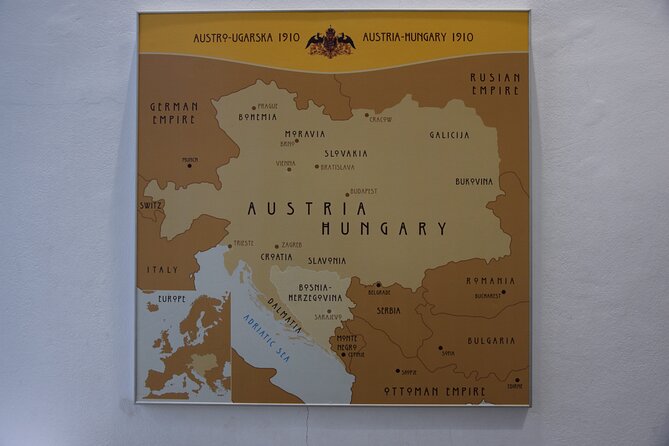
Sarajevo is a city of layered rule, and the assassination sites sit inside that layering instead of sitting in a museum box. One reason this tour works is that it treats the day like a lived event, with the streets, buildings, and public spaces you can still stand next to today.
I like the way you go from “big historical headline” to “small, specific location.” Even when you already know the outline of World War I’s spark, seeing the route makes the chaos feel less abstract. You are also given time to look closely, not just pose for a photo and move on.
The focus is also practical. The tour runs for about 2 hours, then you’re set free for the rest of your day, so you do not feel locked into a long schedule.
More on 1914 in Sarajevo:
- Sarajevo: Franz Ferdinand Assassination & the Start of WWI
★ 4.9 · 41 reviews - The last day of Franz Ferdinand Walking Tour
★ 5.0 · 10 reviews - Sarajevo: Start of The First World War Tour
★ 5.0 · 5 reviews
Getting oriented: meeting point, vehicle, and timing at 10:00 am
You start at Sarajevo Insider – City Tours and Excursions at Zelenih beretki 30. The start time is 10:00 am, and the tour ends back at the same meeting point, which is a nice reset if you want to continue walking on your own afterward.
You’ll ride in an air-conditioned vehicle, which matters more than you think in warm weather. The mix of quick transfers and short stops keeps the pace tight enough for a 2-hour format while still giving you viewing time at each key location.
This is offered in English, and it runs as a small-group experience with a maximum of 15 people. That size is large enough to feel social, small enough to keep the guide’s explanations clear.
Stop-by-stop: Saint Mark Cemetery and the Vidovdan Heroes Chapel
The tour opens with Saint Mark Cemetery, also associated with the Vidovdan Heroes Chapel. This is where Gavrilo Princip and other conspirators are buried, and the story is tightly linked to how Austro-Hungarian authorities handled the plot.
The guide’s explanation makes the burial secrecy feel like part of the conflict, not a footnote. You’re not just looking at graves, you’re seeing how power tried to control the narrative after the attack.
You get about 20 minutes here, and that timing feels right. It’s long enough for the guide to put names and motivations into context, and short enough that you do not lose the thread before heading toward the action points downtown.
One practical note: even when admission is free, cemeteries can still be emotionally heavy. If you prefer lighter topics, this is the first place you’ll feel it.
Presidency building and the empire’s decision-making rooms
Next comes the Presidency of Bosnia and Herzegovina building, a major Austro-Hungarian-era structure. The building once held imperial officials overseeing Bosnia’s governance, and the tour frames it as part of the official world that sat inches away from street-level tension.
It’s a quick stop, around 5 minutes, but you do get the key point: on June 28, 1914, the motorcade carrying Archduke Franz Ferdinand passed through Sarajevo not far from here. Standing nearby makes that proximity feel much more immediate.
Because the stop is brief, don’t expect a museum-style explanation. You’re there for orientation and context, not for lingering.
More around Sarajevo to weigh up
- Sarajevo: Mostar, Konjic, Blagaj Tekke, Pocitelj & Waterfall
★ 4.9 · 1,666 reviews - Fall of Yugoslavia, Sarajevo War Tour with Tunnel of Hope Museum and Frontlines
★ 5.0 · 1,314 reviews - Sarajevo: Grand Walking Tour Through Time and Cultures
★ 4.8 · 1,236 reviews - Sarajevo: Mostar, Konjic, Sufi House, Pocitelj & Kravice Falls
★ 5.0 · 1,179 reviews
Sarajevo VRX museum: the virtual moments right before the assassination
The tour then includes time at the Sarajevo VRX museum. This is a paid add-on, so you’ll see it listed as not included, with a fee of 20 BAM (about 10€).
What makes this part useful is the way it uses virtual storytelling. You’re not just being told about the day, you can witness the moments leading up to the assassination through the museum experience.
You get about 15 minutes here, which is a good match for a 2-hour tour. If you’re the type who loves to study exhibits for a long time, you might want to return later on your own for a longer session.
If you prefer strictly outdoor walking and hate ticketed indoor time, you can treat this as optional and adjust your energy.
Eternal Flame, World War II memory, and the Austro-Hungarian backdrop
At Eternal Flame, the focus is primarily World War II, but the site still helps the larger theme of the tour. The explanation connects the memorial area to the Austro-Hungarian-era streetscapes that were already part of Sarajevo’s built environment during 1914.
The stop is only about 3 minutes, so it functions like a short bridge between major locations. You’ll get the idea without needing a long pause.
This quick stop is a useful reminder that history in Sarajevo does not respect tidy timelines. People built, ruled, and remembered in overlapping waves.
Pijaca Markale: everyday Sarajevo in an empire-era setting
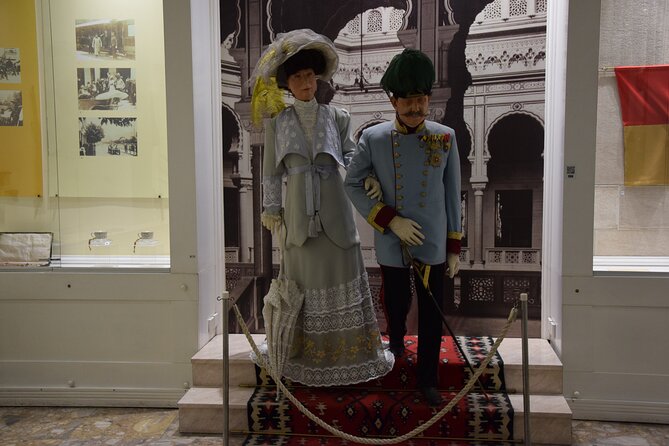
Next you’ll visit Pijaca Markale, the Markale Market area. It’s described as established during Austro-Hungarian rule and shaped as a trade hub reflecting the empire’s modernization efforts.
The value of this stop is how it grounds the story. You are not only tracking officials and grand buildings. You’re seeing public life, crowds, and the normal movement of a city that, that morning, had no clue it was about to become world history.
It’s about 5 minutes at this location. That’s enough time to absorb the contrast and get the guide’s framing, but not enough for a deep food market break.
Katedrala Srca Isusova: 1889 Neo-Gothic and the route’s visible tension
Then you move to Katedrala Srca Isusova, built in 1889 and described as Neo-Gothic. The guide connects it to the route taken by Franz Ferdinand’s motorcade, making the cathedral part of the story’s geography.
This is another short stop at about 5 minutes. It’s less about architecture lessons and more about what the day looked like from different street angles.
Even if you are not an architecture nerd, this kind of “route seeing” helps. You start to build a mental map of where the procession moved, and where people would have been watching.
Latin Bridge: the iconic spot where history turned
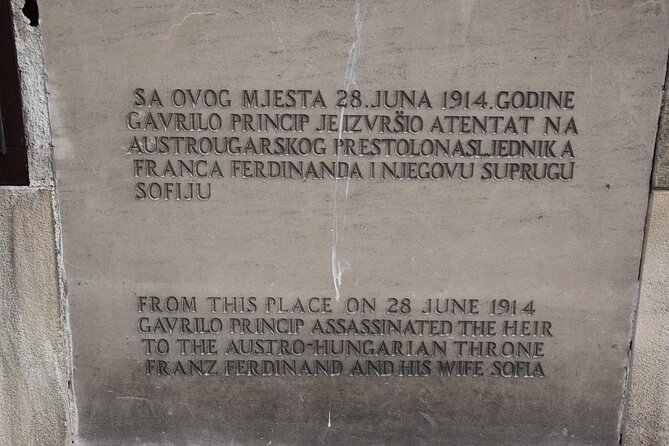
Now comes the big one, Latin Bridge. This is Sarajevo’s famous bridge where Gavrilo Princip fired the shots that altered the course of world history.
You get around 15 minutes here, and that time is the reason this tour feels more satisfying than a quick pass-by. The guide doesn’t just point out the bridge and say history happened. You’re guided to visualize the moment in context, with the surrounding streets helping the mental picture click into place.
One especially strong detail from the experience is how the guide points out the position connected to the fatal shot, including the doorway of a nearby coffee shop location tied to the firing point. Standing where the guide directs you makes the event feel less like a headline and more like a single, urgent moment.
If you like your history grounded in specific places, you’ll appreciate this stop most.
Sarajevo Museum 1878 to 1918: artifacts, Franz Ferdinand, and the aftermath
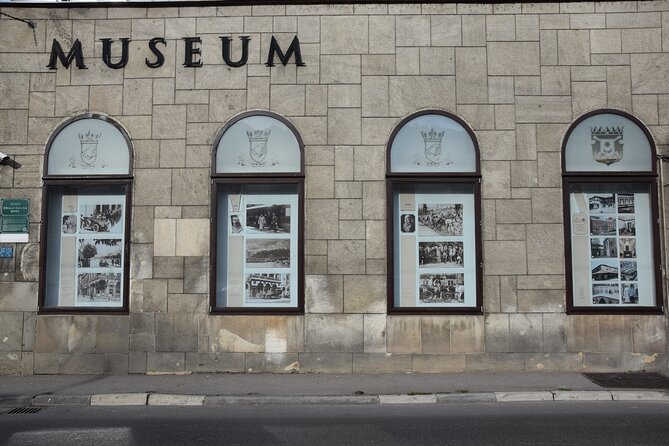
Close to the Latin Bridge, the tour includes time at Sarajevo Museum 1878 to 1918. This is also a paid add-on, with an entry fee of 5 BAM (about 3€) per person.
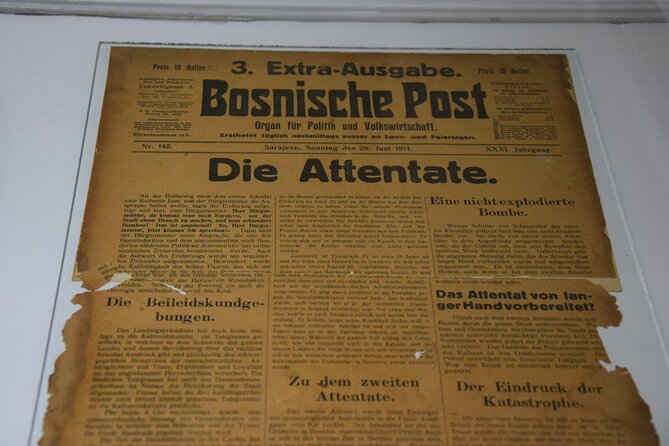
This museum is where you can connect the dots with artifacts. The focus is on the Austro-Hungarian period, Franz Ferdinand’s visit, and the immediate aftermath, which helps you understand how the assassination fed into the machinery that followed.
You get about 15 minutes inside, which works well as a snapshot. If you want longer reading and slower pacing, plan to come back another time since this tour’s main schedule is built for a short half-day walk.
If you skip the museum, you can still enjoy the outdoor story, but you’ll lose some of the object-level detail.
Konak and the governor’s world right before the shots
Next comes Konak, once the residence of Austro-Hungarian governors. The tour frames it as a center of administrative power, with the idea that key decisions and official movements were happening in the same city that day.
This stop is about 3 minutes, so again, think of it as context rather than a full history lecture. The guide’s job here is to connect “where authority lived” with “where the assassination unfolded.”
Short stops can be forgettable, but Konak works well because it adds a new kind of perspective: the story from the top, not just the street.
Sarajevska Pivara and the quiet presence of industry
At Sarajevska Pivara, the Sarajevo Brewery area, the tour treats industry and social life as part of the same day. The guide describes it as a hub of industrial progress and social gatherings, and on the assassination day it served as a silent witness to unfolding events.
This is about 3 minutes. It may sound like a detour if you expect only “assassination facts,” but it actually helps. When history happens in the middle of ordinary routines, that normal background is part of what makes it real.
Sarajevo City Hall (Vijećnica): the official reception step moments
The tour then goes by Sarajevo City Hall, Vijećnica, another grand Austro-Hungarian-era symbol. The key detail is that Archduke Franz Ferdinand’s official reception took place there right before the assassination.
You get about 10 minutes at this stop, which is longer than many others. That extra time helps because it’s a location that people usually remember from photos and postcards, and the guide connects that visual familiarity to what was happening that morning.
It’s also a useful moment for reflection. The contrast between the ceremony setting and the sudden violence that followed is stark, and the guide keeps it grounded in what was physically happening right there.
What you’re really paying for: price, free stops, and smart optional tickets
The tour price is $29.59 per person, and that number matters less than what’s included in that cost. You get a licensed guide, an air-conditioned vehicle, and a city map, plus time at a series of major sites where most stops have free admission.
That’s what makes it good value. If you were to pay for multiple paid entries on your own, you might still spend similar money, but you would miss the guided threading of the story from location to location.
The two optional add-ons are clear in the schedule and budget:
- VRX museum: 20 BAM (about 10€)
- Sarajevo Museum 1878 to 1918: 5 BAM (about 3€)
If you do both, you’ll add roughly 13€ worth of museum entry fees on top of the tour price. If you do only one, it’s easier to keep the overall spend under control.
The real payoff: you walk away with a story you can place on a map
For me, the biggest win is that the tour doesn’t just name locations. It teaches you how to connect them in your head: conspirators to empire officials, everyday markets to political buildings, and then the Latin Bridge moment itself.
You also get a useful takeaway. The experience includes a small book that lays out the fates of the five conspirators. That’s the kind of detail that’s hard to remember later unless you have something to refer back to.
The guide style also helps. One standout quality you can expect is a mix of enthusiasm and light humor that keeps heavy material from turning into a lecture-only experience. It makes the information stick.
Who should book this Sarajevo assassination tour
This is a great fit if you want:
- A short, focused history route that still feels meaningful
- A guide to help you place key events into a real street map
- A mix of outdoor seeing and optional indoor upgrades
It’s also ideal if you’re doing Sarajevo in a day and want to reclaim the rest of your time afterward. Since the tour runs about 2 hours, you’ll have plenty of hours left to explore on your own without feeling rushed.
If you only want museums and hate walking between sites, you might find the outdoor segments too frequent. But if you enjoy location-based history, this format is a strong match.
Should you book this?
Yes, I’d book it if your goal is to understand the Sarajevo assassination as a sequence of places, not just a single moment. The small-group size, the easy meeting point, and the mix of mostly free stops make the price feel fair.
Book it especially if you like guided context, and consider paying for the VRX museum and/or the 1878 to 1918 museum if you want more than a street-level overview. If you’re tight on time or budget, you can still do great with the free sites and enjoy the day after.
FAQ
How long is the Sarajevo assassination tour?
It runs for about 2 hours.
What is the meeting point and start time?
The tour starts at Sarajevo Insider – City Tours and Excursions, Zelenih beretki 30, Sarajevo, and it begins at 10:00 am. It ends back at the meeting point.
Is the tour in English?
Yes, it is offered in English.
How big is the group?
The maximum group size is 15 travelers.
What is included in the price?
The price includes a licensed guide, an air-conditioned vehicle, and a city map.
Are museum entry fees included?
No. Sarajevo Museum 1878 to 1918 costs 5 BAM (about 3€) and the VRX museum costs 20 BAM (about 10€).
Is the VRX museum required?
The VRX museum has an entry fee and is listed as not included, so it is an optional paid stop.
Do I need to bring a paper ticket?
You get a mobile ticket.
Is there free cancellation?
Yes, free cancellation is available. You can cancel up to 24 hours in advance for a full refund. If you cancel less than 24 hours before the start time, the amount you paid will not be refunded.
How accessible is the tour for different travelers?
Most travelers can participate.
Newest Sarajevo write-ups
- Sarajevo to Zagreb: One-Way Tour via Jajce, Travnik, Pliva Lake and Watermills★ 5.0 · 3 reviews
- Mountain Village Lukomir Full Day Adventure Tour★ 5.0 · 3 reviews
- Sarajevo E-Bike City Tour★ 5.0 · 3 reviews
- Bosnian Kingdom Capitals: Travnik & Jajce Tour from Sarajevo★ 5.0 · 3 reviews
- Strbacki Buk and Una Waterfalls: Day Trip from Sarajevo★ 5.0 · 3 reviews
- Sarajevo Snowshoeing Adventure★ 5.0 · 3 reviews
- Sarajevo Old Town: Bosnian Coffee, Baklava & Panoramic Views★ 5.0 · 3 reviews
- 4 Hours Tara Rafting Trip★ 5.0 · 3 reviews
Sarajevo Tours, compared.
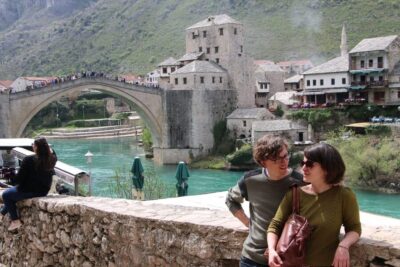
Mostar, Konjic, Blagaj Tekke, Pocitelj & Waterfall
Read our review →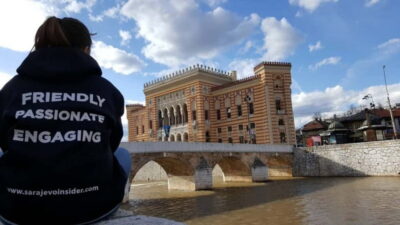
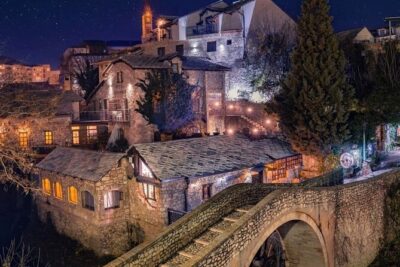
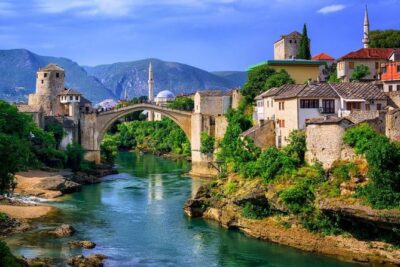
Mostar, Konjic, Sufi House, Pocitelj & Kravice Falls
Read our review →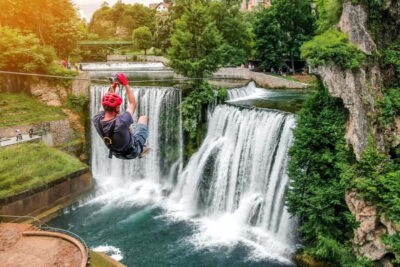
Mostar, Konjic, Dervish House, Pocitelj & Kravica Falls
Read our review →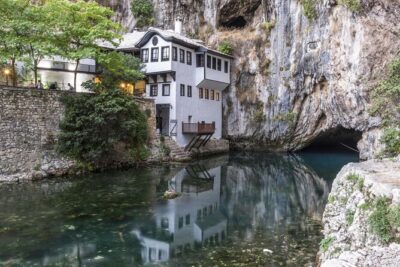
Mostar,Kravica Waterfall,Blagaj,Počitelj – Day Tour from Sarajevo
Read our review →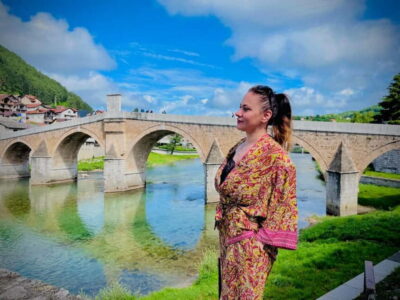
Mostar, Konjic, Pocitelj, Blagaj Skywalk Waterfall
Read our review →Browse the lists this tour appears in