
Reviewed · SIEGE OF SARAJEVO TOURS
Sarajevo: Start of The First World War Tour
Sarajevo is one of those places where history feels close, not dusty. This tour is interesting because you follow the Sarajevo assassination route and the political backstory that turned an event on June 28, 1914, into the spark for World War I. I love how the route mixes landmark buildings with clear context, and I also like that you get to see the role of the Austro-Hungarian administration in Bosnian daily life. One drawback to consider is that it is a walking tour with multiple photo stops, so you should be ready for steady movement in a 3-hour window.
You’ll go in a small group (up to 8) with a live English-speaking guide. In past tours, guides such as Ajmed, Alan, Ahmed Huseinović, and Arna have been praised for explaining the events clearly, even when guests asked lots of questions. That matters here, because the story includes dates, factions, and competing memories.
Key highlights worth your time
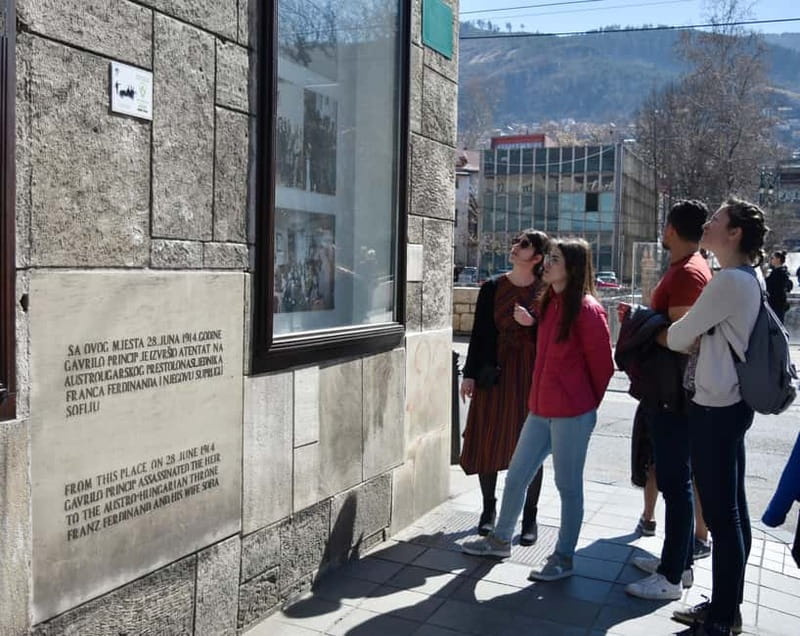
- Sarajevo City Hall as the Austro-Hungarian stage where the Archduke and Sophie were expected to appear
- Latin Bridge and the immediate geography of the assassination so the event makes spatial sense
- The secret-society angle (including groups like the Black Hand and Young Bosnia) and why it mattered
- Hotel Austria and Bosna area context around what people saw and how Sarajevo felt in 1914
- East Sarajevo viewpoints on Gavrilo Princip with discussion of how his legacy differs by community
- A focused 3-hour structure with guided stops plus short free-time breaks for photos and a breather
How Sarajevo turns June 1914 into a story you can actually follow
If you only skim WWI history, it can feel like a chain of treaties and speeches. This tour makes it human, and that is the point. You walk through places tied to Archduke Franz Ferdinand and his wife Sophie, and you also get the political climate that made 1914 such a powder keg in Europe.
The tour keeps a tight theme: reasons WWI began, what was happening in the South Slavic region under Austro-Hungarian rule, and how the assassination reshaped the world. And it does it without turning the city into a theme park. Instead, Sarajevo stays stubbornly real, down to the way different parts of town reflect different memories.
I also appreciate the guide-led approach. With a small group, questions do not feel like an interruption. Ahmed Huseinović, for example, has been specifically praised for mixing academic clarity with plain spoken explanation, which is exactly how you want this kind of tour to work.
Other accounts of the siege years:
- Fall of Yugoslavia, Sarajevo War Tour with Tunnel of Hope Museum and Frontlines
★ 5.0 · 1,314 reviews - Sarajevo: Tunnel Museum Yugoslavia War Tour with War Veteran
★ 5.0 · 1,111 reviews - Tunnel Museum: Bosnian & Yugoslav Wars Tour with War Veteran
★ 5.0 · 551 reviews
Starting points: Vidovdan heroes and the Austro-Hungarian backdrop
Your day begins with a photo stop and visit at Kapela Vidovdanskih heroja (the chapel tied to the Vidovdan tradition). Even if you are not a specialist, that kind of stop helps you understand something big: nationalism in the Balkans was not a single idea. It had symbols, anniversaries, and deep local meaning.
Then you pass by Ilidža, which gives you a quick change of pace and context beyond the densest central landmarks. You are not meant to soak in views for long here. You are meant to keep the momentum, so by the time you reach the major sites, you can connect the political story to the geography.
After that, the tour steers you toward the core of the Austro-Hungarian-era narrative. Sarajevo City Hall is a key anchor because it is an iconic building meant for the Archduke’s visit. That is the moment where the tour’s structure starts paying off. You are not just seeing a memorial. You are seeing the setting that authorities planned to stage.
Hotel Austria, Appel Quay, and Sarajevo as it felt in 1914
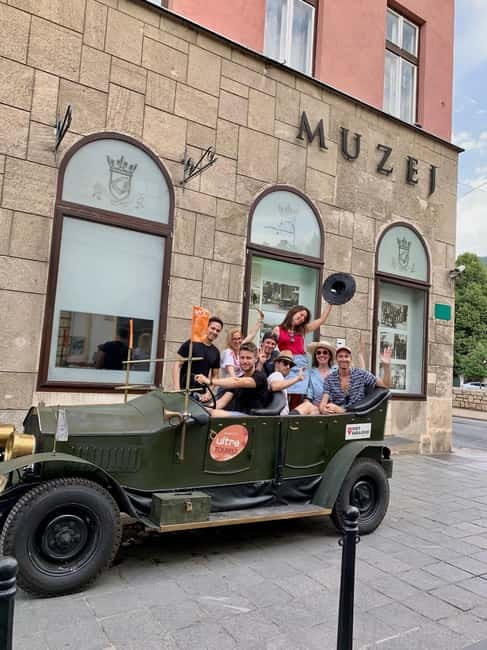
One of the most practical parts of this experience is how it frames what Sarajevo looked and felt like during Austro-Hungarian administration. You stop around Hotel Austria and Bosna, with a break time and some free time built in. That is a good design choice because the assassination story hits you like a timeline, and you need a moment to reset.
From there, the tour connects you to the riverfront atmosphere via Appel Quay. This kind of stop matters because assassinations are not only about the weapon. They are about movement, crowds, and the path people believed they would take.
You also learn why the specific date carried special weight. June 28, 1914 sits at the intersection of historical and personal anniversaries, tied to the First Battle of Kosovo and also linked to Franz Ferdinand’s wedding anniversary. That detail helps explain why the day was loaded with symbolism, not just calendar facts.
A turning point by foot: Ćumurija Bridge and Latin Bridge
The tour’s pace tightens as you work toward the central incident. You get a photo stop at Ćumurija Bridge, and then you move to Latin Bridge, with time to visit and walk the area.
This is where the “shot that changed the world” becomes more than a phrase. Standing near the bridge helps you understand how quickly things can spiral when leaders travel through public space. You can also see why small timing differences mattered so much, including how a first attempt failed and then a later attempt succeeded.
The tour explains the assassination event in detail, including the involvement of Gavrilo Princip and the broader plot context around him. The story stays focused on the cause-and-effect chain: the assassination happens, authorities respond, alliances activate, and World War I follows.
And if you are the type who likes to ask, this is a great time. The guide’s English explanations tend to be strong here, and you can steer the conversation toward questions like how secret groups operated or how the Austro-Hungarian system shaped public life.
More on 1914 in Sarajevo:
- Sarajevo: Franz Ferdinand Assassination & the Start of WWI
★ 4.9 · 41 reviews - The last day of Franz Ferdinand Walking Tour
★ 5.0 · 10 reviews - Sarajevo Assassination: The Spark of World War I
★ 5.0 · 4 reviews
Sarajevo Museum 1878 to 1918: filling in the gaps between monuments
Between the dramatic moments outside and the memorials tied to them, you get to Sarajevo Museum 1878 to 1918. There is break time and free time here too, which is smart. Museum pacing works best when you can choose how long you linger, not when you feel rushed by the next stop.
This museum stop is valuable because it fills in the background your brain needs to connect all the buildings you are seeing. You are learning about life during the Austro-Hungarian period and how that rule impacted Bosnian society at the time. That is the missing link if you only know the assassination as a headline.
You also pick up context for why local groups formed and why tensions mattered. The tour’s broader theme ties in here, especially the idea that the empire’s rule was experienced in ways that could provoke resistance and radical organizing.
Gavrilo Princip in East Sarajevo: chapel, park, monument, and memory politics
After the central Sarajevo stops, the route turns toward East Sarajevo, passing by the area and then spending real time around Park Gavrilo Princip. You get a visit and photo time, plus free time, before you reach the Gavrilo Princip Monument.
Then you go one step deeper with Gavrilo Princip’s Chapel as part of the experience. This matters because it keeps the tour from being only political theater. It reminds you that people were shaped by faith, family, and local networks as much as by ideology.
But the most thought-provoking part comes from how the tour treats Princip’s legacy. You learn that he is remembered differently depending on who you ask in Bosnia and across the Balkan region. That point is not just historical trivia. It helps you understand how one act can produce opposing narratives: hero in one telling, terrorist or criminal in another.
For me, this section is the best check against a simplistic story. It forces you to hold more than one idea at once, which is how history usually behaves in places still living with its consequences.
The political and social context that makes the plot make sense
The tour’s core strength is its explanation of the political climate in Europe in 1914 and why it was primed for catastrophe. WWI does not start because one person fires a shot. It starts because Europe had rivalries, alliances, and pressure points already set.
You also get the “local wiring,” meaning how Austro-Hungarian rule shaped Bosnian society and how that environment influenced the actions of people involved in the assassination plot. The tour covers secret societies tied to the event, including the Black Hand and Young Bosnia.
Here is a practical way to think about this: the buildings and bridges give you location, but the political context gives you motivation. Together they explain why people could believe their plan would achieve their goals, and why the world responded so aggressively afterward.
And yes, you learn how the assassination changed the course of the world. The tour keeps pulling you forward into what happened next, so you leave with a sense of consequences, not just a dramatic scene frozen in 1914.
Guides, group size, and what 3 hours feels like on the ground
At $58 per person for 3 hours, this is not a cheap “quick walk” tour. It is also not overpriced for what you get. You are paying for a guide who can connect multiple stops, explain complicated context, and answer questions in a way that actually helps you process what you saw.
Small group size, limited to 8 participants, makes a noticeable difference with a topic like this. You do not feel lost in a crowd of strangers asking unrelated questions. You also get the chance to slow down during key moments, especially around the Latin Bridge area and the East Sarajevo memorial stops.
Duration matters too. Three hours means you will see many meaningful places, but you will not have time to linger endlessly in every spot. The tour compensates by scheduling short breaks and free time pockets, including around Hotel Austria and Bosna and during the museum visit.
Who should book this Sarajevo WWI tour, and who might want a different option?
This tour is a strong match if you want history tied to place. You like walking tours that explain why streets and buildings matter. You also enjoy political stories where symbols, dates, and group dynamics all matter.
It is also a good choice for people who want clarity. The guides have been praised for strong English and patience when questions come up, which is a big deal here since the story involves factions and names.
It may not be the best fit if you want a light, relaxed stroll. This is a heavy subject, tied to assassination and war. It also has a physical component that may be challenging for some people. The activity is not suitable for children under 2, people with mobility impairments, or people with heart problems.
Should you book the Shot That Changed the World Sarajevo tour?
I’d book it if you are in Sarajevo for a short stop and you want the most meaningful WWI start-point experience without building a self-guided plan from scratch. The mix of City Hall, Latin Bridge, the museum, and East Sarajevo memorial sites gives you a full arc: setting, event, and memory.
I’d skip or consider a different format if you are sensitive to emotionally heavy topics or if steady walking will be tough for you. But if you can handle the subject and you like your history explained with actual street-level grounding, this is a smart use of a half day.
FAQ
How long is the tour?
The tour duration is 3 hours.
What does the tour cost?
The price is $58 per person.
Where is the pickup location?
Pickup is in Sarajevo.
Is this tour a walking tour?
Yes, it is described as a walking tour.
How many people are in a group?
The group is small, limited to 8 participants.
What language is the tour guide?
The tour is offered in English with a live tour guide.
Which WWI-related sites will I see?
The tour includes stops such as Sarajevo City Hall, Latin Bridge, Sarajevo Museum 1878 to 1918, Hotel Austria and Bosna, Ćumurija Bridge, and locations connected to Gavrilo Princip including his chapel, park, and monument.
Does the tour cover the political context of 1914 and why WWI happened?
Yes. It explains the political climate in Europe in 1914 and the reasons for World War I, including the role of secret societies.
Is the tour suitable for children?
It is not suitable for children under 2 years old.
Is it refundable if I cancel?
Yes. Free cancellation is offered up to 24 hours in advance for a full refund.
Newest Sarajevo write-ups
- Sarajevo to Zagreb: One-Way Tour via Jajce, Travnik, Pliva Lake and Watermills★ 5.0 · 3 reviews
- Sarajevo E-Bike City Tour★ 5.0 · 3 reviews
- Mountain Village Lukomir Full Day Adventure Tour★ 5.0 · 3 reviews
- Bosnian Kingdom Capitals: Travnik & Jajce Tour from Sarajevo★ 5.0 · 3 reviews
- Strbacki Buk and Una Waterfalls: Day Trip from Sarajevo★ 5.0 · 3 reviews
- Sarajevo Old Town: Bosnian Coffee, Baklava & Panoramic Views★ 5.0 · 3 reviews
- Sarajevo Snowshoeing Adventure★ 5.0 · 3 reviews
- PRIVATE Sarajevo Under Siege War Tour★ 5.0 · 3 reviews
Siege of Sarajevo Tours, compared.
Fall of Yugoslavia, Sarajevo War Tour with Tunnel of Hope Museum and Frontlines
Read our review →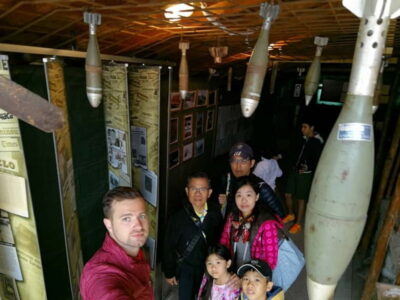
Tunnel Museum Yugoslavia War Tour with War Veteran
Read our review →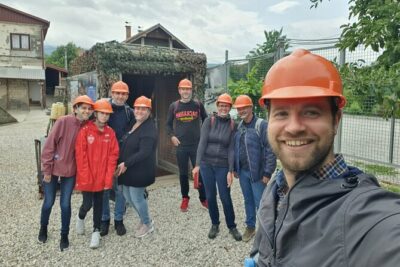
Tunnel Museum: Bosnian & Yugoslav Wars Tour with War Veteran
Read our review →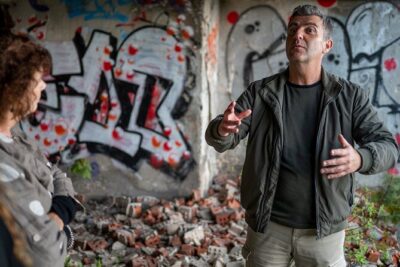
Sarajevo War Tour: A Veteran’s Story of the Siege (fees included)
Read our review →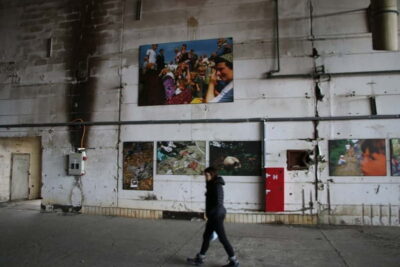
Srebrenica Genocide Study Tour with War Veteran
Read our review →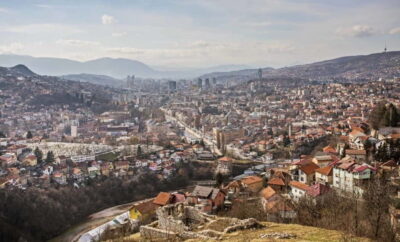
Break-up of Yugoslavia & The War in Mostar: Life Under Siege
Read our review →Browse the lists this tour appears in