
Reviewed · YUGOSLAV HISTORY TOURS
Break-up of Yugoslavia & The War in Mostar: Life Under Siege
Mostar is one of those places where history is not behind glass. It’s in the buildings, the street layout, and that uneasy way some neighborhoods still feel divided. This tour gives you the story of the breakup of Yugoslavia and the war in Mostar, using real local perspective and clear on-the-ground stops.
I especially like the mix of sites: you start with a hidden military space near the city, then go into the Mostar War Museum, and finish by walking the area that became a front line in the city center. I also love that guides like Esmer and Harun share personal stories, not just dates, which makes the conflict easier to understand without getting lost in jargon. One drawback to consider is that the focus is heavy on wartime realities, so if you’re looking for purely scenic or relaxed sightseeing, this may feel intense.
Key highlights worth your time
- A small group (max 8) for more question time and better pacing
- Hand-mapped history using a board timeline of Yugoslavia’s collapse during the War Museum stop
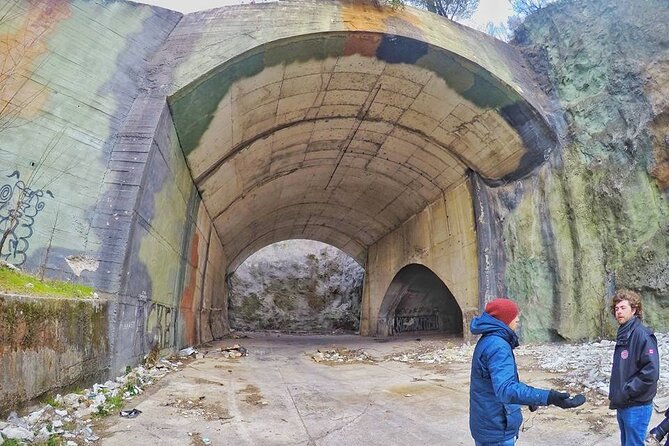
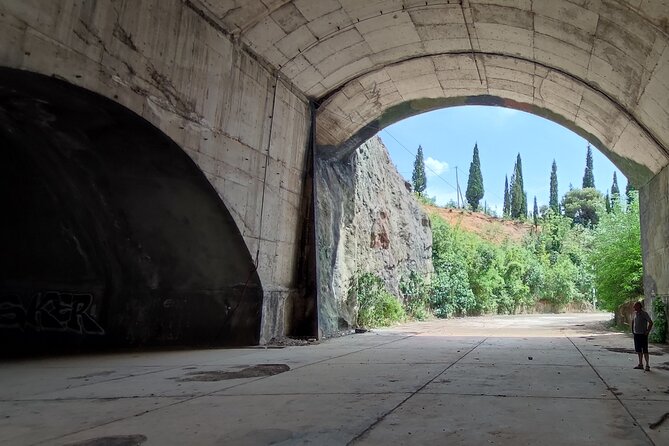
- Tito-era hangar stop that shows how the city’s geography was used for military defense
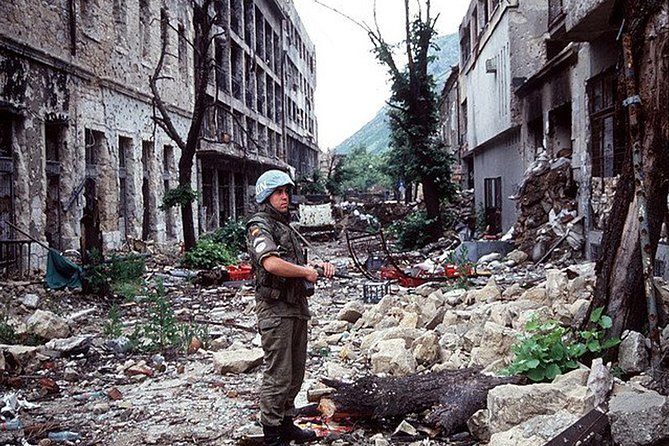
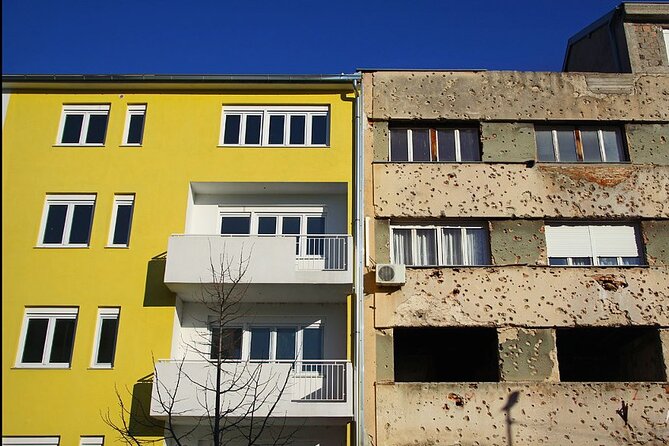
- Walking the West Front Line along Šantića Street, where bunkers still remain in central Mostar
- Free museum admission at the War Museum stop, with a professional guide and A/C vehicle included
Why Mostar’s War Still Shapes the City
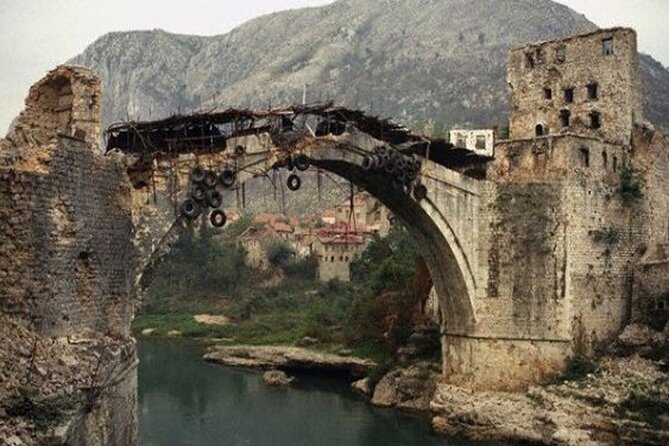
I like tours that help me read a place, not just photograph it. In Mostar, the war affected how people moved, where fighting clustered, and how the city’s shared spaces changed after 1992 to 1995. This tour helps you understand why the city still feels split in ways that aren’t always obvious until you know what to look for.
The other thing I appreciate is the tone. The guides I’ve heard described in this tour experience share personal stories honestly, but they don’t turn it into a one-sided rant. You get explanations that try to connect causes, battles, and outcomes, plus the reality of daily life after the shooting stopped.
Finally, plan for emotions. Some stories are heartbreaking, and you might feel that weight in the museum and around war remnants in the streets.
Other accounts of the siege years:
- Fall of Yugoslavia, Sarajevo War Tour with Tunnel of Hope Museum and Frontlines
★ 5.0 · 1,314 reviews - Sarajevo: Tunnel Museum Yugoslavia War Tour with War Veteran
★ 5.0 · 1,111 reviews - Tunnel Museum: Bosnian & Yugoslav Wars Tour with War Veteran
★ 5.0 · 551 reviews
3 hours, small group, and hotel pickup that saves real time
This is designed as a short, focused “education walk,” not a half-day bus tour that swallows your morning. It runs about 3 hours and keeps group size capped at 8 travelers, which matters because you’ll likely ask questions. The format is set up so your guide can slow down when history gets complicated.
You can also go with hotel pickup and drop-off in Mostar (if you select that option). That’s a practical advantage in a city where you’ll spend less time figuring out logistics and more time absorbing the meaning of each stop.
A/C transportation is included. Not glamorous, but it helps when you’re hopping between locations in the heat, or if you’re doing this in shoulder season and the weather swings.
Stop 1: The abandoned Yugoslav hangar and the idea of a hidden war
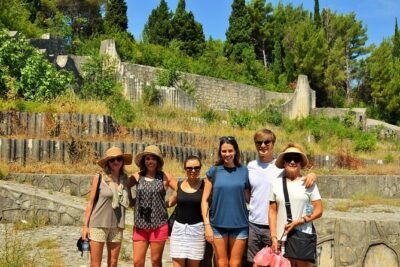
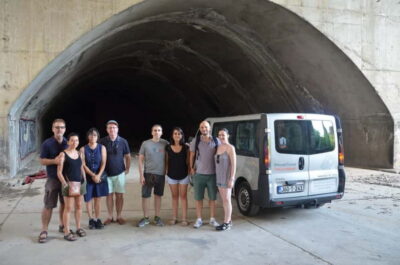
The first stop is an abandoned aircraft hangar south of Mostar, tucked into mountainous terrain. The key detail here is the concept: fighter jets were stored deep in the hanger, positioned to deploy while the location itself stayed protected from attack and from prying eyes.
Why I think this works for you: it reframes the war away from only dramatic front lines. You start with infrastructure, secrecy, and geography. It helps you understand how a place can become a strategic asset without looking like a battlefield from the street.
This stop also tends to be surprisingly “human-scale,” even though it’s military. In descriptions of the experience, guides often share how local people saw or sensed what was happening, even when they were not directly inside the action. That kind of context makes the later museum and street walk click faster.
The hangar stop is listed with free admission for this experience, and it sits close to Mostar itself, so it doesn’t eat up your limited time.
Stop 2: Mostar War Museum, where the guide builds the map in front of you
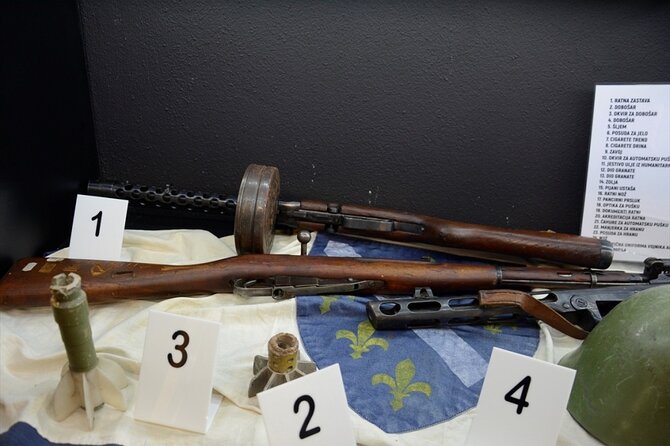
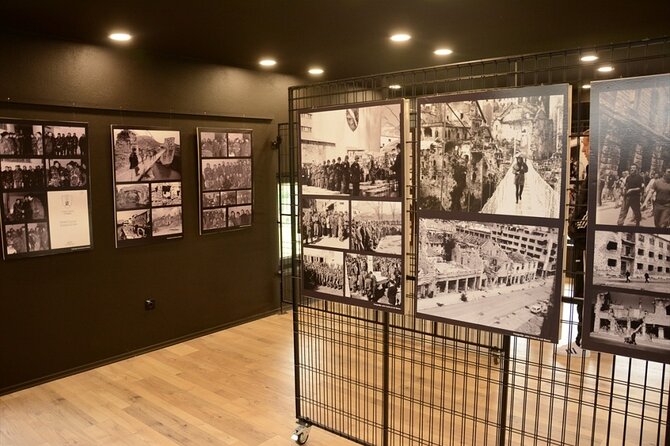
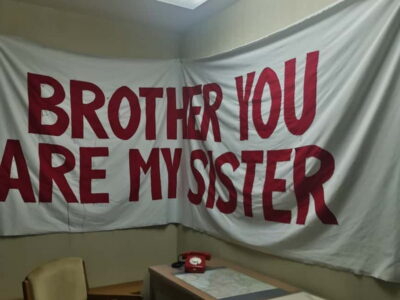
The second stop is the Mostar War Museum, where the guide explains what it was like to live in a divided city and what happened between the lines. This is the “systems” stop. You’re not just learning events, you’re learning how the conflict fit together.
One of my favorite parts of this style of tour is when the guide uses a board to draw a map and timeline of the former Yugoslavia. In this experience, that board explanation is part of the museum visit, and it’s meant to help you assemble the pieces into a coherent picture. Some guides go even further with how they present the timeline so it’s easier to follow the movements and relationships between groups.
You can also count on time for questions. The tour format emphasizes education and encourages you to ask. That matters because the breakup of Yugoslavia is not a simple single-cause story, and most travelers need a chance to clarify terms and sequences.
The museum entrance fee is included, and the experience lists admission ticket free for this stop. So you’re paying for guide time and interpretation, not getting nickeled-and-dimed at the door.
A note on tone: guides like Esmer are described as passionate and candid, including firsthand family stories from the siege. That does not mean the tour is only trauma. It also includes the guide’s perspective on what life has become since the war, and what hopes or concerns remain today.
More of the Yugoslav decades:
- The Death of Yugoslavia Tour in Mostar
★ 5.0 · 102 reviews - The Death of Yugoslavia: Unique thematic Tour in Mostar
★ 5.0 · 22 reviews - Sarajevo: Bosnian War & Fall of Yugoslavia Tour with Tunnel
★ 4.9 · 398 reviews - Utopia of Tito’s Yugoslavia, Tito’s Bunker & Siege of Sarajevo
★ 5.0 · 35 reviews
Stop 3: Šantića Street and the invisible line where fighting got closest
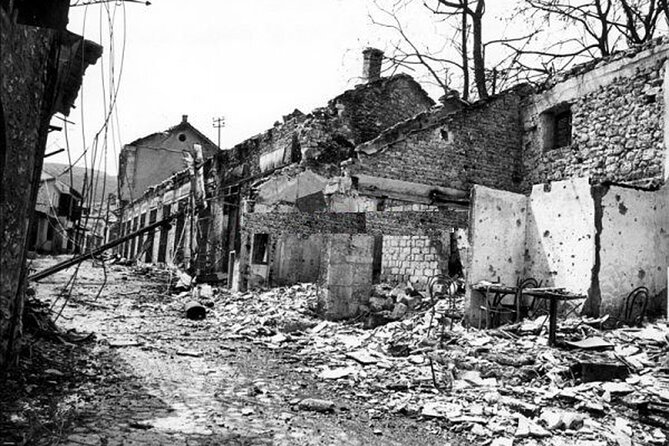
The final portion is a walking segment focused on Šantića Street and the West Front Line. The tour describes this as the area where the closest fights happened between Bosnian and Croatian forces, and where bunkers still exist in the city center.
Here’s why this stop is so powerful: you’re not only inside a building. You’re standing in the everyday Mostar people live in now, and comparing it to what once happened here. The tour plan includes showing pictures of key places during the war, then walking to points such as Spanish Square and Boulevard Street to see what changed.
That “then and now” approach helps you understand the war’s lasting imprint. Even when the city rebuilt, the memory of separation stayed in the urban layout and in the way people talk about neighborhoods.
Walking through the front line today also forces you to notice what you might otherwise miss. The experience describes this area as an invisible line, which sounds abstract until you try to follow the route and match your surroundings to the guide’s explanation.
You’ll end this section with that lingering feeling that cities can carry invisible borders long after the fighting stops.
The breakup of Yugoslavia, explained in plain language
A lot of conflict tours dump names and dates on you and hope you keep up. This one is built to connect causes to consequences in a way you can actually track during a short time in Mostar.
The guides are praised for being able to explain complex history in an understandable order. In particular, the board mapping used at the museum stop is highlighted as a way to make sense of what’s hard to parse alone. If you’ve tried reading about the Balkans and felt like you were missing the bigger picture, this format is designed to fix that.
I also like that the guides described in this experience make room for complexity. Some mention objectivity and covering more than one side, including acknowledgment that different sides committed wrongs. That’s important because Mostar is not a story with simple heroes and villains, and a good guide doesn’t pretend it is.
And yes, personal stories are part of the package. Esmer is repeatedly mentioned in reviews as a guide who shared family experiences of the siege and talked about how people had to keep living during and after. Harun and Haron are also named as guides who answered tough questions and kept the explanations chronological and clear.
What the tour feels like day-of: emotional, but structured
This tour isn’t just a list of stops. It has a shape: military context first, then museum explanation, then walking the most central remnants. That structure helps you avoid the common problem of feeling like you visited three unrelated places.
In a few accounts, guides spent a bit longer than the stated schedule because they were passionate and kept talking through details. So I’d plan a little buffer in your day. If you’re rushing to another attraction immediately after, you might feel stressed during the final walk.
Group size helps a lot here too. With only up to 8 travelers, your guide can tailor the pace and answer questions that come up naturally. That’s how you turn a “tour” into an actual learning session.
Logistics that matter, and what you can safely ignore
You’ll be doing this in Mostar, Bosnia and Herzegovina, with English offered. A mobile ticket is used, so you won’t need to print anything.
The tour includes a professional guide, an air-conditioned vehicle, and the war museum entrance fee. That keeps your personal planning simple. You can also expect near public transportation access, which can be a backup option if you choose not to use pickup.
Price-wise, it’s listed at $42.33 per person for about 3 hours. I think it’s fair because you’re paying for specialized local interpretation at historically specific sites, plus museum access and transportation. You’re not just paying for entry tickets.
Who should book this Mostar siege tour
I think this is best for travelers who want to understand what Mostar became, not only what it looks like today. If you’re visiting Bosnia after spending time in Montenegro, Croatia, or elsewhere in the region, this tour can help you tie the political story to the places you’re seeing.
It’s also a good pick if you like questions and conversation. The guides described here are praised for answering questions and using tools like whiteboard timelines, which is hard to pull off with large groups.
You might want to skip it if you prefer light, purely photo-focused sightseeing. The subject matter is intense, and the stops focus on wartime remnants and memories.
Should you book The Break-up of Yugoslavia and the War in Mostar?
Yes, I’d book it if you want your Mostar visit to make sense. Mostar is a beautiful city, but beauty without context can feel shallow. This tour gives you the context in a short time, with strong guidance and a route that connects the military, the museum explanation, and the street-level reality.
Book it especially if you’re the kind of traveler who likes asking why things look the way they do. The hangar stop, the museum board mapping, and the walking segment along Šantića Street and the West Front Line all work together to build a clearer picture.
Just go in knowing the tone is serious. If you can handle that, you’ll walk away with a deeper understanding of Mostar and why the city still carries the war in plain sight.
FAQ
How long is the tour?
The tour is approximately 3 hours.
Where does the tour take place?
It takes place in Mostar, Bosnia and Herzegovina.
What language is the tour offered in?
The tour is offered in English.
Is hotel pickup included?
Pickup is offered, and hotel pickup and drop-off are included if you select that option.
How many people are in a group?
The tour has a maximum of 8 travelers.
What stops are included?
The tour includes a visit to an abandoned Yugoslavian military hangar area near Mostar, the Mostar War Museum, and a walking segment around Šantića Street and the West Front Line area.
Are entrance fees included?
The Mostar War Museum entrance fee is included, and the stops listed show free admission tickets.
Does the tour include transportation?
Yes. An air-conditioned vehicle is included.
Can children join the tour?
Children must be accompanied by an adult.
When will I receive confirmation after booking?
You should receive confirmation within 48 hours of booking, subject to availability.
FAQ
Is free cancellation available?
Yes. You can cancel for free up to 24 hours in advance for a full refund.
Do I need a printed ticket?
No. A mobile ticket is offered.
Is it suitable for people who use public transport?
It is listed as near public transportation.
What should I do if my accommodation is not listed for pickup?
If your accommodation is not listed, you need to share the address of your accommodation in Mostar.
Newest Mostar write-ups
- Private Transfer from Mostar to Split★ 5.0 · 3 reviews
- Mystical Sutjeska National Park★ 5.0 · 3 reviews
- Mostar Guided Tour & Sweet Delights★ 5.0 · 3 reviews
- Burek Masterclass in Mostar★ 3.0 · 3 reviews
- Mostar Old Town Walking Tour – Best Seller★ 5.0 · 4 reviews
- All Inclusive Neretva Rafting, Day Tour from Mostar★ 5.0 · 4 reviews
- Authentic Medjugorje Tour★ 4.0 · 4 reviews
- Private Transfer from Mostar and Split★ 5.0 · 5 reviews
Yugoslav History Tours, compared.
The Death of Yugoslavia: Unique thematic Tour in Mostar
Read our review →
Browse the lists this tour appears in