
Reviewed · YUGOSLAV HISTORY TOURS
Sarajevo: Bosnian War & Fall of Yugoslavia Tour with Tunnel
This Sarajevo tour is interesting because it turns the fall of Yugoslavia and the siege of Sarajevo into something you can actually see, walk, and stand inside. I love how the Tunnel of Hope connects the city’s survival to a real, physical lifeline, and I love how the Yellow Fortress panorama makes the scale of the shelling feel immediate. One possible drawback: this is a heavy, emotional day, so if you want light sightseeing only, you may find it too intense.
The tour runs as a small-group experience with live English guidance, and the guides on this route are known for clear explanations plus lots of space for questions. I’d especially expect strong storytelling from guides such as Chris, Arme, Almir, Ahmed, and Emin, who have been praised for handling a dark topic with care.
You’ll cover several major sites in about four hours, including multiple short walks and museum time. If you book, wear comfortable shoes, because you will be on the move, not just sitting in a van.
Key highlights to look for
- Tunnel of Hope museum film and presentation that explains how the occupied city survived
- Sarajevo Roses mortar scars filled with red resin for civilian victims
- Trebević Mountain Olympic context with the bobsleigh track area and war damage in the same views
- Sniper Alley and Sarajevo’s visible scars from the frontline days
- Yellow Fortress panorama that shows what the enemy could see and target
- Martyr Cemetery (Šehidi), including the grave of Alija Izetbegović
Tunnel of Hope: where the siege becomes personal and practical
If you only remember one stop from this half-day outing, make it the Tunnel of Hope. It is not just a museum visit. The place is framed as the city’s lifeline, and the guide’s job is to translate that idea into a story you can follow.
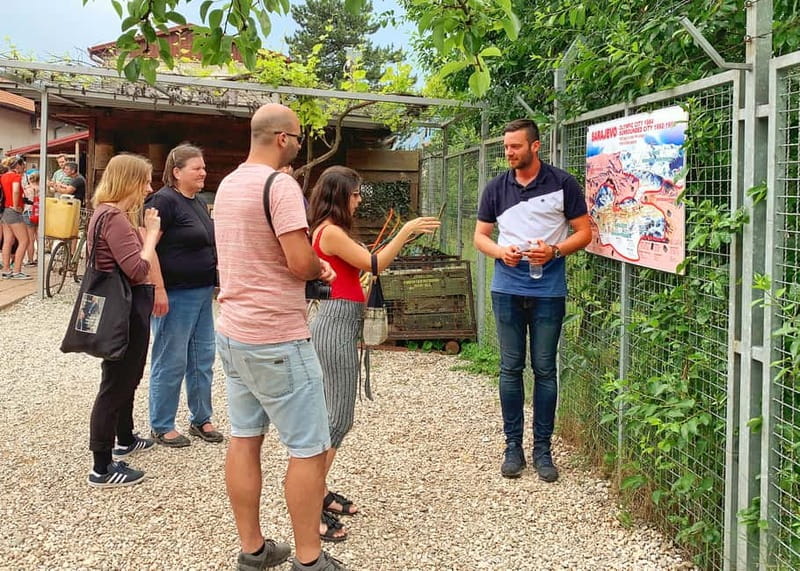
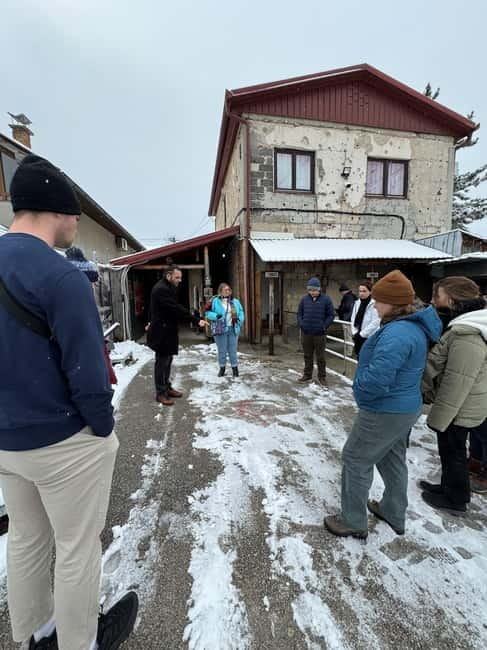
On arrival, you start in the museum area and you get a powerful visual cue outside: Sarajevo’s famous rose marks. These are mortar-shell impacts later filled with red resin, a reminder of civilian victims. It is the kind of detail that makes the whole day feel specific, not abstract.
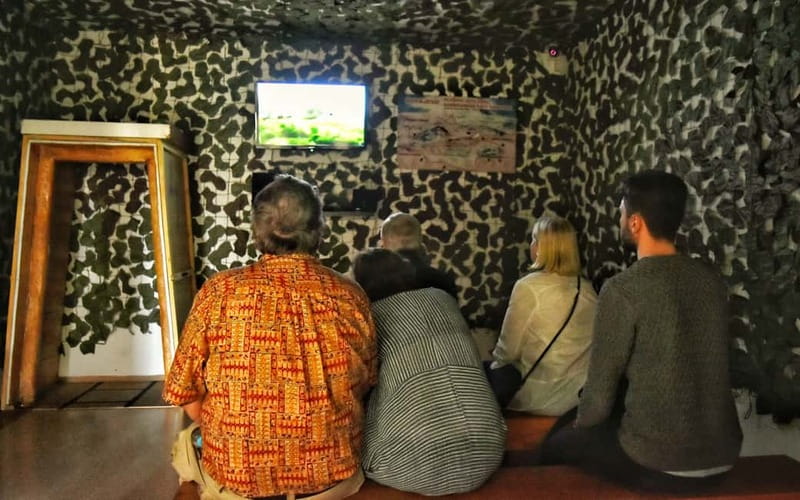
Inside, you watch an original short movie filmed during the war years, then you get a presentation lasting about one hour. What I appreciate is the structure. The guide does not treat this as a single dramatic moment. You get the broader breakup of Yugoslavia, the wars that followed in Slovenia and Croatia, and then the start of the Siege of Sarajevo, all tied back to why a tunnel mattered.
You’ll also learn how occupied Sarajevo stayed connected to free territory. That sounds simple on paper. In person, with the museum story guiding you step by step, it becomes something closer to logistics under pressure: people, movement, and time. Expect this to be the emotional center of the tour.
Practical note: museum time and the presentation mean you are not rushing through. Budget mentally for a reflective stop, not a quick photo break.
Other visits to the tunnel museum:
- Fall of Yugoslavia, Sarajevo War Tour with Tunnel of Hope Museum and Frontlines
★ 5.0 · 1,314 reviews - Sarajevo: Tunnel Museum Yugoslavia War Tour with War Veteran
★ 5.0 · 1,111 reviews - Sarajevo: Tunnel of Hope Tour – Survival and Resilience
★ 4.8 · 630 reviews
Sarajevo Roses, Sniper Alley, and the city’s scars on full display
After the Tunnel of Hope, the tour keeps the same theme, survival written into the street plan. You’ll see reminders of the siege across the city: sites connected to sniper activity and frontline areas, plus locations that help you understand how daily life changed.
One of the themes I like here is the way the guide stitches together different types of evidence. Some are physical, like the mortar scars and war-damaged buildings. Others are story-based, like how the guide explains what the city meant to different sides in the breakup period and war years.
In the walk-and-spotlight parts of the day, it’s easy to miss meaning if you treat it like standard sightseeing. The best way to get value is to ask questions. Guides on this route tend to handle the tough how-and-why with patience. In past tours, people have highlighted guide responses that cover not just facts, but also context, like how the political breakup process led to the specific reality of Sarajevo.
If you’re the type who likes to connect the map to the story, this segment works well. It helps you read the city like a timeline, where you start noticing that “normal” buildings can be survival artifacts too.
Trebević Mountain: Olympic joy meets frontline reality
Trebević Mountain is the kind of place where Sarajevo changes tone in a hurry. Only a few years before the war, it hosted part of the 1984 Winter Olympic Games. During the siege, the same mountain became a main front line.
You will drive up to Trebević and get guided time there, with a short walk and a chance to take in the war-era contrast. The tour includes the destroyed hotel Osmice, surrounded by silent ruins. The effect is striking: you are standing where the city once hosted international sport, and now you’re looking at the aftermath of being targeted.
The tour also connects this area to the Olympic bobsleigh track. Even if you are not a winter-sports fan, it helps you grasp how the landscape once meant celebration and how it later meant visibility to the enemy.
You’ll also get a panoramic view of Sarajevo from here. And the key point is that the same viewpoints were unfortunately used by the enemy army to shell the city. That makes your photos feel different. This is not just “pretty Sarajevo.” It is Sarajevo from the perspective of what can be seen, ranged, and hit.
Tip for your time up there: slow down at the viewpoint. This is one of the few stops where the guide’s story pairs with a real line of sight. If you rush, you’ll miss that connection.
Yellow Fortress: the best panorama, with the heaviest context
The Yellow Fortress is a favorite spot for locals and visitors, mainly because the views are great. The tour keeps it that way, but it adds something important: reflection.
You’ll reach the fortress area after Trebević, and the tour frames the panorama as a way to understand what Sarajevo endured for four years of constant bombing. The viewpoint is a gift to photographers, but it also puts your brain in the enemy’s position for a moment.
That’s a strange thing to do on vacation. Yet it’s part of why this tour is so effective. A city like Sarajevo can look beautiful because it has always been beautiful. But the Yellow Fortress helps you see beauty and survival at the same time.
If you’re worried about the emotional weight, this is where you might feel it most in a quieter way. There’s no tunnel movie moment or big dramatic incident. It’s you, the skyline, and the realization that the city’s outline mattered to attackers.
If you can, take five minutes without taking photos. Let the viewpoint land before you start collecting images.
More of the Yugoslav decades:
- Tunnel Museum: Bosnian & Yugoslav Wars Tour with War Veteran
★ 5.0 · 551 reviews - Utopia of Tito’s Yugoslavia, Tito’s Bunker & Siege of Sarajevo
★ 5.0 · 35 reviews - From Sarajevo: Tito’s Bunker & Konjic City Tour
★ 4.9 · 23 reviews - Secret Tito’s Bunker/Konjic Tour
★ 5.0 · 4 reviews
Holiday Inn, barracks, cemeteries, and frontlines in context
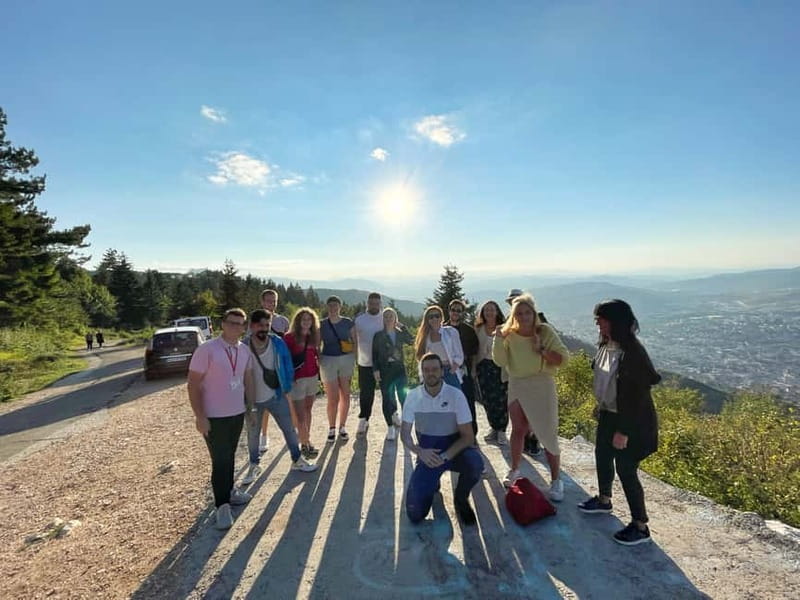
One reason this tour earns repeat bookings is that it does not treat the siege like a single museum event. The day includes additional war sites and war-related locations across Sarajevo.
Depending on the exact flow of your group, you’ll pass and/or stop near places tied to the siege and defense effort, including the Holiday Inn area, barracks, cemeteries, and frontline references. You’ll also notice the tour’s attention to the larger Yugoslavia story. The guide is setting Sarajevo inside a regional breakdown: new states, shifting borders, and the slide from political conflict to violent war.
This matters because many people arrive with only the headline story. They know there was a siege. They might not know how the breakup process fed the conflict, or how Sarajevo became a symbol of resistance and survival.
From a travel-value point of view, these extra sites are what make the price feel justified. Without them, Tunnel of Hope plus a viewpoint would be “good.” With them, it becomes a guided map of meaning.
And the guides often keep it human. People taking this tour have highlighted guides who share personal family experiences from the siege era. That kind of firsthand context helps the story feel grounded rather than textbook.
Martyr Cemetery (Šehidi): independence has a cost
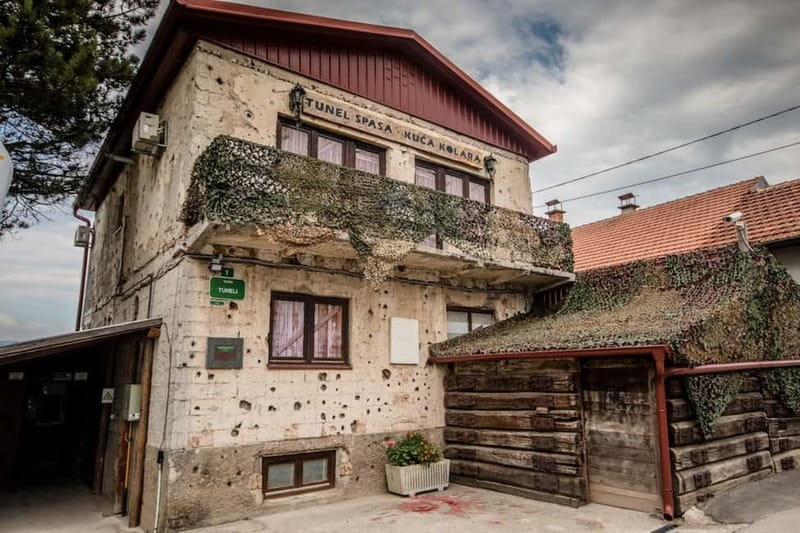
You end at Martyr Cemetery, also known as Šehidi. This is where many defenders of Sarajevo rest, and at the center is the grave of the first Bosnian president, Alija Izetbegović.
This stop changes the pace again. It is reflective, not scenic. The day’s earlier panoramas asked you to imagine visibility and targeting. The cemetery asks you to count the price of independence and survival.
Even if you do not know Bosnian history in depth, this is a clear place to understand what the guide means when they say Sarajevo became a symbol. The setting, the memorial style, and the presence of Izetbegović’s grave anchor the political story in physical remembrance.
I like ending here because it avoids the problem of leaving before the meaning lands. You get the siege story through tunnels, streets, mountains, and views. Then you finish at a place built to remember.
How the 4-hour loop stays focused, not rushed
The tour is built as a four-hour loop using a van and short walking segments. There is transportation time between key points, including a drive from Sarajevo pickup to the Tunnel of Hope museum area, then another series of transfers up to Trebević and back into central viewpoints.
What this accomplishes for you is simple: it reduces dead time. You do not spend half your day negotiating buses and taxis. Instead, your time is spent where the guide can add meaning.
From the on-the-ground plan, you can expect multiple “pass by” moments as the van moves you between sights, plus guided stops where you get walking time and time for photos. The Tunnel of Hope portion is the longest guided component after pickup time, and Trebević includes both guided time and a short walk.
One consideration: because the day is time-compressed, you should ask your questions when you have them. If you keep everything for the very end, you might not get as much back-and-forth as you’d like. This tour works best if you treat it like a conversation, not a lecture.
Price and value: $36 for a lot of story time
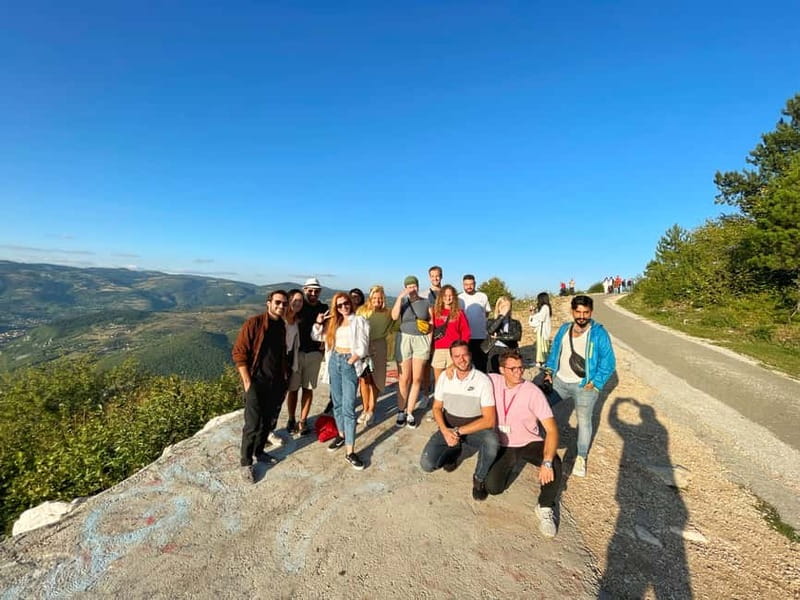
At $36 per person for about four hours, this tour is priced like a practical “history hit,” not an all-day premium experience. The value comes from three things you are actually getting.
First, you get transport plus hotel pickup options, which saves you money and time compared with piecing together rides for sites like Trebević and the Tunnel of Hope area.
Second, you get a guided museum experience, including a one-hour presentation inside the Tunnel of Hope museum. That is where the storytelling cost is real, and it is also where most self-guided visits would feel incomplete.
Third, you get multiple major sites linked to the siege in a single day. Tunnel of Hope and one viewpoint is not enough to understand Sarajevo’s wartime logic. This tour strings together the political background, the occupation reality, and the city’s survival space by space.
Also, the tour includes a voucher for a traditional Bosnian lunch at a family-owned restaurant during your free time. Lunch is not built into the tour timeline, but the voucher reduces decision fatigue after you finish.
Bottom line: if you want the highlights plus context, this price is fair. If you already know the siege history and prefer long independent wandering, you might feel it is packed. For most first-time visitors, it hits the sweet spot.
Lunch voucher, luggage handling, and what to bring
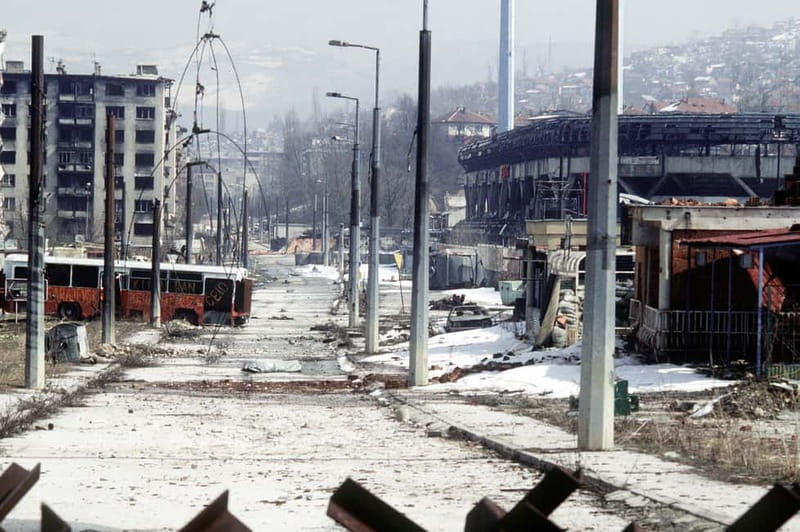
This part is practical, and it affects how smooth your day feels.
The traditional lunch voucher is included, but it is for use in your free time. You can pick up the vouchers from the office at any time, then use them during your stay. That means you can decide when to eat without being rushed.
Luggage is also covered in a simple way. You are welcome to bring it with you on the tour, or you can securely leave it at the office while you explore. That’s handy if you’re doing this soon after arriving.
What to bring is straightforward: a camera. I’d add one personal note, bring water if you’re sensitive to long walks, even though the tour duration is only half a day.
Who should book this Sarajevo war and tunnel tour
Book this if you want a guided, chronological understanding of Sarajevo’s siege and the breakup period that led into it. It suits you if you like connecting politics to places, and you want the Tunnel of Hope plus viewpoints that explain how the city’s geography mattered.
It also fits families, as long as everyone is comfortable with a serious topic. Some past participants even noted their 11-year-old enjoyed the tour, which usually means the guide kept the pace and explanations clear and engaging.
Skip it if you want a purely cheerful Sarajevo outing. This is built around war sites, memorials, and the reality of civilian harm. You can still enjoy Sarajevo afterward, but this tour is not a “just fun” kind of day.
If you do book, consider this simple strategy: during the tour, ask one or two questions that connect the sites. For example, ask how the tunnel story relates to what you’re seeing in the later viewpoints. That’s where the tour turns from facts into understanding.
Should you book this tour?
Yes, if you are visiting Sarajevo for the first time and you want one half-day experience that explains why the city feels the way it does. The Tunnel of Hope museum time, the linked panoramas from Trebević and the Yellow Fortress, and the ending at Martyr Cemetery create a strong arc.
If you’re emotionally cautious, go in knowing it will be heavy. Then plan a gentle evening after, with food and breathing room. This tour gives you clarity fast. It deserves time to sit with it once the van drops you back in the city.
FAQ
How long is the Sarajevo Tunnel and War sites tour?
The tour duration is 4 hours.
How much does it cost per person?
The price is $36 per person.
What is included in the tour price?
You get hotel pickup, a small-group tour with a professional English guide, air-conditioned transport, and transport between stops. You also get a voucher for traditional lunch in Sarajevo at a family-owned restaurant (used in your free time), plus Tunnel of Hope entry fee if you select that option.
Is the Tunnel of Hope ticket included?
Tunnel of Hope entry is included if the Tunnel entry option is selected.
Is hotel pickup provided?
Hotel pickup is available, and pickup is optional. You will be informed of the pickup time when you book.
Is lunch included during the tour?
Breakfast and lunch are not part of the tour program. A lunch voucher is included for traditional Bosnian lunch, and you can use it during your free time.
What language is the guide, and is the tour wheelchair accessible?
The tour is guided in English, and it is wheelchair accessible.
Newest Sarajevo write-ups
- Sarajevo to Zagreb: One-Way Tour via Jajce, Travnik, Pliva Lake and Watermills★ 5.0 · 3 reviews
- Sarajevo E-Bike City Tour★ 5.0 · 3 reviews
- Mountain Village Lukomir Full Day Adventure Tour★ 5.0 · 3 reviews
- Bosnian Kingdom Capitals: Travnik & Jajce Tour from Sarajevo★ 5.0 · 3 reviews
- Strbacki Buk and Una Waterfalls: Day Trip from Sarajevo★ 5.0 · 3 reviews
- Sarajevo Snowshoeing Adventure★ 5.0 · 3 reviews
- Sarajevo Old Town: Bosnian Coffee, Baklava & Panoramic Views★ 5.0 · 3 reviews
- 4 Hours Tara Rafting Trip★ 5.0 · 3 reviews
Yugoslav History Tours, compared.
The Death of Yugoslavia: Unique thematic Tour in Mostar
Read our review →
Browse the lists this tour appears in