
Reviewed · YUGOSLAV HISTORY TOURS
Tunnel Museum: Bosnian & Yugoslav Wars Tour with War Veteran
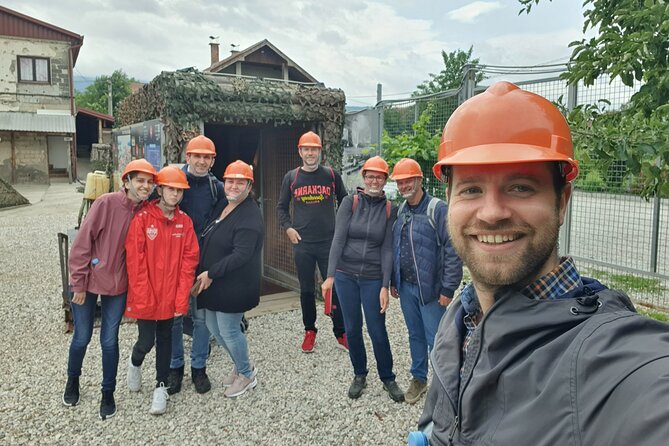
Sarajevo has a way of turning history into something you can feel. This tour is interesting because it links the city streets, memorials, and viewpoints of the siege to the real engineering of the Tunnel of Hope, explained by someone who lived the era. I love the war-veteran, firsthand storytelling and the way the day moves from Tunnel Museum history to panoramic siege positions. The only drawback is the subject matter is heavy and emotional, so it helps to be ready for that tone from the start.
You also get real value for the price because transportation is handled in an air-conditioned car or minivan, and you are not just standing in one place reading plaques. The group size stays small (up to 20), so questions actually get answered, and you can process the story at your own pace. Just note that the tour needs moderate physical fitness, especially around the mountain viewpoints.
Key highlights I’d plan around
- War veteran guide perspective that makes the siege feel real, not textbook.
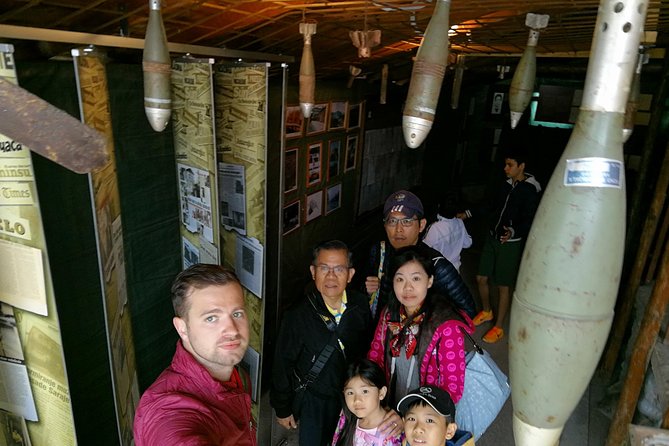
- Tunnel of Hope Museum with a short film and a longer guided presentation (plus a key spot called Sarajevo Rose at the entrance).
- Trebevic Mountain views from the same high ground used as a first line during the siege.
- Jewish Cemetery tombstones with shapes influenced by medieval Bosnian stecak.
- Old Ottoman Sarajevo stops, including the Yellow Fortress and nearby Soldiers Cemetery and the resting place of the first Bosnian president.
- Small-group pacing that lets you linger just enough without feeling dragged along.
Entering Sarajevo’s Siege Story, Ferhadija to the City’s Big Questions
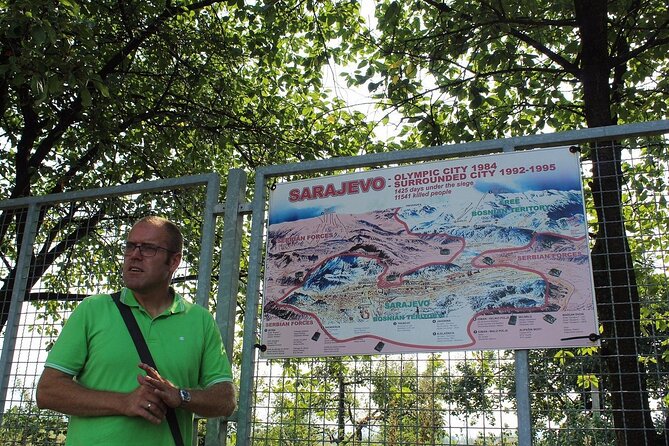
The day starts near the pedestrian spine of Sarajevo, on Ferhadija, by the Info Bosnia Tourist Information Center, right next to the Sarajevo Meeting of Cultures. From there, you get an intro before the tour really begins, and it is not random. The guide sets you up with a war theme and points out key places you will later see referenced again, including during the Tunnel Museum visit.
This is one of the smartest parts of the tour. You do not just arrive at the Tunnel of Hope and get the facts. You get your bearings first, so when the guide starts connecting places, it clicks faster. I also like that the drive intro runs about 25 to 30 minutes, which is long enough to frame the story but short enough that you are not stuck waiting around.
Other accounts of the siege years:
- Fall of Yugoslavia, Sarajevo War Tour with Tunnel of Hope Museum and Frontlines
★ 5.0 · 1,314 reviews - Sarajevo: Tunnel Museum Yugoslavia War Tour with War Veteran
★ 5.0 · 1,111 reviews - Sarajevo War Tour: A Veteran’s Story of the Siege (fees included)
★ 5.0 · 326 reviews
Comfort and the Small-Group Advantage on an Air-Conditioned Ride
You’ll ride in an air-conditioned car or minivan, which matters a lot in a city where you will be outside at viewpoints. The tour is about 4 hours, so comfort is not a luxury here, it is the difference between enjoying the day and just surviving it.
Hotel pickup is included if you are staying outside the Old Town, and that helps you avoid the stress of getting yourself across town while you are also trying to absorb difficult history. The tour also caps at 20 travelers, which is why you often get a conversation instead of a lecture.
One detail I took from the guide style is how interactive this can be. People mention guides answering questions calmly, sometimes with humor, and remembering names in small groups. That may sound minor, but it changes the whole tone. It turns the day into a shared explanation, not a one-way performance.
Old Town Stops That Turn Memorials Into Location-Based History
After the intro, you move through key sites tied to the siege. These stops are short, but they matter because the guide uses them like signposts. You are constantly being told why a place was vulnerable, strategic, or symbolic.
A few of the most important stops include:
Markale massacres, and how Sarajevo became a target
You will stop at the Markale massacres, described as two separate bombardments during the siege that targeted civilians. This is not presented as vague tragedy. The guide ties it to the reality of daily life getting crushed, and how fear moved through neighborhoods.
If you are the kind of traveler who likes context, this stop gives you a concrete anchor. If you prefer a lighter pace, this is also where you should mentally prepare for the intensity.
Other visits to the tunnel museum:
- Sarajevo: Tunnel of Hope Tour – Survival and Resilience
★ 4.8 · 630 reviews - Sarajevo: Bosnian War & Fall of Yugoslavia Tour with Tunnel
★ 4.9 · 398 reviews - Sarajevo: A Siege Story – The Tunnel of Hope Experience
★ 4.8 · 206 reviews - Tunnel of Hope Tour – Survival and Resilience
★ 5.0 · 118 reviews
The Eternal flame, linking World War II memory to later suffering
The Eternal flame is a memorial to military and civilian victims of World War II in Sarajevo. It was dedicated on 6 April 1946, the first anniversary of Sarajevo’s liberation from the Nazi occupation and the fascist Independent State of Croatia.
Why this stop works on a siege tour is simple. It reminds you Sarajevo’s suffering did not begin in the 1990s, and it did not end there. The guide uses the continuity to help you understand how trauma can echo through generations.
Sniper Alley, the geography of fear
You’ll also hear about Sniper Alley, an informal name connected to streets like Zmaja od Bosne Street and Meša Selimović Boulevard. During the Bosnian War, these roads were lined with sniper posts, and it became infamous as a dangerous route for civilians.
The guide typically explains why this part of town was so hard to cross: tall high-rise buildings gave shooters fields of fire, and the boulevard connected industrial zones and further routes toward the airport and the Tunnel of Hope to the Old Town.
This is where the tour shows its best skill. It turns a street name into a map of power.
A museum stop connected to the Sarajevo Haggadah
You may also stop at a museum connected to the Sarajevo Haggadah, an illuminated manuscript holding the traditional Jewish Haggadah. It is described as the oldest Sephardic Jewish document in the world, issued around 1350 in Barcelona.
Even if you are not a manuscript person, this stop helps you see Sarajevo as layered, not just wounded. The siege era is central, but you are also reminded that the city held deep cultural life long before the war, and that life did not disappear everywhere at once.
War Tunnel Museum, Sarajevo Rose, and the One-Hour Presentation That Makes It Make Sense
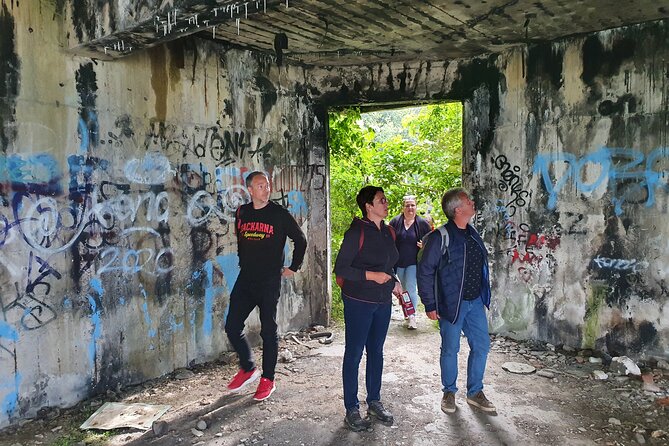
The main event is the Sarajevo War Tunnel, part of the War Tunnel Museum experience. When you arrive, the guide helps you understand the location of the museum and points out a famous marker near the entrance called Sarajevo Rose.
Before the deeper explanation, you watch a short movie. Then you sit through a presentation that lasts about an hour. This is the heart of the tour because it connects big political shifts to real human survival, and it explains the tunnel’s creation and why it mattered.
The presentation covers the fall of Yugoslavia, wars in Slovenia, Croatia, and Bosnia and Herzegovina, and then zooms in on Sarajevo and the importance of the Tunnel. That range is important. It prevents the Tunnel from feeling like a standalone miracle.
Practical note: Tunnel Museum admission is not included in the tour price. You’ll want to budget for that add-on so you do not get surprised at the entrance.
This is also where the war-veteran angle becomes most powerful. People describe guides like Adis with personal stories that explain how normal life shifted into war, and how the ingenuity of locals helped the city hold out until the Dayton Agreement. Even when the facts are already known, the tone becomes different when it is told as lived experience.
Trebevic Mountain and the Panoramas From the Siege’s First Line
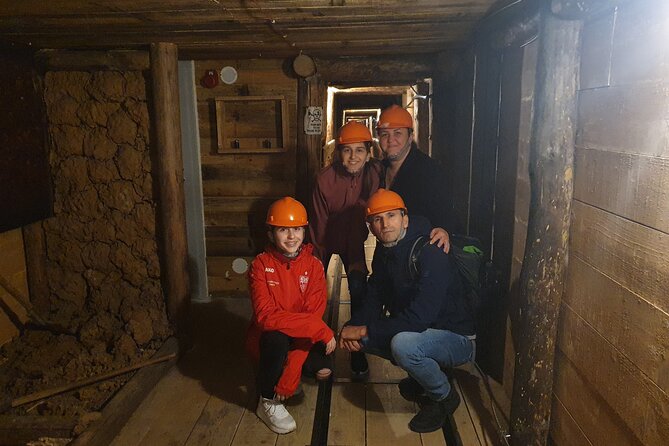
After the Tunnel visit, you head to Trebevic Mountain, at 84 Olympic mountain. This is the closest mountain to the center of Sarajevo, and it was a first line during the siege.
You’ll have time to walk around the area and, if the site is open, you can experience the hotel restaurant called 8. But the real reason to come here is the views. From Trebevic, you understand why this “natural advantage” became a problem. The panoramic look is tied directly to the high positions where the enemy army was located.
This stop usually lands best for travelers who want to connect history with geography. You are not just hearing that the city was surrounded, you are seeing why mountains shaped control and shelling.
Time on this stop is about 30 minutes. That is enough to see the views and take a few photos, without forcing a long hike.
Jewish Cemetery Under Trebevic, Where the Tombstones Tell a Second Story
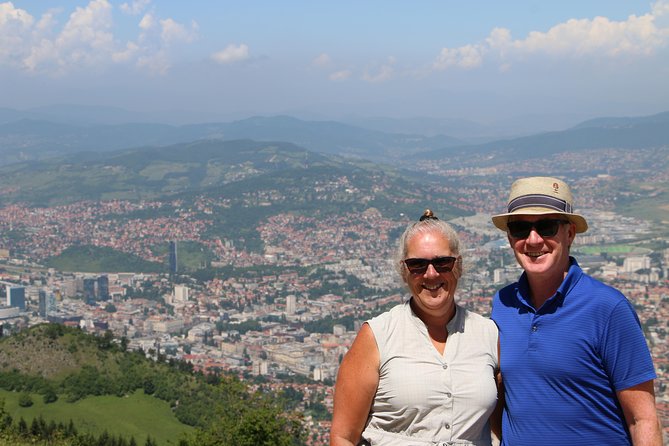
Just under Trebevic Mountain lies the Jewish Cemetery in Sarajevo, described as the second largest Jewish cemetery in Europe. You will have about 20 minutes here.
The standout detail is the unique shaped tombstones, described as being influenced by medieval Bosnian stecak. That word matters because it connects different time periods and cultural styles within Bosnia, not only within the Jewish community.
This cemetery stop also changes the emotional temperature of the day. The Tunnel can feel like survival engineering. The cemetery adds another dimension: memory, loss, and the way identity remains visible through stone.
Yellow Fortress, Soldiers Cemetery, and the First President’s Resting Place
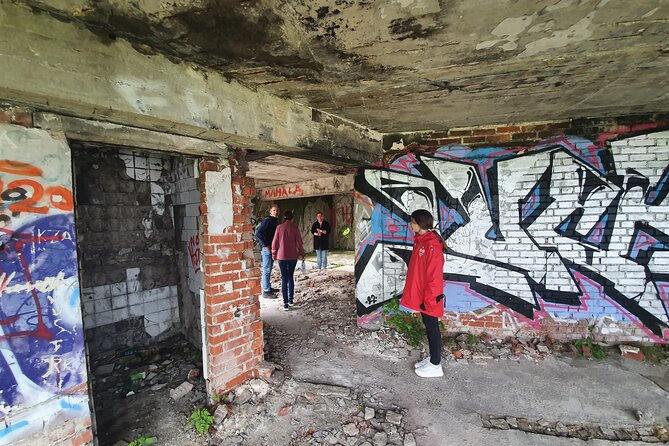
Next you head toward the old Ottoman part of the city to visit the Yellow Fortress. From here, you get views of the Soldiers Cemetery and the resting place of the first Bosnian president.
This stop is built for interpretation. You are looking out over places that are both commemorative and historical, which helps you understand how Sarajevo keeps layering the siege into its everyday geography.
With about 20 minutes here, it stays focused. You get the view, you get the explanation, and you move on.
Price and What You Actually Pay For at $36.28
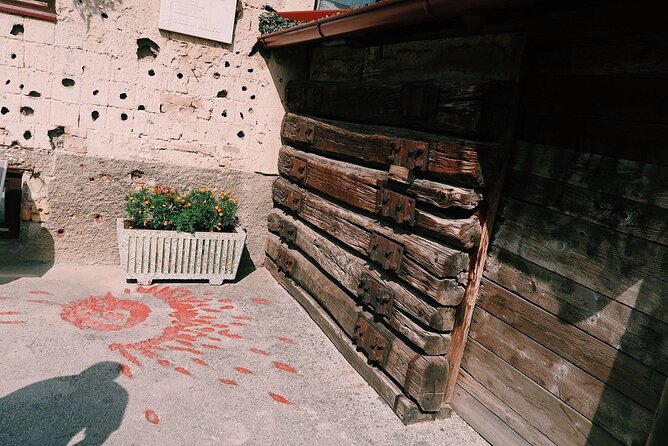
At $36.28 per person for roughly 4 hours, the value depends on what you care about.
Here’s what you get included:
- Driver/guide
- Transport by air-conditioned car or minivan
- Hotel pickup if you are staying outside the Old Town
- Mobile ticket
- Tour in English
- Small group size up to 20
Here’s what is not included:
- Food
- Hotel drop-off
- Admission to the Tunnel Museum (not included), and you’ll pay that on site
For this kind of tour, the biggest value is not the number of stops. It is the quality of the explanation. When the guide has firsthand knowledge, and when the day is built to connect viewpoints, memorials, and the Tunnel into one narrative, the price starts to look reasonable fast.
Also, the tour is frequently booked about 8 days in advance on average. If you are traveling in high season or you want a specific time, it’s smart to lock it earlier rather than gamble.
Who Should Book This Siege and Tunnel Tour, and Who Might Prefer Something Else
You should book if you want Sarajevo with meaning. This tour is ideal if you like history that connects to streets you can stand on, and if you appreciate a guide who answers questions and gives personal context.
It is also a great fit for solo travelers who want a small-group format. One person described ending up on a solo tour and still getting a full, enthusiastic experience, which tells you the company aims to keep the guide energy consistent.
You might think twice if you do not handle emotional topics well. This tour deals with attacks on civilians, the siege, and the way war reshaped normal life. It is important history, but it is not light entertainment.
Should you book the Bosnian and Yugoslav Wars Tunnel Museum tour?
I’d recommend booking if your goal is to understand why Sarajevo mattered and how people kept functioning under siege conditions. The combination of Tunnel of Hope Museum plus siege viewpoints like Trebevic gives you both the engineering story and the geographic reality. With air-conditioned transport, hotel pickup (if needed), and a guide who can speak personally, it feels efficient without feeling rushed.
Book it if you want authentic perspective more than museum browsing. Just plan for the emotional weight, and bring water or a snack for after, since food is not included.
FAQ
How long is the Sarajevo War Tunnel and Siege tour?
The tour runs about 4 hours (approximately).
Where does the tour start and end?
It starts at Velika avlija Laure Papo Bahorete 2, Sarajevo 71000, Bosnia and Herzegovina, and it ends back at the meeting point.
Is the tour offered in English?
Yes, the tour is offered in English.
Is hotel pickup included?
Hotel pickup is included if you stay outside the Old Town of Sarajevo.
What is included in the tour price?
The tour includes the driver/guide, transport by air-conditioned car or minivan, and hotel pickup if required, plus a mobile ticket.
What is not included?
Food is not included, and the Tunnel Museum admission is not included. Hotel drop-off is also not included.
Do I need much physical ability?
The tour says it requires a moderate physical fitness level, and children must be accompanied by an adult.
What is the cancellation policy?
You can cancel for a full refund up to 24 hours before the experience starts. If you cancel less than 24 hours before, the amount paid will not be refunded.
More Museums in Sarajevo
- Cable Car Olympic Tour With Museum
★ 5.0 · 17 reviews - SARAJEVO CONCEPTUAL ART TOUR (galleries, art and arhitecture)
★ 5.0 · 7 reviews - Sarajevo: A City Under Siege – War Tour With Tunnel Museum
★ 5.0 · 4 reviews - Mostar: Sarajevo Grand Tour with Tunnel of Hope Museum
★ 5.0 · 17 reviews
More of the Yugoslav Decades
- Utopia of Tito’s Yugoslavia, Tito’s Bunker & Siege of Sarajevo
★ 5.0 · 35 reviews - From Sarajevo: Tito’s Bunker & Konjic City Tour
★ 4.9 · 23 reviews - Secret Tito’s Bunker/Konjic Tour
★ 5.0 · 4 reviews - Break-up of Yugoslavia & The War in Mostar: Life Under Siege
★ 5.0 · 136 reviews
Newest Sarajevo write-ups
- Sarajevo to Zagreb: One-Way Tour via Jajce, Travnik, Pliva Lake and Watermills★ 5.0 · 3 reviews
- Sarajevo E-Bike City Tour★ 5.0 · 3 reviews
- Mountain Village Lukomir Full Day Adventure Tour★ 5.0 · 3 reviews
- Bosnian Kingdom Capitals: Travnik & Jajce Tour from Sarajevo★ 5.0 · 3 reviews
- Strbacki Buk and Una Waterfalls: Day Trip from Sarajevo★ 5.0 · 3 reviews
- Sarajevo Old Town: Bosnian Coffee, Baklava & Panoramic Views★ 5.0 · 3 reviews
- Sarajevo Snowshoeing Adventure★ 5.0 · 3 reviews
- 4 Hours Tara Rafting Trip★ 5.0 · 3 reviews
Yugoslav History Tours, compared.
The Death of Yugoslavia: Unique thematic Tour in Mostar
Read our review →
Browse the lists this tour appears in