
Reviewed · OLYMPIC MOUNTAIN TOURS
Cable Car Olympic Tour With Museum
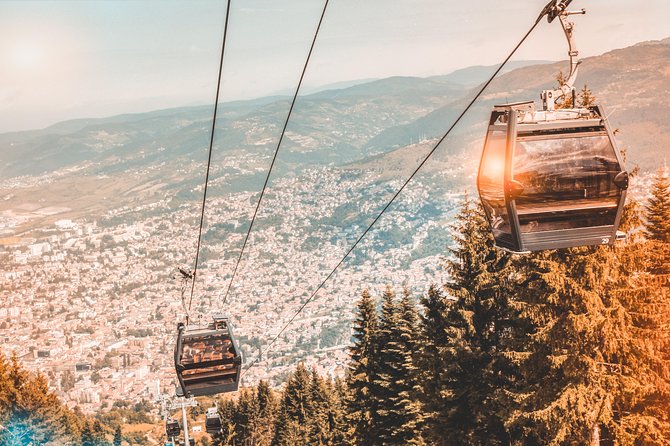
This is one of those Sarajevo tours that mixes big ideas with big views. You start in the city center, ride the cable car up to Trebević Mountain, then walk part of Sarajevo’s 1984 Winter Olympics legacy. It’s a lot to fit into one half day, but the flow makes sense.
I especially like two things. First, the small group (max 15) keeps the pace human and the guide’s attention where it should be. Second, the chance to get on the Olympic bobsleigh and luge track and understand what you’re seeing, not just snap photos.
One drawback to plan for: the return cable car ticket and the Olympic Museum entrance are listed as extra costs, and the day includes hills and some stairs. If you prefer flat walking, this may feel like more effort than expected.
Key things I would plan around
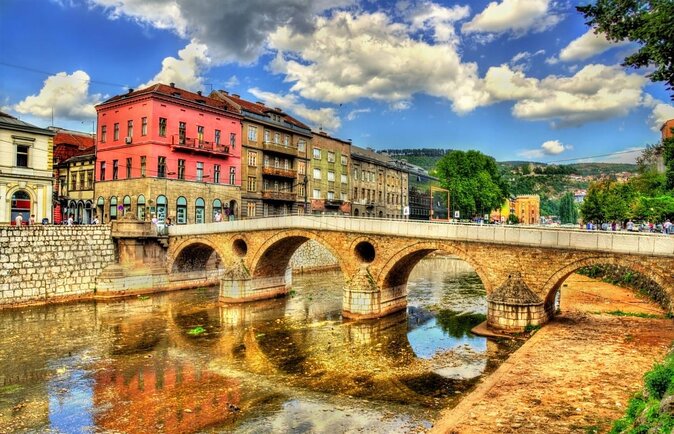
- A cable car ride up to Trebević Mountain with panoramic views over Sarajevo
- Small-group guiding (max 15), which helps you keep up and ask questions
- Walkable Olympic history on the Sarajevo Olympic bobsleigh and luge track
- Old Town context in short stops at major landmarks like Latin Bridge and Emperor’s Mosque
- Time in Bascarsija and the Meeting of Cultures to end with real Sarajevo street life
Trebević Mountain by cable car: the view plus the context
The tour’s backbone is the cable car up to Trebević, often called the lungs of Sarajevo. The line runs about 2,100 meters and connects Bistrik on the Miljacka River side with Trebević. When you’re going up, you feel the change fast, city noise thinning out as you gain height.
What makes this ride more than just scenery is what the guide does with it. While you’re near the top, you’ll get narration about winter Olympics history and how this mountain area ties into the 1984 Games. That matters because Trebević can look like a simple viewpoint unless someone points out what it used to host and why people cared.
Also, the cable car itself has a story. It was damaged during the war and renovated in 2018. That gives the ride an extra layer of meaning, like you’re seeing a comeback in motion.
Practical take: wear shoes with grip. You’ll be walking and moving between stops, and the mountain section can feel more slippery than the Old Town.
More time on the 1984 mountains:
- Sarajevo Grand Tour: Old Town, War Tunnel, Olympic Sites & More
★ 5.0 · 73 reviews - Sarajevo Full Day Tour: History, Culture, Nature, War & Olympics
★ 5.0 · 27 reviews - Sarajevo: Olympic Mountains and Spring of Bosna River Tour
★ 5.0 · 25 reviews
Sarajevo’s quick hits: Latin Bridge, Emperor’s Mosque, and Saint Anthony
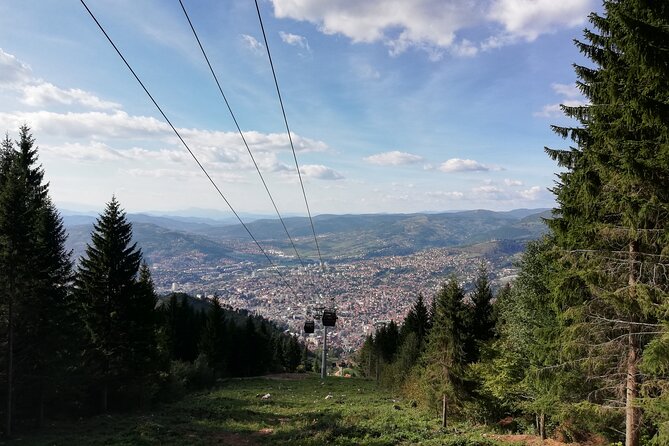
Before you even reach the mountain, you get a fast, efficient slice of central Sarajevo. The tour doesn’t try to turn into a museum marathon, so the stops are short, but they’re placed where a guide can explain the why.
Latin Bridge: where a street moment changed the world
You start near Latin Bridge, tied to Sarajevo’s Catholic neighborhood name history. The big lesson here is Gavrilo Princip, who assassinated Archduke Franz Ferdinand and his wife, Sofie, just meters from this bridge. The guide connects that single act to the start of the First World War, and you’ll understand why this spot is spoken about so often.
Even if history isn’t your main interest, this stop helps you read Sarajevo with better context. The city’s layers are visible, and the guide gives you a thread to follow.
Emperor’s Mosque: Sarajevo’s oldest mosque roots
Next is the Emperor’s Mosque, described as Sarajevo’s oldest mosque and among the oldest in Bosnia and Herzegovina. It’s associated with Isa Bey Ishaković, a founder figure, and it’s linked to construction shortly after the city’s founding in 1462, in honor of Sultan Mehmed II “the Conqueror”.
The stop is brief, but it’s a useful reminder that Sarajevo’s identity has long been shaped by different faiths and rulers, not just the 20th century.
More around Sarajevo to weigh up
- Fall of Yugoslavia, Sarajevo War Tour with Tunnel of Hope Museum and Frontlines
★ 5.0 · 1,314 reviews - Sarajevo: Tunnel Museum Yugoslavia War Tour with War Veteran
★ 5.0 · 1,111 reviews - Tunnel Museum: Bosnian & Yugoslav Wars Tour with War Veteran
★ 5.0 · 551 reviews - SARAJEVO CONCEPTUAL ART TOUR (galleries, art and arhitecture)
★ 5.0 · 7 reviews
Church of Saint Anthony of Padua: a neo-gothic Franciscan presence
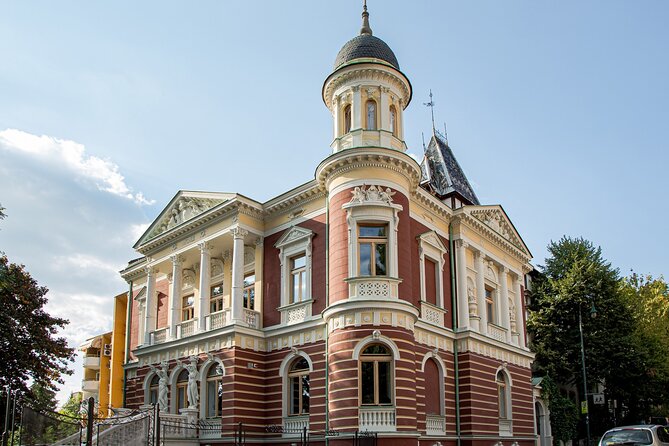
Then you pass by the Franciscan neo-gothic Church of Saint Anthony of Padua. The key value of this stop is not a long interior visit, it’s the way the architecture tells you who built what, and when. You leave with a quicker visual map of what to notice as you walk on your own later.
A stop for brewing tradition: Sarajevska Pivara
You also stop at Sarajevska Pivara, Sarajevo Brewery, established in 1864. The tour frames it as the oldest and most renowned brewery in Bosnia and Herzegovina.
This is not a full tasting tour, and the stop stays short. Still, I like having a food or drink landmark in the mix because it makes Sarajevo feel less like a list of sights and more like a real place people live in. If you want to extend the experience afterward, this gives you a strong cue for where to look for local beer on your own time.
The heart of the tour: Trebević and the Olympic bobsleigh and luge track
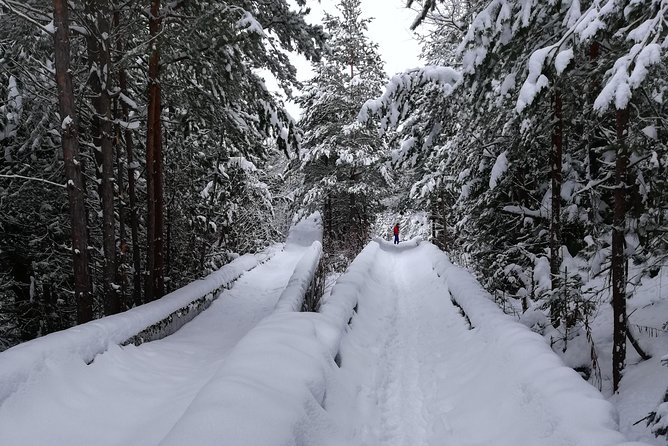
Once you’re up on Trebević, the pacing becomes more outdoors and more specific. You’re there for about an hour with admission included, and you’ll talk about the winter Olympic events connected to this area.
Why Trebević works for visitors
Trebević is the closest mountain reachable via the cable car from the heart of Stari Grad, specifically from the Bistrik neighborhood. That makes it a rare kind of “mountain time” that doesn’t require a day trip and doesn’t require a car. You get a real sense of being above the city, plus a bit of breathing room between the Old Town stops.
If your day feels too dense, this is the release valve.
Walking the Sarajevo Olympic bobsleigh and luge track
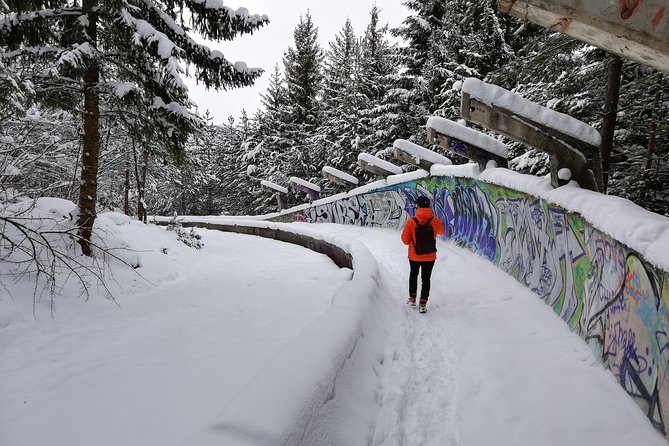
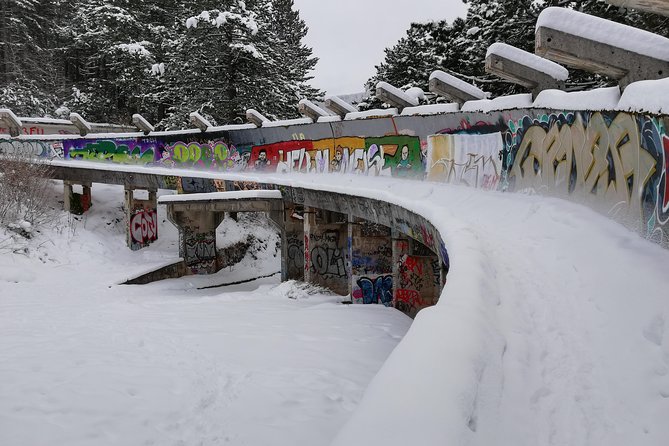
This is the moment people remember. You’ll have around 30 minutes at the Sarajevo Olympic Bobsleigh and Luge Track with admission included. You get to walk the iconic course, and the guide helps you place what you’re looking at within the Olympic story.
One practical truth: you’re not just walking for pictures. You’re walking to understand. When the guide explains how the track was used and why the location mattered, the track becomes more than concrete and rails. It turns into a piece of sport history you can actually experience on foot.
Practical take: expect some uneven ground and sun exposure. A hat helps, even if the forecast looks mild.
The Olympic Museum: pay attention to the ticket fee
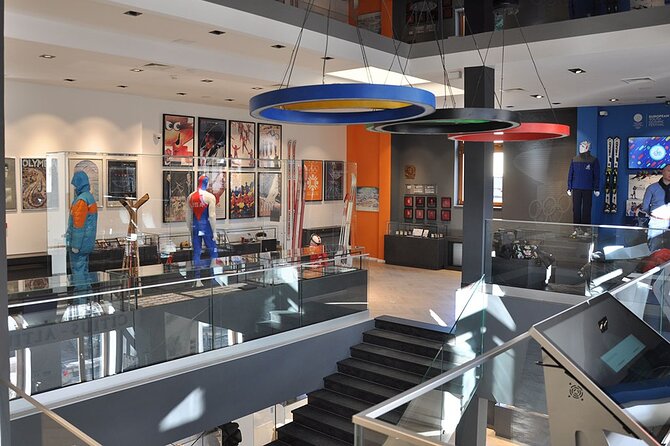
After the track, the itinerary includes time for the Olimpijski Muzej, the Olympic Museum tied to the 1984 Winter Olympics. It’s allocated about 40 minutes, but museum entry is listed as not included, with a ticket cost of 12 BAM per person.
If you care about artifacts, behind-the-scenes stories, and how Sarajevo marketed itself to the world during the Games, this is your best chance to go deeper. If you only want the outdoor sites, you could treat the museum time as optional, but in this tour it’s planned in.
My advice for value: if you’re on a tight schedule, budget enough time to see the main Olympic rooms properly. Half-reading it feels like a waste, but a focused visit feels rewarding.
Bascarsija and the Meeting of Cultures: end with local Sarajevo
After the Olympic section, you get two quick stops that bring you back to everyday Sarajevo.
Bascarsija
You’ll have around 15 minutes in Bascarsija, Sarajevo’s historic bazaar. This is where you feel the city’s rhythm: crafts, small storefronts, and lots of places to grab a drink or snack.
The time is short, but it’s a good reset after Trebević. Use it to re-orient yourself, and pick one thing to try so the day ends with flavor, not just altitude.
Sarajevo Meeting of Culture
You’ll also stop at the Sarajevo Meeting of Cultures, a landmark described as a meeting point between East and West. It’s only about 2 minutes in the itinerary, so this is more of a quick photo-and-orientation stop than a long break.
I like it because it ties back to the earlier religious and historical sites. It gives Sarajevo a through-line that’s not only about conflict, but also about how cultures have mixed and shared space.
The guide matters: what the best reviews get right
The strongest part of this experience is the human one. The tour runs with an English guide, and the operator lists English, German, and Croatian-speaking support. Across the experiences shared, guides like Dennis and Medina stood out for being highly attentive and for explaining the Sarajevo story clearly.
Here’s what that means in real terms for you:
- You’ll get more than dates. You’ll get reasons. Why a bridge matters, why a mosque is placed where it is, why Olympic venues were built here.
- You’ll get careful pacing, especially for the walking. Even when the itinerary includes hills and stairs, a good guide keeps the group together.
- You may get smart adaptations. One guest shared that on their day, cable cars were not running and the guide switched to a city walking tour plan instead. That kind of flexibility is exactly what you want when weather or schedules interfere.
In short: if you’re the type who likes to understand what you’re looking at, this tour is built for you.
Price and ticket planning: where your money really goes
The tour price is listed at $30.04 per person, with an approximate duration of 4 hours. On paper, that sounds like good value for a guide plus multiple site stops plus time up on Trebević.
But here’s the part you should plan for upfront: the itinerary lists two major add-on fees.
- Cable car return ticket: 30 BAM (about 15.5 euros)
- Olympic Museum entrance: 12 BAM (about 6.5 euros)
So your total cost is the base tour price plus those two tickets. If you’re budgeting tightly, treat those as part of the price, not extras you discover at the last second.
What your base price covers well
Even without those add-on tickets, your money supports:
- A guided tour in English, with a small group size (max 15)
- Included admission at Trebević (about 1 hour) and at the Olympic bobsleigh and luge track (about 30 minutes)
That combination, plus the Old Town stops and the Olympic framing, is why the day works as a half-day plan instead of a collection of disconnected locations.
How much walking is it, really?
This tour is not a couch-to-cable-car shuffle. It includes hills and stairs. The day is described as requiring moderate physical fitness, and the terrain matters because you’re going between viewpoints and sites in central Sarajevo, then up to the mountain area.
If you can handle uneven sidewalks and a steady climb, you’re likely fine. If you struggle with stairs or you get winded easily, you’ll want to think twice, or at least go in with extra patience.
Also, you have about 4 hours total. That’s not long, but it’s enough that you’ll feel the pace if you’re not used to walking.
Who should book this Sarajevo Olympic tour?
This tour is a strong match if you want:
- Olympic Sarajevo as more than a fact on a sign
- A cable car ride without the hassle of planning the logistics yourself
- A guide who can connect major sites like Latin Bridge to modern Sarajevo identity
- A half-day plan that still ends in the Old Town area
It may not be your best choice if you:
- Want a very relaxed, mostly flat walking day
- Only care about one thing, either the museum or just the mountain, and would rather go independently
Should you book it?
I’d book this if you like your tours guided, not scripted, and you’re curious about how Sarajevo’s story connects past and present. The best part is the blend: Olympic venues you can walk, Old Town landmarks you can’t fully read on your own, and a small group size that keeps it comfortable.
Just go in with realistic ticket budgeting for the return cable car and the Olympic Museum, and wear shoes for hills. If you do that, you’ll get a memorable Sarajevo day that feels like you actually understood the places you visited, not just checked them off.
FAQ
How long is the Cable Car Olympic Tour with Museum in Sarajevo?
It is about 4 hours long.
What language is the tour offered in?
The tour is offered in English, and the guides include English, German, and Croatian.
What is included in the tour admission fees?
Admission is included for Trebević (the mountain stop) and for the Sarajevo Olympic bobsleigh and luge track.
What extra tickets do I need to pay for?
The cable car return ticket costs 30 BAM per person, and the Olympic Museum entrance costs 12 BAM per person.
How large is the group?
The tour has a maximum of 15 travelers.
How fit do I need to be for this tour?
You should have moderate physical fitness. There are stairs and hills during the walk between stops.
Newest Sarajevo write-ups
- Sarajevo to Zagreb: One-Way Tour via Jajce, Travnik, Pliva Lake and Watermills★ 5.0 · 3 reviews
- Sarajevo E-Bike City Tour★ 5.0 · 3 reviews
- Mountain Village Lukomir Full Day Adventure Tour★ 5.0 · 3 reviews
- Bosnian Kingdom Capitals: Travnik & Jajce Tour from Sarajevo★ 5.0 · 3 reviews
- Strbacki Buk and Una Waterfalls: Day Trip from Sarajevo★ 5.0 · 3 reviews
- Sarajevo Old Town: Bosnian Coffee, Baklava & Panoramic Views★ 5.0 · 3 reviews
- Sarajevo Snowshoeing Adventure★ 5.0 · 3 reviews
- PRIVATE Sarajevo Under Siege War Tour★ 5.0 · 3 reviews
Olympic Mountain Tours, compared.
Olympic Mountains and Spring of Bosna River Tour
Read our review →
Trebevic Mountain Biking Tour from Sarajevo – Bobsleigh Track
Read our review →
1984 Winter Olympics Site & Vrelo Bosne Day Trip
Read our review →
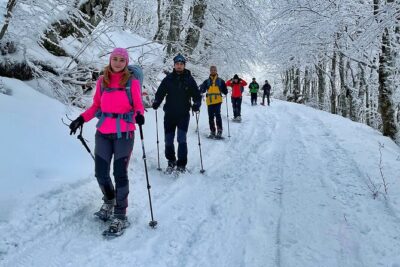
Experience Snowshoeing in Olympic Mountain Bjelašnica
Read our review →
Browse the lists this tour appears in