
Reviewed · MUSEUMS
SARAJEVO CONCEPTUAL ART TOUR (galleries, art and arhitecture)
This Sarajevo conceptual art tour is interesting because it reads the city like a sketchbook. You move from galleries to street-level marks and back again, so the art is not separate from real places.
I especially like two things. First, Brodac Gallery turns an old Austro-Hungarian prison building into a working contemporary space, with craft beer Gelender to keep the mood friendly. Second, I love how the route includes Sarajevo Roses and Mensud Kečo’s Srebrenica memorial sculpture, so you see how art can carry memory without becoming only a history lesson.
One possible drawback: you are on a tight 2 to 3 hour loop and you will do both indoor gallery time and outdoor walking, plus some stops connect to heavy topics from the Siege of Sarajevo and Srebrenica. If you want only light, postcard Sarajevo, this may feel too serious at times.
Key highlights you should care about
- Small group, up to 15 people, which means you get real back-and-forth with the guide instead of nodding along
- Mobile ticket so you are not stuck hunting for paper confirmations
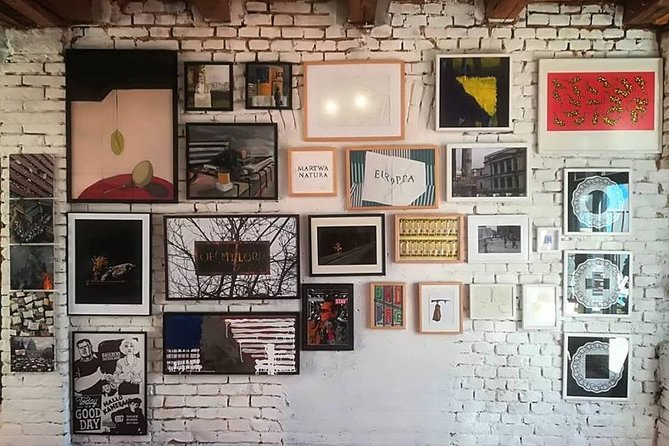
- Brodac Gallery in a former prison, now a cozy contemporary art stop (and yes, Gelender craft beer)
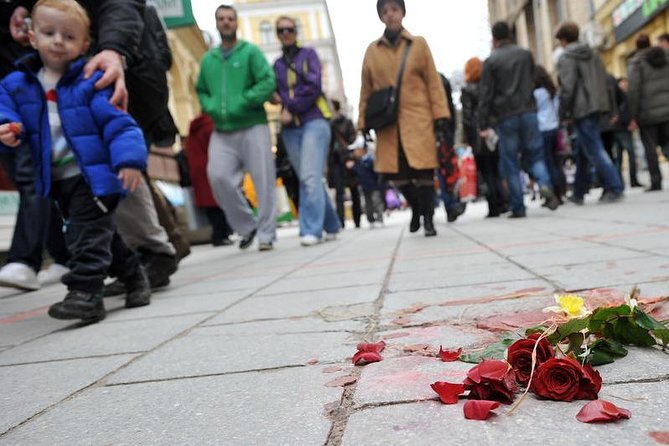
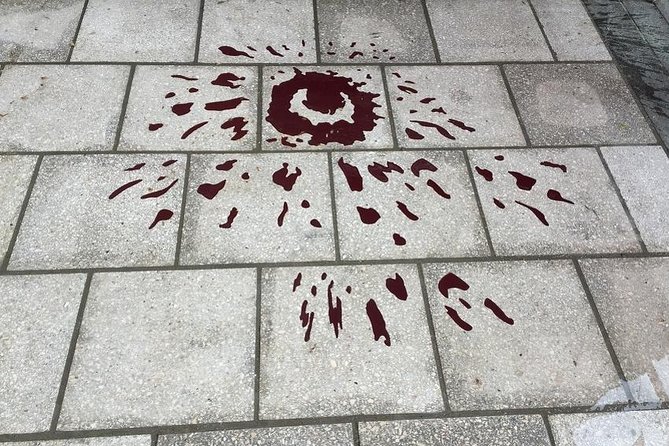
- Sarajevo Roses on Ferhadija, a concrete explosion scar filled with red resin that looks almost floral
- Galerija Java in the city center, a key supporter of both Bosnian and international contemporary artists
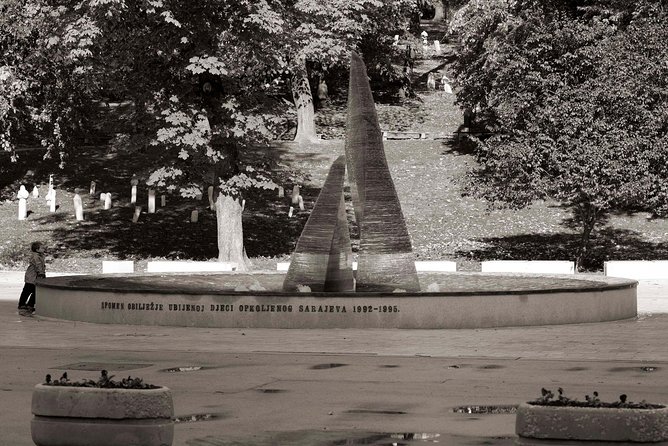
- A guided stop in Veliki Park, featuring Mensud Kečo’s Srebrenica memorial sculpture
Why this tour feels like Sarajevo, not just art
If you have done the usual highlight crawl, you know the problem. You see buildings, you take pictures, and you move on. This tour tries something smarter. It connects ideas to the exact spaces where Sarajevo shows its layers.
The big advantage is the guide. You get context that turns what you might call conceptual art into something you can actually place in your mind: why a certain material was chosen, what an urban scar is doing on a pedestrian street, and how the contemporary scene keeps working in a city that knows disruption well.
And the group size matters. With a maximum of 15, the conversation stays human. In one account, the guide is named Mak, and he stood out for being generous with his questions, his personal war experience, and even a book he wrote that he shared as a gift. That kind of presence changes the tone from tour mode into learning mode.
More around Sarajevo to weigh up
- Fall of Yugoslavia, Sarajevo War Tour with Tunnel of Hope Museum and Frontlines
★ 5.0 · 1,314 reviews - Sarajevo: Tunnel Museum Yugoslavia War Tour with War Veteran
★ 5.0 · 1,111 reviews - Tunnel Museum: Bosnian & Yugoslav Wars Tour with War Veteran
★ 5.0 · 551 reviews
Price and what you truly get for $33.64
At $33.64 per person for roughly 2 to 3 hours, you are paying for three things: a structured route, guided interpretation, and built-in admission coverage for several stops.
Here is how the time and tickets add up in practical terms. You spend time at Brodac Gallery (admission included), Galerija Java (admission included), and a final Skenderija Bridge area stop with admission included. Two other main moments are free, including the Sarajevo Roses sight on Ferhadija Street and the sculpture stop in Veliki Park. So you are not just paying for walking from spot to spot.
The value also comes from the route itself. Conceptual art makes more sense when you see how it relates to architecture, public space, and materials used in the city. This itinerary is designed to keep those connections tight, instead of sending you off to random places that do not talk to each other.
Stop 1: Brodac Gallery, a former prison turned contemporary art room
The tour begins at Brodac Gallery, and you can feel the idea immediately. The building is not a neutral white box. It has a past, including use as a prison during the Austro-Hungarian occupation. Now it hosts contemporary Bosnian art exhibitions when they are on, in a space that feels cozy rather than formal.
This is one of your best stops to start with, because it frames everything that follows. You are seeing how Sarajevo repurposes. A hard, controlling space becomes a place for artistic expression and exchange, which fits the tour’s theme perfectly.
What I like here is the practical comfort. It is a place you can slow down in, listen, and look. Also, Brodac serves local craft beer, Gelender. That matters more than it sounds. It keeps the tour friendly and breaks the day into a more human rhythm.
One thing to keep in mind: this is a gallery stop inside a building with a story. If you are the type who likes to read every placard and take time with artworks, you will probably want a bit more than the scheduled time. Still, 45 minutes is enough to leave with a clear sense of the building and what the contemporary art scene is doing right now.
Stop 2: Ferhadija Pedestrian Street and the Sarajevo Roses resin scar
Next comes Ferhadija, a pedestrian street that runs west to east, lining up key street connections as you move through town. You are not just sightseeing sidewalks here. You are looking for Sarajevo Roses, a very specific urban mark.
This is a concrete scar created by a mortar explosion. The original damage was later filled with red resin. The mortar rounds create a fragmentation pattern in the concrete that looks almost floral in arrangement, which is exactly why the name Sarajevo Roses stuck.
Here is the meaning that you will get from a guided explanation. Sarajevo was a site of intense urban warfare during the Siege of Sarajevo, and the city took thousands of shell explosions. Those impacts did not only damage buildings. They changed surfaces and textures. Sarajevo Roses turns that brutality into a visible pattern that you can stand beside and actually see.
Practical tip: this is an outdoor stop with a short time block, so keep your phone charged and your attention ready. You will get more out of it if you slow down and look at how the resin filling changes the way the concrete breaks apart visually.
Also, be aware of the emotional weight. Even if you appreciate the art of the concept, you are still standing on a record of real harm. The guide’s job is to help you see the scar as both an artistic object and a memory mark.
Somewhere quieter after Sarajevo:
- Sarajevo: Mostar, Konjic, Blagaj Tekke, Pocitelj & Waterfall
★ 4.9 · 1,666 reviews - Sarajevo: Grand Walking Tour Through Time and Cultures
★ 4.8 · 1,236 reviews - Sarajevo: Mostar, Konjic, Sufi House, Pocitelj & Kravice Falls
★ 5.0 · 1,179 reviews - ROSES OF SARAJEVO (Official WAR + CITY tour)- Story of a Survivor
★ 5.0 · 770 reviews
Stop 3: Galerija Java in the city center, where contemporary art keeps moving
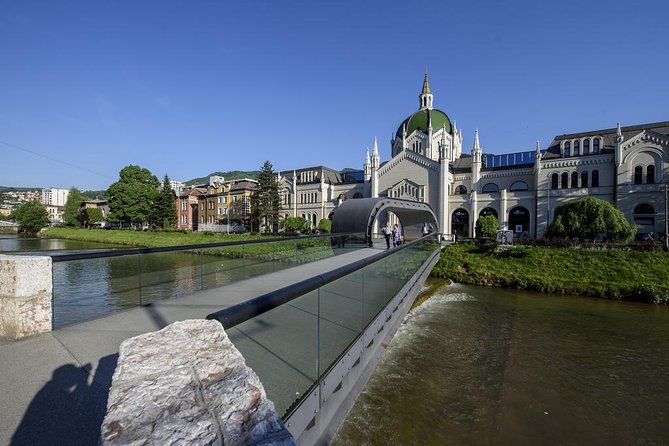
Galerija Java is a full hour, and it is placed right in the center of town for a reason. You get a shift from street-level memory to a dedicated contemporary exhibit space.
This gallery has played an important role in affirming and building Sarajevo’s contemporary art scene. The basic idea is simple: it gives artists a chance to present their work in an attractive exhibit space, and it supports and promotes both artists from Bosnia and Herzegovina and international artists.
It also works across mediums and collaborations. So even if you are not an art-world expert, you are less likely to feel boxed into one style. The tour’s earlier stops helped you understand the city as a canvas. Galerija Java lets you see the contemporary scene in a more direct, gallery format.
If you want to get the best experience here, do one small thing: pay attention to the space itself. Notice how the artworks interact with the room. Conceptual art often depends on context, and the guide can help you connect what you see to why the gallery environment matters.
The one drawback to note: galleries can sometimes feel quiet, and you only have one hour. If a particular exhibition catches you hard, the time limit may feel short. That is not a dealbreaker, but it is the reality of a 2 to 3 hour tour.
Stop 4: Veliki Park and Mensud Kečo’s Nermine, dođi
Then the tour moves into Veliki Park for one of its most powerful moments. In one of Sarajevo’s famous parks, you will see a sculpture by Bosnian and Herzegovina artist and sculptor Mensud Kečo. The sculpture is dedicated to the genocide in Srebrenica.
The piece is titled Nermine, dođi. It is made of concrete, reinforcement bars, plastic, and silicon, and it represents the most distressing documented photograph from Srebrenica to the artist.
This stop is not about “looking at a statue.” It is about understanding materials as meaning. Concrete and reinforcement bars suggest industrial weight and structure. Plastic and silicon introduce something more fragile and human-feeling. Even without adding extra details that are not in the tour, you can feel the intention in the material choices: to translate documentation into a form that makes you pause.
You also benefit from the guided explanation here because genocide memorials can be misread if you treat them like normal outdoor art. The guide’s job is to connect the sculpture to what it references, so your viewing stays respectful and informed.
This stop is free, and it lasts about 30 minutes. That is just enough time to reflect without rushing, as long as you stay present. If you skim, the sculpture will feel like any other outdoor work. If you slow down, it will land.
Stop 5: Gallery BORIS SMOJO coffee break and the FESTINA LENTE bridge stop
After Veliki Park, you get a break. The tour includes a caffe break at Gallery BORIS SMOJO. This is a smart pacing move. You have already carried some heavy context, and a short pause helps you keep your brain switched on for the final sight.
Then you go to see the bridge known as FESTINA LENTE. The tour time for this final segment is around 30 minutes, and admission is included for this stop.
I like endings like this because it returns you to the city’s structure. Bridges are about movement, and this is a tour about how Sarajevo moves through ideas, scars, and artistic expression. You finish with a public-space landmark after time spent in galleries and memorial context.
Because the details you will get here are limited to what the guide shares during the walk, I suggest you treat this as a listening moment. Ask what the bridge stop is meant to connect to. The tour format is small-group friendly, so questions are welcome.
How the route helps you see conceptual art with less effort
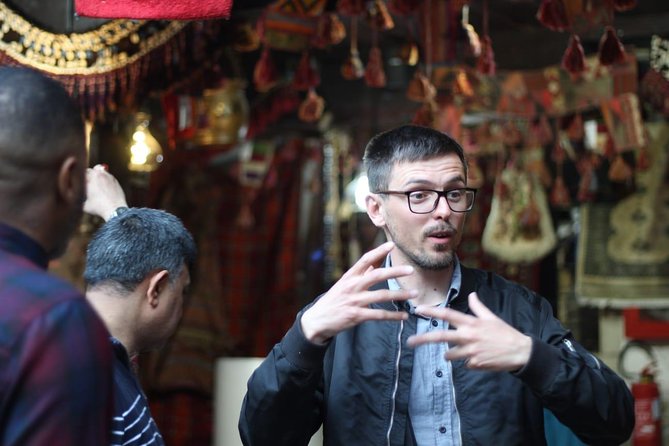
Conceptual art can feel slippery if you are walking in cold. This tour reduces that problem by building connections step-by-step.
- You start with a building repurposed from prison into art space, so you understand transformation as the theme.
- You then step into a street scar, where material damage becomes a kind of urban artwork.
- Next you go to a gallery that supports both local and international contemporary artists, so you see the art world’s infrastructure.
- Then you return to public space with a memorial sculpture using industrial and synthetic materials to communicate a real tragedy.
- Finally, you wrap with a bridge stop in central Sarajevo, tying movement and place back together.
You do not need to be an expert. The guide helps you translate what you see into meaning without turning it into a lecture you cannot remember. And with a max of 15 people, you can ask follow-up questions instead of letting them float away.
What to expect on the ground, and who this tour is for
This tour is offered in English and runs about 2 to 3 hours starting at 1:00 pm. The tour starts at Đulagina 2 and ends in the Skenderija area. It is near public transportation, and most people can participate.
Who it suits best:
- You like contemporary and urban art more than classic sightseeing
- You want a guided explanation that connects art to Sarajevo’s real circumstances
- You enjoy small-group conversations and a human guide, not a scripted slideshow
- You are okay with art that touches memory and difficult subjects
Who might find it less ideal:
- You prefer only light, entertainment-style sightseeing
- You want a long museum-style time with no outdoor walking or no heavy memorial context
- You do not want any discussion tied to the Siege of Sarajevo or Srebrenica
Should you book the Sarajevo conceptual art tour?
If you are torn, I would decide based on what kind of Sarajevo you want to understand. Book this tour if you want the city’s contemporary and conceptual side, and you like the idea of seeing artworks and monuments as part of how Sarajevo explains itself.
The strongest reason to book is the combination of structure and closeness. Several admissions are included, the group stays small, and the guide can share personal perspective like Mak did in one review, including his own war experience and even a book he wrote. That kind of connection makes the art feel less like a random stop and more like a story you can hold.
Skip it only if you are looking for an easy, feel-good loop. This route includes war-related memory, and it is designed to take you there thoughtfully. If that sounds right for you, you will likely walk away with a more honest, sharper sense of Sarajevo than you could get from a standard checklist.
FAQ
How long is the Sarajevo Conceptual Art Tour?
The tour lasts about 2 to 3 hours.
What language is the tour offered in?
It is offered in English.
Where does the tour start and where does it end?
It starts at Đulagina 2, Sarajevo 71000, and ends at the Skenderija area in Sarajevo.
Is it a mobile ticket?
Yes, the tour includes a mobile ticket.
What is the maximum group size?
The tour has a maximum of 15 travelers.
Are admissions included during the tour?
Admission tickets are included for some stops, and other stops are free.
Can I cancel for free?
Yes, you can cancel for free, up to 24 hours in advance for a full refund.
What happens if the minimum number of travelers is not met?
If the tour is canceled because the minimum is not met, you will be offered another date or a full refund.
Newest Sarajevo write-ups
- Sarajevo to Zagreb: One-Way Tour via Jajce, Travnik, Pliva Lake and Watermills★ 5.0 · 3 reviews
- Sarajevo E-Bike City Tour★ 5.0 · 3 reviews
- Mountain Village Lukomir Full Day Adventure Tour★ 5.0 · 3 reviews
- Bosnian Kingdom Capitals: Travnik & Jajce Tour from Sarajevo★ 5.0 · 3 reviews
- Strbacki Buk and Una Waterfalls: Day Trip from Sarajevo★ 5.0 · 3 reviews
- Sarajevo Old Town: Bosnian Coffee, Baklava & Panoramic Views★ 5.0 · 3 reviews
- Sarajevo Snowshoeing Adventure★ 5.0 · 3 reviews
- 4 Hours Tara Rafting Trip★ 5.0 · 3 reviews