
Reviewed · YUGOSLAV HISTORY TOURS
Utopia of Tito’s Yugoslavia, Tito’s Bunker & Siege of Sarajevo
Sarajevo can feel like two stories at once, and this tour leans hard into that. You’ll move from Cold War planning inside Tito’s Nuclear Bunker to the reality of the Sarajevo War Tunnel, then connect it all to the city’s siege-era landscape.
I like two things most. First, the day is built around an intimate group size, max eight, so you can ask questions and actually keep up with the guide’s pacing. Second, the tour includes the big ticket entries, especially ARK D-0 and the Tunnel, so you spend your time learning instead of hunting down tickets.
One consideration, though: this is a long 10-hour day with multiple sites, some outdoor walking, and viewpoints on mountain ground. If you prefer a slow, restful pace, you may find it a bit much, especially with the heavy war themes.
Key things to know before you go
- Max 8 people means a calmer day and better conversations with your guide
- Tito’s bunker plus the War Tunnel in one outing saves you time and transport
- Hotel pickup in Sarajevo cuts out the morning scramble
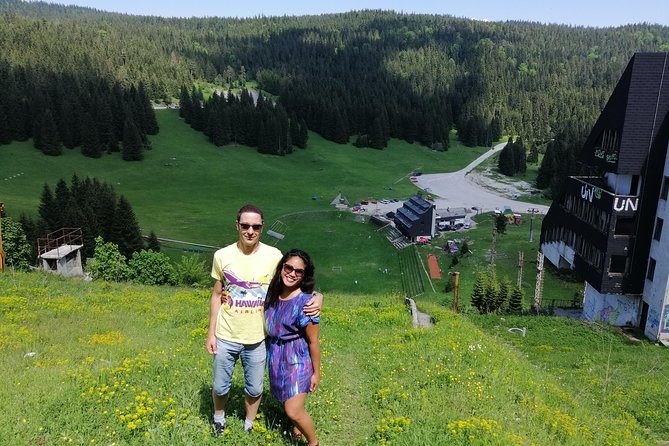
- Olympic sites turned siege-era history at Igman, Dobrinja, and Trebević add variety
- Guides bring strong personal storytelling, with names like Hamza, Emir, Ahmed, and Salem mentioned in past experiences
- Lunch is not included, so plan a meal budget for midday
A day that links Cold War fear to siege survival
What makes this tour fascinating is how quickly it jumps between mindsets. One stop is about planning for nuclear war, built with massive money and paranoia. Another is about people surviving a city cut off from the outside. Same region, same tension, totally different stakes.
I also like that the day isn’t just museums in a row. You get a real sense of geography, river views, mountain air, and long angles over the places where people once fought. That matters, because Sarajevo’s story makes more sense when you can look at the hills and routes instead of only seeing photos.
The emotional weight is real. The War Tunnel and the cemetery stops can feel heavy, and parts of Trebević are described as unrepaired and scarred by conflict. If you want light entertainment, this is not that. If you want honest context for modern Bosnia and Herzegovina, you’ll feel your understanding click into place.
Other accounts of the siege years:
- Fall of Yugoslavia, Sarajevo War Tour with Tunnel of Hope Museum and Frontlines
★ 5.0 · 1,314 reviews - Sarajevo: Tunnel Museum Yugoslavia War Tour with War Veteran
★ 5.0 · 1,111 reviews - Tunnel Museum: Bosnian & Yugoslav Wars Tour with War Veteran
★ 5.0 · 551 reviews
Price and what you truly get for it
At $101.85 per person, you’re paying for a full, guided day that includes transport by air-conditioned vehicle, an English-speaking professional guide and driver, and admissions to key sites.
Here’s the practical value: the tour states the Tito’s Bunker entrance fee is included (10 EUR adult), and the Sarajevo War Tunnel entrance fee is included (5 EUR adult, 2.5 EUR for children and students). That alone helps justify the cost if you were going to do both anyway. Add the guide time, vehicle ride, and the included access to essential attractions, and it becomes less about buying entry tickets and more about buying a smooth, story-driven itinerary.
The one clear gap is lunch. You’ll need to sort your own midday meal in Sarajevo or pack a snack, depending on how your guide times things. I’d treat lunch as part of your total budget, even though the tour won’t charge you for it.
Konjic Bridge: start with the Neretva, not the trauma
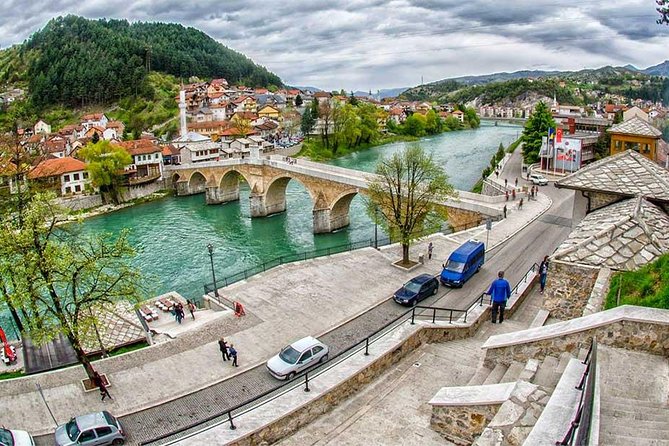
Your day starts with a stop at Konjic Bridge, a place that gives your brain a warm-up before the heavy history. It sits over the turquoise Neretva River, in a part of Konjic known for being prehistorically inhabited and anchored by a prominent 17th-century six-arch old bridge.
This stop is short, but it’s not filler. It helps you get your bearings. You’ll see how the river corridor shapes towns and travel routes, which becomes relevant later when you think about siege-era connections and movements.
Practical note: because this is usually sunny and outdoors, I’d bring basic sun protection. And if you’re the type who likes taking photos, this is a good moment to get a few quick shots before the day turns into underground spaces and memorial sites.
ARK D-0 Tito’s Nuclear Bunker: walking through a plan for the end of the world
Then the day turns. ARK D-0, also tied to the name Tito’s Nuclear Bunker, is the centerpiece, and it’s a big one: a 6500 m² complex built over 26 years. The bunker was designed to shelter over 350 Yugoslav leaders and army generals and support command and management in the event of nuclear warfare.
The experience here is not just architecture. The point is the mindset. Your guide will explain the labyrinth feel of the facility and connect it to Cold War tension, communist-era fear, and the way big plans can collide with real history later on. It’s the kind of place where you start to understand how secrecy and bunker logic shape decisions.
You’ll also have time for an on-site wandering approach, with the bunker functioning as a venue for contemporary art events at times. That contrast can hit hard. You’re in a space built for survival after catastrophe, but it’s also used for cultural interpretation.
Tip: be ready for a colder, more enclosed atmosphere than you expect. Even if you’re comfortable outside, underground spaces often feel different fast. Comfortable layers help.
More of the Yugoslav decades:
- Sarajevo: Bosnian War & Fall of Yugoslavia Tour with Tunnel
★ 4.9 · 398 reviews - From Sarajevo: Tito’s Bunker & Konjic City Tour
★ 4.9 · 23 reviews - Secret Tito’s Bunker/Konjic Tour
★ 5.0 · 4 reviews - Break-up of Yugoslavia & The War in Mostar: Life Under Siege
★ 5.0 · 136 reviews
Igman Olympic mountain and the 1984 sites that were damaged in the siege
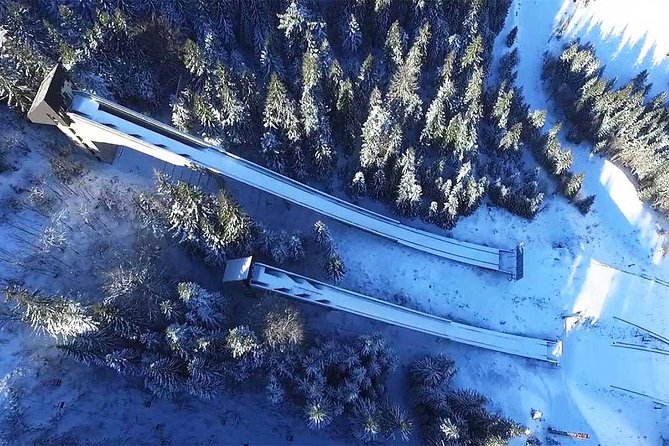
Next comes Igman, a mountain area tied to the 1984 Sarajevo Winter Olympics. The tour frames it with Olympic details, like the ski-jump heritage and photo opportunities around the Olympic podium area. You may also have a chance to explore the ski-jump structures depending on what’s accessible on the day.
What I like about this stop is the contrast. You’re seeing the physical shapes of sport venues and then hearing how these places were interrupted by war. It isn’t just trivia about an Olympics. It’s a story about how quickly peacetime infrastructure can become wartime background.
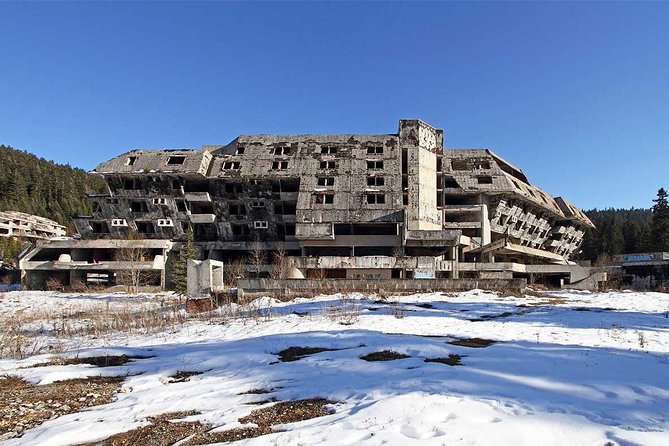
The tour also highlights the Igman Olympic Hotel, described as a 162-room luxury showplace built in the spirit of the Olympics, later brutally torn apart during the Balkan War era and the Siege of Sarajevo. That detail helps the site land emotionally, because a hotel isn’t abstract. It’s jobs, travel, and everyday routines. When that’s destroyed, the war story stops feeling like history class.
You’ll spend about an hour here, which is long enough to look around and take photos, but not long enough to let the day drag.
Sarajevo War Tunnel and the Tunnel of Hope feeling
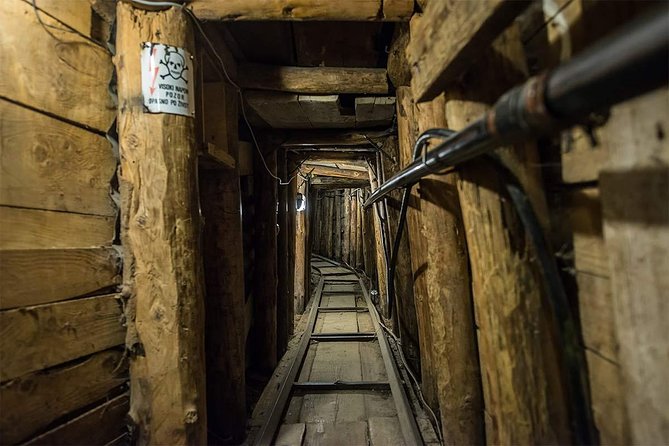
If you only do one of the emotional-heavy stops, do the Sarajevo War Tunnel. The tour takes you through the museum exhibition and includes a short movie about why the underpass was necessary, then you go through the tunnel itself.
This stop teaches you more than facts. It teaches scale and claustrophobia. Underground spaces make people understand how siege life works, even if they’ve never lived through anything similar. You also get a timeline feeling: before, the siege starts, then the tunnel becomes lifeline logic, then the tunnel becomes memory.
The museum portion helps you keep your footing, especially if the story is new to you. And the walk through the tunnel is where the narrative shifts from information to sensation.
Practical advice: if you’re claustrophobic, take it slowly and tell your guide if you need a brief pause. It’s still manageable for most people, but your comfort matters.
Olympic Village Dobrinja and Trebević Vidikovac, where views meet war ruins
After the tunnel museum, you head toward Trebević. On the way, you pass Olympic Village Dobrinja, and your guide ties it back to the Winter Games and what happened when neighborhoods became targets.
At Trebević Vidikovac, you’re in Olympic space again, but with siege-era reality all over it. The tour mentions places associated with the 1984 Olympics, including areas like Zlatište and Osmice, plus the Sarajevo Bobsleigh from the Games period. Then it layers in what conflict left behind, including bunkers, minefields, tank track traces, trenches, and visible shrapnel.
The key point for your experience is that you’re seeing evidence that has not been fully restored. You’re not looking at a perfect reenactment. You’re seeing remnants that still look like time stopped.
And the views matter. The tour specifically calls out panoramic scenery from the top of Trebević, which is where a lot of the strategic story makes sense. When you look over the terrain, you understand why holding or moving across these slopes was so hard. You also grasp how the fighting unfolded around Sarajevo’s surrounding ground.
Bring water, and wear shoes you trust. Even if it’s not a hiking trip, you’ll likely navigate uneven ground near ruins and viewpoints.
Sarajevo bobsleigh and luge track: street art, then the memory hits
You’ll then walk down the famous 1984 Olympic bobsled track, described as a place with strong street art energy and historical weight at the same time. This is one of those rare moments where the setting is almost playful, but the background knowledge makes you slow down.
The practical benefit is timing. After Trebević, this walk gives you movement without the same level of up-and-down terrain. It’s a chance to reset your body and gather photos in brighter light.
If you’re into urban art, you’ll probably enjoy the contrast between art and ruins. If you’re more into war history, you can treat it as another marker of how Sarajevo’s Olympic dream was interrupted.
Jewish Cemetery Sarajevo: memorial ground tied to sniper positions
The tour ends with a sobering stop at the Jewish Cemetery in Sarajevo, one of the largest Jewish cemeteries in Europe. The key siege-era context is that during the Siege of Sarajevo (1992 to 1995), the cemetery functioned as the main front line and included sniper nest activity attributed to the Army of Republic Srpska.
This is not a casual visit. It’s short in time, but it can feel long in emotion because cemeteries hold a different kind of silence than museums.
Practical tip: give yourself a minute to look before you take photos. And if you’re traveling with kids or anyone sensitive to war themes, this is the moment where you may want to check in on comfort.
Who this tour is best for
Book this if you want a day that connects the dots between Yugoslavia’s political paranoia, Cold War architecture, and the lived reality of the siege. It’s especially good for:
- History-minded travelers who like guided storytelling with clear chronology
- People who want a mix of museums and outdoor viewpoints
- Anyone who likes Sarajevo’s Olympic thread, but also wants the war context attached to it
It may not be ideal if you want a relaxing nature break. This day is structured around conflict sites and memorial locations, with only a few lighter stops for balance.
My booking take: should you do it?
I’d book this tour if your goal is to understand Sarajevo as more than a single storyline. The combination of ARK D-0 and the War Tunnel, plus the Olympic sites at Igman and Trebević, gives you a framework that clicks faster than doing these places on separate days.
Do it with a realistic expectation: it’s a full day, and parts of it are intense. If you can handle a serious topic with a good guide and comfortable walking shoes, you’ll leave with a much sharper sense of place and time.
FAQ
What is the duration of this Sarajevo tour?
The tour runs for approximately 10 hours.
Where does the tour start, and what time does it begin?
It starts at the meeting point at Funky Tours, Beserina čikma 5, Sarajevo, and the start time is 8:00 am.
Is hotel pickup included?
Yes. Pickup can be arranged from any hotel in Sarajevo, or you can meet at the office in the old town.
How big is the group?
The maximum group size is 8 travelers.
What language is the tour guide?
The tour includes a professional English speaking guide and driver.
Is lunch included?
No, lunch is not included.
Which major attractions are included in the day?
You visit Konjic Bridge, ARK D-0 Tito’s Nuclear Bunker, Igman, the Sarajevo War Tunnel, Trebević Vidikovac, the Sarajevo Olympic bobsleigh and luge track, and the Jewish Cemetery.
Are admission fees included?
Entrance fees are included for Tito’s Bunker and the Sarajevo War Tunnel. The tour also states it includes admission fees to essential museums or attractions on the itinerary.
Is the tour ticket mobile?
Yes, the tour offers a mobile ticket.
Can I cancel for a full refund?
Free cancellation is available. You can cancel up to 24 hours in advance for a full refund.
Newest Sarajevo write-ups
- Sarajevo to Zagreb: One-Way Tour via Jajce, Travnik, Pliva Lake and Watermills★ 5.0 · 3 reviews
- Mountain Village Lukomir Full Day Adventure Tour★ 5.0 · 3 reviews
- Sarajevo E-Bike City Tour★ 5.0 · 3 reviews
- Bosnian Kingdom Capitals: Travnik & Jajce Tour from Sarajevo★ 5.0 · 3 reviews
- Strbacki Buk and Una Waterfalls: Day Trip from Sarajevo★ 5.0 · 3 reviews
- Sarajevo Snowshoeing Adventure★ 5.0 · 3 reviews
- Sarajevo Old Town: Bosnian Coffee, Baklava & Panoramic Views★ 5.0 · 3 reviews
- PRIVATE Sarajevo Under Siege War Tour★ 5.0 · 3 reviews
Yugoslav History Tours, compared.
The Death of Yugoslavia: Unique thematic Tour in Mostar
Read our review →
Browse the lists this tour appears in