
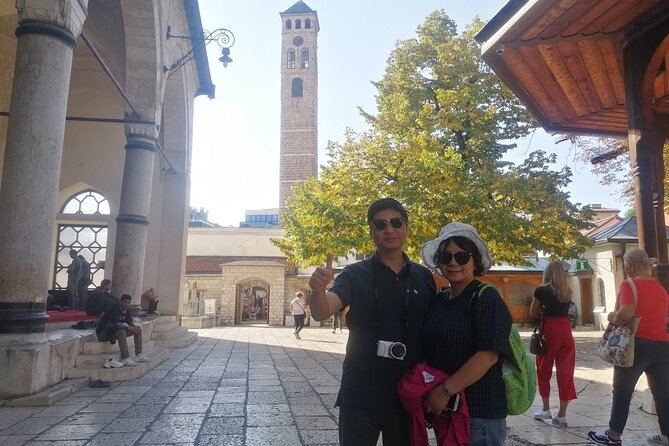
Reviewed · SARAJEVO TOURS
Sarajevo for beginners
Sarajevo is fascinating because it packs Ottoman, Austro-Hungarian, and modern layers into a walkable Old Town, then adds the kind of history that changed the world. I especially like the way the route lines up major faith landmarks back-to-back, so you get Sarajevo fast. Guides like Samra (and sometimes Irfan) are praised for clear English, humor, and practical city tips, including how to enjoy Bosnian coffee.
I also like that the tour mixes famous photo stops with real meaning, from the Latin Bridge area to City Hall and the Jewish Museum. The one drawback is that many sights have admission tickets marked as not included, so your total cost might creep up if you decide to go inside.
Key Things You Will Enjoy on This Sarajevo For Beginners Tour
- A 2-hour, beginner-friendly loop with lots of short stops (mostly 5 to 10 minutes) so you do not get stuck waiting around.
- Small group size (max 18) which makes it easier to ask questions and keep the pace comfortable.
- English guide focus, with guides like Samra and Irfan known for strong storytelling and good practical advice.
- Faith and architecture on one route, from churches and mosques to Ottoman-era urban details.
- History moments with context, especially around Sarajevo assassination location, Latin Bridge, and Austro-Hungarian City Hall.
- Coffee and/or tea included, a small but welcome reset during the walk.
A 2-Hour Sarajevo Loop for Beginners, What You Will Actually Do
This is not a museum crawl. This is a guided walk that helps you recognize what you are looking at, and why it matters. You start at Trg fra Grge Martića at 9:00 am, then you finish back at the same meeting point about 2 hours later.
The pacing is built for first-timers. Most stops are quick hits, which means you see a lot of Sarajevo without turning your day into an endurance test. It also helps you map the Old Town in your head, so your next walks feel easier.
You should also plan your expectations around entrances. The tour description marks admission tickets as not included at the stops, so you will either admire from the outside or decide on the spot whether an indoor ticket is worth it for you. If you love doors and tickets, budget a little extra.
Finally, because the group is capped at 18, you get a good balance of structure and freedom. You listen, look, ask, then move on. It is a format that works well if you want the “where am I and what am I seeing” part handled for you.
More around Sarajevo to weigh up
- Sarajevo: Mostar, Konjic, Blagaj Tekke, Pocitelj & Waterfall
★ 4.9 · 1,666 reviews - Fall of Yugoslavia, Sarajevo War Tour with Tunnel of Hope Museum and Frontlines
★ 5.0 · 1,314 reviews - Sarajevo: Grand Walking Tour Through Time and Cultures
★ 4.8 · 1,236 reviews
From Katedrala Srca Isusova to Hotel Europe, Sarajevo’s Layers in Plain Sight
The tour begins with Katedrala Srca Isusova, described as a simple but beautiful Sarajevo cathedral. Even if you are not a church person, this is a useful start because it sets a tone: Sarajevo is not one culture. It is several, sitting close together.
Next comes the Orthodox Church of the Nativity of the Theotokos, the Serbian Orthodox church. Two quick faith stops back-to-back sounds simple, but it is powerful for beginners. You start noticing how Sarajevo’s identity shows up in architecture, not just in words.
Then you get to Hotel Europe, known as the first hotel in Sarajevo and the oldest in South-East Europe. This is the kind of stop that makes a city feel real. A building like this is not only a landmark, it is where travelers, conversations, and city moments have happened over time.
After that, the walk starts shifting into older Ottoman-era trade space. You see Tašlihan remains, and then move toward Gazi-Husrev Beg’s Bezistan, described as the original shopping mall in Sarajevo. That is your cue that the city’s “center” was once built around commerce and movement, not cars and big avenues.
The big value here is how the tour teaches you to read the street. You will begin to spot patterns: religious buildings at one scale, historic institutions at another, and then trade and craft spaces that explain everyday life.
Tašlihan, Bezistan, and Kazandziluk, Ottoman Trade Places You Can Still Feel
Once you pass Hotel Europe, the tour keeps pulling you toward the commercial spine of the Old Town. Tašlihan is short, but it is a strong signal. You are looking at the remains of a historic structure, and the guide helps you understand it as part of the past city economy.
Then comes Gazi-Husrev Beg’s Bezistan, the original shopping mall. Even if you are not planning shopping, this stop is worth your attention because it explains a different kind of city planning. People did not browse in one open street only. They moved through designed, covered spaces where trades could cluster.
Later, the route adds Kazandziluk, one of the most authentic streets in Sarajevo. The name alone hints at craft. This is one of the places where you start seeing the Old Town not as scenery, but as a living workshop geography.
One practical tip: with stops like Bezistan and Kazandziluk, wear shoes you can walk in comfortably. You are not on a long highway sidewalk. You are in an Old Town environment with uneven surfaces and short distances between points.
This is also where the included coffee and/or tea can feel like a smart part of the itinerary, not just a perk. A quick break helps you keep listening energy up. And if your guide is Samra, you might get helpful coaching on enjoying Bosnian coffee the local way, a detail that many people appreciate because it turns a drink into a small cultural win.
Sarajevo Assassination Site, Latin Bridge, and Austro-Hungarian City Hall
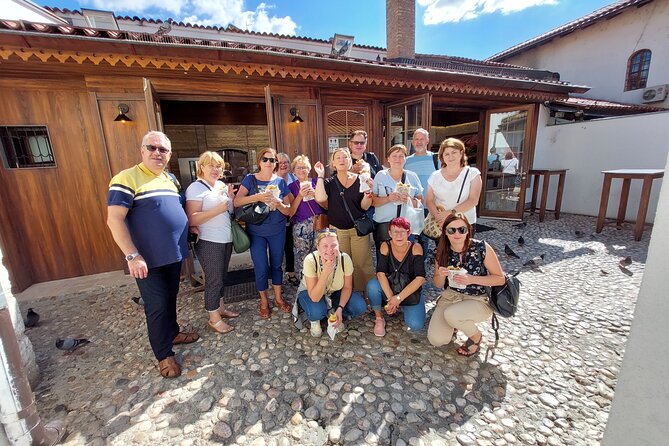
This is the part of the walk that gets serious, fast. The tour includes the Location of Sarajevo Assassination, described as the place where history of the world changed. You spend about 15 minutes here, which is enough time to get the story without sinking into information overload.
Then you move to Latin Bridge, described as a bridge with three names. That line is a gift for beginners. It tells you the city is layered in language and politics, so the same physical spot can carry different labels depending on who is telling the story.
Next is Emperor’s Mosque, described as the oldest mosque in Sarajevo. It is a good counterbalance: one stop tied to world-altering events, another tied to long continuity. You will notice how Sarajevo holds contrasting narratives close to each other.
After the mosque, you reach Sarajevo City Hall, built during Austro-Hungarian times in the center of the Old part of town, designed to fit with the Ottoman architecture around it. That “fit” detail matters. Sarajevo is not a clean museum of one era. It is more like a conversation between eras, still happening in the streets.
The cool part for you as a beginner is that you do not have to connect the dots alone. The guide does it in a way that feels logical: Ottoman urban fabric here, Austro-Hungarian civic power there, then back to the street corners that hold the story.
If you dislike heavy history, you can still enjoy the architecture and geography. But you will not fully escape the significance in this section, and that is kind of the point.
Somewhere quieter after Sarajevo:
- Sarajevo: Mostar, Konjic, Sufi House, Pocitelj & Kravice Falls
★ 5.0 · 1,179 reviews - Sarajevo: Tunnel Museum Yugoslavia War Tour with War Veteran
★ 5.0 · 1,111 reviews - ROSES OF SARAJEVO (Official WAR + CITY tour)- Story of a Survivor
★ 5.0 · 770 reviews - Sarajevo: Tunnel of Hope Tour – Survival and Resilience
★ 4.8 · 630 reviews
Mosques, Bridges, and Inat Kuća, Ottoman Charm With Cultural Meaning
The route keeps you moving through signature Old Town features. You see Seher Cehaja’s bridge, described as the oldest bridge in Sarajevo and the second built. Bridges are perfect for beginners because they give you orientation points. You can remember the city by landmarks that connect places.
Then you get Inat kuća, with a promise to learn what Inat is. Even without a long explanation, this stop works because it gives you a concept tied to everyday attitude, not just architecture. You leave with a word that locals use, which helps when you later read signs or hear conversations.
Next up is the Gazi Husrev-beg Mosque, described as the central mosque in Sarajevo. This is a key visual anchor. When you have one “central” religious landmark in mind, you start understanding the logic of where things are around it.
The tour also includes a story about the development of Bravadžiluk street, which helps explain how this area grew and why it looks the way it does. If you like walking through places and understanding the “why,” this part adds real value because it goes past the surface of what you see.
One practical note: there are several mosque and church stops. If you want to enter, plan for time and follow local rules about dress and behavior. The tour time is tight, so you might do a quick look outside if you need to stay flexible.
Baščaršija, Sebilj, Morića Han, and the Jewish Museum Story
Now you shift into the area most people think of when they picture Sarajevo. You stop at Kazandziluk earlier, and later you reach Baščaršija, the main square of Sarajevo. This is the place where the city feels social. You will likely see people lingering, chatting, and just being out in public.
A quick stop at Sebilj follows, described as a meeting place for many. Small detail, big effect. When you know Sebilj is a meeting hub, you understand why it shows up in conversations and plans.
Then comes Fotokopirnica Morića Han, described as probably the coolest place in Sarajevo. That kind of line is not for everyone, but it signals a stop with personality. It is a chance to see a different kind of historic everyday space, not only monuments.
You also get a stop at the Jewish Museum of Bosnia and Herzegovina, plus a setup described as different time, different story. The tour includes seeing the square and hearing the story of Jews in Bosnia and Herzegovina. That stop rounds out the tour’s main theme: Sarajevo is not one narrative. It is multiple communities stacked across time.
The value for beginners is that you finish with a more complete mental picture. You walked past churches, mosques, trade spaces, civic buildings, and then community history. That makes Sarajevo easier to revisit on your own later, because you already have categories in your head.
Price and Logistics, Is This Sarajevo for Beginners Tour Good Value?
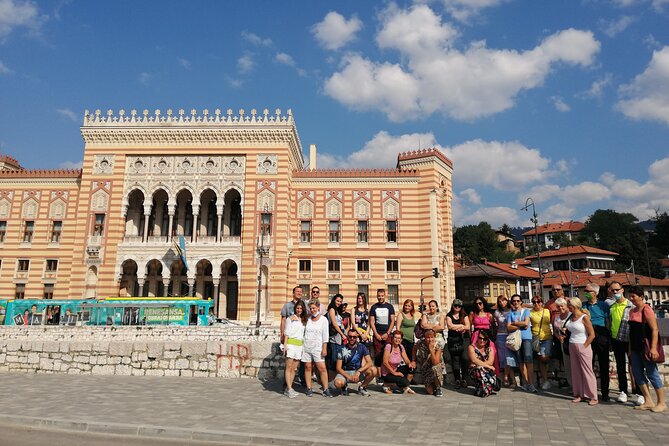
At $34.92 per person for about 2 hours, this tour is priced like a straightforward Old Town orientation, not a long deep-dive. For many first-time visitors, that is exactly the right value. You pay for a guided connection between landmarks, plus the included coffee and/or tea, plus the comfort of a small group capped at 18.
The main cost caveat is admissions. Since admission tickets are not included at the stops, you should expect optional extra spending if you choose to go inside. If you keep it exterior-focused, the price is likely close to what you planned.
This one is also easier to trust because the guide experience matters. People consistently praise guides like Samra for teaching practical things, including how to drink Bosnian coffee, and for keeping the walk interesting with humor and clean English.
One final practical point: the tour is often booked early, with an average booking of 38 days in advance. If your dates are fixed, you will feel better booking sooner rather than later.
Should You Book This Sarajevo for Beginners Tour?
I think you should book it if you are on a first visit and want a guided route that helps you connect Ottoman and Austro-Hungarian Sarajevo without getting lost in details. It is ideal if you like short stops, strong storytelling, and a quick way to understand how the Old Town is organized.
Skip it or supplement it if you want long museum time, deep interior access, or a tour that includes admissions in the base price. This one is about seeing and understanding, then letting you choose what to do next.
If you want an easy starting point for your Sarajevo week, this is a solid choice.
FAQ
How long is the Sarajevo for beginners tour?
It is approximately 2 hours.
What is included in the price?
The price includes coffee and/or tea. Admission tickets are not included.
Where does the tour start and end?
It starts at Trg fra Grge Martića in Sarajevo and ends back at the same meeting point.
Is the tour in English?
Yes, it is offered in English.
How large is the group?
The tour has a maximum of 18 travelers.
Do I need an admission ticket for the stops?
Admission tickets are not included. You may need to purchase tickets separately depending on the stop.
What is the cancellation policy?
You can cancel for a full refund up to 24 hours before the experience starts. If you cancel less than 24 hours before, the amount paid is not refunded.
Newest Sarajevo write-ups
- Sarajevo to Zagreb: One-Way Tour via Jajce, Travnik, Pliva Lake and Watermills★ 5.0 · 3 reviews
- Sarajevo E-Bike City Tour★ 5.0 · 3 reviews
- Mountain Village Lukomir Full Day Adventure Tour★ 5.0 · 3 reviews
- Bosnian Kingdom Capitals: Travnik & Jajce Tour from Sarajevo★ 5.0 · 3 reviews
- Strbacki Buk and Una Waterfalls: Day Trip from Sarajevo★ 5.0 · 3 reviews
- Sarajevo Old Town: Bosnian Coffee, Baklava & Panoramic Views★ 5.0 · 3 reviews
- Sarajevo Snowshoeing Adventure★ 5.0 · 3 reviews
- 4 Hours Tara Rafting Trip★ 5.0 · 3 reviews
Sarajevo Tours, compared.
Mostar, Konjic, Blagaj Tekke, Pocitelj & Waterfall
Read our review →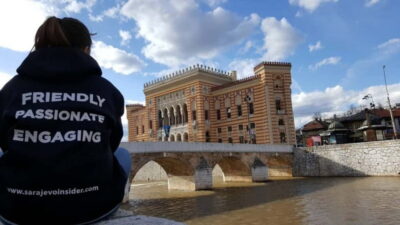
Mostar, Konjic, Sufi House, Pocitelj & Kravice Falls
Read our review →
Mostar, Konjic, Dervish House, Pocitelj & Kravica Falls
Read our review →
Mostar,Kravica Waterfall,Blagaj,Počitelj – Day Tour from Sarajevo
Read our review →
Mostar, Konjic, Pocitelj, Blagaj Skywalk Waterfall
Read our review →Browse the lists this tour appears in