
Reviewed · TOURS
Sarajevo: Islamic Traditions and Daily Life Tour
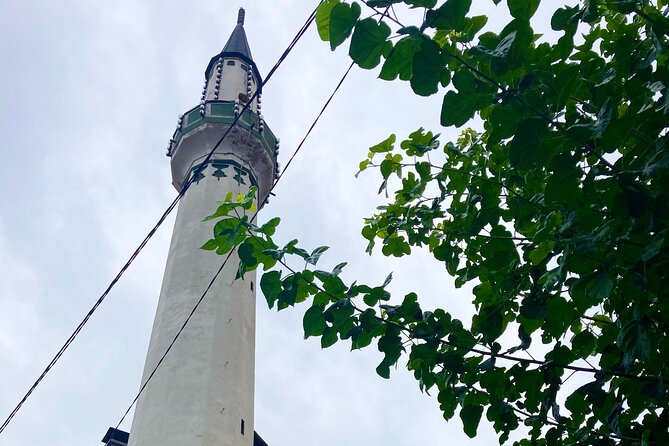
What makes this tour interesting is how Islamic faith shows up in everyday Sarajevo, not just in big monuments. I love the stop-by-stop look at Gazi Husrev Bey’s Mosque complex, and I love how Svrzo’s House helps you picture daily Muslim life in old Sarajevo. One thing to keep in mind, you will need the right clothing and you should budget extra for a couple entrance fees.
A big part of the charm is the guide-led storytelling. Guides like Suad, and also Emina, Aid, Suad and others in recent bookings, are praised for making the route feel personal and for answering questions clearly in English. You get a licensed local guide, a city map, and a plan that stays focused on what you are seeing.
The tour is short, but it is still a walking route through historic streets and mosque areas. If you have mobility limits, this one may not be a good fit, and you should read the dress rules before you show up.
Key points
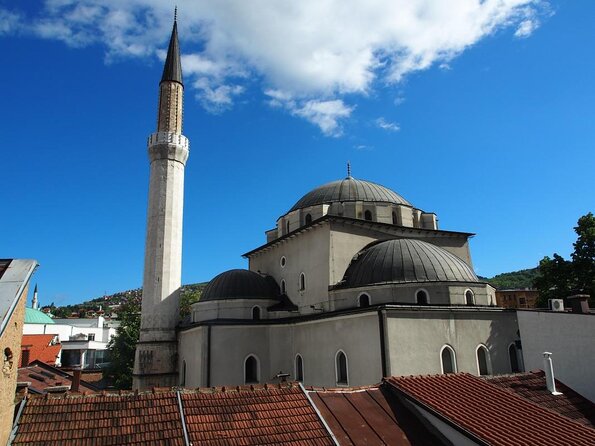
- Gazi Husrev Bey’s complex links worship, education, and scholarship in one of Sarajevo’s key Ottoman-era centers
- Emperor’s Mosque gives you a strong starting point for the city’s long Islamic architectural story
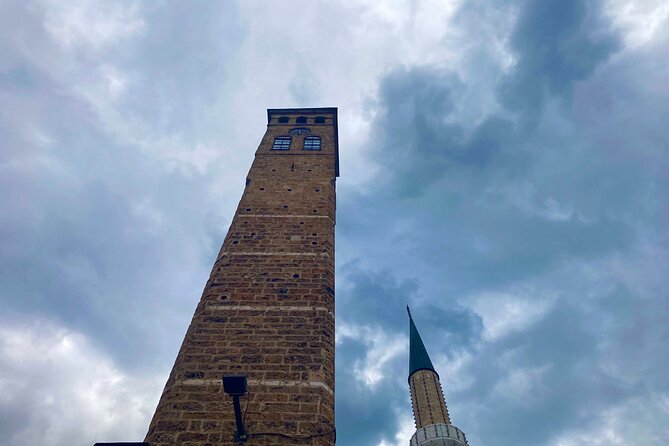
- Clock Tower with lunar time helps you connect timekeeping traditions to everyday life
- Svrzo’s House shows what daily Muslim home life looked like in 18th-century Sarajevo
- Baščaršija and Sebilj Fountain put the tour into the classic old-town heart where people still gather
- Small-group energy is common, which makes Q and A feel easy
A 2-hour walk through Sarajevo’s Ottoman and Islamic core
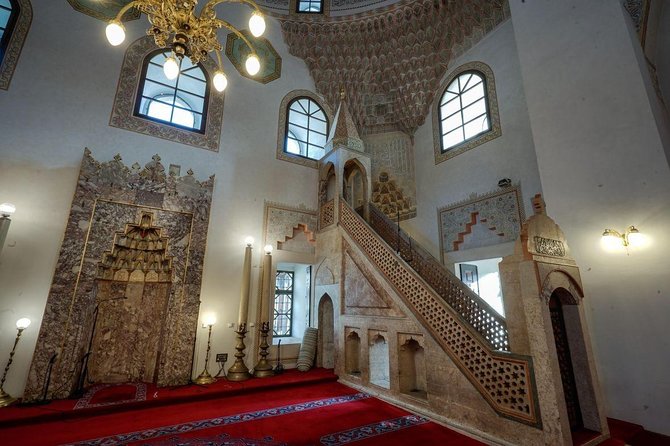
This is one of those Sarajevo experiences where you learn without it feeling like homework. In just two hours, you move through the places where Muslim life has shaped the city, from early mosques to Ottoman institutions and the local old-town rhythm.
What I like most is that the route is built for real observation. You are not just told what you should admire, you pause, look, and then get the story that makes the details make sense. It is the kind of tour where the city answers back, because you keep seeing connected themes: architecture, community routines, and the way religion and learning lived side by side.
Also, the guides clearly aim to challenge stereotypes by using specific examples of Sarajevo’s Muslim traditions and daily culture. That is a more useful goal than vague good feelings. You walk away with a mental map, plus a better sense of how the Ottoman-era urban fabric still influences the city.
More around Sarajevo to weigh up
- Sarajevo: Mostar, Konjic, Blagaj Tekke, Pocitelj & Waterfall
★ 4.9 · 1,666 reviews - Fall of Yugoslavia, Sarajevo War Tour with Tunnel of Hope Museum and Frontlines
★ 5.0 · 1,314 reviews - Sarajevo: Grand Walking Tour Through Time and Cultures
★ 4.8 · 1,236 reviews
Price and value: what $29 covers, plus the common add-ons
The stated price is $29 per person for a 2-hour guided walking tour with a city map. The included value is the licensed local guide plus the tour experience itself, including stops around Sarajevo’s Islamic landmarks.
Two main entrance fees are not included:
- Gazi Husrev Bey’s Mosque and Madrasa: 8 BAM per person (listed as about 4.50€)
- Svrzo’s House Museum: 5 BAM per person (listed as about 3.00€)
So, if you plan to enter both, your total cost is usually that base $29 plus the add-ons for those ticketed sites. It is still very fair for what you get, because the tour is built around major institutions that you generally would not understand well if you were just snapping photos from the sidewalk.
One practical bonus: the tour offers skip-the-ticket-line for the included site visits. That can matter in busy old-town hours, because every minute standing around is one less minute learning.
Before you go: dress rules and mobility reality check
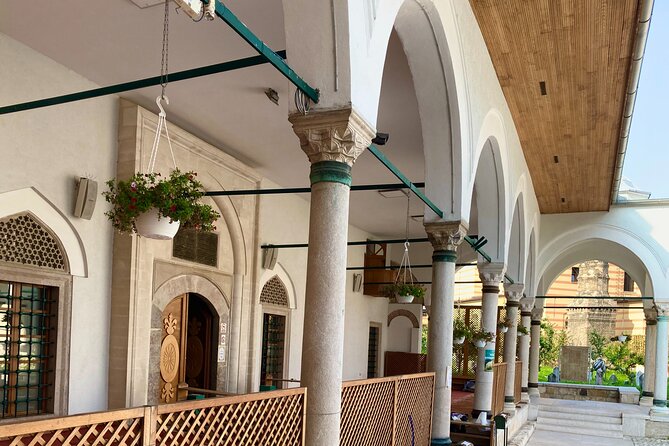
This tour follows mosque-area dress expectations closely. If you show up casually, you might end up turning back or missing parts of the visit.
Bring:
- Long-sleeved shirt
- Long pants
- Sarong (useful for covering where needed)
Not allowed:
- Shorts
- Short skirts
- Sleeveless shirts
- Pets
And do not ignore the mobility note. This route is not recommended for people with limited mobility, and it is not suitable for wheelchair users. It is a walking route with stops, so plan for stairs, uneven sidewalks, and short time in old-town buildings.
If you are fine with walking and you can dress for the site, you are in good shape for a smooth experience.
Getting oriented at Zelenih beretki, then the Mejdan to mosque rhythm
You meet at Zelenih beretki 30, at the Sarajevo Insider Tour Agency. The meeting point is in the city’s core, which helps because your first stretch is not wasted travel.
From there, the route starts with a photo stop and a guided walk through Mejdan. Even without going into a museum, the Mejdan pause helps you get your bearings. It sets the tone: Sarajevo’s Islamic heritage is not one isolated landmark. It is a network that shapes how the neighborhood feels and where people gather.
Next, you move to Emperor’s Mosque, which is listed as Sarajevo’s oldest mosque and a core part of Islamic heritage. This stop works well as an anchor. When you understand the older mosque first, the later Ottoman institutions like Gazi Husrev Bey feel more connected instead of random.
Somewhere quieter after Sarajevo:
- Sarajevo: Mostar, Konjic, Sufi House, Pocitelj & Kravice Falls
★ 5.0 · 1,179 reviews - Sarajevo: Tunnel Museum Yugoslavia War Tour with War Veteran
★ 5.0 · 1,111 reviews - ROSES OF SARAJEVO (Official WAR + CITY tour)- Story of a Survivor
★ 5.0 · 770 reviews - Sarajevo: Tunnel of Hope Tour – Survival and Resilience
★ 4.8 · 630 reviews
Emperor’s Mosque: Sarajevo’s oldest mosque as your reference point
At Emperor’s Mosque, expect a guided walk and a photo stop style introduction. This is where you learn why a city’s oldest religious architecture matters. It is not just about age. It is about continuity, how forms get reused and interpreted over time, and how the community keeps building identity into the urban layout.
This stop also trains your eye for what to watch on later sites. For example, you start noticing how Ottoman-era and Islamic architectural ideas show up repeatedly, even when you are looking at different building functions across the tour.
If you like architecture and you want to avoid the usual skip-it-and-move-on approach, this is a strong start.
Hotel Isa-begov hamam and the Ottoman life thread
After the first mosque, you get a photo stop at Hotel Isa-begov hamam. It is a quick stop, but it matters. A hamam, or bathhouse, points to daily life in Ottoman Sarajevo, not only to worship and scholarship.
This is the kind of stop that can be overlooked on a rushed tour, because it is not always the biggest headline attraction. But it helps you keep the tour grounded. Islam here is not just ceremonies you attend occasionally. It is part of everyday routines and public life.
You should treat this stop as a visual bridge. It links the big religious structures to the human-scale rhythms that shaped the neighborhood.
Gazi Husrev Bey’s Mosque and Madrasa: where worship meets learning
This is one of the tour’s big centers. You will visit Gazi Husrev Bey’s Mosque and the related madrasa area. You also get time for guided explanations and walking between points.
Why this matters for you: when you see a mosque plus a madrasa in the same complex world, you understand how education and worship were historically connected. You are not looking at two separate categories. You are seeing one community system, with religion and learning feeding each other.
Also, the guide context tends to make the space feel usable in your mind. You get practical explanation about what these institutions represented in Sarajevo and why their legacy shaped the city’s Muslim life.
One reminder: entry to the mosque and madrasa requires the listed entrance fee of 8 BAM per person.
Gazi Husrev Bey Library: turning architecture into ideas
Right after the mosque and madrasa, you visit the Gazi Husrev-beg Library. Expect photo stops and guided tour time here as well.
Libraries can sound boring until a guide connects them to the real point. In Islamic cities, a library is not only books stored on shelves. It is a signal that scholarship and public teaching were part of the everyday urban environment.
So for readers who like intellectual history as much as architecture, this stop is a payoff. You walk into a place that makes the idea of Islamic learning visible, not abstract.
If you are the type who enjoys understanding why people built what they built, plan to take a few minutes to look slowly instead of just collecting photos.
Svrzo’s House: daily Muslim life in 18th-century Sarajevo
Then you switch from institutional buildings to lived-in space at Svrzo’s House. The schedule lists it as a 20-minute visit, which is enough time for a guided walk through rooms and a few big takeaways about domestic life.
The most useful part of this stop is the shift in scale. Mosques and schools tell you about public identity. A house tells you about routine: how people lived, how privacy and family life worked, and how cultural values showed up at home.
This is also one of the tour’s most memorable elements, because it makes the topic feel human. Instead of only thinking about traditions as beliefs, you start thinking about them as daily practices with real rooms, real objects, and real habits.
Entrance is 5 BAM for the Svrzo’s House Museum.
Faculty of Islamic Sciences and the modern scholarship link
Next is Fakultet islamskih nauka u Sarajevu. You get a photo stop plus guided walking time here.
This stop is not about Ottoman buildings for their own sake. It brings the story into the present by showing Islamic sciences as a continuing field of study. Even if you only get a brief look, it helps you complete the timeline: past institutions shaped the city, and modern education continues the thread.
If you enjoy contemporary context, this is a good moment to connect what you just saw in older centers to what Sarajevo values today.
Baščaršija, the lunar clock, and Sebilj Fountain breaks
After the educational stops, you arrive at Baščaršija, Sarajevo’s old-town heart. Here the tour becomes more street-level. You will get a guided walk with photo stops and time to explore the feel of the quarter.
This is where two of the tour highlights often click:
- The Clock Tower, known for a lunar clock that ties timekeeping to Islamic tradition
- Sebilj Fountain, where you can drink from Sarajevo’s iconic fountain
Why this works so well for you: it is the transition from indoor or campus-like spaces into the social center. You learn how traditions show up in public gathering points, not only in formal buildings. The lunar clock also gives you a non-theoretical detail to carry home. You might not think about timekeeping as cultural, but the moment you see it referenced in a city’s landmark, it stops being abstract.
For Sebilj, take a quick drink and keep your timing moving with the group. This is a stop that feels simple, but it is the kind of Sarajevo moment that makes your photos look like a real day in town, not just monument shots.
A short viewpoint stop for orientation
Near the end, there is a viewpoint stop for about 15 minutes. Since the schedule keeps it brief, think of this as your “reset button.” It helps you connect everything you saw earlier to the geography of the old town.
If you tend to get lost in photos later, use this time to look up, identify the key areas, and mentally stitch together mosques, lanes, and the open gathering spaces around Baščaršija.
Then you head back to Insider City Tours and Excursions, finishing where you started.
What you learn beyond landmarks: daily Muslim life and stereotypes you can test
The tour is built to be more than architecture appreciation. You are meant to learn about the roots of Islamic architecture and how it shaped Sarajevo’s cityscape. You also get context for why Gazi Husrev Bey’s legacy mattered for the city’s development and for Muslim life.
The most practical learning angle is daily life. Stops like Svrzo’s House and the hamam photo stop help you understand that culture is not only prayer and formal education. It is also how people lived, timed their routines, gathered in public, and kept traditions visible in ordinary places.
If you are someone who likes to ask big questions but prefers concrete examples, this tour is a good fit. The structure gives you plenty of moments where you can ask why things look the way they do, and why they were placed where they were.
Guides seem to lead with clear explanations and invite questions in English. From the naming pattern in the guide roster, you also get the feeling that the guides take pride in speaking in a way that helps you actually understand, not just nod along.
Who should book this tour, and who should skip it
This tour is a strong choice if you:
- Want a focused 2-hour walking overview of Islamic Sarajevo
- Like Ottoman-era architecture and institutions like mosques and madrasa
- Prefer guided context over self-guided guesswork
- Enjoy learning how religion shows up in daily public life
You might skip or consider another option if you:
- Need wheelchair-friendly access or have mobility challenges, since the route is not recommended for limited mobility
- Can’t follow mosque-area dress rules, since long-sleeves, long pants, and a sarong matter here
If you are visiting Sarajevo for a short time and you want one guided walk that gives you structure, this is one of the easiest bets to make.
Should you book this Sarajevo Islamic Traditions and Daily Life Tour?
Yes, if your goal is understanding Islamic heritage through specific places, not through generic statements. The price is reasonable for a guided route with ticketed site entry built into the plan, plus a guide who can explain things clearly in English.
Book it when:
- You want a short, high-impact walk
- You are curious about mosque complexes, education, and daily life
- You can dress for mosque visits and you are comfortable walking on historic streets
Skip it or adjust your expectations if:
- You cannot meet the dress requirements
- You need better mobility support
If you do book, I would plan your budget for the listed entrance fees and bring your clothing basics. That simple prep is the difference between a smooth visit and a tour where you spend time thinking about what you forgot.
Newest Sarajevo write-ups
- Sarajevo to Zagreb: One-Way Tour via Jajce, Travnik, Pliva Lake and Watermills★ 5.0 · 3 reviews
- Sarajevo E-Bike City Tour★ 5.0 · 3 reviews
- Mountain Village Lukomir Full Day Adventure Tour★ 5.0 · 3 reviews
- Bosnian Kingdom Capitals: Travnik & Jajce Tour from Sarajevo★ 5.0 · 3 reviews
- Strbacki Buk and Una Waterfalls: Day Trip from Sarajevo★ 5.0 · 3 reviews
- Sarajevo Snowshoeing Adventure★ 5.0 · 3 reviews
- Sarajevo Old Town: Bosnian Coffee, Baklava & Panoramic Views★ 5.0 · 3 reviews
- 4 Hours Tara Rafting Trip★ 5.0 · 3 reviews
Tours, compared.
Blagaj, Počitelj & Kravice Waterfalls Day Tour
Read our review →
Discover Herzegovina Day Tour from Mostar: Kravice Waterfalls, Blagaj, Počitelj
Read our review →
Herzegovina Day Tour from Mostar: Blagaj, Pocitej, Kravice falls (Join Us! :D)
Read our review →
Mostar,Kravica Waterfall,Blagaj,Počitelj – Day Tour from Sarajevo
Read our review →
Browse the lists this tour appears in