
Reviewed · WALKING TOURS IN SARAJEVO
Crossroads of Cultures – Sarajevo Walking Tour
Sarajevo works on your feet. This walking tour stitches together Catholic, Jewish, Islamic, and Orthodox landmarks into one easy route, so you start to understand why people call the city a place where east meets west. I like that the pace is short-stop and story-led, with real street-level context from guides like Adnan (praised as friendly, smiling, and clear).
Two things I especially like are the mix of major sights with “everyday” places like the market, and the fact that some entrances are handled on the tour while other sites you can choose to pay for separately. One possible drawback to consider: the Jewish Museum and some other landmark interiors are marked as not included, so your overall experience may depend on whether you want to go inside those stops.
Key highlights and what makes this tour work
- A compact 2-hour loop that still covers the city’s biggest historical anchors
- Adnan-style guiding, known for friendly, helpful explanations and strong communication
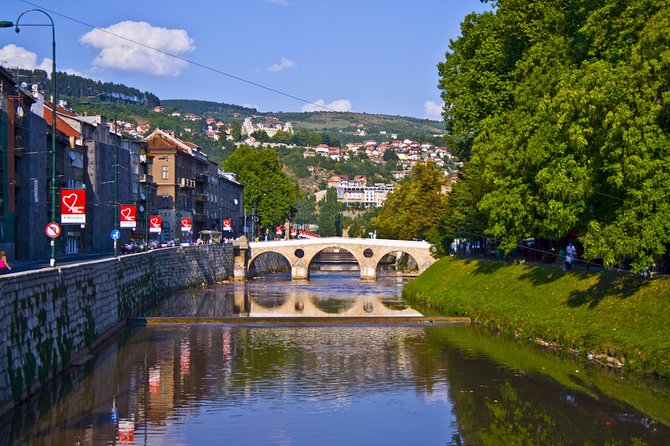
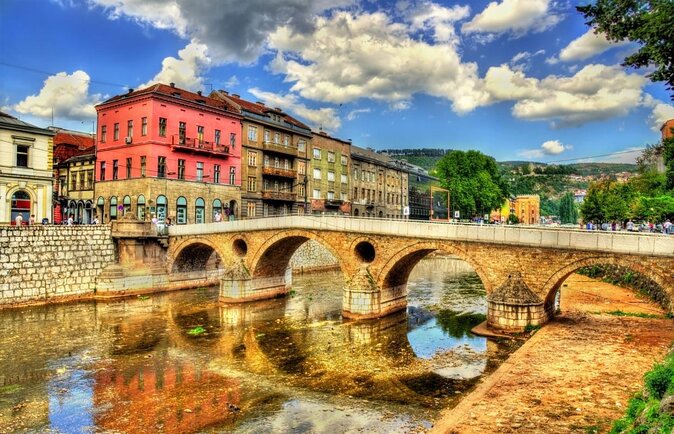
- Faiths and politics in one route, from Sacred Heart Cathedral to Latin Bridge
- Food and craft stops, including a Bosnian coffee moment and guidance on cevapi and burek
- Iconic center-city landmarks, like Sebilj Fountain (Pigeon Square)
- Small groups up to 15 people, so it feels human sized
Why Sarajevo feels like a crossroads on foot
Sarajevo is not a museum city where everything stays behind glass. It is lived-in, built in layers, and this tour helps you see those layers without getting lost in long distances. You get a sense of how different communities shaped street corners, architecture, and even the way major events are remembered.
What I like is how the route doesn’t treat religion as trivia. Instead, it places places of worship and community landmarks next to each other, so you notice the city’s patterns fast. You’ll also pick up context that makes later sights make sense, especially as you move from Ottoman-era landmarks toward Austro-Hungarian-era buildings and 20th-century history.
The mood is also practical. It’s designed for a 2-hour block, so you can do it early in your stay to get your bearings. And if your schedule is tight, this kind of focused route can save you the effort of piecing together a self-guided plan.
More Walking Tours in Sarajevo
- Sarajevo: Grand Walking Tour Through Time and Cultures
★ 4.8 · 1,236 reviews - Sarajevo: 2 Hours Old Town Walking Tour With Local Guide
★ 5.0 · 505 reviews - Private Walking Tour, Food Tasting and Bosnian Coffee in Sarajevo
★ 5.0 · 255 reviews
Meeting at Muvekita 7 and the 2-hour walking rhythm
The tour meets at Muvekita 7 in Sarajevo and ends back at the meeting point. Start time is 10:30 am, and the total duration is about 2 hours, which matters because Sarajevo’s center can feel compact but spread out once you factor in traffic lights and hills.
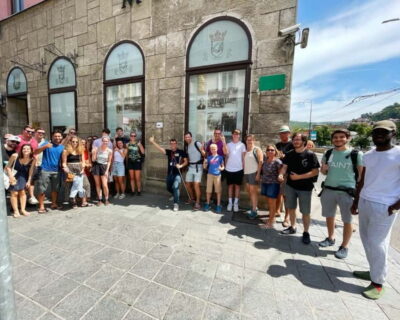
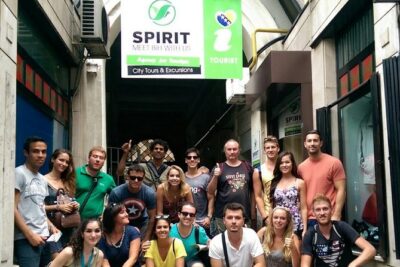
Group size is capped at 15 travelers. That usually means you’ll have a chance to hear the guide clearly and keep up without feeling rushed. You’ll also move through a sequence of short photo-and-story stops, not long sit-down segments.
You’ll get a mobile ticket, and the tour is offered in English. Confirmation comes at booking, and service animals are allowed. One more thing to plan around: it requires good weather, so if conditions are rough the operator may reschedule or refund you.
Sacred Hearth Cathedral, then the Jewish Museum of Bosnia
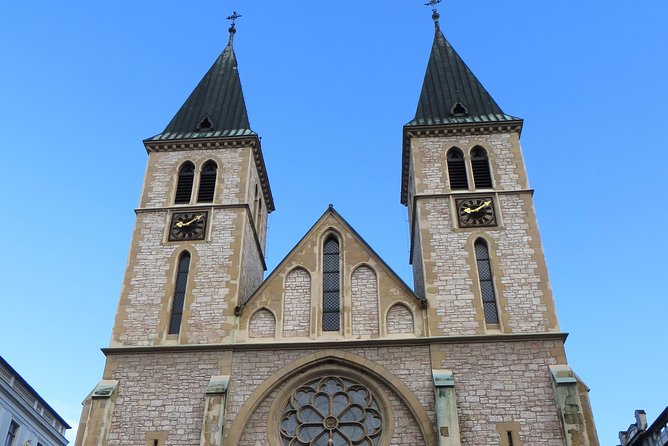
The opening stop is the Sacred Hearth Cathedral, also known as Katedrala Srca Isusova. The tour gives you the main facts and why this building matters in Sarajevo’s spiritual geography. Admission is listed as included for this stop, so you can focus on the experience rather than calculating the extra cost on the spot.
Next comes the Jewish Museum of Bosnia and Herzegovina, tied to the story of the first Jewish temple built in Sarajevo. Admission is not included here, so you’ll want to decide whether seeing the museum interior is your priority. Even if you don’t pay for entry, you’ll still get the framing that makes the stop more than a quick glance.
This pairing works well because it keeps the religious context balanced. You start with a major Christian landmark, then shift to a Jewish story anchored to the city’s earliest community life. That contrast is exactly the kind of mental map you need in a place with many narratives running at once.
Sarajevo Meeting of Culture, Gazi Husrev-beg Mosque, and the Old Sarajevo clock
After the cathedral and museum area, the tour focuses on Sarajevo as a meeting point, not a one-note city. The Sarajevo Meeting of Culture stop is short, but it’s where you get the big idea that ties the rest together: east meets west, and the city’s identity lives in that overlap.
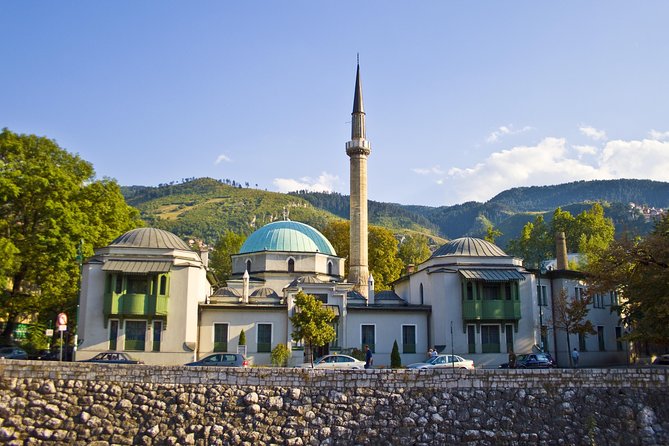
Then you move into the old core with the Gazi Husrev-beg Mosque. Admission is listed as free for this stop, and it’s given about 10 minutes, which is just enough time to look carefully without turning it into a long detour. You’ll get guidance on what makes the mosque central to Bosnia and Herzegovina’s religious life.
Right after that, you’ll stop at the Old Sarajevo Clock Tower. It’s only around 5 minutes, but this is one of those landmarks that makes the city feel real. A clock tower is practical. It marks time for daily life, not just for tourism photos.
What I like about this portion is that it teaches you how to read the city. You go from meaning and identity to a major worship site, then to a civic marker like a clock tower. That mix prevents the tour from feeling like a checklist.
More around Sarajevo to weigh up
- Sarajevo Grand Walking Tour
★ 5.0 · 232 reviews - Sarajevo: Old Town Walking Tour with Local Guide
★ 4.9 · 211 reviews - Sarajevo Essential Full Walking Tour
★ 5.0 · 198 reviews - Sarajevo: Discover Sarajevo Walking Tour with Local Guide
★ 4.9 · 92 reviews
Morica Han and Sebilj Brunnen, the pulse of old Sarajevo
Morica Han is described as the only preserved han, or caravanserai-like inn, in Sarajevo. Admission is listed as included here, and you get about 10 minutes. This is one of the better stops for understanding how trade, travel, and everyday hospitality shaped the city long before modern borders.
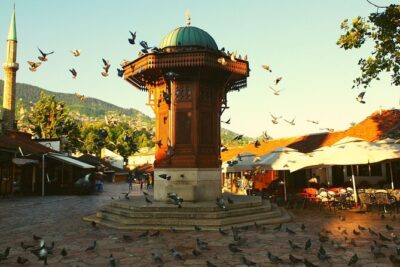
Then you hit Sebilj Brunnen, the iconic fountain also known as Pigeon Square. Admission is listed as included, and it’s a quick 5-minute stop. Still, it’s worth giving your eyes a full moment here, because this fountain anchors the central pedestrian flow of old Sarajevo.
These two stops together do something smart. Morica Han helps you picture how the city functioned economically and socially in earlier centuries. Sebilj brings you back to the modern street experience, where the center is still used, still busy, and still a meeting point.
Kazandziluk, Bosnian coffee, and where to eat without wasting time
One of the most useful segments is Kazandziluk, where you learn about old crafts of Sarajevo and the way a Bosnian coffee is made. Admission is free and the stop is about 10 minutes. Even if you don’t get hands-on instruction, the explanation can help you understand why coffee is more than caffeine here.
Right after that, the guide takes you toward Bravadziluk Street. It’s another short stop, about 5 minutes, and the focus is practical: your guide will recommend where to taste cevapi and burek. Admission is listed as free, and the real value is the guidance on what to order and where to go.
This is the part of the tour that helps after it ends. You’re not just collecting sights. You’re getting a shortcut to the right kind of local meal in a central area. Since the tour ends back at the meeting point, you can keep moving through the neighborhood with better instincts.
Sarajevo City Hall, Latin Bridge, and the 1914 turning point
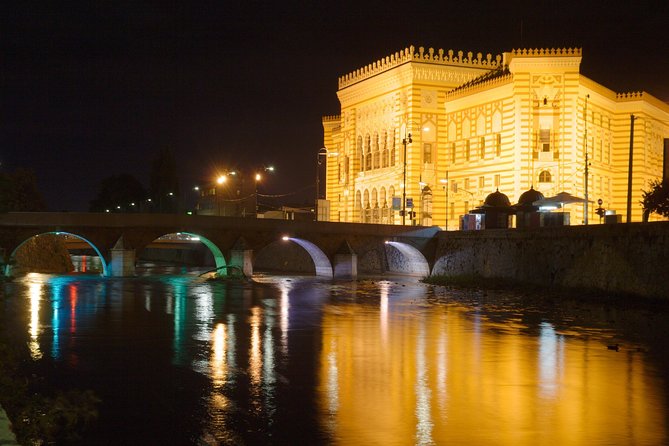
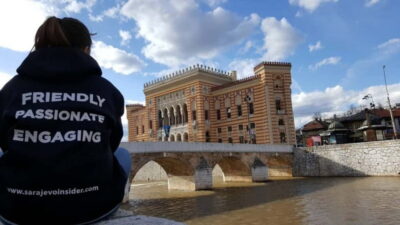
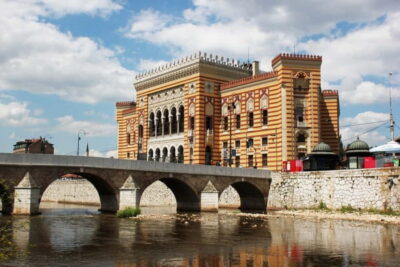
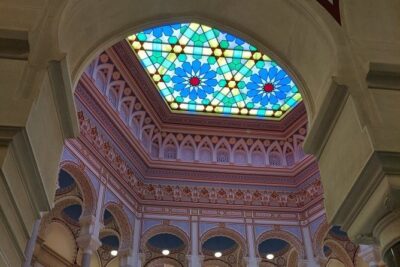
Sarajevo City Hall is next, described as one of the most beautiful buildings from the Austro-Hungarian period. Admission is not included for this stop, and it’s about 10 minutes. The main point here is architectural context and the sense that Sarajevo was tied into European empire-era politics, not only local Ottoman-era traditions.
Then you head to Latin Bridge for the big historical event: the Sarajevo Assassination 1914. This stop gets about 20 minutes, and admission is listed as free. That longer time matters, because the guide has room to connect the dots between place, event, and why this part of the city appears in world history lessons.
This portion is also where I’d suggest paying attention even if you’ve read the headline before. The value of a walking tour is turning dates into geography. When you stand near Latin Bridge, the event becomes grounded in the actual streets and the way people move through the area.
A small practical note: this area can be busy. Give yourself a little patience for slower photo moments and listen closely for the guide’s direction, especially if you’re traveling with kids or anyone who wants frequent brief breaks.
Orthodox Sarajevo, Markale market, and the Eternal Flame
The tour continues with the Serbian Orthodox Cathedral. Admission is not included, and the stop is about 5 minutes. Still, it’s an important religious counterpoint to balance what you’ve already seen, and it reinforces the layered identity of Sarajevo.
Then comes Pijaca Markale, the City Market, with about 10 minutes. Admission is free, and the focus is everyday Sarajevo life: buying fruits, vegetables, and meat products. This is where the tour becomes less about monuments and more about how people actually live around them.
Finally, you visit the Eternal Flame, a monument dedicated to WWII fighters, with about 5 minutes. Admission is listed as free. This short stop lands well because it brings the timeline forward into modern conflict memory, the kind that still shapes civic identity.
This last stretch is valuable because it prevents the tour from ending on a single theme. You finish with a blend of faith sites, daily life at a market, and a memorial that keeps history in the public space.
Price and logistics, and how to judge the value
The price is $24.08 per person for about 2 hours, with a guided experience included. For a city like Sarajevo, where the best sights are close enough to walk but spread across different eras, this is a reasonable way to save time and avoid indecisive wandering.
Here’s how to judge value beyond the number. First, group size is capped at 15, which generally makes the guide’s attention feel more direct. Second, some admissions are marked as included, like Sacred Hearth Cathedral, Sarajevo Meeting of Culture, Morica Han, and Sebilj Brunnen. Third, you get a mix of free and paid interiors, so you can decide what to prioritize without paying for every museum-like stop.
Your biggest cost risk is inside access at locations marked as not included, such as the Jewish Museum of Bosnia and Herzegovina, Sarajevo City Hall, and the Serbian Orthodox Cathedral. If you’re mainly there for outdoor architecture and guided context, you may be happy with the included stops. If you want to go inside museums and civic buildings, you should budget extra.
The tour is offered in English, and the guide experience is a standout from the feedback you’ll find. Adnan is specifically praised for being helpful and smiling, with explanations that cover both history and daily life. One review also points to strong communication skills in Spanish, including Bosnian coffee offered before the tour, which suggests this operator cares about a welcoming start even when the language focus differs.
Who should book this Sarajevo walking tour
This is a strong pick if you want an efficient orientation to Sarajevo’s core. You’ll enjoy it if you like your sightseeing mixed with context, and you want religion, politics, and everyday city life in one compact plan.
It’s also a good choice if you’re the type of traveler who prefers a guide for the “why,” not just the “what.” The route is built so the story makes sense across stops, from the Sacred Hearth Cathedral and Jewish Museum to Gazi Husrev-beg Mosque and Latin Bridge.
If you only want one theme, like purely Ottoman architecture or purely WWII history, this may feel like a lot of transitions. In that case, you might prefer a focused tour. But if you want the full Sarajevo picture quickly, this one is built for that.
Should you book?
Yes, if your priority is to understand Sarajevo fast, without hopping across multiple tours. The $24.08 price for a 2-hour guided route with a small group size is a solid deal, especially because key stops have admission included and the guide helps connect the city’s layered stories.
Book it early in your trip if you can. After this, you’ll know where to wander on your own, including where the market fits into your day and which food areas your guide points out for cevapi and burek. If you are set on visiting every interior spot, plan for optional extra admissions at the stops marked as not included.
FAQ
How long is the Crossroads of Cultures walking tour in Sarajevo?
The tour lasts about 2 hours.
What time does the tour start?
The start time is 10:30 am.
Where does the tour meet?
You meet at Muvekita 7, Sarajevo 71000, Bosnia and Herzegovina.
What language is the tour offered in?
The tour is offered in English.
Is the tour fully guided?
Yes, a tour guide is included.
Are museum or building entrance fees included?
Not everywhere. Admission is included for some stops, while others are listed as not included, including the Jewish Museum of Bosnia and Herzegovina, Sarajevo City Hall, and the Serbian Orthodox Cathedral.
How big is the group?
The tour has a maximum of 15 travelers.
What happens if the weather is poor?
The tour requires good weather. If it is canceled due to poor weather, you’ll be offered a different date or a full refund.
Can I cancel for a full refund?
Yes. You can cancel up to 24 hours in advance for a full refund.
If you cancel less than 24 hours before the experience’s start time, the amount you paid is not refunded.
Newest Sarajevo write-ups
- Sarajevo to Zagreb: One-Way Tour via Jajce, Travnik, Pliva Lake and Watermills★ 5.0 · 3 reviews
- Sarajevo E-Bike City Tour★ 5.0 · 3 reviews
- Mountain Village Lukomir Full Day Adventure Tour★ 5.0 · 3 reviews
- Bosnian Kingdom Capitals: Travnik & Jajce Tour from Sarajevo★ 5.0 · 3 reviews
- Strbacki Buk and Una Waterfalls: Day Trip from Sarajevo★ 5.0 · 3 reviews
- Sarajevo Old Town: Bosnian Coffee, Baklava & Panoramic Views★ 5.0 · 3 reviews
- Sarajevo Snowshoeing Adventure★ 5.0 · 3 reviews
- 4 Hours Tara Rafting Trip★ 5.0 · 3 reviews
Walking Tours in Sarajevo, compared.
Private Walking Tour, Food Tasting and Bosnian Coffee in Sarajevo
Read our review →
Browse the lists this tour appears in