
Reviewed · SREBRENICA MEMORIAL VISITS
From Sarajevo: Srebrenica Genocide Memorial Study Tour
This experience is interesting because it takes you from everyday Sarajevo life into one of the most painful moments of modern Europe, with a guide who connects the facts to what people carry today. I especially like the small group size (up to 8) and the focus on the Potocari memorial and graves, not just a quick stop. A fair consideration: you are going to spend hours in memorial spaces that can feel cold and emotionally heavy, so plan your pacing and wear proper clothes.
On this tour, you’ll cross the Romanija mountain area en route, then shift to guided visits at the Srebrenica Genocide Memorial in Potocari and the cemetery site. After that, you’ll continue toward Srebrenica town for time on the ground, plus a look at life after the genocide, including springs with mineral-rich water and time to eat (lunch is not included).
Romanija mountain drive breaks up a long day and adds real context to the region
Potocari’s museum plus the cemetery gives you the full “memory and evidence” experience
You watch a documentary about Srebrenica to anchor the story before you walk the grounds
The tour includes present-day Srebrenica, not only the tragedy
Guides often bring personal connection, including names like Almir, Senad, Ago, Ayub, and Muamer
You get a 12-hour, guided, air-conditioned round trip for $80 with hotel pickup and drop-off
A Day Trip That Turns Facts Into Something You Can Actually Feel
Let’s be honest. A visit to Srebrenica is not a sightseeing day. It’s study, remembrance, and learning how atrocity can happen when the world turns away. That is exactly why this kind of guided tour is worth your time in Bosnia.
What I like about this specific format is that it does the job properly. You get the guided memorial visit, a chance to see the large cemetery complex at Potocari, and context about the war in Bosnia from 1992 to 1995, including the events of July 11, 1995. And then you also continue to Srebrenica town, where the emphasis shifts to life after the genocide and how people live and coexist now.
The other reason this works is the small-group size. With a limited group of up to 8, you have room to ask questions and have respectful conversations without feeling like your day is just a conveyor belt.
Leaving Sarajevo: Hotel Pickup, Air-Conditioned Comfort, and the Romanija Mountain Route
The day starts with hotel pickup in Sarajevo and a ride in an air-conditioned modern car or minivan. The total time out is 12 hours, and you’re back around 5 pm. That matters because a long day like this can either feel organized or chaotic. Here, the schedule is built around a full memorial visit plus time in Srebrenica town.
The drive includes crossing the Romanija mountain area, and that scenery break is more than a nice extra. It helps you understand the region as more than a single tragedy. Bosnia is made of places like this, valleys and ridges and winding roads, and the land shapes how communities connect.
In practice, you might also find the trip includes restroom stops along the way, since guides and drivers often plan for comfort on a full-day route. You should still come prepared for a long day, because once you’re at the memorial sites, you will not be able to treat it like a casual museum stop.
Other visits to Srebrenica, told plainly:
- From Sarajevo: Srebrenica Genocide Memorial Study Tour
★ 5.0 · 359 reviews - Sarajevo: Srebrenica Genocide Study Tour with War Veteran
★ 5.0 · 263 reviews - Sarajevo to Srebrenica: Genocide Study Tour with War Veteran
★ 5.0 · 131 reviews
What Happens at Potocari: Graves, a Museum, and a Documentary Before the Cemetery
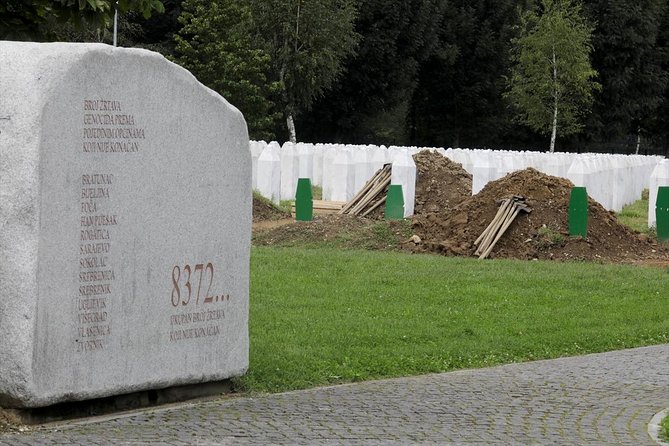
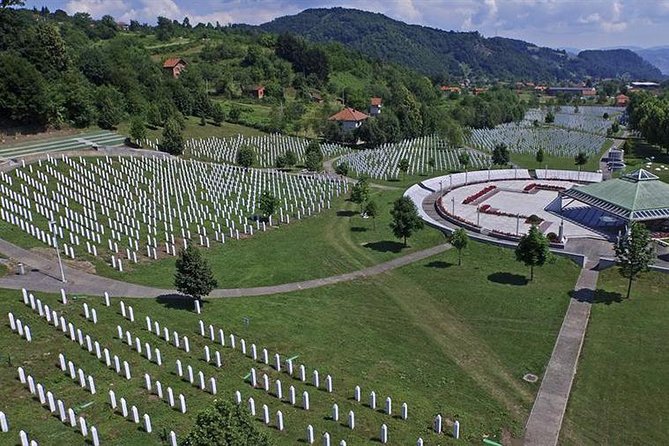
Potocari is the heart of the experience. You’ll visit the Srebrenica Genocide Memorial complex with a guided tour, then spend time at the cemetery grounds where victims are buried. This is one of those places where the word memorial is accurate and also not enough.
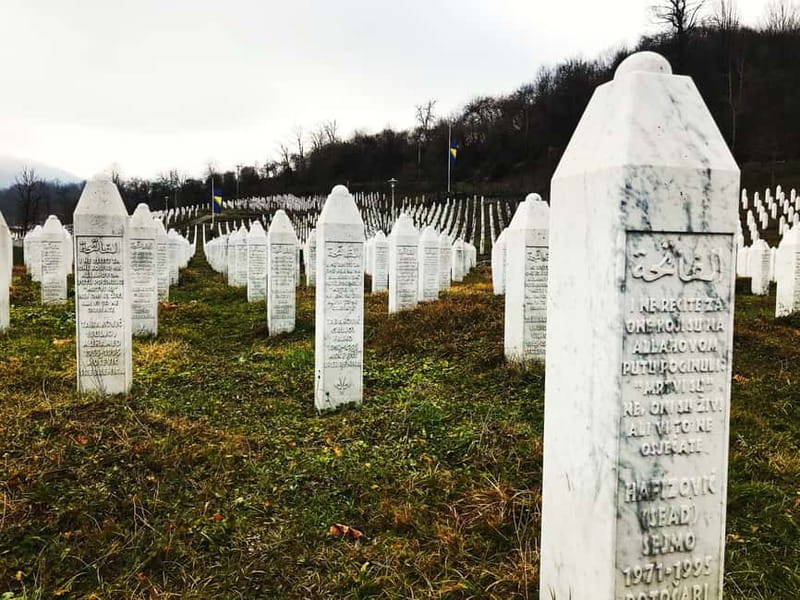
You’re looking at a huge graveyard area with over 8,000 graves. Even with context, that number lands in your chest. The scale is part of the lesson. It’s not abstract. It is human beings, laid to rest, and it forces you to face what happened in those days after Srebrenica was attacked.
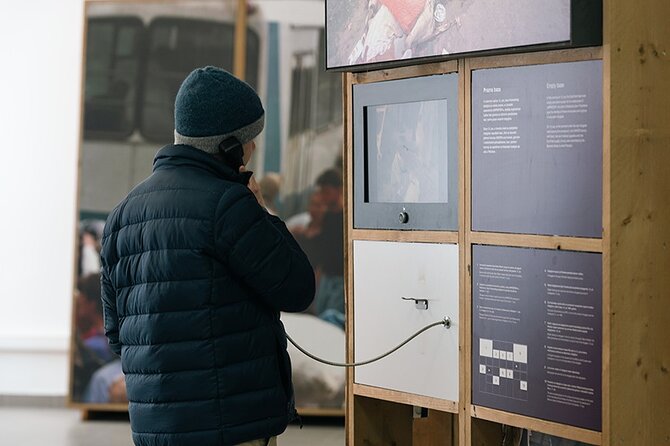
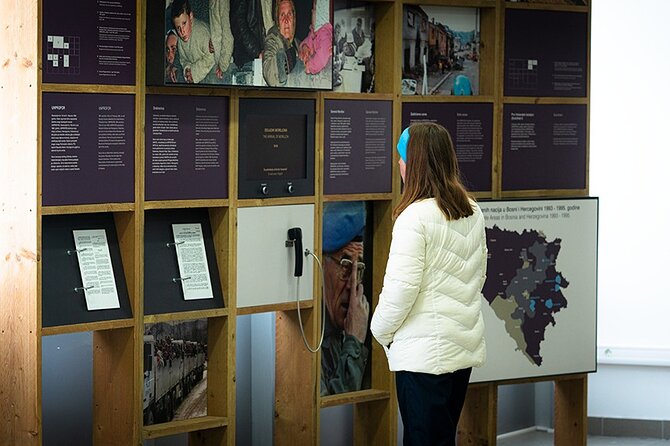
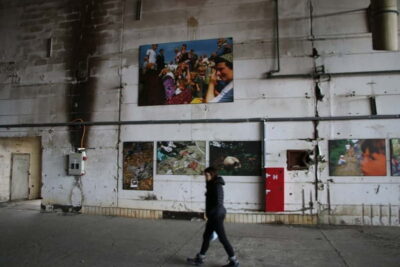
Before you walk among the graves, the tour includes a documentary about Srebrenica and time inside exhibitions with original photo and video material. You learn how Srebrenica became a UN-designated protected area, then how the attack unfolded on July 11, 1995, and how thousands of people were killed in the following days.
The Context That Matters: Why This Memorial Exists, and Why Identification Is Still Ongoing
This memorial is not just a building with photographs. It has a mission, and you’ll hear the story behind it.
The memorial and museum were established in 2001 by the High Representative Wolfgang Petritsch as part of the Foundation Srebrenica-Potocari. Later, the memorial was officially opened by US President Bill Clinton in 2003. After that, there were successive burials of hundreds of victims every year.
What I appreciate here is that the guide doesn’t stop at the past. You also learn that the crimes were so massive that experts are still disinterring and identifying victims from mass graves in the area around the river Drina. That detail keeps the tour honest. It underlines that the story is still being pieced together, even decades later.
The memorial complex is meant to be a warning and a place of memory for the victims. That sounds heavy because it is heavy, but it’s also the right frame. You’re not going there to be entertained. You’re there to witness evidence and understand the consequences.
Inside the Exhibitions: Original Photos, Video Evidence, and Time to Read
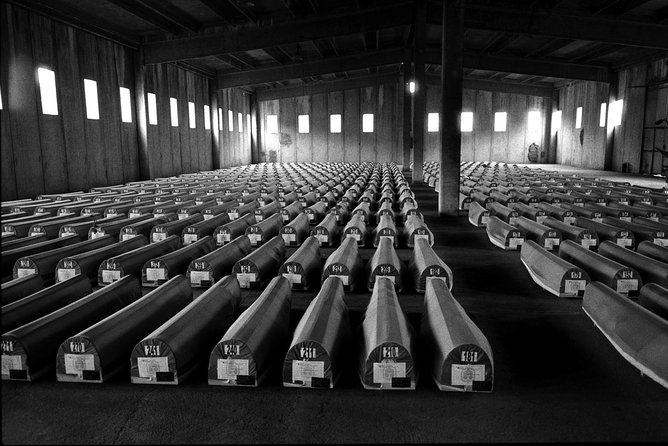
One of the strongest reasons to book a guided tour like this is what happens inside the museum spaces at Potocari. You’ll see original photo and video exhibitions that help you understand the level of crimes that happened there.
From the way guides run these stops, you’ll likely feel there’s a rhythm: first you get background and a timeline, then you move through the displays that show how life changed during the war, and how families were impacted. It’s not a single narrative. It’s many angles. That’s useful because it makes you less likely to oversimplify what happened.
A practical consideration: the museum experience can feel uneven depending on conditions and how the day is staffed. One visitor mentioned a lack of heating in the exhibitions during February, with the cinema room being warmer. Another person noted that some screens were turned off and that there wasn’t an audio guide for the exhibitions, with the center staff helping you move from one part to the next and leaving more of the interpretation to you.
So here’s my advice to you: go in expecting that you will need your own time to read and absorb. If you rush, you’ll miss the parts that hit hardest.
More around Sarajevo to weigh up
- Sarajevo: Mostar, Konjic, Blagaj Tekke, Pocitelj & Waterfall
★ 4.9 · 1,666 reviews - Fall of Yugoslavia, Sarajevo War Tour with Tunnel of Hope Museum and Frontlines
★ 5.0 · 1,314 reviews - Sarajevo: Grand Walking Tour Through Time and Cultures
★ 4.8 · 1,236 reviews - Sarajevo: Mostar, Konjic, Sufi House, Pocitelj & Kravice Falls
★ 5.0 · 1,179 reviews
The Cemetery Visit: Why This Part Can Feel Like the Whole Point
After the museum and documentary, the visit moves into the cemetery area. You’re crossing from history shown on screens to history contained in the ground.
This is where the tour earns its emotional weight. The cemetery is where the numbers become real. The memorial grounds are laid out in a way that makes you notice names, dates, and the careful organization of remembrance. Your guide’s job here is crucial: they can keep the context clear and also help you ask questions without the day turning into numb silence.
If you feel overwhelmed, that’s normal. You’re dealing with genocide. Give yourself small breaks when you can and keep your pace respectful. You don’t need to force yourself to “keep going” just because others are walking. You’re allowed to pause.
Srebrenica Town After the Memorial: Life, Coexistence, and Mineral-Rich Springs
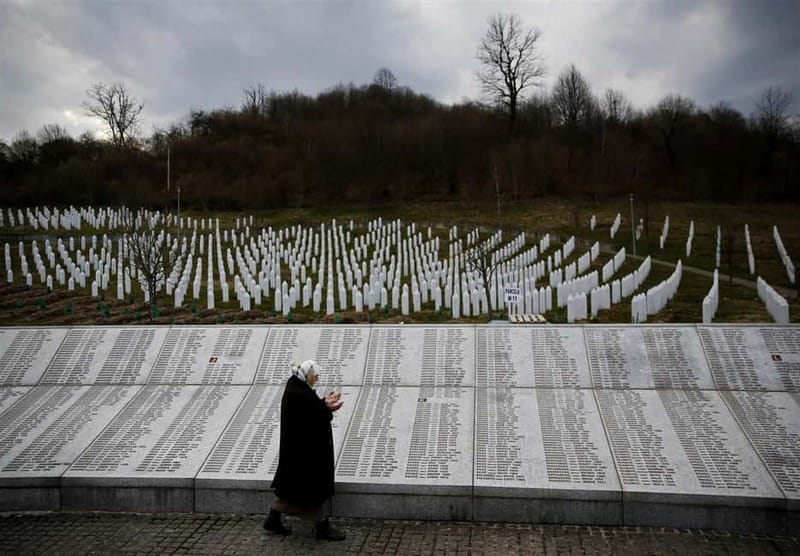
This tour doesn’t only stop at Potocari. You continue toward Srebrenica town, where you’ll have break time and visit the area. There’s even time for lunch, but lunch itself is not included, so you’ll want to be ready to buy food once you’re there.
The focus shifts to life after genocide, including coexistence in the city today. That doesn’t erase the tragedy. It explains what comes next: how people rebuild routines, how communities coexist, and how the present carries memory.
One of the more unique inclusions is a look at the springs around the city. The tour notes that the water contains minerals such as two-valency iron, cobalt, nickel, copper, manganese, and more. You’ll hear that this has potential for developing the area in the future.
I like this addition because it prevents the day from becoming only a tragedy lecture. It gives you a chance to see that Srebrenica is not only the worst chapter in its history. It’s a place with daily life, challenges, and some hope tied to practical resources.
The Guides: Why the Human Connection Makes the Day Work
This tour seems to rise and fall on the guide, and the reviews show that clearly. Many visitors praised guides by name, especially Almir, Senad, Ago, Ayub, and Muamer/Muammar. Several guides shared personal perspectives tied to the region and the war.
For example, one review specifically noted a guide who was a war veteran and connected his experiences to the siege of Sarajevo. Other guides were described as locals from the region of Srebrenica or people with firsthand understanding of the period. That kind of context can make the story feel more grounded and less like a distant case study.
You should also know the guides are trained to keep the day sensitive. People repeatedly mention that the guides were careful, caring, and responsive when guests had questions. On a subject like this, that matters as much as the facts.
A small-group format helps here too. In a group of up to 8, questions don’t get lost, and you’re more likely to have a real conversation instead of a one-way lecture.
Price and Value: $80 for 12 Hours, Pickup, and a Serious Guided Story
At $80 per person, this is not cheap in the casual-day-trip sense. But in the real world of Bosnia touring, it’s good value for what you’re getting.
You get:
- Professional guiding for a full 12-hour day
- Hotel pickup and drop-off
- Small group size (up to 8)
- Transport in an air-conditioned vehicle
- A bottle of water
- A traditional Bosnian sandwich in the morning (vegetarian option available)
The biggest value is not the vehicle. It’s the guided interpretation of a highly sensitive, complex topic. This is the kind of visit where reading alone can help, but a good guide can keep the timeline straight, answer your questions, and explain the significance of what you’re seeing.
And since the tour covers multiple parts, it’s also efficient. You’re not coordinating your own transportation between memorial sites and town time. The tour handles that, then gets you back to Sarajevo around 5 pm.
What to Bring and Wear for a Respectful Memorial Day
This is the kind of day where comfort and respect work together.
Bring:
- Camera
- Comfortable clothes
- Headscarf
Wear appropriate clothing. You will visit cemeteries and memorial centers, so choose something that feels respectful and comfortable for walking and standing.
One practical note from reviews: in cold months, indoor exhibition areas can feel chilly. Layer up, even if you expect a warm day on the drive.
Also, since lunch is not included, you’ll want some flexibility in your plan for food once you reach Srebrenica town. The morning sandwich handles breakfast, but not midday.
Who Should Book This Tour, and Who Might Want to Think Twice
This tour is a great match if you:
- Want a guided, structured visit to the Potocari memorial and cemetery
- Care about learning the context of the war in Bosnia (1992 to 1995) and the Srebrenica genocide
- Prefer a small group setting with time to ask questions
- Like that you also get time in Srebrenica town to learn about life today
You might think twice if you:
- Don’t handle emotional history well, because the cemetery and memorial exhibitions can be intense
- Prefer a more casual, sightseeing-heavy itinerary, because this is study and remembrance first
- Plan to move fast. This day works best when you slow down and let it land
Should You Book This Srebrenica Genocide Memorial Study Tour From Sarajevo?
Yes, you should book it if you can give it full attention. This is the kind of experience that changes how you understand the modern Balkans, not through vague inspiration, but through careful context, documentary material, and a guided walk among the graves.
Go in prepared for a hard day. Dress appropriately, bring layers, and let the tour take the time it needs. If you want to leave Sarajevo with more than surface knowledge, this is one of the best ways to do it.
FAQ
How long is the Srebrenica Genocide Memorial Study Tour from Sarajevo?
The tour lasts 12 hours.
What is included in the $80 price?
It includes a professional guide, hotel pickup and drop-off, a small-group tour, transportation in an air-conditioned modern vehicle, bottle of water, and a traditional Bosnian sandwich in the morning with a vegetarian option.
Is lunch included?
No. Lunch is not included.
Is the tour wheelchair accessible?
Yes, it is wheelchair accessible.
What language is the live guide?
The live tour guide is in English.
What should I bring and wear?
You should bring a camera, comfortable clothes, and a headscarf. Wear something appropriate for cemeteries and memorial centers.
Can I reserve and cancel flexibly?
Yes. You can reserve now and pay later, and you can cancel up to 24 hours in advance for a full refund.
Newest Sarajevo write-ups
- Sarajevo to Zagreb: One-Way Tour via Jajce, Travnik, Pliva Lake and Watermills★ 5.0 · 3 reviews
- Sarajevo E-Bike City Tour★ 5.0 · 3 reviews
- Mountain Village Lukomir Full Day Adventure Tour★ 5.0 · 3 reviews
- Bosnian Kingdom Capitals: Travnik & Jajce Tour from Sarajevo★ 5.0 · 3 reviews
- Strbacki Buk and Una Waterfalls: Day Trip from Sarajevo★ 5.0 · 3 reviews
- Sarajevo Snowshoeing Adventure★ 5.0 · 3 reviews
- Sarajevo Old Town: Bosnian Coffee, Baklava & Panoramic Views★ 5.0 · 3 reviews
- 4 Hours Tara Rafting Trip★ 5.0 · 3 reviews
Srebrenica Memorial Visits, compared.
Srebrenica Genocide Study Tour with War Veteran
Read our review →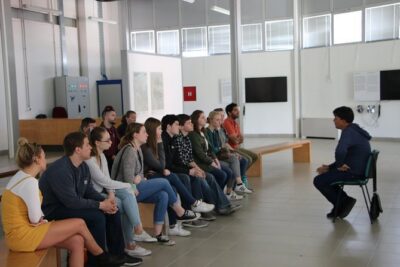
Sarajevo to Srebrenica: Genocide Study Tour with War Veteran
Read our review →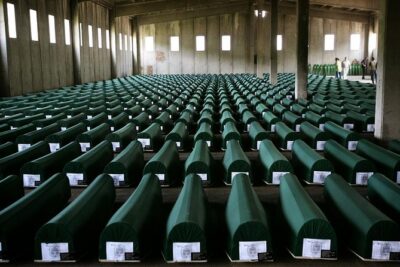
Understanding Srebrenica Genocide Tour + Lunch with Local Family Included
Read our review →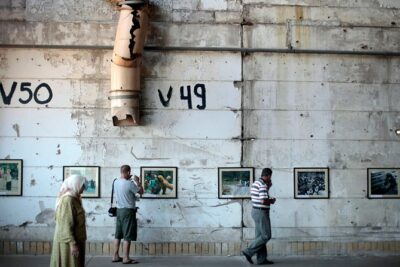
Understanding Srebrenica Genocide – Day tour from Sarajevo
Read our review →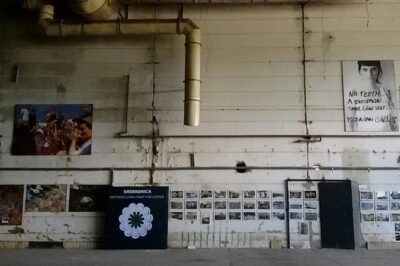
Understanding Srebrenica Genocide + Lunch With Local Family – Private Tour
Read our review →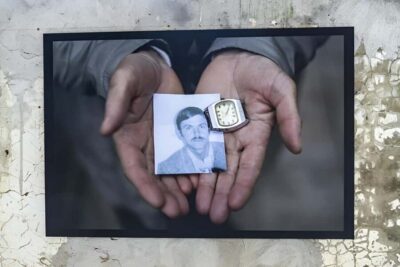
Understanding Srebrenica Genocide + Lunch with Local Family
Read our review →
Srebrenica Genocide Memorial and Testimonial Tour
Read our review →Browse the lists this tour appears in