
Reviewed · SREBRENICA MEMORIAL VISITS
Understanding Srebrenica Genocide – Day tour from Sarajevo
This day tour is interesting because it gives you the timeline first, then the human stories, then the place where people were laid to rest. You’ll see how the Museum of Srebrenica Genocide explains what led to the massacre, and you’ll have time at Potocari Memorial Centre to reflect in a respectful way.
I like the chronological setup before you walk through the site, because it helps you hold the full picture of the Yugoslav wars without getting lost in dates. I also like the small group size (max 8), which means you are not stuck listening at the back of a crowd. One consideration: it is a long, emotionally heavy day, and you should go in ready for that reality, not for comfort or easy sightseeing. Lunch is also not included, so you’ll want a plan for what you eat in Srebrenica.
If you’re lucky enough to have a guide like Kenan or Ayyub, you’ll likely notice how they handle the subject with care, and how they bring Bosnia and the broader history into the drive so the museum visit lands better.
Key things to know before you go
- Chronology first: the drive and first stop are designed to help you understand events in order, not as random tragedy.
- A museum with multimedia: you’ll use films and displays to connect the timeline to real survivor accounts.
- Potocari for respectful reflection: after the museum, you move on to a memorial space built for remembrance.
- Curator access at the museum: you can meet the curator and hear firsthand framing of what you’re seeing.
- Small group attention: with up to 8 people, questions and pace feel more human.
- Lunch is on your own: the tour includes the journey, not a restaurant plan.
Getting To Srebrenica: The 8:00 Start and the 2.5-Hour Drive
The day begins early. Pickup starts from any hotel in Sarajevo and the meeting point is Kovači 25, with a start time of 8:00 am. From Sarajevo to Srebrenica, you’re looking at about two and a half hours on the road, and the whole tour runs roughly 8 to 10 hours.
That drive matters more than you might expect. This is not a quick shuttle to a memorial. The tour is structured to help you get context before you’re standing in front of evidence and testimony. In the bus, you’ll also get WiFi on board, plus bottled water and snacks, which is a small but real comfort when you’re preparing for a day that asks a lot emotionally.
One practical tip: plan to dress in layers. The day can run long, and you’ll likely spend time both indoors and outdoors around memorial areas.
Other visits to Srebrenica, told plainly:
- From Sarajevo: Srebrenica Genocide Memorial Study Tour
★ 5.0 · 359 reviews - Sarajevo: Srebrenica Genocide Study Tour with War Veteran
★ 5.0 · 263 reviews - From Sarajevo: Srebrenica Genocide Memorial Study Tour
★ 5.0 · 242 reviews
Museum of Srebrenica Genocide: Chronology, Film, and Meeting the Curator
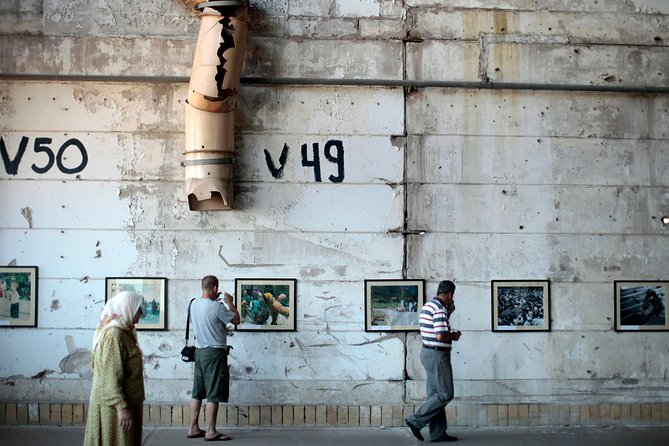
Your first stop is the Srebrenica Genocide Memorial area and the Museum of Srebrenica Genocide, which sits in a former battery factory used during the war by UN forces. Starting your visit in front of that building helps you understand you’re not just looking at a “museum topic.” You’re seeing a place shaped by the events.
Inside, what I’d call the tour’s key strength kicks in: the museum is presented in a chronological way, so you can trace how events unfolded as part of the wider Yugoslav wars. If you’ve ever visited a memorial and felt like the information was all at once, this approach is designed to slow that down.
The museum also uses multimedia, including a selection of films. Those visuals aren’t there for drama. They help you connect the timeline to survivor perspectives and the events that led to the massacre. The setting is modern for Bosnia and Herzegovina, and the exhibits are set up so you can follow the story rather than just absorb isolated panels.
Another standout detail is that you meet the curator. That matters because a curator can frame what you’re seeing with care and accuracy, and they can point out what people most often misunderstand. It’s also one of those moments that can make the museum feel less like a script and more like a conversation about how to remember responsibly.
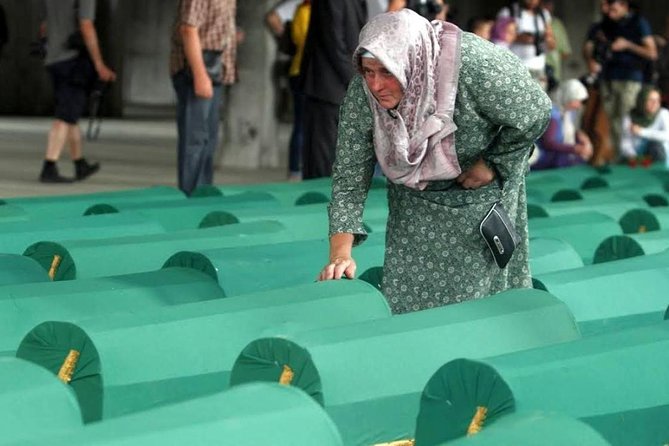
The museum visit includes a memorial room where you can hear stories of victims, made by a local journalist. After that, the tour takes you toward the memorial cemetery, where victims who were found and identified are resting. That cemetery stop gives the story a final, human weight.
Memorial Room to Cemetery: What the Stories Add
After the exhibits and films, the experience shifts from information to voice. The memorial room is where the stories you heard become personal. Because the stories are presented in a way tied to victims, the emotional tone changes fast, and that’s part of why the tour spends time on the timeline earlier.
Then comes the memorial cemetery, described as the resting place of victims who were found and identified. This is the kind of stop where your pace slows, and you don’t need to feel rushed to “get through it.” If you’re the type who likes to take notes, bring a pen and use it lightly. If you don’t, that’s fine too. The point is to let the visit land.
Possible drawback here: because the content is intense, you might feel overwhelmed if you treat it like a sightseeing checklist. If that’s you, I’d suggest giving yourself permission to pause, sit where possible, and take breaks when you can.
Potocari Memorial Centre: Respect, Quiet, and the Meaning of Timing
Once the museum stops are done, the tour continues to Potocari Memorial Centre for reflection and remembrance. This is the moment many people come for, and it’s best approached with a slower mindset than you’d use at a typical attraction.
What I like about the tour flow is that Potocari doesn’t happen in isolation. By the time you reach it, you’ve already built a framework: the chronology, the survivor and victim stories, and the link between wartime events and what followed. That sequence changes how you read a memorial space. It becomes more than a location. It becomes the last step in a story you now understand.
Also, remember the timing. After Potocari, you continue your journey to the city of Srebrenica, and the tour is designed so lunch happens there. The plan reflects an honest reality: there are not a lot of restaurants right around Potocari Memorial Centre. So you’re meant to eat in Srebrenica itself.
If you want an easy lunch day, you might consider bringing a small extra snack just in case. The tour provides snacks on board, but your appetite and energy level could vary a lot after a museum and memorial visit.
More around Sarajevo to weigh up
- Sarajevo: Mostar, Konjic, Blagaj Tekke, Pocitelj & Waterfall
★ 4.9 · 1,666 reviews - Fall of Yugoslavia, Sarajevo War Tour with Tunnel of Hope Museum and Frontlines
★ 5.0 · 1,314 reviews - Sarajevo: Grand Walking Tour Through Time and Cultures
★ 4.8 · 1,236 reviews - Sarajevo: Mostar, Konjic, Sufi House, Pocitelj & Kravice Falls
★ 5.0 · 1,179 reviews
Srebrenica Today: Once an Industrial Hub, Now a Ghost City
After Potocari, the tour heads to the city of Srebrenica. This part helps you shift from past to present, and it shows why place matters even after the facts are known.
The tour includes a point about how Srebrenica was once an industrial hub. Then you see how it is described as a ghost city today. That contrast can be difficult to sit with, but it’s useful. It reminds you that genocide is not just a story from history books. It changes the built environment and the daily life that comes after.
The value here is not doom and gloom. It’s perspective. When you see what remains and what is missing, you get a sense of what was lost beyond the tragedy of one day. For many visitors, this is the stop that makes the memory last longer than the museum alone.
Guide Quality in a Small Group: What You Can Expect From Kenan or Ayyub
A major practical advantage is the maximum of 8 travelers. That small group size is not only nice for comfort. It tends to make the guide more responsive. When you’re dealing with a complex and sensitive subject, you’ll likely have questions about context, terms, and what you’re seeing.
The drive from Sarajevo is part of the teaching. Guides often explain Bosnian culture and history on the way there, so the first hours of the day are not wasted sitting quietly in traffic. If you get a guide like Kenan, you may notice how he balances the conversation with professionalism, and how he can add value to the museum experience so you don’t just read panels and move on.
If your guide is Ayyub, you can expect a passionate, careful approach focused on accurate storytelling. The aim is the same either way: help you understand the events and the human stakes without turning the day into a shock experience.
Price and Value: Is 82.68 Per Person Worth It?
At $82.68 per person, this tour sits in the range of a serious day excursion. The key question is what you’re getting for that price.
You’re paying for:
- Round-trip transport by air-conditioned vehicle with Sarajevo pickup and drop-off
- A real driver/tour guide for context and pacing
- WiFi on board, plus bottled water and snacks
- The structured stops at the memorial museum area and Potocari
- And importantly, a small group size that can make questions possible
What’s not included is lunch. Since the tour is designed around limited food options near Potocari, it’s worth budgeting that extra cost. Still, the inclusion of snacks, water, and the fact that the museum stop is described as having free admission helps keep the overall day manageable.
My take: for a subject that needs time, context, and a careful guide, the value is solid. If you tried to do this alone, you’d still spend a long day on transport, and you might not get the same timeline structure that helps everything click.
What to Bring (So the Day Feels Easier)
You can’t pack away the heaviness, but you can make the logistics smoother.
Bring:
- A light jacket or layers for comfort during a long day
- A bottle if you like, even though bottled water is provided
- A small day bag for personal items
- Something for lunch (or at least plan where you’ll eat in Srebrenica), since lunch is not included
If you’re the type who prefers not to think about anything once you’re there, this tour helps with that. You have a plan, transport, and guided interpretation. The fewer decisions you need to make during a sensitive day, the better.
Who This Tour Fits Best
This is a good fit if you:
- Want a guided, chronological understanding of the massacre, not just memorial photos
- Prefer a small group day where you can listen and ask questions
- Are okay with a serious day that includes survivor and victim stories
This might not be the best fit if you:
- Have a strong dislike for heavy historical topics
- Need lots of free time to wander alone without any structured stops
- Want lunch and meals fully handled, since lunch is not included
Should You Book This Srebrenica Genocide Day Tour From Sarajevo?
If you’re visiting Sarajevo and you want Srebrenica to be more than a box to tick, I think this is the kind of tour that makes the visit meaningful. The strongest reason to book is the sequence: timeline and context, then museum storytelling, then Potocari remembrance, then a look at what the city is like now. That flow helps you understand instead of just witnessing.
I’d book it if you can handle a long, emotionally heavy day and you’re ready to learn carefully. If you want a purely casual outing with lots of upbeat sightseeing, look elsewhere. But for respectful remembrance with real context, this is a focused, well-paced option for getting it right.
FAQ
How long is the Srebrenica genocide day tour from Sarajevo?
The tour runs about 8 to 10 hours.
What time does the tour start and where is the meeting point?
The tour starts at 8:00 am. The meeting point is Kovači 25, Sarajevo 71000, Bosnia and Herzegovina.
Is lunch included?
No. Lunch is not included. Lunch is planned in Srebrenica after the memorial visits.
What is included in the tour price?
The price includes a driver/tour guide, an air-conditioned vehicle, WiFi on board, hotel pick-up service (including pickup from hotels in Sarajevo), hotel drop-off, bottled water, and snacks.
How big is the group and what language is the tour in?
The tour has a maximum of 8 travelers and is offered in English.
Can I cancel and get a full refund?
Yes. Free cancellation is available, and you can cancel up to 24 hours in advance for a full refund. If you cancel less than 24 hours before the start time, the amount paid is not refunded.
Newest Sarajevo write-ups
- Sarajevo to Zagreb: One-Way Tour via Jajce, Travnik, Pliva Lake and Watermills★ 5.0 · 3 reviews
- Mountain Village Lukomir Full Day Adventure Tour★ 5.0 · 3 reviews
- Sarajevo E-Bike City Tour★ 5.0 · 3 reviews
- Bosnian Kingdom Capitals: Travnik & Jajce Tour from Sarajevo★ 5.0 · 3 reviews
- Strbacki Buk and Una Waterfalls: Day Trip from Sarajevo★ 5.0 · 3 reviews
- Sarajevo Snowshoeing Adventure★ 5.0 · 3 reviews
- Sarajevo Old Town: Bosnian Coffee, Baklava & Panoramic Views★ 5.0 · 3 reviews
- 4 Hours Tara Rafting Trip★ 5.0 · 3 reviews
Srebrenica Memorial Visits, compared.
Srebrenica Genocide Study Tour with War Veteran
Read our review →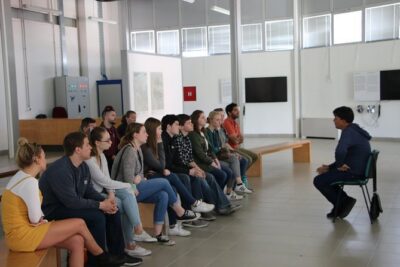
Sarajevo to Srebrenica: Genocide Study Tour with War Veteran
Read our review →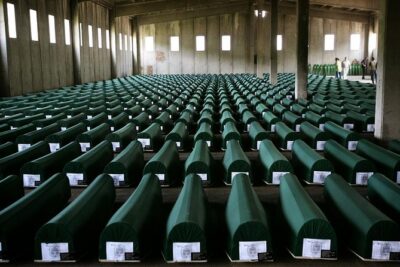
Understanding Srebrenica Genocide Tour + Lunch with Local Family Included
Read our review →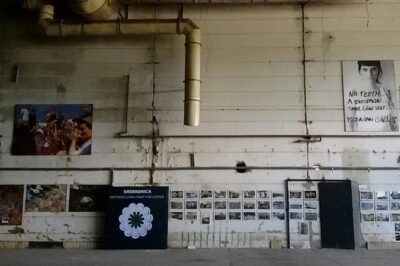
Understanding Srebrenica Genocide + Lunch With Local Family – Private Tour
Read our review →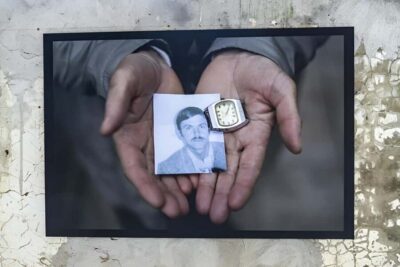
Understanding Srebrenica Genocide + Lunch with Local Family
Read our review →
Srebrenica Genocide Memorial and Testimonial Tour
Read our review →Browse the lists this tour appears in