
Reviewed · SREBRENICA MEMORIAL VISITS
REMEMBERING SREBRENICA (Genocide study tour 11/07/95)
What makes this experience stand out is that you do not just learn about Srebrenica in the abstract. You travel from Sarajevo to the sites tied to the 1995 genocide, with time built in for a documentary, museum context, and a visit to the memorial cemetery.
I especially like the way the day is structured for clarity, starting with a film and museum visit before you move into the heavier stops. I also like the small group size, which makes it easier to ask questions and hear the guide’s clear explanations. One possible drawback is that the subject matter is extremely heavy, so you should be ready for an emotionally intense day.
Key points that make Remembering Srebrenica different
- A small-group format (max 5 travelers) keeps the experience focused and question-friendly
- Documentary plus museum first, so the later stops make more sense
- UN base and Battery factory stop, part of the story you need to understand
- Talk with witnesses, a core element of the learning experience
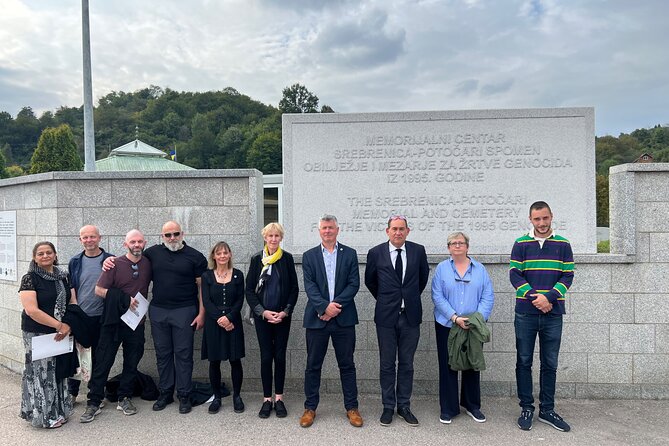
- Srebrenica Potočari Memorial and Cemetery visit gives the day its final focus
- A short drive through Srebrenica city helps you connect the past to what people live with now
The day starts in Sarajevo, then moves into the Srebrenica story
The tour meets at Đulagina 2 in Sarajevo at 8:30 am. From there, you head out by car toward Srebrenica, with the morning set aside to get you grounded before you step into the most intense parts of the program.
I like that the pacing gives you a proper lead-in. You are not rushed from the city straight into the cemetery without context. That matters, because the genocide is not only a date in history, it is a sequence of events that shape how people remember today.
Other visits to Srebrenica, told plainly:
- From Sarajevo: Srebrenica Genocide Memorial Study Tour
★ 5.0 · 359 reviews - Sarajevo: Srebrenica Genocide Study Tour with War Veteran
★ 5.0 · 263 reviews - From Sarajevo: Srebrenica Genocide Memorial Study Tour
★ 5.0 · 242 reviews
Documentary and Srebrenica Museum, before you go to the most painful sites
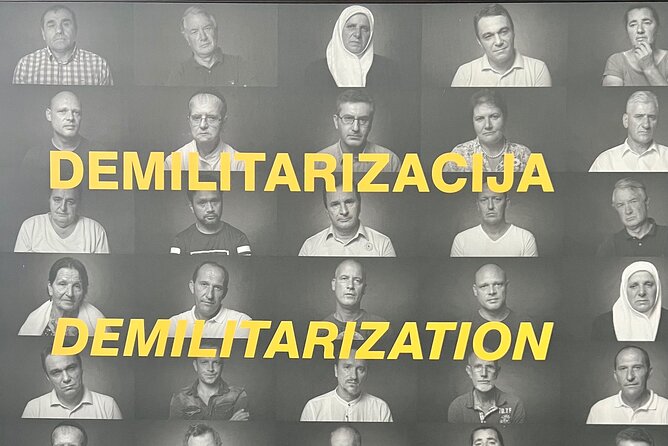
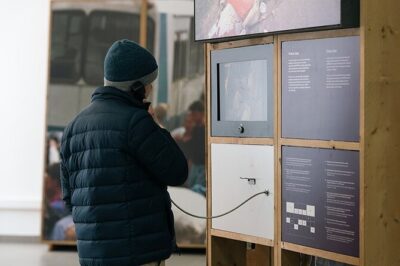
From late morning, the program turns to education. You watch a documentary about Srebrenica and then visit the Srebrenica Museum. This is the part of the day that helps you follow the story without feeling lost.
I like the ordering here: film and museum first, then the field stops after. That is a practical way to learn, especially for visitors who do not already know the background. If you go in with only a headline memory, you often leave with blank spaces. Here, the schedule tries to fill those gaps.
A good consideration, though, is language and tone. Even if you understand the topic, documentary and museum content can feel emotionally direct. If you are sensitive to graphic or distressing themes, plan your mental pace, and do not try to push through on autopilot.
UN base visit and the Battery factory stop
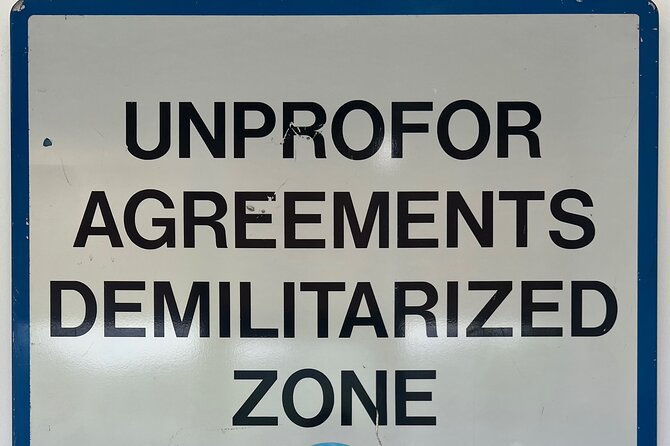
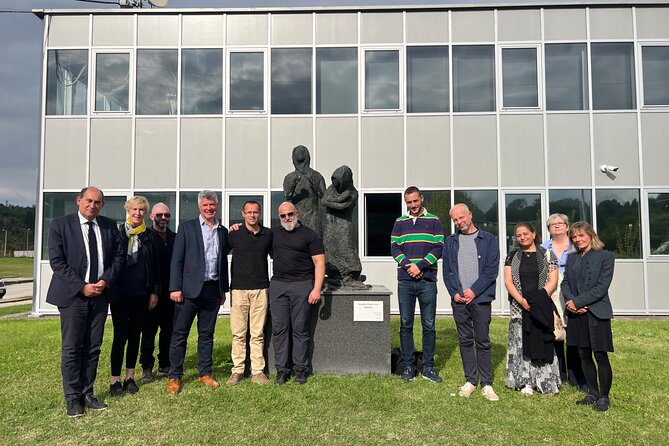
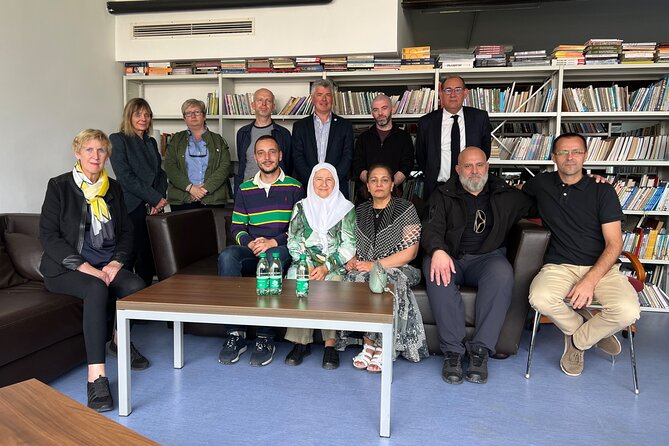
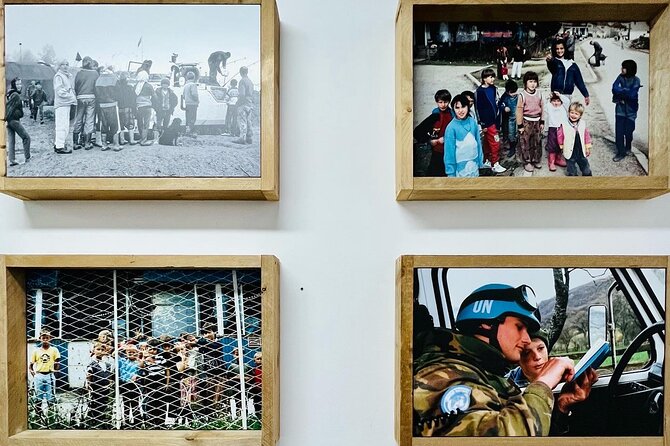
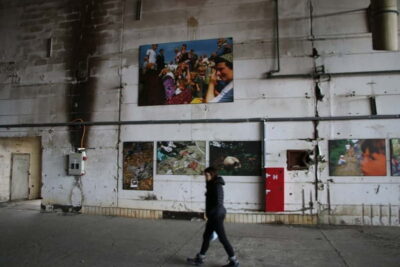
After the museum and documentary, the tour moves to a UN base in Srebrenica. Right after that, you visit the Battery factory. You also talk with witnesses connected to the Srebrenica massacre.
This is the most important shift in the entire experience. Up to this point, you have a guided structure and explanatory materials. Then you reach the stops where history becomes human testimony and lived memory.
If you are deciding whether you can handle this, think of it this way: the witness talk is not an optional side quest. It is part of how the tour conveys meaning. You are being asked to listen, not just to look. You will likely feel the difference between reading facts and hearing what people remember.
The Srebrenica Potočari Memorial and Cemetery: where the focus stays
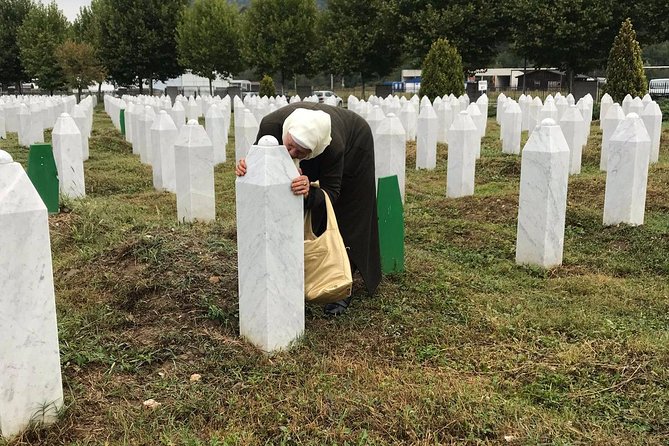
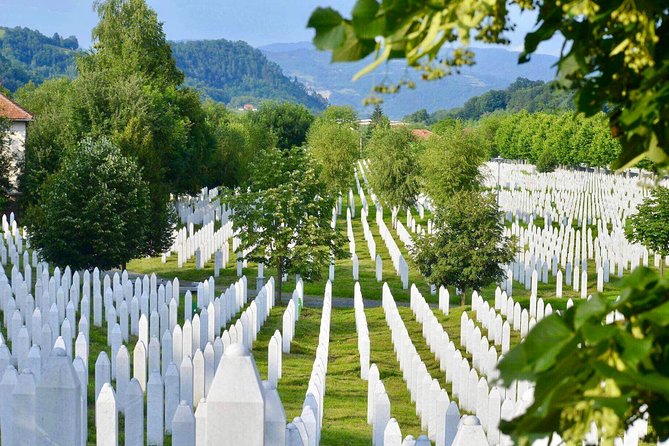
Later in the afternoon, you visit the memorial cemetery complex in Srebrenica, called the Srebrenica Potočari Memorial and Cemetery for the Victims of the 1995 Genocide. The tour centers on honoring the victims, at least 8,372 of them, with many being mainly males, mostly Bosniaks, as described in the memorial information.
This stop is where the day becomes quiet, even if the guide continues explaining. The cemetery setting naturally slows you down. You are not being entertained, you are being asked to witness and reflect.
One practical detail that helps: because the visit is set aside for a longer period on site, you get time to take in what you see. The program also notes that admission is included for this part, which is useful because you do not have to think about extra tickets while you are already focused on a difficult experience.
More around Sarajevo to weigh up
- Sarajevo: Mostar, Konjic, Blagaj Tekke, Pocitelj & Waterfall
★ 4.9 · 1,666 reviews - Fall of Yugoslavia, Sarajevo War Tour with Tunnel of Hope Museum and Frontlines
★ 5.0 · 1,314 reviews - Sarajevo: Grand Walking Tour Through Time and Cultures
★ 4.8 · 1,236 reviews - Sarajevo: Mostar, Konjic, Sufi House, Pocitelj & Kravice Falls
★ 5.0 · 1,179 reviews
Driving through Srebrenica city, and what that brief look can do
The tour also includes a drive through the city of Srebrenica to introduce you to the current situation of its citizens. It is not a long walk or a deep neighborhood tour, but that short drive can change how you process what you learned earlier.
I find that brief urban context matters. The genocide is tied to specific places, but people still live in those places now. Even a short pass through the city can make the story feel less like distant history and more like a reality with consequences that continue.
What the $90.38 price gets you, and whether it is good value
At $90.38 per person for about 9 hours, the value depends on what you want out of the day. This is not just transportation to a single site. The program includes a full sequence of stops: documentary, museum visit, UN base visit, Battery factory visit, witness talk, plus time at the memorial cemetery complex.
The admission ticket is specifically noted as included for the memorial cemetery portion, and the schedule is built around structured learning rather than open-ended touring. Also, the group is capped at a maximum of 5 travelers, which can justify the cost compared with big group options that often feel rushed.
If you are trying to pack your own itinerary in a day, you would still face the challenge of connecting context to locations. Here, the value is in the order and the guidance, not just in the sites themselves.
The guide experience, and why clear explanations matter here
The feedback for this tour highlights very good explanations and a guide who is both competent and pleasant. That combination is not a small detail. In a subject like this, the tone and clarity can make a big difference between confusion and understanding.
Look for the practical effect of good guiding: you should leave with your questions answered, and with a clearer sense of how the different stops fit together. The day moves from documentary and museum to UN base and witness testimony, so your guide’s job is to connect the dots without turning the experience into a lecture-only format.
I also like that the tour is set up with a small maximum group size. A group of 5 means you are less likely to get lost in a crowd and more likely to have time for real questions.
Who this tour fits best, and who should reconsider
This tour is a strong fit if you want a structured genocide study day with time at the memorial and a witness component. It also works well if you are the kind of traveler who likes learning in sequence, documentary first, then sites, then reflection.
You might reconsider if you know you need a lighter emotional day. The visit is focused on the victims and the 1995 genocide. Even with careful guidance, this kind of study tour can be draining.
If you want an outing that is casual and scenic, this is not that. If you want a day that takes history seriously and treats memory with respect, you will find the pacing and stop selection directly aligned to that goal.
Tips to get more out of the day without rushing yourself
You are going to a place where reflection matters, so make small choices that support clarity.
Wear comfortable shoes for walking around memorial spaces. Bring a jacket or layer if weather feels changeable in the morning and late afternoon. Plan to take your time with the memorial grounds, even if you feel pressure to keep up.
Mentally, the best tip is also the simplest. Let the day unfold in order. If you try to jump ahead emotionally, you can miss what the documentary and museum time are trying to set up.
Finally, if you have questions, ask them thoughtfully. With a small group, you have more of a chance to get a real answer rather than a rushed one.
Should you book this Remembering Srebrenica tour?
Book it if you want a guided, structured study day that includes documentary learning, museum context, a UN base and Battery factory stop, witness talk, and time at the Srebrenica Potočari Memorial and Cemetery. The small group size and the emphasis on clear explanations make it easier to understand what you are seeing, not just move past it.
Skip it if you are looking for an easy sightseeing day or if you know you cannot handle emotionally intense content. This tour does not hide from the reality it studies, so you need to choose it with intention.
If you do decide to go, treat the day like a serious educational visit. You will get more out of it, and the experience will feel more respectful to everyone involved.
FAQ
Where does the tour start in Sarajevo?
It starts at Đulagina 2, Sarajevo 71000, Bosnia and Herzegovina.
What time does the tour begin, and how long is it?
The start time is 8:30 am, and the duration is approximately 9 hours.
How much does the tour cost?
The price is $90.38 per person.
How many people are in the group?
The tour has a maximum of 5 travelers.
What happens at the memorial stop?
You visit the Srebrenica Potočari Memorial and Cemetery for the Victims of the 1995 Genocide, and admission is included for this part.
Do you visit the UN base and the Battery factory?
Yes. The schedule includes a visit to the UN base in Srebrenica and a stop at the Battery factory.
Is there a witness component?
Yes. The program includes talking with witnesses of the Srebrenica massacre.
What is the cancellation policy if plans change?
You can cancel up to 24 hours in advance for a full refund. If you cancel less than 24 hours before the experience start time, the amount paid is not refunded.
Newest Sarajevo write-ups
- Sarajevo to Zagreb: One-Way Tour via Jajce, Travnik, Pliva Lake and Watermills★ 5.0 · 3 reviews
- Sarajevo E-Bike City Tour★ 5.0 · 3 reviews
- Mountain Village Lukomir Full Day Adventure Tour★ 5.0 · 3 reviews
- Bosnian Kingdom Capitals: Travnik & Jajce Tour from Sarajevo★ 5.0 · 3 reviews
- Strbacki Buk and Una Waterfalls: Day Trip from Sarajevo★ 5.0 · 3 reviews
- Sarajevo Old Town: Bosnian Coffee, Baklava & Panoramic Views★ 5.0 · 3 reviews
- Sarajevo Snowshoeing Adventure★ 5.0 · 3 reviews
- 4 Hours Tara Rafting Trip★ 5.0 · 3 reviews
Srebrenica Memorial Visits, compared.
Srebrenica Genocide Study Tour with War Veteran
Read our review →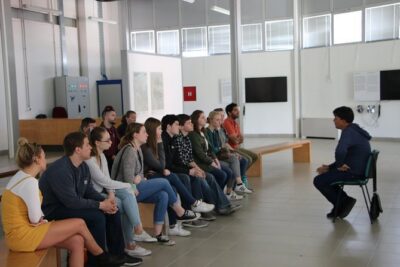
Sarajevo to Srebrenica: Genocide Study Tour with War Veteran
Read our review →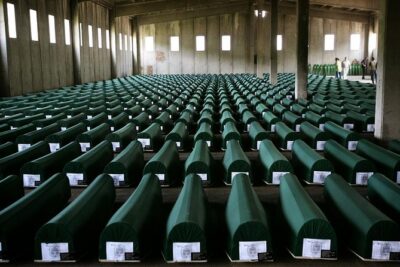
Understanding Srebrenica Genocide Tour + Lunch with Local Family Included
Read our review →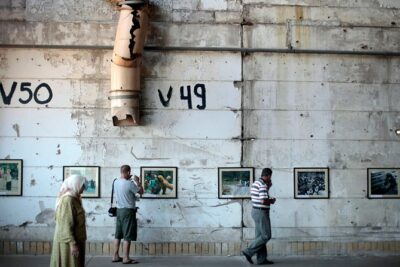
Understanding Srebrenica Genocide – Day tour from Sarajevo
Read our review →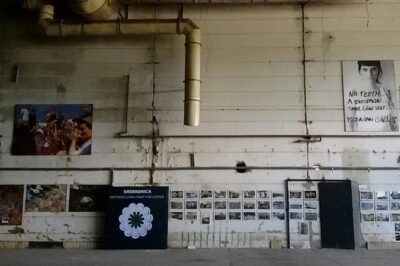
Understanding Srebrenica Genocide + Lunch With Local Family – Private Tour
Read our review →
Understanding Srebrenica Genocide + Lunch with Local Family
Read our review →Browse the lists this tour appears in