
Reviewed · SREBRENICA MEMORIAL VISITS
Remembering Srebrenica Genocide
This is one of the most important trips you can take from Sarajevo, because it brings the Srebrenica genocide story down to human scale, not textbook scale. I love the small group size (up to 15), which keeps questions possible and keeps the day from feeling like a conveyor belt. I also love that you ride in comfort with round-trip transportation and an air-conditioned vehicle. One real consideration: this is emotionally heavy, and it is not a sightseeing kind of “break.”
What makes it hit harder is the way the day is taught. You learn about the genocide through a local lens, and guides such as Emina Koso Sarajcic and Safet are praised for explaining painful events with clarity and care, including background leading up to July 1995. If you’re sensitive to difficult history, I suggest planning extra space in your schedule for the quiet, reflective mood that follows.
Key Highlights You Should Know Before You Go
- Max 15 people keeps the conversation human, not rushed
- Air-conditioned round-trip vehicle helps the long day feel manageable
- Potočari memorial + former UN base turns testimony into something you can actually see and read
- See Srebrenica today and talk through what reconciliation looks like in practice
- English-led experience with a licensed guide to connect the dots without fluff
Why This Day Trip Matters in Sarajevo (And What You’ll Actually Learn)
If Sarajevo is your base, this is the most direct way to understand why the Balkans after Yugoslavia were so fragile, and how quickly normal life can collapse into organized violence. The trip focuses on Srebrenica and what happened in and around it, but it also gives you context for why those events were able to unfold.
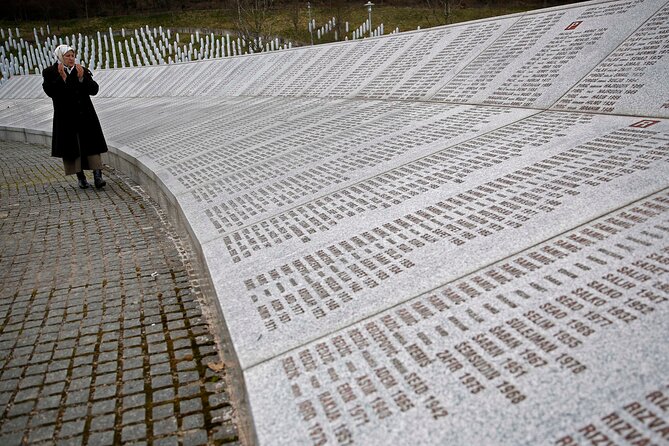
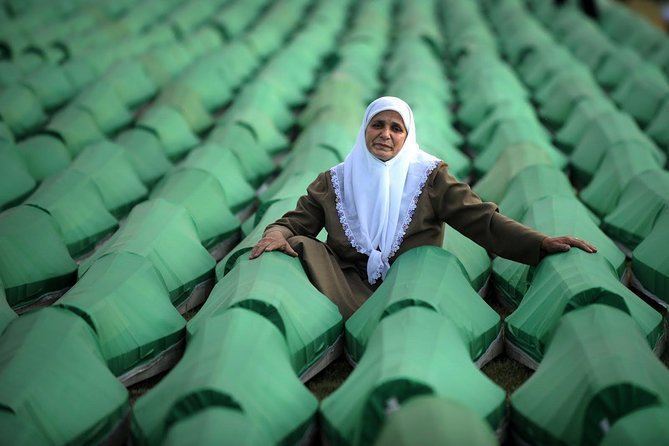
The memorial visit at Potočari is the emotional core. You’re not just touring a monument. You’re stepping into a space where evidence, memory, and testimony are presented in a way that forces you to slow down. That matters because genocide history can become numbers on a page if you let it. Here, the day pushes you back toward real lives and real choices, told by a local guide who knows how to explain without turning tragedy into theater.
Then you go to Srebrenica itself and look at what the town looks like now. That second stop is shorter, but it gives your brain somewhere to land. You’ll hear about the reconciliation process, not as a slogan, but as a difficult, ongoing effort.
This is also a good match for people who want more than surface facts. You can ask questions during the day, and the guidance style is the kind that tries to give you a framework you can hold onto.
Other visits to Srebrenica, told plainly:
- From Sarajevo: Srebrenica Genocide Memorial Study Tour
★ 5.0 · 359 reviews - Sarajevo: Srebrenica Genocide Study Tour with War Veteran
★ 5.0 · 263 reviews - From Sarajevo: Srebrenica Genocide Memorial Study Tour
★ 5.0 · 242 reviews
Meeting at 8:00 am: Small-Group Comfort and Clear Timing
The day starts at 8:00 am at Zelenih beretki 30, Sarajevo 71000. Plan on being there a little early, because the start time is fixed. You’ll travel in an air-conditioned vehicle, and the group stays small, with a maximum of 15 people.
This small-group setup is not just “nice.” It affects the whole experience. When the group is bigger, guides rush through, people stop asking questions, and everyone follows a pace set by the bus schedule. With a cap of 15, you’re more likely to get explanations that fit your questions, and you’re more likely to hear things you might miss if you’re just listening for key words.
The tour is offered in English, and confirmation is provided at booking. Most people can participate, which is helpful if you’re planning this as part of a broader Sarajevo itinerary.
Also, keep in mind the day is about 8 hours 30 minutes total. Stop 1 is 3 hours and Stop 2 is 45 minutes, so you’ll have travel time and some buffer built in. That’s a realistic balance. You won’t be steamrolled through Srebrenica at high speed, but it also won’t drag endlessly.
Stop 1, Potočari Memorial: The Former UN Base and Testimony You Can Read
Your first major stop is the Srebrenica Genocide Memorial in Potočari, where you’ll visit the memorial complex and the authentic UN base, which today functions as a Gallery of genocide. The visit time is 3 hours, and it’s free entry.
This is where the tour becomes more than history. A memorial like this works best when you give it full attention. You’ll want to take breaks as you need them, because it’s the kind of place where your emotions can run ahead of your ability to process details.
What I like about this part is that it centers testimony and the scars it left on survivors’ hearts and minds. That framing changes your perspective. You stop thinking of events as something that happened “to a place” and start understanding what it did to people.
There’s usually a lot to absorb visually and through written materials. If you’re the type who likes taking notes, bring a notebook. If you’re the type who gets overwhelmed easily, don’t force yourself to “collect facts.” Let your questions guide what you focus on. The guide’s job is to help you hold the story in a humane way.
A practical tip: wear comfortable shoes. This is not about climbing mountains, but you’ll spend time standing and walking in a reflective setting.
Srebrenica Town Today: Reconciliation in Real Life, Not a Slogan
After the memorial, you head to Srebrenica and spend about 45 minutes there. Admission is again free, so you’re not paying extra just to walk around and see what remains and what has been rebuilt.
This short stop still matters because it connects the memorial to geography and everyday reality. You get to see how Srebrenica looks today and learn more about the reconciliation process.
Reconciliation is a tricky word. It can sound abstract, like it belongs to politicians and press conferences. On this part of the trip, you’ll see it treated as something slower and harder, tied to memory, justice, and the daily work of living with the past.
Even though the time is shorter, you can use it to ask practical questions. For example, you might wonder how communities rebuild trust, or what it means when grief is not only personal but collective. A local guide is the right kind of source for those answers, because they can explain what reconciliation looks like on the ground rather than in theory.
If you’re hoping for a relaxed “photo walk,” manage expectations. This is a reflective visit, and it should feel that way.
More around Sarajevo to weigh up
- Sarajevo: Mostar, Konjic, Blagaj Tekke, Pocitelj & Waterfall
★ 4.9 · 1,666 reviews - Fall of Yugoslavia, Sarajevo War Tour with Tunnel of Hope Museum and Frontlines
★ 5.0 · 1,314 reviews - Sarajevo: Grand Walking Tour Through Time and Cultures
★ 4.8 · 1,236 reviews - Sarajevo: Mostar, Konjic, Sufi House, Pocitelj & Kravice Falls
★ 5.0 · 1,179 reviews
The Value in the Price: What You Pay for, What You Don’t
The price is $78.27 per person for roughly 8 hours 30 minutes, and that’s a fair structure if what you want is a guided, organized trip to a sensitive site.
Here’s what your money covers:
- a licensed guide
- air-conditioned vehicle transportation
- the core sites are free for admission (including the memorial complex and the Srebrenica stop)
What you should budget separately:
- snacks
- lunch
So I’d plan like this is a full-day outing. Bring your own water and a simple snack if you don’t like relying on convenience food. Since lunch isn’t included, you’ll want a strategy for timing, especially if you’re traveling right after the tour. If you’re sensitive to emotional days, a steady blood-sugar level can help you stay present.
Also, because the sites and tone are serious, the guide matters a lot. This isn’t a “sit back and watch the scenery” kind of day. You’re paying for context, for translation of difficult history, and for a local voice that can respond to your questions without turning the material into a performance.
Getting the Most From a Heavy-Hitting Day (Without Burning Out)
This tour asks something of you. It’s emotionally challenging, and the best version of the day is the one where you respect your own limits.
I suggest you do a quick prep check the night before:
- Decide how many questions you want to ask.
- Choose comfy clothing and shoes.
- Consider whether you want to bring something grounding, like a small note app for reflection rather than frantic note taking.
During the drive and between stops, listen for the lead-in details. The stories and background that come before you arrive are part of what makes the memorial visit land with clarity. Guides such as Emina Koso Sarajcic are praised for explaining complicated events in a simple and appropriate way, which is exactly what you want when your brain is already carrying heavy material.
You may also have a guide like Safet, who is noted for making the day feel smooth and meaningful, including thoughtful pacing and attention to the group’s needs. That kind of leadership matters, because the day can turn from “learning” to “surviving your own feelings” very fast.
And please, don’t treat this like a checklist. If you rush, you lose what the memorial is trying to communicate. If you slow down, you’ll come away with understanding that lasts.
Should You Book This Srebrenica Genocide Tour?
Yes, I think you should book it if you want a small-group, English-language way to understand Srebrenica with a licensed local guide. It’s a practical day from Sarajevo, with air-conditioned transport and free entry to the key sites, and it’s structured so you get both the memorial testimony and a look at Srebrenica today.
Don’t book it if you want a casual, light sightseeing day. This is serious history in a serious place. But if you’re willing to take the emotional weight seriously, you’ll leave with a clearer grasp of what happened and why remembrance matters.
One more thing: if you book, commit to the full day. Skipping the memorial part defeats the purpose. The short Srebrenica town stop only works because you’ve already visited Potočari.
FAQ
What time does the tour start, and where do I meet?
The tour starts at 8:00 am. You meet at Zelenih beretki 30, Sarajevo 71000, Bosnia and Herzegovina.
How long is the tour?
The duration is about 8 hours 30 minutes.
Is the tour offered in English?
Yes, the tour is offered in English.
How big is the group?
The group size is capped at a maximum of 15 travelers.
What admissions do I need to pay?
Admission tickets are listed as free for both the Srebrenica Genocide Memorial (Potočari) and the Srebrenica stop.
What is included in the price?
Included: a licensed guide and round-trip transportation in an air-conditioned vehicle.
Are snacks or lunch provided?
No. Snacks and lunch are not included.
Newest Sarajevo write-ups
- Sarajevo to Zagreb: One-Way Tour via Jajce, Travnik, Pliva Lake and Watermills★ 5.0 · 3 reviews
- Mountain Village Lukomir Full Day Adventure Tour★ 5.0 · 3 reviews
- Sarajevo E-Bike City Tour★ 5.0 · 3 reviews
- Bosnian Kingdom Capitals: Travnik & Jajce Tour from Sarajevo★ 5.0 · 3 reviews
- Strbacki Buk and Una Waterfalls: Day Trip from Sarajevo★ 5.0 · 3 reviews
- Sarajevo Snowshoeing Adventure★ 5.0 · 3 reviews
- Sarajevo Old Town: Bosnian Coffee, Baklava & Panoramic Views★ 5.0 · 3 reviews
- 4 Hours Tara Rafting Trip★ 5.0 · 3 reviews
Srebrenica Memorial Visits, compared.
Srebrenica Genocide Study Tour with War Veteran
Read our review →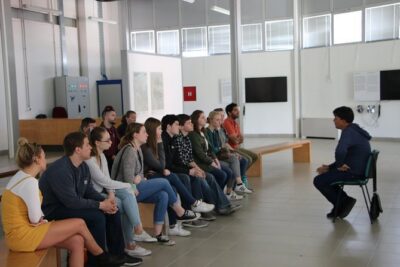
Sarajevo to Srebrenica: Genocide Study Tour with War Veteran
Read our review →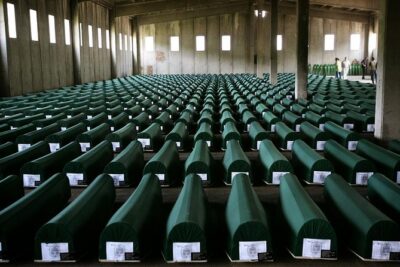
Understanding Srebrenica Genocide Tour + Lunch with Local Family Included
Read our review →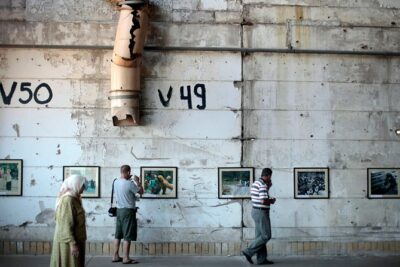
Understanding Srebrenica Genocide – Day tour from Sarajevo
Read our review →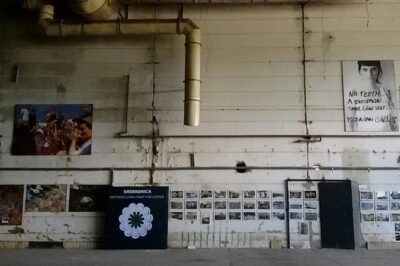
Understanding Srebrenica Genocide + Lunch With Local Family – Private Tour
Read our review →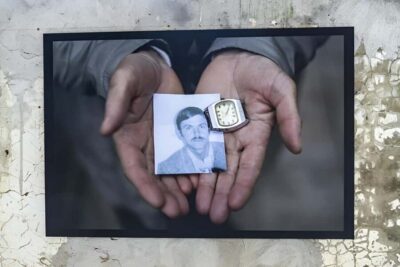
Understanding Srebrenica Genocide + Lunch with Local Family
Read our review →Browse the lists this tour appears in