
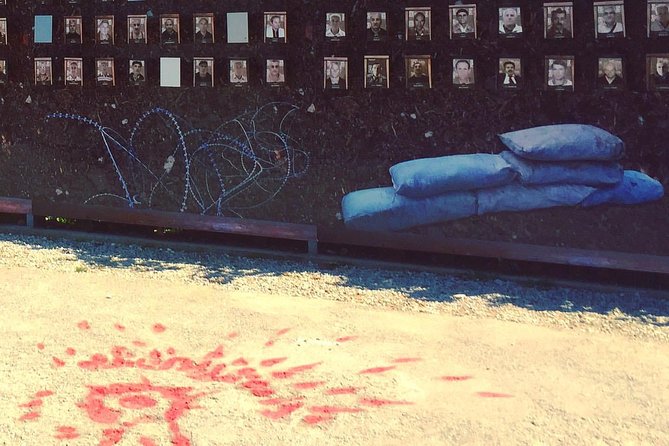
Reviewed · SIEGE OF SARAJEVO TOURS
Sarajevo Under Siege: A War History Tour
Sarajevo Under Siege is interesting because it uses the city itself as the lesson plan. You start with a big panoramic overlook, then you move through streets and sites where survival was daily business. I love the way the route mixes iconic landmarks with the human stories tied to specific spots, and I especially like the personal, question-friendly guiding style I’ve seen from Suvad and Evan.
I also think there’s one consideration. This is a war-history tour, and some parts feel heavy, including drives past places tied to shelling and sniper fire. If you want a light sightseeing day only, this may be too direct.
Key highlights at a glance
- Bijela Tabija (White Fortress) viewpoints to frame the siege story with city geography
- Personal war testimony near Zetra Olympic Hall, linked to a guide’s own family memories
- Sniper Alley drive-by to understand how routine movement became dangerous
- Tunnel of Salvation walk-through, with authentic artifacts and a short documentary
- Lukavica front-line context, including how post-war division still shows up in public spaces
- Vijećnica (Sarajevo City Hall) visit, from Austro-Hungarian grandeur to destruction by fire
Starting at Vijećnica, then letting the city explain the siege
You meet at Vijećnica, Sarajevo City Hall. The timing is set for a 1:30 pm start, and pickup can begin about 15 minutes before the tour begins if you’re staying in the city center. It’s a private setup, so you’re not sharing the day with strangers who don’t want to talk about the past.
I like how the tour feels structured without feeling mechanical. You get drives between sites, then you slow down at the most meaningful stops like Bijela Tabija, the Tunnel of Salvation, and Vijećnica. That balance matters because Sarajevo’s war story is hard to process if you only rush through.
Also, the logistics are easy. You ride in an air-conditioned vehicle, you get WiFi on board, and you use a mobile ticket. Even if your day is busy, this format helps you stay focused on the sites instead of wrangling transport.
Other accounts of the siege years:
- Fall of Yugoslavia, Sarajevo War Tour with Tunnel of Hope Museum and Frontlines
★ 5.0 · 1,314 reviews - Sarajevo: Tunnel Museum Yugoslavia War Tour with War Veteran
★ 5.0 · 1,111 reviews - Tunnel Museum: Bosnian & Yugoslav Wars Tour with War Veteran
★ 5.0 · 551 reviews
Bijela Tabija viewpoints: the 16th-century start that makes the siege make sense
The day kicks off at Bijela Tabija, the White Fortress. It’s a scenic viewpoint where you can see the whole city spread out below. That matters because siege history is not just dates and facts, it’s distance, angles, and who could see whom.
This stop is also where the guide typically connects time periods. From what you’ll hear, the story isn’t limited to the 1990s. The viewpoint becomes a way to talk about Sarajevo’s strategic position from Ottoman times through the Siege of Sarajevo.
You’ll spend about 30 minutes here, with admission marked as free for the stop. The practical takeaway: use this moment to get your bearings fast. Once you’ve seen the city from above, the later street and neighborhood stories land with more clarity.
Zetra Olympic Hall area: a war story tied to one family’s geography
Next you head toward the Zetra Olympic Hall area. This is not treated like a generic memorial visit. It’s described as a neighborhood where the guide lived during the war, in close proximity to the former maternity hospital that took heavy bombing.
From there, the tone turns personal. You’ll hear a childhood-under-siege account, framed through daily survival and the reality of constant shelling around home. You also visit specific places connected to the guide’s father, including where he was buried and the street where he grew up and played during the war.
This part is brief at about 15 minutes, so the goal is focus, not sightseeing. If you like to ask questions, this is often where your guide can give the most context, because the story is anchored to named streets and exact memories.
Sniper Alley from the road: when a city street becomes a survival problem
Between stops, you drive along Sniper Alley, one of Sarajevo’s most infamous wartime streets. This is a main avenue that faced constant sniper fire. The tour doesn’t ask you to imagine it vaguely. The guide explains how residents had to plan basic movement like crossing the street to fetch food, water, or reach safety.
You’ll see today’s modern buildings, and that contrast is the point. It’s easy to think of war history as something distant, but here the lesson is that danger can hide in plain sight even in an everyday-looking city.
Because this is a drive segment, you’re not doing long walking. Still, it’s worth mentally preparing for the emotional weight. This is the type of place where your guide’s pacing and phrasing can matter, and the best moments here come when you let the story land.
More around Sarajevo to weigh up
- East Bosnia & West Serbia UNESCO heritage day tour from Sarajevo
★ 5.0 · 55 reviews - Sarajevo Full Day Tour: History, Culture, Nature, War & Olympics
★ 5.0 · 27 reviews - Sarajevo genuine walking tour: Steps through history
★ 5.0 · 22 reviews - SARAJEVO STREET ART TOUR (art, history & mystery) – sARTajevo!
★ 5.0 · 18 reviews
Tunnel of Salvation: walking the lifeline that ran under the runway
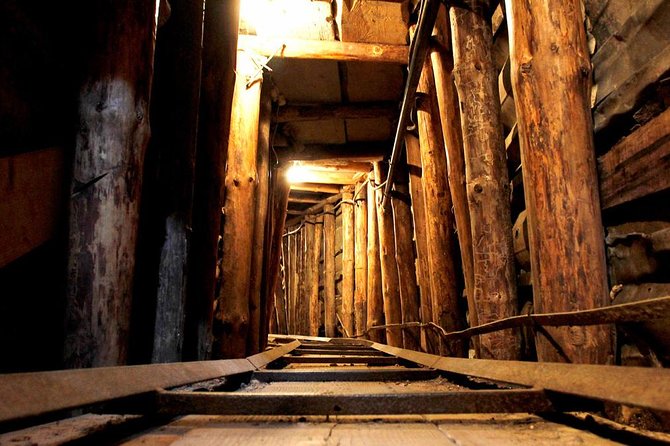
The most time goes to the Tunnel of Salvation. It’s one of the Bosnian War’s most important sites, and the tour gives it the room it deserves. The tunnel was dug secretly beneath the airport runway in 1993, and it connected the besieged city of Sarajevo with the outside world.
What you’ll do here is practical and visual. You walk through a portion of the original tunnel, then you see authentic wartime artifacts. You also watch a short documentary about the Siege. The whole point is to help you understand the tunnel as a lifeline, not just a curiosity.
The tunnel segment lasts about 1 hour 20 minutes, with admission marked as free for the stop. Here’s the personal-consideration angle: it’s a narrow underground passage. If you dislike tight spaces, go in knowing you may feel a bit constrained. If you can handle it, you’ll likely feel the structure of survival in your body more than in your mind.
This is also the stop that tends to get the strongest endorsements, including the simple judgment that it’s worth seeing if you want to understand what happened during the war. If you only remember one part of the route, make it this one.
Lukavica and Dayton-era divisions: how memory stays political
After the tunnel, you drive through Lukavica. This area was once part of the front line during the Siege of Sarajevo, and today it belongs to Republika Srpska. In other words, you’re not just learning wartime events, you’re also learning how borders and governance changed after the fighting ended.
Your guide points out former front lines and explains how the Dayton Peace Agreement reshaped Bosnia and Herzegovina, splitting the country into the Federation of BiH and Republika Srpska. You’ll also see graffiti and murals that glorify wartime figures such as Ratko Mladić.
That last detail is important. It’s easy to treat reconciliation as a slogan. Here, you’re seeing how public art can reflect unresolved views of the past. This section encourages reflection on identity and the long, uneven road toward peace.
I like that the tour doesn’t try to force one interpretation. It sets up the reality that memory can remain contested, then leaves you with time to think about what that means when you’re walking through a present-day city.
Vijećnica (Sarajevo City Hall): from Austro-Hungarian pride to burned books
The tour ends with Sarajevo City Hall, known as Vijećnica. It was originally built in 1896 during the Austro-Hungarian period, and at one time it was the seat of the National Library. In August 1992, it was destroyed when Serbian forces shelled it, and the fire burned almost two million books and manuscripts.
Now the building is beautifully restored. The guide frames Vijećnica as a symbol of both destruction and rebirth, tied directly to Sarajevo’s cultural identity. When you stand here after the tunnel and front-line context, the symbolism feels heavier. It’s not just about loss of a building. It’s loss of knowledge, culture, and everyday intellectual life.
This final stop also gives the tour a grounded ending. You return back to the meeting point at the end of the experience, so the day feels like a closed loop: city to siege to survival to remembrance, back to the starting point.
How the 3-hour private format works for your schedule
This is about 3 hours total, approximate. The pacing is built around the two big emotional anchors, Bijela Tabija and the Tunnel of Salvation, while other stops are shorter and driven or focused. That’s a smart way to keep the day from dragging, especially when the topic is intense.
It’s also a private tour, which matters for sensitive topics. You can ask questions without worrying about a group that wants to move on quickly. Based on what I’ve seen from guides like Suvad and Evan, the best moments come when the conversation turns personal and specific.
Pickup can help if you don’t want to manage the whole route by yourself. If you’re staying within Sarajevo city center, you can request pickup from your hotel or location, and the guide meets you there. If you’re outside the center, additional arrangements are possible if you ask in advance.
One more detail I appreciate: this tour is offered in English. Confirmation happens at booking, and you get a mobile ticket, so you can keep your day simple.
Price and value: what $30.10 covers, and what to budget for entrances
The listed price is $30.10 per person, and it’s a fair deal when you look at what you get. You’re paying for a guided, structured route plus air-conditioned private transportation and onboard WiFi. You’re also getting the time allocations that matter, especially the Tunnel of Salvation stop.
The part to double-check is entrance fees. Entrance fees for the war tour sites are listed as €10.25 for adults and €5.25 for students, and they are not included in the base price. So your real cost depends on how you handle those site fees, but you’re at least not stuck paying additional local transport costs.
Value here isn’t about flashy extras. It’s about access to the stories and the guide’s ability to link each place to the Siege of Sarajevo in a way that helps you understand the whole arc.
Should you book this war history tour in Sarajevo?
Book it if you want more than monuments and photos. You’re coming for the Tunnel of Salvation, the city-wide viewpoint framing at Bijela Tabija, and the guided connections that tie Sniper Alley, front-line neighborhoods, and Vijećnica into one coherent story. The best versions of this tour are the ones led with sensitivity, and the high ratings you’ll see for guides like Suvad and Evan match that pattern.
Skip it if you’re searching for a casual, light walking day. This route touches real wartime experiences, including shelling and sniper fire, and the tone can get heavy. Also, if you’re sensitive to narrow underground spaces, plan for that at the tunnel.
If you do book, I’d suggest you come with one mindset: ask questions, then take your time at the stops that feel hardest to picture. This tour works best when you let the places teach you, step by step.
FAQ
Where does the tour start and where does it end?
The tour starts at Vijećnica (Sarajevo City Hall), at Hafiza Ibrahima Trebinjca 10 in Sarajevo, and it ends back at the same meeting point.
What time does the tour start?
The start time is 1:30 pm.
How long is the tour?
The duration is about 3 hours.
Is pickup offered?
Yes. Pickup can be arranged from any hotel or location within Sarajevo city center. Pickup begins about 15 minutes before the tour starts.
Is this a private tour?
Yes. It’s private, meaning only your group participates.
Is WiFi provided during the tour?
Yes. WiFi is available on board the vehicle.
What language is the tour offered in?
The tour is offered in English.
Are entrance fees included?
No. Entrance fees are listed separately as €10.25 per person for adults and €5.25 per person for students.
Is this tour dependent on weather?
Yes. It requires good weather, and if it’s canceled due to poor weather, you’ll be offered a different date or a full refund.
What is the cancellation policy?
You can cancel for free up to 24 hours in advance for a full refund. If you cancel less than 24 hours before the start time, the amount paid is not refunded.
Newest Sarajevo write-ups
- Sarajevo to Zagreb: One-Way Tour via Jajce, Travnik, Pliva Lake and Watermills★ 5.0 · 3 reviews
- Sarajevo E-Bike City Tour★ 5.0 · 3 reviews
- Mountain Village Lukomir Full Day Adventure Tour★ 5.0 · 3 reviews
- Bosnian Kingdom Capitals: Travnik & Jajce Tour from Sarajevo★ 5.0 · 3 reviews
- Strbacki Buk and Una Waterfalls: Day Trip from Sarajevo★ 5.0 · 3 reviews
- Sarajevo Old Town: Bosnian Coffee, Baklava & Panoramic Views★ 5.0 · 3 reviews
- Sarajevo Snowshoeing Adventure★ 5.0 · 3 reviews
- 4 Hours Tara Rafting Trip★ 5.0 · 3 reviews
Siege of Sarajevo Tours, compared.
Fall of Yugoslavia, Sarajevo War Tour with Tunnel of Hope Museum and Frontlines
Read our review →
Tunnel Museum Yugoslavia War Tour with War Veteran
Read our review →
Tunnel Museum: Bosnian & Yugoslav Wars Tour with War Veteran
Read our review →
Sarajevo War Tour: A Veteran’s Story of the Siege (fees included)
Read our review →
Srebrenica Genocide Study Tour with War Veteran
Read our review →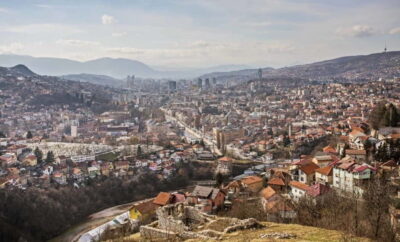
Break-up of Yugoslavia & The War in Mostar: Life Under Siege
Read our review →Browse the lists this tour appears in