
Few places hit as fast as Sarajevo under siege, and this 3-hour route keeps the focus on real people living through impossible days, not just dates. I love the way Yellow Fortress gives you panoramic scale, then the tour brings you down into the city where danger felt close. I also love the Tunnel of Hope section, because you walk it and get the practical, human story behind the city’s secret lifeline. One possible drawback, the subject matter is heavy, and a couple stops are intentionally somber.
If you want a first-timer-friendly way to understand what happened, and why Sarajevo’s survival story still shapes the city today, this is a strong use of time. It starts from the Old Town area in comfortable, air-conditioned transport, then focuses on the places that explain daily risk, international attention, and long recovery. It is not a quick history lecture either, you get time to ask questions and make the timeline click with local guide Adis Hamzic.
Key things I’d plan around
- Yellow Fortress viewpoints: see how Sarajevo’s geography helped create the siege reality
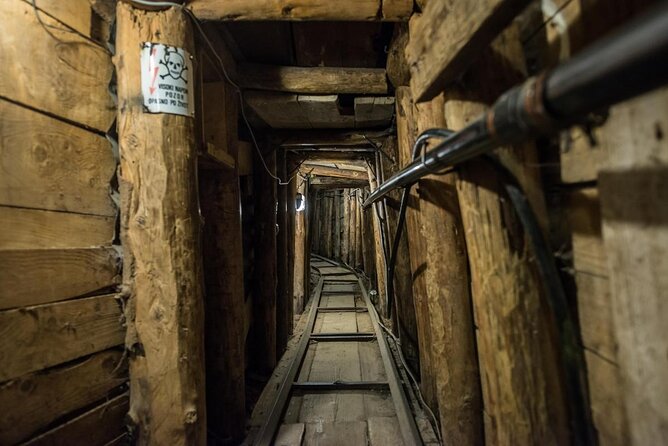
- Tunnel of Hope visit: walk a preserved section of the underground lifeline
- Markale Market: understand why civilian attacks mattered globally
- Sniper Alley: learn how normal street life became a risk calculation
- Memorial stops: see how Sarajevo honors children and fallen defenders
- Adis Hamzic’s storytelling: the kind of guide who can answer follow-up questions
From Old Town to Yellow Fortress, you get the city’s “why”
The tour begins at Mula Mustafe Bašeskije 65, right by the main square, in front of the office next to Pekara Edin. Look for the Bosnian flag, that is your quick confirmation you are in the right place. You then get in a comfortable, air-conditioned vehicle and head out, so you are not spending the first part of the trip sweating and lost.
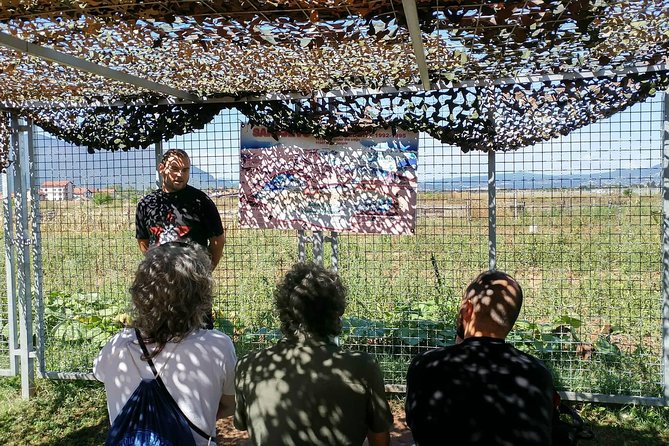
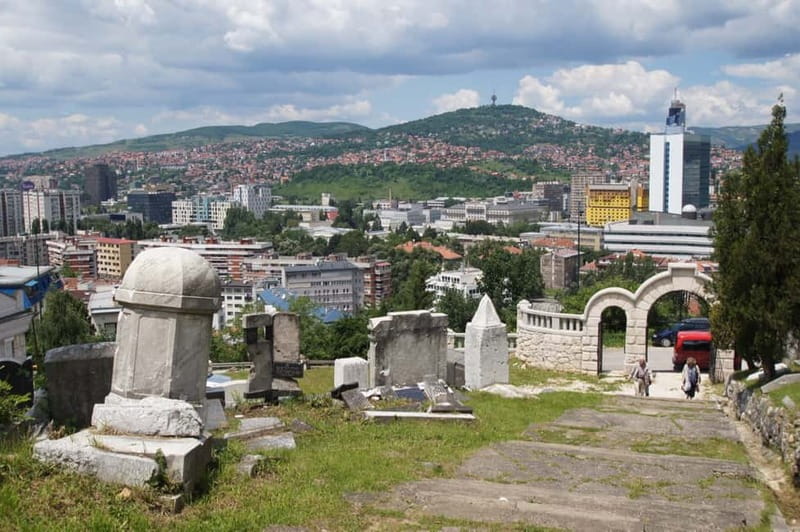
The first major stop is at the Yellow Fortress, also called Yellow Bastion. This is your moment to get bearings fast. From up there, Sarajevo spreads out below you, and your guide explains how the city became trapped. You do not just stare at a view, you start connecting geography to everyday survival.
Then the tone shifts. You descend back toward the city and begin moving through locations tied to key phases of the siege. The pacing matters here. You get the “big picture” first, then you start collecting the details that make that big picture feel real.
Other accounts of the siege years:
- Fall of Yugoslavia, Sarajevo War Tour with Tunnel of Hope Museum and Frontlines
★ 5.0 · 1,314 reviews - Sarajevo: Tunnel Museum Yugoslavia War Tour with War Veteran
★ 5.0 · 1,111 reviews - Tunnel Museum: Bosnian & Yugoslav Wars Tour with War Veteran
★ 5.0 · 551 reviews
Markale Market and the Olympic Stadium, pride meets tragedy
A lot of your route is drive-by, but it is not random. The city market hall area and the Eternal Flame pass by early, giving you context for what Sarajevo symbolically represents beyond the war years. This helps, because you are not only learning about collapse, you are also learning what the city was trying to protect.
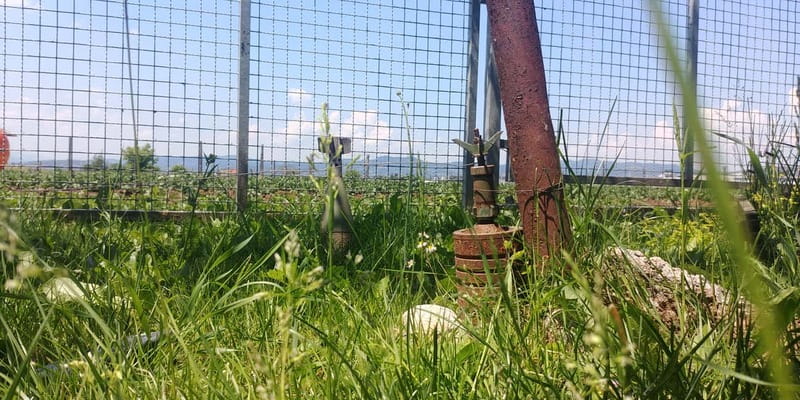
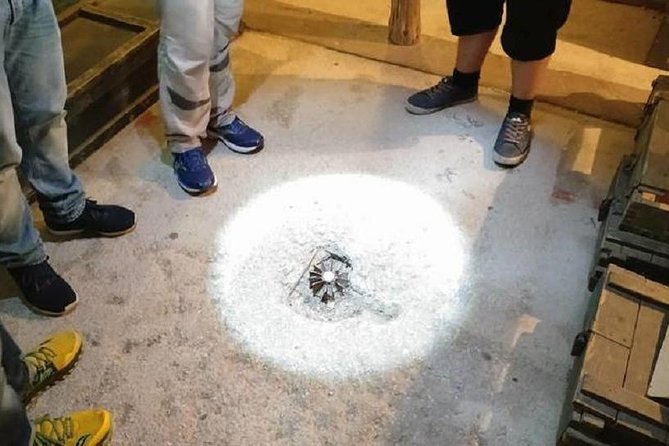
Next comes Markale Market, one of the most emotionally difficult stops. This is where two tragic massacres happened, with mortar shells taking the lives of innocent civilians. Your guide connects those events to how the world reacted and how international attention moved. You will feel the weight of it because the story is told in human terms, not clinical ones.
Right after that, you pass the Olympic Stadium, a reminder of Sarajevo’s pride during the 1984 Winter Olympics. Eight years later, part of the stadium had to be turned into a cemetery as burial grounds filled up during the siege. That contrast is the point. The city tried to live as a city with big dreams, then war reduced everyday spaces to survival needs and losses.
You also pass the Memorial to Murdered Children, dedicated to 1,601 children killed during the siege. It is one of those stops that makes the war feel personal in the most heartbreaking way. If you are the kind of person who reads every plaque slowly, plan on taking your time here, even if the vehicle keeps moving.
Sniper Alley, when crossing the street becomes the event
After the memorials and cemetery-related stops, you drive through Sniper Alley, once one of the most dangerous streets in Sarajevo. Your guide explains how snipers positioned in the hills fired at civilians. The key is that the danger was not hypothetical. It changed how people moved, what they dared to do, and how ordinary errands could turn into life-or-death moments.
This is where the tour does something smart. It does not only show where violence happened. It explains how it shaped behavior, like crossing a street becoming a decision with consequences. You start seeing the siege as a system, not just a series of explosions.
And because Sniper Alley is part of the route rather than a long walking stop, you get a break from the emotional intensity without leaving the story behind. You are still in the middle of it, just with a bit of breathing space.
Tunnel of Hope Museum, the most practical war story on the itinerary
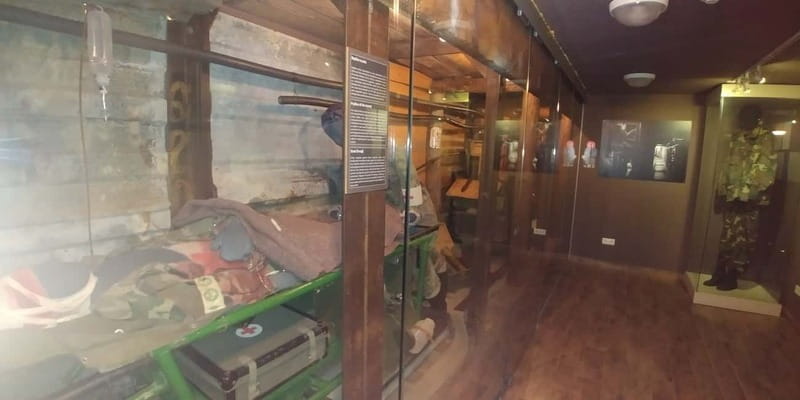
The most important stop is the Tunnel of Hope Museum. This was Sarajevo’s only connection to the outside world during the siege, built in secret so supplies could reach the city. You take a short photo stop, then you walk through a preserved section of the tunnel with a guided explanation.
What makes this stop special is that it turns survival into logistics. You hear about how people managed to move food, medicine, and other supplies through a passage under constant pressure. It is not just dramatic history, it is also effort, planning, and risk management, carried out by ordinary people doing extraordinary work.
One practical note for your budget. The tunnel entrance fee is not included in the tour price. Plan on an extra €10 paid on-site in local currency. The tour does include skip-the-line access through a separate entrance, so you should not lose precious time after arriving.
You also get a guided portion that lasts about an hour at the tunnel area. That is a good length. Long enough to absorb what you are seeing, not so long that your brain is overloaded before you understand the overall route.
When you come back up, the city looks different. Light feels louder. Streets feel more fragile. It is hard to pretend you did not learn anything, because the tunnel story makes every nearby detail feel connected.
More around Sarajevo to weigh up
- Sarajevo: Mostar, Konjic, Blagaj Tekke, Pocitelj & Waterfall
★ 4.9 · 1,666 reviews - Sarajevo: Grand Walking Tour Through Time and Cultures
★ 4.8 · 1,236 reviews - Sarajevo: Mostar, Konjic, Sufi House, Pocitelj & Kravice Falls
★ 5.0 · 1,179 reviews - ROSES OF SARAJEVO (Official WAR + CITY tour)- Story of a Survivor
★ 5.0 · 770 reviews
Cemeteries and memorials, where names and places stay with you
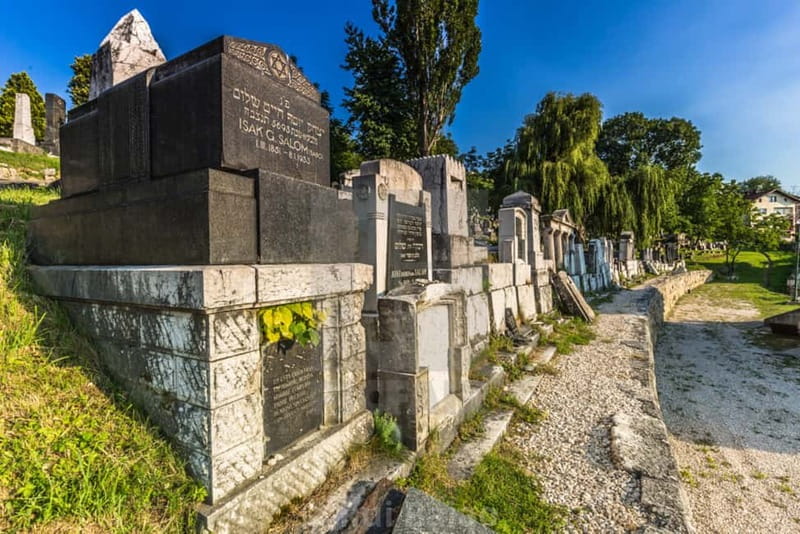
Between drives and short passes, you will see a cemetery area where Sarajevo’s defenders rest, plus a brief stop at the Sarajevo Jewish Cemetery. These are quick segments, but the way your guide frames them helps. You are not just looking at rows of markers. You are learning why communities memorialize, and how Sarajevo refuses to let the siege become only a political talking point.
You also pass key war-era remembrance sites like the Memorial to Murdered Children. These stops are part of the tour’s moral focus. The tour keeps reminding you that survival was not abstract, it had faces, ages, and families.
If you are traveling with kids, this tour can be emotionally challenging. Nothing is graphic, but the losses are real and specific. If your group prefers lighter subject matter, you might want to pick a different kind of Sarajevo history outing.
Understanding the siege story, from Yugoslavia to modern Sarajevo
As the tour moves between locations, Adis Hamzic ties things together. You will hear about the creation and collapse of Yugoslavia and the political tensions that led to war. Then you connect those big-picture shifts to why Sarajevo became trapped.
Later, on the return toward the Old Town, the discussion shifts to what happened after the war. You talk about post-war recovery, political divisions, and what Sarajevo looks like now. This part matters because a siege tour can otherwise end at the edge of tragedy. Here, you get at least a first layer of how the city carries those memories while living forward.
Near the end, you also get a final panoramic view of the city. It is a visual reset, but it does not erase the weight. Instead, it helps you compare past and present in a way that makes sense.
Value check: $41 for 3 hours, plus the tunnel fee
At $41 per person for a 3-hour tour, you are paying for three things at once: guided storytelling, transportation, and key location access. The vehicle is comfortable and air-conditioned, which is a real quality-of-life factor in a city where you can spend time just getting from one site to the next.
Also, this is not an all-day tour. If you are short on time, this gives you a focused route without demanding a full day of travel logistics.
Budget tip: the Tunnel of Hope Museum entrance fee (€10) is paid separately on-site, and it requires local currency. So your effective cost is a little higher than $41, depending on how exchange rates shake out. Still, the guided tunnel visit and the way the guide links it to the rest of the siege story usually makes that extra expense feel worth it.
One more small value point: you get skip-the-line access through a separate entrance. That kind of setup can save time and stress, especially at busy museum moments.
Practical tips before you go
This tour runs in all weather conditions, so dress for rain or wind as needed. Wear comfortable shoes, because there is some walking at certain stops, including the tunnel portion. Bring water or a snack if you need one, food and drinks are not included.
One rule to know: audio recording is not allowed during the tour. If you were planning to record a voice memo, leave that idea behind and focus on taking normal notes or photos where permitted.
Meeting details are straightforward, but still, I’d build in a few extra minutes. Start time matters because the route hits multiple places, and you want to be settled in the van without rushing.
Who should book this tour
Book this if you want a clear, organized way to understand the siege of Sarajevo, with real site visits that connect geography to human experience. It also suits you if you like asking questions, because Adis Hamzic is the kind of guide who can answer follow-ups and keep the story understandable without oversimplifying it.
Skip it if your group prefers light entertainment, or if you want a purely outdoor photo tour. This is not that. This is a survival story told at specific, intentional places.
Should you book the Inside the Siege tour?
Yes, I think you should book it if Sarajevo’s siege is part of what you came to learn. The combination is strong: Yellow Fortress for context, Sniper Alley for how danger shaped daily movement, and the Tunnel of Hope for the practical lifeline story you can walk through. Add in memorial stops for children and defenders, and you get a complete emotional arc, without the tour feeling like it is only there to shock.
If you are sensitive to intense topics, go in with your expectations set. Bring water, wear good shoes, and let the guide’s pacing do its job. This is the kind of tour that leaves you quieter than when you started, and that is often the point.
FAQ
How long is the tour?
The tour lasts 3 hours.
What is the price per person?
The price is $41 per person.
Where is the meeting point?
The meeting point is at Mula Mustafe Bašeskije 65, right in front of the main square next to the bakery called Pekara Edin. There will be a Bosnian flag as a sign.
Which sites does the tour include?
You visit the Yellow Fortress for a panoramic view and visit the Tunnel of Hope. The tour also includes drive-by passes of places like Markale Market, the Olympic Stadium, the Memorial to Murdered Children, Eternal Flame, City Market Hall, and the Sarajevo Jewish Cemetery, plus driving through Sniper Alley.
Is the Tunnel of Hope entrance fee included?
No. The Tunnel of Hope Museum entrance fee is €10 and is paid separately on-site in local currency.
Is the tour guided in English?
Yes. It is a live tour guide in English.
Is there walking involved?
Yes, some walking is required at certain stops, including inside the Tunnel of Hope area. Comfortable shoes are recommended.
What is the weather like for this tour?
The tour runs in all weather conditions, so bring appropriate clothing.
Are audio recordings allowed?
No. Audio recording is not allowed.
How many people are needed for the tour to operate?
A minimum of 2 participants is required for the group tour to operate.
Newest Sarajevo write-ups
- Sarajevo to Zagreb: One-Way Tour via Jajce, Travnik, Pliva Lake and Watermills★ 5.0 · 3 reviews
- Mountain Village Lukomir Full Day Adventure Tour★ 5.0 · 3 reviews
- Sarajevo E-Bike City Tour★ 5.0 · 3 reviews
- Bosnian Kingdom Capitals: Travnik & Jajce Tour from Sarajevo★ 5.0 · 3 reviews
- Strbacki Buk and Una Waterfalls: Day Trip from Sarajevo★ 5.0 · 3 reviews
- Sarajevo Snowshoeing Adventure★ 5.0 · 3 reviews
- Sarajevo Old Town: Bosnian Coffee, Baklava & Panoramic Views★ 5.0 · 3 reviews
- 4 Hours Tara Rafting Trip★ 5.0 · 3 reviews
Siege of Sarajevo Tours, compared.
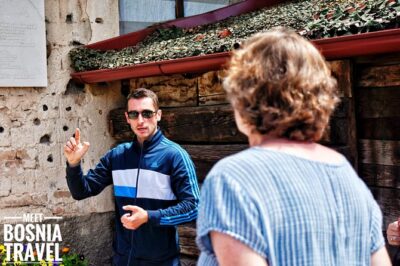
Fall of Yugoslavia, Sarajevo War Tour with Tunnel of Hope Museum and Frontlines
Read our review →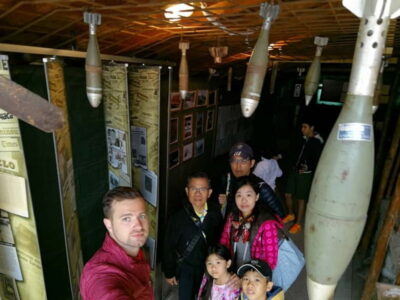
Tunnel Museum Yugoslavia War Tour with War Veteran
Read our review →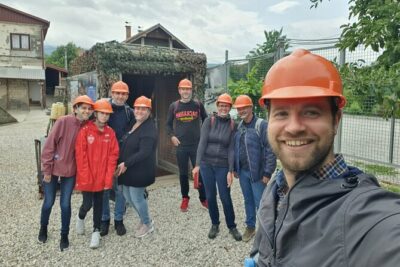
Tunnel Museum: Bosnian & Yugoslav Wars Tour with War Veteran
Read our review →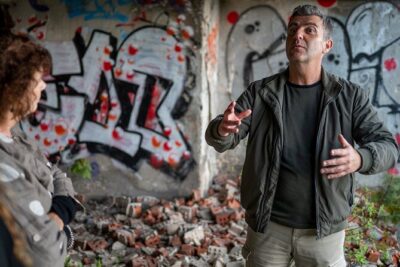
Sarajevo War Tour: A Veteran’s Story of the Siege (fees included)
Read our review →
Srebrenica Genocide Study Tour with War Veteran
Read our review →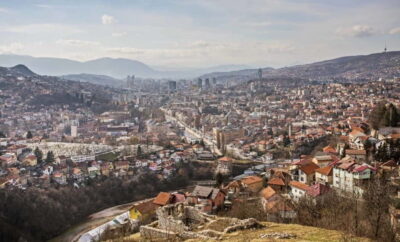
Break-up of Yugoslavia & The War in Mostar: Life Under Siege
Read our review →Browse the lists this tour appears in