
Sarajevo’s siege story is one of those topics that feels like it belongs to textbooks, until you see the places where it happened. This tour brings the facts to ground level, then connects them to what survival really meant in everyday Sarajevo.
I really like the way Adis Hamzic (and his assistant guide) tells the story with a human voice, not just dates. I also like the small-group format (up to 16 people), which makes questions feel normal instead of rushed.
One thing to plan for: the Tunnel of Hope Museum ticket is not included, so you will pay separately on-site (listed at about €10 per person).
Key highlights worth marking on your map
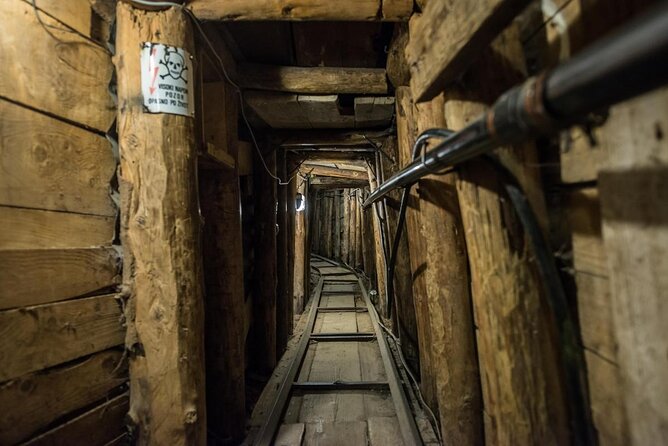
- Yellow Fortress viewpoints tied directly to the front lines of the siege
- Sniper Alley explained as a lived experience, not a scary label on a street
- Asim Ferhatovic Hase Stadium linked to the 1984 Winter Olympics and its later wartime use
- Honoring the 1,601 children killed during the siege
- Tunnel of Hope Museum visit as the city’s secret lifeline for supplies and survival
- Air-conditioned vehicle plus a scenic return drive so the afternoon stays manageable
Sarajevo Siege, told through streets you can actually stand on
There are tours that explain the war. This one helps you understand Sarajevo during the siege by walking through key places where the war left marks you can still see today.
What I like most is the tone. You get the serious stuff, but the guiding style is direct and conversational. In the best moments, you are not just absorbing information, you are learning how locals make sense of what happened and how the city remembers it. The guide’s English is strong, and the format encourages questions.
The itinerary is built to move from high views to specific sites of loss, then to the one piece of infrastructure that became a symbol of survival. It is a smart flow: you start by seeing the city’s layout, you trace how danger spread into daily movement, and you end with the Tunnel of Hope, the underground route that kept people alive when the city was cut off.
Just note the subject matter is heavy. You should come ready for emotion around civilian massacres and the mass killing of children. If you want a light, funny city stroll, this is not that.
Other accounts of the siege years:
- Fall of Yugoslavia, Sarajevo War Tour with Tunnel of Hope Museum and Frontlines
★ 5.0 · 1,314 reviews - Sarajevo: Tunnel Museum Yugoslavia War Tour with War Veteran
★ 5.0 · 1,111 reviews - Tunnel Museum: Bosnian & Yugoslav Wars Tour with War Veteran
★ 5.0 · 551 reviews
Yellow Fortress and the view that explains the front lines
You meet at Mula Mustafe Bašeskije 65 and set off with the guide’s framing for what you are about to see. The first stop is the Yellow Fortress, a high point with panoramic views over Sarajevo.
From here, the siege becomes easier to grasp. Views do not change the facts, but they help your brain connect them. When you look outward from the fortress and hear how the front lines functioned, the city stops being a postcard grid and becomes a real battlefield geography.
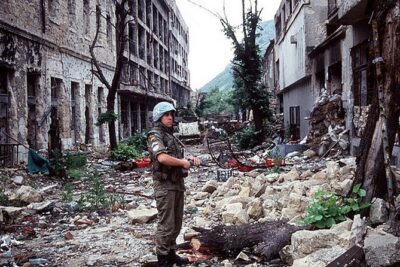
You also visit the resting place of those who fought to protect the city. In the same zone, you hear about tragic civilian massacres during the siege. That pairing matters. It keeps the story from becoming abstract. It also makes the ground feel like memory, not just scenery.
This stop is listed with no admission ticket cost, so you are not juggling extra payments early in the tour. It is also a good moment to slow down. Take a minute to really look around, then let the guide connect what you see to the siege timeline.
Practical note: because you are seeing views plus memorials, the pace can feel reflective. If you hate waiting for people to get ready at scenic stops, plan on this being a calm start.
Asim Ferhatovic Hase Stadium, Sniper Alley, and the war’s political center
After the high views, you drop into the places where daily life got dangerous fast.
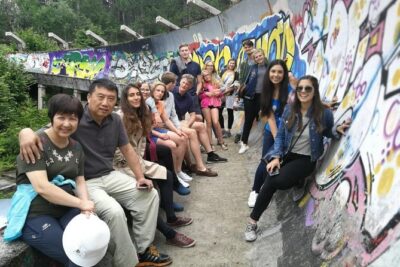
One of the key stops is Asim Ferhatovic Hase Stadium. It has an unusual two-part identity. It hosted the 1984 Winter Olympics, and later, during the war, parts of it were used as a cemetery. That contrast hits hard. It shows how quickly a familiar city setting can change roles when a siege tightens.
The tour also focuses on honoring 1,601 children killed during the siege. This is not presented as a statistic thrown into a lecture. It is framed as remembrance, which is exactly what you want from this kind of stop.
From there, you move to Sniper Alley, described as one of the most dangerous streets during the war and known for sniper fire. The value here is in the explanation. A name like Sniper Alley can sound like a tourist label until the guide explains why people moved the way they did, where risk clustered, and what staying alive required.
Then comes the Presidency Building, described as the political center during the war. Even if you know the country’s modern history, this is where you can feel the siege as a governance story, not only a survival story. It is the reminder that war is also about decision-making, power, and what governments had to do while civilians were under siege.
This section is tightly packed, with short stops meant to keep you oriented. You will probably feel like you are learning fast. The upside is that it makes your time count. The downside is that if you want long pauses at every site, you might feel slightly rushed.
Tunnel of Hope: the survival route and what the museum adds
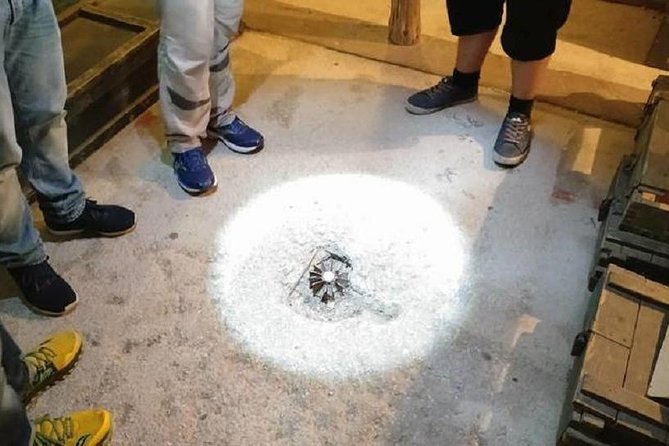
The emotional center of the tour is the Tunnel of Hope, also known as Tunnel of Salvation on the itinerary. You do the tour stop plus time at the Tunnel of Hope Museum.
The tunnel is presented as Sarajevo’s secret lifeline. It was used for smuggling supplies and survival when normal routes were blocked. Hearing that, then seeing how the museum interprets it, makes the siege story feel more physical. This is one of the few places where you can picture how survival logistics worked, not just how people suffered.
Your planned museum time is about 50 minutes. That is long enough to read, look around, and ask questions without turning into a full half-day museum trip.
Important cost detail: the Tunnel of Hope Museum entrance fee is not included. You pay on-site in local currency (the tour listing gives a reference amount of €10 per person). If you want everything smooth, bring cash and keep a little flexibility in your schedule for on-site payment.
After the tunnel visit, you do a panoramic drive as a scenic return route, ending with a final view of Sarajevo. This is a smart close. You have been inside the story’s hardest parts, then you get a view that reminds you the city is still here, still lived in, still moving forward.
More around Sarajevo to weigh up
- Sarajevo: Mostar, Konjic, Blagaj Tekke, Pocitelj & Waterfall
★ 4.9 · 1,666 reviews - Sarajevo: Grand Walking Tour Through Time and Cultures
★ 4.8 · 1,236 reviews - Sarajevo: Mostar, Konjic, Sufi House, Pocitelj & Kravice Falls
★ 5.0 · 1,179 reviews - ROSES OF SARAJEVO (Official WAR + CITY tour)- Story of a Survivor
★ 5.0 · 770 reviews
Getting your bearings in 2 to 3 hours without feeling herded
This is a 2 to 3 hour tour, start time 1:00 pm, and it ends back at the meeting point. That timing matters because it fits an afternoon without forcing you to lose your whole day.
You travel by an air-conditioned vehicle, which is a real benefit in summer and in shoulder seasons when weather can swing. It also reduces the stress of moving between memorial-heavy stops. Even if you are comfortable walking, this route is better when the transitions happen by car.
Group size is capped at 16. In practice, small groups tend to make a difference. You get a guide who can answer questions and adjust explanations on the fly. The guides associated with this tour have strong English skills, and the tone is friendly, with humor that does not turn tragedy into a joke.
One realistic consideration: when a tour is small, you may still feel close quarters in the vehicle. That is not a dealbreaker, just the kind of thing you notice after a few stops. If you hate tight spaces, keep that in mind.
Overall, the structure is tight enough to feel efficient, but not so rushed that you miss the core sites. The guiding approach keeps you from feeling like you are checking off attractions. Instead, you are learning why each place matters.
Price and value: what you are really paying for
The price is listed at $54.22 per person. On its face, that is more than a typical walking tour. The value comes from three concrete things you get for that money.
First, you get a local professional guide with deep command of Sarajevo’s war history, presented through human storytelling and personal perspective. That kind of interpretation is hard to replicate on your own with a couple of guidebooks.
Second, the price includes an air-conditioned vehicle, which saves time and makes this kind of route feasible in a short window. You are moving between high points, stadium grounds, and the tunnel area without turning your afternoon into a long commute.
Third, the tour includes multiple major siege sites in one outing, which helps you avoid piecing together transportation and timing yourself. When the itinerary is this specific, having someone else coordinate the flow is part of the deal.
The one part not included is the Tunnel of Hope Museum ticket (listed at about €10 per person). That is the main add-on cost you should budget for. Tips are optional, though the tour notes that tipping the guide is appreciated.
If you care about Sarajevo beyond the postcard landmarks, this is a fair price for a guided, structured, emotionally grounded experience that would be harder to assemble independently.
Who should book this siege survival tour, and who should skip it
This tour is a strong fit if you:
- Want a clear understanding of the siege that connects sites like Yellow Fortress, Sniper Alley, and the Presidency Building to lived wartime realities
- Prefer a local guide who can explain context and take questions
- Like small-group touring where conversation is part of the experience
- Plan to spend time in Sarajevo in the afternoon and want a focused route
You might choose a different activity if you:
- Do not handle heavy topics well, because the stops include civilian massacre remembrance and the honoring of 1,601 children
- Want a purely practical, logistics-free tour without emotional or historical interpretation
The guides are known for answering questions and speaking clearly in English, so if you ask a lot, you are likely to enjoy the way the story is delivered.
Should you book Inside the Siege with Adis Hamzic?
If your goal is to understand Sarajevo during the siege, book this. The combination of major siege sites, the Tunnel of Hope Museum, and a guide who can explain how people survived makes it more than a sightseeing loop. It is a story route you can feel in your body as you move from view to street to tunnel.
If you are short on time, this format is also practical. The afternoon timing works, the vehicle keeps transitions efficient, and the group size helps the guide stay responsive.
Just go in with the right expectations: this is history with real grief attached. If you can hold that weight, you will leave with a much clearer understanding of what survival in Sarajevo actually required.
FAQ
How long is the Inside the Siege tour?
It runs about 2 to 3 hours.
What is the price per person?
The listed price is $54.22 per person.
Is the tour offered in English?
Yes, it is offered in English.
What is the meeting point and start time?
Meet at Mula Mustafe Bašeskije 65, Sarajevo 71000. The start time is 1:00 pm, and the tour ends back at the meeting point.
Is the Tunnel of Hope Museum ticket included?
No. The Tunnel of Hope Museum entrance fee is not included and is paid separately on-site in local currency (listed as €10 per person).
Does the tour include transportation?
Yes, it includes an air-conditioned vehicle.
What is the maximum group size?
The tour has a maximum of 16 travelers.
Can I cancel for a full refund?
Yes. You can cancel for a full refund if you cancel at least 24 hours before the experience starts. Free cancellation is available, and changes made less than 24 hours before the start time are not refunded. The tour may also be canceled if a minimum number of travelers is not met.
Is the tour suitable for most people and are service animals allowed?
Most travelers can participate, and service animals are allowed.
Newest Sarajevo write-ups
- Sarajevo to Zagreb: One-Way Tour via Jajce, Travnik, Pliva Lake and Watermills★ 5.0 · 3 reviews
- Sarajevo E-Bike City Tour★ 5.0 · 3 reviews
- Mountain Village Lukomir Full Day Adventure Tour★ 5.0 · 3 reviews
- Bosnian Kingdom Capitals: Travnik & Jajce Tour from Sarajevo★ 5.0 · 3 reviews
- Strbacki Buk and Una Waterfalls: Day Trip from Sarajevo★ 5.0 · 3 reviews
- Sarajevo Snowshoeing Adventure★ 5.0 · 3 reviews
- Sarajevo Old Town: Bosnian Coffee, Baklava & Panoramic Views★ 5.0 · 3 reviews
- 4 Hours Tara Rafting Trip★ 5.0 · 3 reviews
Siege of Sarajevo Tours, compared.
Fall of Yugoslavia, Sarajevo War Tour with Tunnel of Hope Museum and Frontlines
Read our review →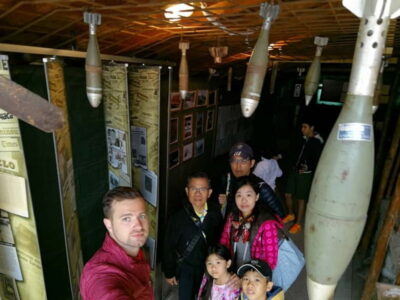
Tunnel Museum Yugoslavia War Tour with War Veteran
Read our review →
Tunnel Museum: Bosnian & Yugoslav Wars Tour with War Veteran
Read our review →
Sarajevo War Tour: A Veteran’s Story of the Siege (fees included)
Read our review →
Srebrenica Genocide Study Tour with War Veteran
Read our review →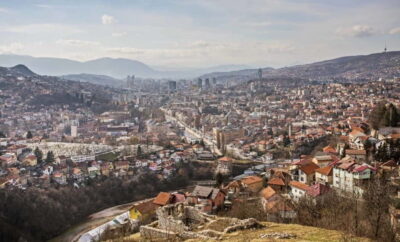
Break-up of Yugoslavia & The War in Mostar: Life Under Siege
Read our review →Browse the lists this tour appears in